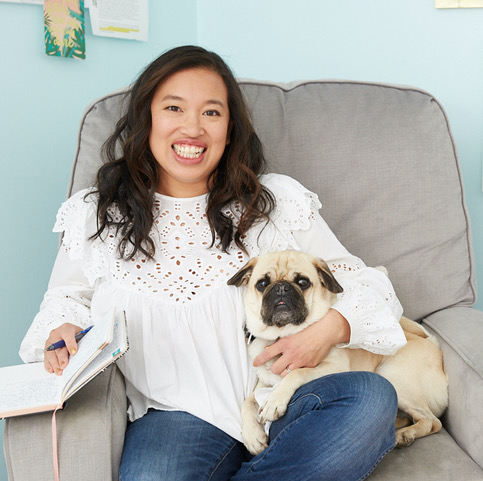
Riché Barnes: Transcript


Writer Mother Monster: Riché Barnes

April 15, 2021

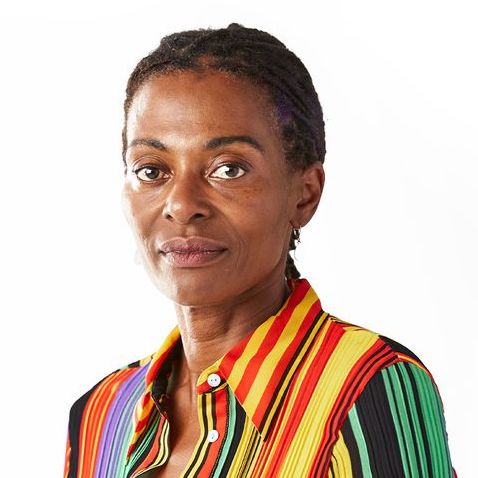
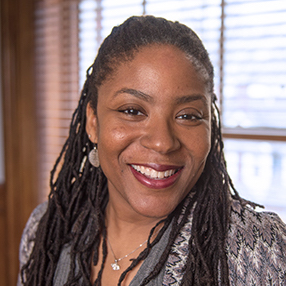
Riché J. Daniel Barnes is an associate professor and chair of the Department of Gender Studies at Mount Holyoke College. A socio-cultural anthropologist, Riché focuses on a broad range of issues concerning Black families and is the author of Raising the Race: Black Career Women Redefine Marriage, Motherhood, and Community (2016), in which she coined the term “black strategic mothering” while investigating what she refers to as the “neo-politics of respectability.” Riché is the co-founder and director of the Association of Black Anthropologists Mentoring Program, the President of the Association of Black Anthropologists, and winner of the 2019 AAA/Oxford University Press Award for Excellence in Undergraduate Teaching of Anthropology. She is a scholar-activist committed to social justice action including the Movement for Black Lives and #SayHerName. Riché has a 20-year-old daughter and twin 18-year-old sons, and she describes writer-motherhood in three words as “Supporter. Creative. Industrious.”

Lara Ehrlich

Hello, and welcome to Writer Mother Monster. I’m your host, Lara Ehrlich, and our guest tonight is Riché Barnes. Before I introduced Riché, thank you all for tuning in. You can watch this interview as a video, listen to it as a podcast, and read the transcript on writermothermonster.com. If you enjoyed the episode, please consider becoming a Writer Mother Monster patron or patroness on Patreon. For just $3 a month, I’ll send you a pin. And new to announce today is our first Writer Mother Monster workshop, called Prioritizing Your Craft for Writer-Moms. It is conveniently scheduled the day before Mother’s Day on Saturday, May 8. Please also chat with us during the interview. Your comments and questions will appear in our broadcast studio, and we’ll weave them into the conversation.

And now I am excited to introduce Riché Barnes. She is an associate professor and chair of the Department of Gender Studies at Mount Holyoke College. A socio-cultural anthropologist, Riché focuses on a broad range of issues concerning Black families and is the author of Raising the Race: Black Career Women Redefine Marriage, Motherhood, and Community (2016), in which she coined the term “black strategic mothering” while investigating what she refers to as the “neo-politics of respectability.” Riché is the co-founder and director of the Association of Black Anthropologists Mentoring Program, the President of the Association of Black Anthropologists, and winner of the 2019 AAA/Oxford University Press Award for Excellence in Undergraduate Teaching of Anthropology. She is a scholar-activist committed to social justice action including the Movement for Black Lives and #SayHerName. Riché has a 20-year-old daughter and twin 18-year-old sons, and she describes writer-motherhood in three words as “Supporter. Creative. Industrious.”

Riché Barnes

Hello.

Lara Ehrlich

Hello. Thank you so much for joining me.

Riché Barnes

Thank you for having me.

Lara Ehrlich

Tell me about the three words that you chose for writer motherhood: supporter, creative, industrious.

Riché Barnes 

A supporter, I feel like that’s what’s happening all the time. I think it was fresh on my mind, because in the COVID moment, and with all that’s going on in the world right now, I feel like a lot of my time is spent offering support to my kids, just being a listening ear or trying to anticipate what kinds of struggles they might be having. I can’t fix them, because they’re pretty much adults at this point, but there are little things I can do. They’re all home. My daughter is a junior in college, so she’s been home since the pandemic. And my sons, who are twins, are still in high school, which has been in-person pretty much consistently since maybe November. Before that, they were online a lot. I felt like in a lot of ways, I was just paying attention to how they were being affected by the pandemic and by other things that are going on in the world and just trying to be supportive. We’re past the point where I’m making lunches and breakfasts, and sometimes even dinner, because they’re able to fix things for themselves. But if I’m paying attention, I realize, he’s going through a lot right now, let me make breakfast, because he’s not going to eat if I don’t make breakfast. So, you know, things like that. That’s what made me think of supporter.

Creative, you’re just on the fly, like, what do I need to do right now with this situation? I think for me, I’m creative anyway, so it really falls in line with that. Again, I was thinking of things I have to do and how I respond to them. I almost put “entrepreneurial,” because I’m also thinking about very practical things. Both of my boys are over six feet tall, so, when they were smaller, it was them growing out of clothing very quickly and me being very industrious to keep up with the budget and do things to keep us within our financial means. I’m also thinking about that right now, because they’re getting ready for college. They’ve gotten some really good packages, but we’re also thinking about how much we are going to have to put in the pot—and it’s two of them, and my daughter hasn’t graduated yet, so there’ll be three of them. All of that is on my mind right now.

Lara Ehrlich

Yeah, that’s a lot. With those logistical things that you have to be thinking about, how does that impact the creativity side? When you’re thinking about lunches and finances and buying new clothes so your child’s ankles aren’t showing, how do you maintain your creativity?

Riché Barnes

It’s hard. I used to write poetry and short stories. I used to do a lot more creative writing. I used to say grad school pushed it out of me, but I think it’s because you have to think differently when you’re doing social, scientific, scholarly work, but I think as an ethnographer, I still get to use some of my creative juices. But I think the creativity in terms of my writing really suffered in a lot of ways once I had kids, because there just wasn’t time and there wasn’t space. I think so much of creativity happens because you’re able to be alone or be in spaces that are going to inspire you. That’s not happening when you have three kids under three. My kids are all very close in age. There’s just not a lot of time. Lately, I’ve been trying to get back to the creative juices, so I’ve been doing simple things like coloring. I actually have a coloring book.

Lara Ehrlich

So do I! It’s OK.

Riché Barnes

I had mine in my bookbag, which is sitting right next to me, but I took it out because I needed to make room for some papers I needed to grade. So that’s what happens to my creativity. I think that’s a great metaphor. And I love to dance. As part of my workout regimen, instead of doing lots of things that I don’t like to do, I’ve been doing more dancing. I think all of that inspires my creativity. I’ve been going for a lot longer walks to be out in nature. But all of that is because my kids are older. It’s all because I don’t have to spend so much time, you know, with the day-to-day, minute-to-minute stuff with them. I’m hoping that I’ll be able to get back into the creative part of my writing, maybe once they’re gone. I still journal. I’ve always journaled.

Lara Ehrlich

You mentioned that the creative side of the things that you love to do—the poetry and the short stories—have been on hold, but you’ve been very, very productive, right? I mean, you have an amazing book that you’ve written, among many, many other writings, and dean of university and now, tell me again about your role at Mount Holyoke.

Riché Barnes

I should probably give a little bit of context to for how this happened. I realized that I like being an administrator, but I missed the research that inspired my writing. I wasn’t getting as much time to do that as an administrator. I was teaching at Yale, and it was very difficult to carve out time to do the real kind of research and writing that I wanted to be doing. I think I might get back to administration later in my career, but right now, I still want to be doing research and writing. I got the opportunity to be in conversation with Mount Holyoke College about a position that they had open about 18 months ago in gender studies, and they were looking for a scholar who was focused on Black feminism, and that’s me.

Lara Ehrlich

Let’s focus on Raising the Race: Black Career Women Redefine Marriage, Motherhood, and Community for a second. When did you write the book? Were you writing the book when your kids were younger? Talk me through the process of the research and writing that went into this book with small children.

Riché Barnes

Yeah, that’s a great question. I had all three of my kids while I was in grad school, and my book is based off of the research that I did for my dissertation. They were little people. My daughter must have been 3 or 4, during my concentrated time of interviewing, what we call participant observation, where you just kind of hang out with people and see what they do. I would go with the moms that I was working with for my research to pick up their kids at doctor’s appointments and soccer games. My kids were still too little to be involved in those kinds of activities, so I actually learned a lot from the women that I interviewed about balancing out motherhood and work and all the other things that they were doing.

But in terms of negotiating—doing that research and raising my family—I leaned on husband a lot. He was a trooper, as far as I’m concerned. There’s one story that we still laugh about. I was a part of this research group that met in the afternoons once a week. It wasn’t the part of the research where I was actually collecting research, but it was a group of scholars that I was in conversation with, as I was collecting the interviews with the women that I was working with.

It was once a week in the evening, when my husband was a public-school math teacher. He would get out of school and be done with his workday at around 4:30 or 5. We had a Volvo and a pickup truck, and he would drive the pickup truck to work, and I would have the Volvo with the kids. On the days when I had that meeting, I’d put the kids in the Volvo and drive to his school, and he would meet me in the parking lot and take the kids. He would take them back into school with him, or he would just go home, and I would take the truck and go to my meeting. So, he would have them for the rest of the evening—getting them their dinner, getting them ready for their bath—but even with that, there would be days when I needed to go meet with someone because that was the time they had to talk with me, and he would watch the kids, or my parents would watch the kids. It was a lot of balancing with them.

I never brought them with me though, like all of the women who I was researching. I didn’t want to break that line of researcher. I never wanted them to feel like I was their friend or something. I wanted to make sure that I didn’t cross any lines or do anything that would interrupt the scholarly process of collecting data from people. But yeah, it was a blur, a lot of it. People used to ask me how I did it all, and I would just say, “I don’t have a choice.” I mean, I guess I did have a choice—I didn’t have to pursue my PhD and raise kids at the same time—but it didn’t feel like a choice to me. It felt like I needed to be true to the kinds of work that I wanted to do and also true to the kind of mom I wanted to be.

Lara Ehrlich

What kind of mom did you want to be?

Riché Barnes

Supportive, creative, industrious. No, but all jokes aside, we all want to be good moms, right? I think the way that I was characterizing it then, and I think I still do, has a lot to do with time, being there for them. Not that I need to be there 24-7, because we definitely did use childcare providers, and they went to school and after-school programs when they were of age, and they were in rec this and dance that—all that stuff. But yeah, I think it had a lot to do with time listening and being present, showing love.

Lara Ehrlich

Talk to me about being present with so many other things going on. How did you do that?

Riché Barnes

I think it’s actually doing things with them. We made a point of having breakfast together every day. We decided it would be breakfast, because as they were getting older and involved in more activities, it was harder to have the same dinner time, but we could have the same breakfast time—like, everybody gets up, everybody comes in, comes to the table, and eats breakfast together. That was always a good time to be present and available, listening, and kind of setting them up for the day ahead. They had this moment in which we were all grounded together as a family that they could then take into their day—at least, that’s the way I imagined it was happening. I don’t know how they felt about it, like maybe it was a complete annoyance that they had to get up earlier than they would have if they were just having a bowl of cereal.

Those are moments that I can remember of being present, just really spending time together. We always go on a family vacation, and we do a lot of things together on the weekends, but everybody’s on a device. Even to this day, and they’re 18 and 20, we have family movie night, we do talent shows—like, we all prepare talent and share it with the whole family, which is a lot of fun. So, I guess present day is having fun together, being together intentionally.

Lara Ehrlich

I love that. Finding things that are fun for you and your family to do together. I think there’s so much pressure on being present, dictated by kids and what they find fun, which is fine, too, but it’s probably a little easier to be present if you’re finding something that everyone really enjoys doing together. I find that if it’s something I would enjoy anyway, then it’s a lot easier to be present than doing something that is a little less in my wheelhouse, like playing blocks, for example, when I’m like, “Oh, God, do we have to do that again?”

Riché Barnes

Yeah, I think that’s absolutely right.

Lara Ehrlich

Tell me more about the book, Raising the Race: Black Career Women Redefine Marriage, Motherhood, and Community. Tell me a little bit about the women that you followed and researched and what you learned from them.

Riché Barnes

The book is an ethnography, which, if folks aren’t aware of what that means, it’s basically when usually anthropologists, but other social sciences, too, go out and spend time with people to understand their everyday lived experiences. You do that with a set of guiding questions about what you’re interested in finding out about. The women I followed around, which is literally what I was doing, were professional women, career women, educated women who had at least a college education, but many of them had advanced degrees. They were doctors, lawyers, executives, engineers, marketing executives, finance executives, a journalist—those kinds of positions that would give one a degree of financial security and stability. They were women who were making decisions around whether or not they wanted to continue in a full-time career where they were very focused on being ambitious in the workplace, or they were continuing in a career but maybe not on full steam, or they were choosing to be at home or part time for a while.

 What was interesting about this question for me was, this wasn’t something, historically, that African-American women had the opportunity to think about as an option. For these women, it had a lot to do with the fact that they were professionals, but also their partners were professionals, so it allowed them a degree of freedom that, historically, Black women haven’t had. Then the negotiation becomes “if my husband can’t afford for me to be at home, do I stay at home?”

A lot of the decision-making has to do with this history that I’ve been talking about. If the history of your experience as a race and gendered person is that you have always worked, and even when you have had success at work, you still worked, because that was doing something important for not only your own family but also your community, because that opportunity hadn’t been available to your community previously, what responsibility do you have to a larger community of people who may be, quote unquote, “counting on you.”

For example, there was one woman I followed whose family of origin was poor—the families of many of the women I worked with were poor or working class—and this is what made it even more difficult, because they were in this woman’s particular experience. Her parents had had her as teenagers, and she was raised by her grandmother and grandfather in a very small town in the rural South. The whole community had seen her as a very bright child that was going to go far and do great things. And so, she did. She did well in high school, went to college, went on to medical school, went into her career as a physician, got married to an attorney, and was living everybody back home’s dream, right? Like, wow, look at you. You’re doing such great things. We’re so proud of you. And then she starts having her kids.

 I think the combination of trying to hold down this very demanding role at work and being supportive to her husband who was, at the time, starting his own business, and raising small children was becoming a bit too much. So, she decided, because she could, she’d stay home. And not stay home in the sense of, and she actually said this, “sitting around eating bonbons.” She was helping her husband get the business off the ground. It wasn’t that she had devoted all her time to being a mom, not that there would be anything wrong with that, but she had decided that for her family, it actually was more helpful to everyone, in terms of her health and stress load and all that stuff for kids, because she would be more present. And her husband, because she could keep the books, wouldn’t necessarily have to hire more people, and things like that. They could build that thing together and make another successful type of thing. But her family and community at home, had no recognition of what that was right. They were like, what are you doing? Why are you at home?

It was that kind of negotiation that I found many of the women in the study trying to figure out, how to make sense of having these new financial freedoms, wanting stability and presence in their households, seeing how this on ramp of “go, go, go, go, go” wasn’t really giving them many returns and deciding it’s okay to step back for this moment. And I say “for this moment,” because for many of the women going back, or going back part-time was something that was happening at different points in their decision making or different points in their children’s lives, different points in their marriages—there were a lot of things that were at play when they were making these decisions.

I probably saved my children so much grief by learning from these women. I could probably write a manual about all the stuff taught to me that I was able to implement, because I was watching them go through it just a few years ahead of me. But what I really learned, and this is the part that I hope comes through in the book, is how challenging it is for families in general to figure out how to do all this stuff on their own. That’s what it came down to. These women would have loved to continue their careers, but there was no way to have it. We’ve all been trying to have it all, right? That’s what they’ve been telling us, like, oh, women, you can have it all, just go for it, right? I mean, we have so many people writing books telling us to do all sorts of things, about women having it all, being able to combine all these things and do it effortlessly and with no stress, all the sleep, and looking gorgeous. Well, it’s only true for a very, very, very, very, very small portion of the population, and everybody else who says that they’re making it work, I believe is a lying.

Lara Ehrlich

I agree with you. Thank you for saying that. Yes.

Riché Barnes

At the end of the book, in the conclusion, we say there are just so many things that our society needs to do. If it really cares about children, if it really cares about people about families, which we keep saying we do, there are so many supports that needs to be put in place, and what we’re seeing instead are supports being removed or made more challenging to get access to. That’s what I learned.

Lara Ehrlich

I want to go back for a second to something that you said you learned from these women, or that you noticed as you were following them, about how they felt they had to justify their choices to family and communities back home and all these voices that have been telling them they can do this, we expect you to do this, and then they decide that they’re going to do something different. Can you talk a little bit about the ramifications of that choice, and if you’ve had to make choices that don’t align with the expectations for you and how you deal with that?

Riché Barnes

Yeah, that’s such a good question. There was some ambivalence, there was some dissonance, there was even some partial speak, where a woman is telling me, “Yeah, I made the decision to come home, because I thought it was going to be good for my kids, and my husband was doing this thing and that thing, and I just thought, wouldn’t it be great if I could just focus and be at home for a while.”

I follow them a bit longer and learn that, no, this woman got laid off from her job a month after she had her third, and with three small children needing childcare, at that moment, it didn’t make sense to look for another job, so she stayed home for a couple of years. Then it was the explanation, the thing that made sense to go along with that decision, which then became “this child needs these activities and this kind of school, and my being home allowed me to be able to get this child what this child needs.”

At one point, her husband was diagnosed with a chronic illness. It wasn’t the kind that was going to take him out of work, but it made it more necessary for him to be more cognizant of what he was eating and things like that, so she was like, “And now that I’m home, I can make sure that we’re eating home-cooked meals every day, and it’s not like when I was at work, and I was running through the drive-thru.”

So, she had this way of explaining and went along with the thing that actually wasn’t her decision. It was prompted by the fact that she got laid off. There were a couple of women who had those kinds of work-related things happen, that then led them to “it doesn’t make sense for me to look for a job right now.”

That was the doublespeak. Ambivalence showed up when, talking to one woman, she was like, “When I was in college, I thought I was going to be a CEO. I thought I was gonna end up at the top of my profession and my industry.” She made this really funny comment, something like, “And I’m CEO of making the laundry work.” It was kind of like, I didn’t get anywhere near what I had expected for myself.

I found women dealing with that, making jokes about it, but also recognizing that they weren’t doing exactly what they thought they would be doing or even what they decided to do. Some of them became clear about their husbands’ expectations, what it means when you’re not bringing in as much money, how he sees your role. When you’re both working full-time and managing the kids and all the household stuff together, there’s a degree of “we’re managing it all together.” He’s going to have days when he is doing baths and laundry.

But when you’ve stepped out of that partnership configuration, then his expectations change. “I’m working all day, you’re home all day or home part time, you should now be doing the laundry, all the baths, all the meals.” Right? There was dissonance, like, this is not how it was when we got married.

Then on the side of community expectations and family expectations, there was a lot of hurt. They were very hurt. Because they wanted support from their families, especially their moms and grandmoms. When they weren’t getting it, I would see in their body language, there was hurt there.

Lara Ehrlich

What were the expectations set by your own family and your own mother? What kind of model did she provide for you of motherhood?

Riché Barnes

My mom and my mom’s mom are very, very hard worker women and had very, very high expectations of me. They would not have been happy with me being at home. They would not have found that a good use of my talents.

Lara Ehrlich

Did you ever consider staying home, or did you for any period of time throughout your career?

Riché Barnes

I actually did consider it. I had a couple of different iterations of changing my relationship with work. When the kids were really small, I thought it would be easier if I just did all the stuff. At one point, we couldn’t find childcare. I was in grad school and wasn’t bringing in much money. Then I was teaching adjuncts sometimes, and that was supposed to be helping us in some way, but really, it was just going to pay for the childcare that they were getting when I was teaching. There were a few times when I was talking to my husband, like, wouldn’t it be cool if I just stayed home? And he was like, “Yeah, if you stay home, all this is gonna be you.”

It was the thing I noticed from the other dads. I was like, I don’t know about that. That’s not what I want to be doing. I enjoyed my work. I wanted to do the work that I was working towards, I wanted to be a researcher, I wanted to be a professor, I wanted to be a writer and teacher, so for me, it would have meant really changing my goals for my life, and I hadn’t achieved them yet. It wasn’t like the women I was talking to, who were in their careers and then made a decision to step back from them or change their relationship with them. It was like, I hadn’t even gotten to it yet.

There was another point when I was like, maybe I don’t need a PhD. Maybe I can be a high school teacher. I thought about that for a while. And I had tried my hand at substitute teaching, right after college, and I was pretty clear that that was not my age group. My age group is full-on adult. I need people who are going to take full-on responsibility for their own learning. Yeah, I’m gonna teach you, but I need you to be responsible for that. That was another moment when I thought about it.

I think earlier, if I remember correctly, you’d asked me if there had been a time when I did have to make some sort of compromise with my career expectations and my relationship with work and family. It was when I was at Yale. When I took the job at Yale, my husband was teaching at a boarding school, so we lived on the campus of the boarding school, and the kids were approaching the age where they could attend the boarding school. I was thinking it was a good time for us to move.

I got my job at Yale, and I thought, okay, everybody’s gonna move. And no one moved. I was the only one who moved. I was commuting about an hour and a half. I didn’t have to do it every day, because I was dean of the college, and I had some place to live there, but I needed to be there pretty much full-time because I was dean.

So, there was a real sense of juggling when I had that position, and I think that’s also what made it attractive for me to leave administration. I didn’t have the same level of flexibility I’d had when I was full-time faculty. Being full-time faculty really helped me navigate being a working mom, because I had so much control over my schedule, when I wasn’t actually in the classroom teaching. That made it easier to show up for a performance at elementary school, or pick up after school if we were going to do something special that day. I had flexibility over my time. I was able to maneuver things better than a lot of parents are able to do the traditional 8 to 6—let’s be real, it’s not 9 to 5 anymore. Being an administrator may be even more challenging for me, because I’m someone who does like to be present, as we were talking about earlier, especially since we’ve been in this COVID moment. The kids come in from class, because I’m teaching fully online, and I might be in the kitchen getting a cup of tea or something, and they come in and just kind of hang out with me, and that’s cool.

Lara Ehrlich

You mentioned intentionally carving out spaces to be together and having fun through various things like talent shows or movies. How did you, as a family, establish that tradition and set up those expectations?

Riché Barnes

When they were little, we would just say, on this night, we’re having family night, and it might be game night, or it might be movie night. The first thing we established was the day, and it’s not every week. That would be too much. It’s once or twice a month. Now that we’re doing the talent shows, I think it’s once every two or three months. It’s regular in the sense that, especially for the talent shows, you always know that it’s coming, so you’re always trying to get your talent together. Really funny, because then when it’s time for the talent show, it’s like, “Are you ready?”

Lara Ehrlich

Are these news talents? Like, do you have to come up with a new talent every time? Or are these established talents, like somebody’s always been a great singer, and they sing a song every time? How does that work?

Riché Barnes

Pretty much established talents. Every now and then, somebody does something new out of their wheelhouse—and, trust me, we’re not the Jackson Five. We’re not super talented individuals. We just have things that we enjoy doing. I think my husband and I also wanted to make sure that the kids enjoyed music and are in dance and stuff like that. We’ve always made sure that those things were a part of their lives. They’ve taken different instrument lessons. One of my sons has been in the a cappella group in his school and likes to sing. One uses instruments as his downtime. We started him on a viola when he was little, and he played that for a number of years, and then he wanted to join the band and played the trombone for a number of years, then taught himself guitar and the electric bass. Most of the time, when we have a talent show, he’s playing one of those instruments. The one that likes to sing is usually singing something. One time, I did a dance. I found a dance on YouTube or something and taught myself, because I love to dance. But I don’t have time to learn a dance every time we have a talent show, so lately, I’ve been reading my writing.

Lara Ehrlich

Whatever works!

Riché Barnes

I’m like, this is my talent, clearly. I am a writer, so I’m going to share with you some of what I’ve been writing. Not that it’s anything they’re interested in. But that is my talent.

Lara Ehrlich

Now, are you reading them scholarly writing?

Riché Barnes

Scholarly.

Lara Ehrlich

I love that.

Riché Barnes

I had this journal article that I had just submitted, and I was like, “I’ll read the first part of this.”

Lara Ehrlich

That’s amazing. I might have to institute that at my house.

Riché Barnes

In terms of establishing it, when they were little, it was really easy, because we were just like, “Hey, we’re gonna watch …” whatever new Disney movie was out. My husband loves going to the movies, so that would be a family outing. We just converted that into something that we do at home. We’ve tried different things. At the beginning of the pandemic, we tried on Sundays, because we couldn’t go to church, come up with your own inspirational thing that you want to share with everyone. That went for, like, a month, and then everybody was like, okay, we’re over this. One thing that we did try that was really helpful was taking turns picking the movie.

Lara Ehrlich

I have to say it’s nice, now that my daughter’s almost 5, she can watch movies that are actually really enjoyable for grownups, too. When they’re 1 or 2, you have to watch Sesame Street, which is lovely, but it’s not the same sort of level of investment for grownups. Being able to watch movies together and engage and talk about the plot and the characters is really nice.

Riché Barnes

The running joke in our family is that my husband hasn’t seen that many of the movies because he fell asleep.

Lara Ehrlich

Well, they’re always new for him, then. We only have a few minutes left, and I feel like this is a big topic for just a few minutes, but I want to ask you about it anyway. Tell me about “Black strategic mothering.”

Riché Barnes

“Black strategic mothering” is basically a term that I came up with that actually just identifies something that’s already been happening, and that is that Black women, over time, especially in the United States, have had to come up with ways to basically strategize for the survival—and I mean real-time survival—of their children, their families, and their communities.

When I talk about it as a strategy, I’m saying that Black women are recognizing that their different strategies are necessary at different times, and they can change according to the historical period and their life course. You can be a woman who use one strategy when your child was small and another strategy entirely when your child is an adult. Of course, you change as a mother as your child goes through different stages, but we’re talking about survival.

For Black women in particular, because of our relationship with this country historically, it has meant that we could be in real fear for our lives and for the lives of our children and the lives of our partners at different times.

I can just give you an example from my life. I remember when it occurred to me as a mother that my sons were no longer being viewed as cute and adorable little boys. They had crossed some invisible line, where they’re not seen as cute little boys anymore, and they’re seen as potentially scary men, even though they’re still cute little boys. How do you parent differently when you have that realization? When they start driving, there’s another point in which you’re strategizing differently. Up to that point, you haven’t really needed to talk about that realization you had when they turned somewhere around 12 or 13. Now that they’re 16, 17, 18, and they’re driving, and you’re not there, then there’s a new conversation—it’s not new for you, because you’ve been thinking on it since they were 13, but now it’s new for them. And how do you have that conversation with them? How do you parent them to see them walk out the door and not fear that something could go wrong while they’re out there?

Lara Ehrlich

I think it’s very important to distinguish between the fear of a mother when their child walks out the door and the fear, as you’re saying, this is Black strategic mothering. This is specific to the mother of children who are Black. Can you say a little bit more about the survival aspect? Can you talk a little bit more about the survival aspect of that strategy and how it changes?

Riché Barnes

For the example I just gave, the survival is real time: how do you make sure that your kid gets back home? What do you need to teach them so that they survive the encounter with whoever? We know from the news, I’m not making up things that couldn’t actually happen. The survival could be you survived a person seeing you having a good time with your friends and deciding that your music is too loud. How do you make sure your child is able to come back from that encounter? Or it’s being stopped by the police. How do you make sure your child is able to survive that encounter? Or it’s a run in with another young person. How do you make sure your child survives that encounter?

And the truth of it is, you can’t make sure, so the strategies are what we have learned over time from this toolkit, which is basically passed down through the collective memory of Black mothers, that we share with our children who think the world has changed and they don’t need to be concerned about it anymore. You’re nowhere that you can’t keep it from happening. And so even that is a strategy. How do you do it, knowing there’s nothing you can do?

Lara Ehrlich

Take it for a second back to writing and why it’s important to write about this and to put it out there. I think it’s so important, what you said, that there’s a community, a wellspring of knowledge, behind these strategies. How are you continuing to further them through writing them down?

Riché Barnes

I try. It’s hard. I’m actually supposed to have written two different pieces for two different public facing news outlets about all that’s been happening over the last year, specific to COVID and to what happened to George Floyd and Breonna Taylor, and recognizing that George Floyd and Breonna Taylor are just two names among many that have not been named and have not had justice in any form. I haven’t been able to finish them. But I keep trying, because it needs to happen.

I appreciate you for asking me, for having me in an interview format to have these conversations. But I am a writer, and I try to write them, and it’s hard. I was thinking earlier, one of them, I just need to say, “I’m not going to be able to get this done.” Because I keep trying to get it done, and I keep not being able to. I don’t know if I’m still too close to everything, because we’re still in the thick of things, and new things are unfolding every day.

One thing I didn’t mention was both my parents had COVID last summer, and they’re fine, now they’re better, they’re not long haulers, they’re doing great, but they are also getting older, and we’re still in this very difficult moment. I have children who are going off to college, and we’re still in this very difficult moment. I think I’m still personally struggling to write out all that I want to be able to say, partly because I’m creative, but I’m also a scholar, so part of me is like, I need more information. I can’t put this out yet. I need to interview more people. I need to do more reading. That part of me is like, you got to have this right before you put it out. But there’s the creative in me, and the one that is committed to telling the stories of Black women, especially Black women who haven’t been heard, and using my platform to say, here’s what you need to know about what these experiences in real time, from the people that you don’t usually listen to. That’s another year. I don’t know what I’m going to do. I’m gonna make a decision. I’m either gonna get it done or say I can’t do it.

Lara Ehrlich

And either one is OK, right?

Riché Barnes

Yeah, I’m learning to give myself more grace.

Lara Ehrlich

I think that’s a good lesson for everyone, especially for mothers and mother writers. That’s a good piece of advice to end on, although I wish we could keep talking. Thank you so much for joining us, Riché. It’s been such a pleasure.

Riché Barnes

Thank you, and thank you to the audience that was here.

Lara Ehrlich

Thank you all for joining us.
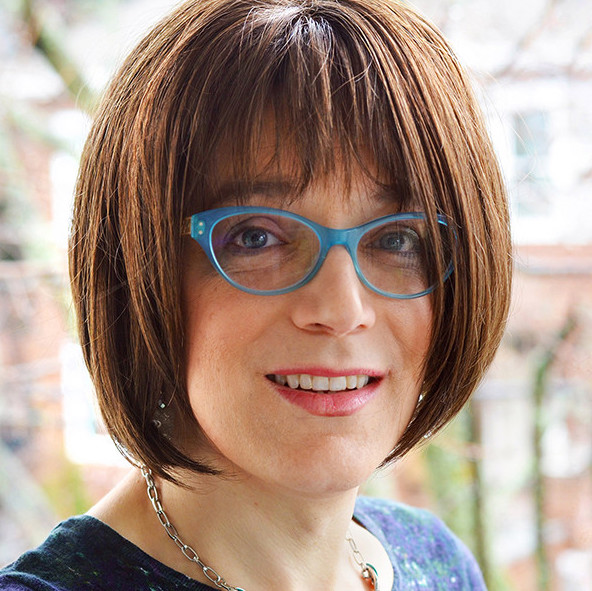
Stephanie Burt

I was raised with the expectation that I would excel in a career and have time left over for kids, rather than the reverse, because the people who raised me didn’t know I was a girl.


(April 24, 2021) Stephanie Burt is a poet, literary critic, professor, and transgender activist who the New York Times called “one of the most influential poetry critics of [her] generation.” She has published four collections of poems: Advice from the LightsBelmontParallel Play, and Popular Music, and her works of criticism include Close Calls with Nonsense: Reading New Poetry, which was a finalist for the National Book Critics Circle Award. Stephanie earned a BA from Harvard and PhD from Yale and is a Professor of English at Harvard University. She lives in the suburbs of Boston with her spouse and their two children.

FROM THE EPISODE: READING LIST & REFERENCES

Stephanie Burt
After Callimachus: Poems and Translations
Don’t Read Poetry: A Book About How to Read Poems
Rain Taxi
Graywolf
Drew Daniel
Lockheed
Kate Pryde
Catherynne M. Valente
octopus parenthood
George Eliot
Mr. Spock
Samuel R. Delany
Belmont
The Argonauts, Maggie Nelson
Hilda Raz
Trans, by Hilda Raz
Advice from the Lights
“Butterfly with Parachute”
The Giving Tree


sound bites

“For an octopus, motherhood is the end of their lives. I know it feels like that for humans sometimes, but for an octopus, it’s sadly literal.”-@accommodatingly

“Learn how to sort what’s important to you, what’s important to the people you care about, and what’s actually not important. Learn how to sort what is actually your job from what seems like it could be your job, but you can delegate or blow off, and how to sort what’s on a deadline from what’s not on a deadline.”

“I try to encourage the people around me to figure out which deadlines are fake and which are real and to find time to do the things that we actually want to do.”-@accommodatingly

“I’m a mom. I am a parent who is a woman, and that makes me a mother, and I really like being a mother. Until the early 20-teens, people thought it was a dad, and that felt really awful.”

“I have had the experience not only of being asked, ‘How can you do all these things and still be a mom?’ but also the experience of being rewarded for the lesser amount of engagement, less than 30 percent of the household work that people expect dads to do in couples that are straight-appearing. I have experienced of a lot of kinds of privilege I didn’t want, some of which I no longer have and some of which, unfortunately, are matters of habit. I think about that a lot.

I’ve been able to get out of things at work by saying, ‘I’m sorry, I have to go parent, I will be right back. My kid needs a sandwich.’ And I love doing that. I recognize that some of my colleagues who are cis women who have less job security than me, can’t or won’t say, ‘I gotta go from this meeting, I’ll be back in 10 minutes, my kid needs a sandwich,’ because they think it makes them look unserious. And that’s fucked up. Everybody should be able to say, ‘I’ll be right back. My kid needs a sandwich’—unless you’re a cardiac surgeon or onstage in King Lear. There are very few things that aren’t worth interrupting if your kid needs a sandwich, and I want to encourage everybody to walk away from meetings if their kid needs a sandwich and try to set an example of that.”

“Everybody should be able to say, ‘I’ll be right back. My kid needs a sandwich’—unless you’re a cardiac surgeon or onstage King Lear. I encourage everybody to walk away from meetings if their kid needs a sandwich.”-@accommodatingly

“The conflict within parenthood, whether or not you’re a writer, whether or not you’re making art actively that day, is between doing things for your kid and saying, ‘I’m sorry, kid, I’m busy—do the thing yourself.'”-@accommodatingly

“Having multiple adults who are family, who are trustworthy, who have been in our pod during the pandemic, and who were just there is so great. These are adults who give our kids resources, from personality types to specific kinds of know-how that their pair of moms happens not to have. There are a lot of ways to be a good mom and a lot of ways to be a good parent—and I’m a fan of the ways that have more than two adults who are not blood relatives.”

“I decided in first grade or so, after seeing some Star Trek, which my father had on after work, that I have a great deal in common with Mr. Spock, and enjoyed pretending to be Mr. Spock, which apparently is a very common trans girl thing. My really wonderful, kind, thoughtful, normy parents decided, understandably, although mistakenly, that I thought I was Mr. Spock, and therefore, that was the beginning of my adventures with child psychiatry.”

“In the early 2000s there was a wave of books that said, ‘Someone I’m close to has a weird gender; how weird for me.’ The next wave is, ‘Hi, I’m the one with the weird gender. Can I have the microphone, please?'”-@accommodatingly

“There’s so much, very merited, wish to just forking dynamite the heteronormative and mononormative and cisnormative and patriarchal institutions and habits and unspoken expectations that have prevented so many of us either from being the parents we want to be or from finding other kinds of creative and interpersonal fulfillment. There’s just so much crap in the way, some of which was always oppressive and some of which served a purpose in a society that no longer exists.”

“Rage is valid, but rage is already available. Being responsible for young people is a good reminder that rage will only take you so far. The revolution is the easy part; we don’t just need to see what’s broken, we need to figure out how to do better.”-@accommodatingly

“I was raised with the expectation that I would excel in a career and have time left over for kids, rather than the reverse, because the people who raised me didn’t know I was a girl.”-@accommodatingly

“I learned to bring my work and hang out with other parents and learn about their work, parents who were often academics or quasi-academics. I would say, ‘I need to be within 10 feet of my child, and I’m going to sit here and grade 20 papers and listen to you talk about your particle accelerator.'”

“One of my tests for my giving too much is asking, ‘Am I being a martyr, or am I being generous? What choice would I want my kids to make when they grow up?’ I really don’t know where my own boundaries are.”-@accommodatingly

“The Giving Tree is a book about what we’re told to do to ourselves as mothers: destroy yourself in the hope that your adult child, who is paradigmatically a son, will come back and cry over your stump when you’re dead.”-@accommodatingly

“I want to be a good listener. I want to set the right boundaries for one kid on one day–and the right boundaries for one kid on one day are not the right boundaries for another kid on another. I want to be really good at reading my kids, to know what that kid needs on that day. I want to share their interests as much as appropriate and no more so, and I want to give them the right amount of space to grow, and put them in a space where they’ll find friends and other adults who will help them grow, because I know I can’t do it all myself. No one can.”

“The more self-help advice we get, the more we feel like if it’s not working, it’s our fault. And no, it’s not your fault.”-@accommodatingly

Kim McLarin

I felt like I had to write or die. Writing was a way of imposing myself, of making a world that was hostile and wanted to render me invisible or dead acknowledge me and deal with me. It felt necessary, like breathing.


(April 22, 2021) . Kim McLarin is the author of three critically-acclaimed novels, the memoir Divorce Dog: Motherhood, Men, & Midlife and Womanish: A Grown Black Woman Speaks on Life and Love. Her most recent book is a critical and personal examination of a favorite novel: James Baldwin’s Another Country. McLarin’s nonfiction writing has appeared in The New York Times, Glamour, The Washington Post, Slate, The Root and other publications. She is a former staff writer for The New York Times, The Philadelphia Inquirer, The Greensboro News & Record, and The Associated Press. She is an associate professor and graduate program director of the MFA in Popular Fiction Writing and Publishing in the Department of Writing, Literature and Publishing at Emerson College. Kim has two children, ages 21 and 23, and describes writer motherhood in three words as “contradictory, depleting, enriching.”

FROM THE EPISODE: READING LIST & REFERENCES

Kim McLarin
Divorce Dog: Motherhood, Men, & Midlife
Womanish: A Grown Black Woman Speaks on Life and Love
James Baldwin’s Another Country
MFA in Popular Fiction Writing and Publishing in the Department of Writing, Literature and Publishing at Emerson College
Toni Morrison
Joan Didion
George Orwell’s “Why I Write”
James Baldwin
Bookmarked series, Ig Publishing
Ilyasah Shabazz


sound bites

“Motherhood requires being present, being available, being self-sacrificing, and being a writer requires being by yourself.”

“Five years ago, I probably would have said I wasn’t as good a mother as I should have been. Now, in retrospect, I know not only was I the best mother I could have been, I was actually a pretty damn good mother.”-@kimmclarin

“My main goal wasn’t to raise rock stars–it wasn’t to raise accomplished people–it was to raise caring human beings because there are so many uncaring ones. My other goal was to not lose myself in the process.”-@kimmclarin

“I wasn’t sure I was going to have children, but I was a writer since I was 6. If you ask me to identify who I am, writer would be up there—far earlier than mother. I think about myself as a writer who has children.”-@kimmclarin

“A writer’s job is to explore what it means to be human, so the more experiences I have about what it means to be human in all kinds of ways, then the more my writing is inevitably going to be enriched.”-@kimmclarin

“Motherhood taught me about what it means to be human, about love, about self-sacrifice, about curiosity, about how little control we have. It enriched me as a human being, so it absolutely enriched my writing.”-@kimmclarin

“It is a capitalist trap that you’re only as good as your latest product. My editor said you’re supposed to produce a novel every two years so you don’t lose your readership. That induced counterproductive anxiety. At the same time, it’s also true. The American public has a very short attention span.”

“I felt like I had to write or die. Writing was a way of imposing myself, making a world that was hostile and wanted to render me invisible or dead acknowledge me and deal with me. It felt necessary, like breathing.”-@kimmclarin

“I don’t believe in writer’s block. I believe if it’s not coming, it just means you don’t know enough.”-@kimmclarin

“I’ve seen cycle after cycle in this society of racial oppression and police brutality and white backlash—Black progress, white backlash, Black progress, white backlash. After you see a couple of those cycles, you start to understand, ‘Okay, this is America, this is the cycle.’ I guess it would take an act of faith greater than I have to believe that things will change. I always wrote with the belief that what I wrote mattered and would change things. I don’t believe it has changed anything, so then the question arises: Why keep writing?”

“Even if I never write another word, I’ve got a shelf full of books and a bunch of essays in magazines–but it becomes less vital. My identity as a wife, as a mother, as a friend, as a person in community and in connection with other people—relationships become more important as I get older, understanding that our time on this Earth is limited. My books are either gonna go the way that most books go, into obscurity, or hopefully, as James Baldwin said, when it all comes to ruin, and the young people are digging in the rubble, looking for something to begin again, they’ll find my work and use it to begin again.”

“I think Black students of this generation came of age with an expectation of equality and justice that I didn’t come of age with. I think that actually makes it harder for them. I didn’t expect to be loved by America. Every place I’ve ever worked is a white space, but I never entered those spaces expecting to be welcomed and loved. People of my children’s and students’ age often do enter those spaces expecting to be welcomed and loved, and when they’re not, it is devastating in a way that it wasn’t personally devastating for me…. My mother taught me, ‘Don’t expect to be loved. You’re going to get your degree, and then you come home to be loved. Don’t expect to be loved there.’ I think we were protected in a way that this generation was not.”

“I think Black students of this generation came of age with an expectation of equality and justice that I didn’t. I didn’t expect to be loved by America. My mother taught me, ‘Get your degree, and then come home to be loved.'”-@kimmclarin

“For me, writing is about being honest. In my essays about motherhood, I put down all my honest, conflicting feelings. If I’m not going to tell the truth, what’s the point in doing this?”-@kimmclarin

“For those in the thick of motherhood, it can seem overwhelming. It’s important to say, ‘This too shall pass.’ That allows you to relax and enjoy where you are—and it is a joy and a privilege to raise these young people.”-@kimmclarin

“Always save a part of yourself. It’s important for our kids, too–for our daughters–to see us not totally negate ourselves in the service of motherhood. It’s a gift to you and to your children. Save some for yourself.”-@kimmclarin

Riché Barnes

Black women have had to come up with strategies for the survival of their children, families, and communities. It’s a toolkit passed down through the collective memory of Black mothers.


Riché J. Daniel Barnes is Associate Professor and Chair of the Department of Gender Studies at Mount Holyoke College. A socio-cultural anthropologist, Riché focuses on a broad range of issues concerning Black families and is the author of Raising the Race: Black Career Women Redefine Marriage, Motherhood, and Community (2016), in which she coined the term black strategic mothering while investigating what she refers to as the neo-politics of respectability. Riché is the co-founder and director of the Association of Black Anthropologists Mentoring Program, the President of the Association of Black Anthropologists, and winner of the 2019 AAA/Oxford University Press Award for Excellence in Undergraduate Teaching of Anthropology. She is a scholar-activist committed to social justice action including the Movement for Black Lives and #SayHerName. Riché has a 20-year-old daughter and twin 18-year-old sons, and she describes writer-motherhood in three words as: “Supporter. Creative. Industrious.”

FROM THE EPISODE: READING LIST & REFERENCES

Riché J. Daniel Barnes’s website
Raising the Race: Black Career Women Redefine Marriage, Motherhood, and Community

Movement for Black Lives

#SayHerName


SOUND BITES

“Creativity in terms of my writing really suffered in a lot of ways once I had kids, because there just wasn’t time and there wasn’t space. I think so much of creativity happens because you’re able to be alone or be in spaces that are going to inspire you. That’s not happening when you have three kids under three.”

“People used to ask me how I did it all and I would say ‘I don’t have a choice.’ I needed to be true to the kinds of work that I wanted to do and also true to the kind of mom I wanted to be.”-@DrRJDBarnes

“We made a point of having breakfast together every day. We decided it would be breakfast, because as my kids were getting older and involved in more activities, it was harder to have the same dinner time. They had this moment in which we were all grounded together as a family that they could then take into their day.”

“I found many of the women in the study [for Raising the Race] trying to figure out how to make sense of having new financial freedoms, wanting stability and presence in their households, seeing how this on-ramp of ‘go, go, go, go, go’ wasn’t really giving them many returns and deciding it’s okay to step back for this moment.”

“People tell us women can have it all, effortlessly and looking gorgeous. That’s only true for a very small portion of the population and everybody else who says they’re making it work, I believe, is a lying.”-@DrRJDBarnes

“If our society really cares about families, which we say we do, there are so many supports that need to be put in place. What we’re seeing instead are supports being removed or made more challenging to get access to.”-@DrRJDBarnes

“Black women have had to come up with strategies for the survival of their children, families, and communities. It’s a toolkit passed down through the collective memory of Black mothers.”-@DrRJDBarnes

“I remember when it occurred to me that my sons were no longer viewed as cute little boys and were seen as potentially scary men. How do you parent differently when you have that realization?”-@DrRJDBarnes

Writing Motherhood & Miscarriage: Transcript


Special Episode: Writing Motherhood & Miscarriage

March 31, 2021

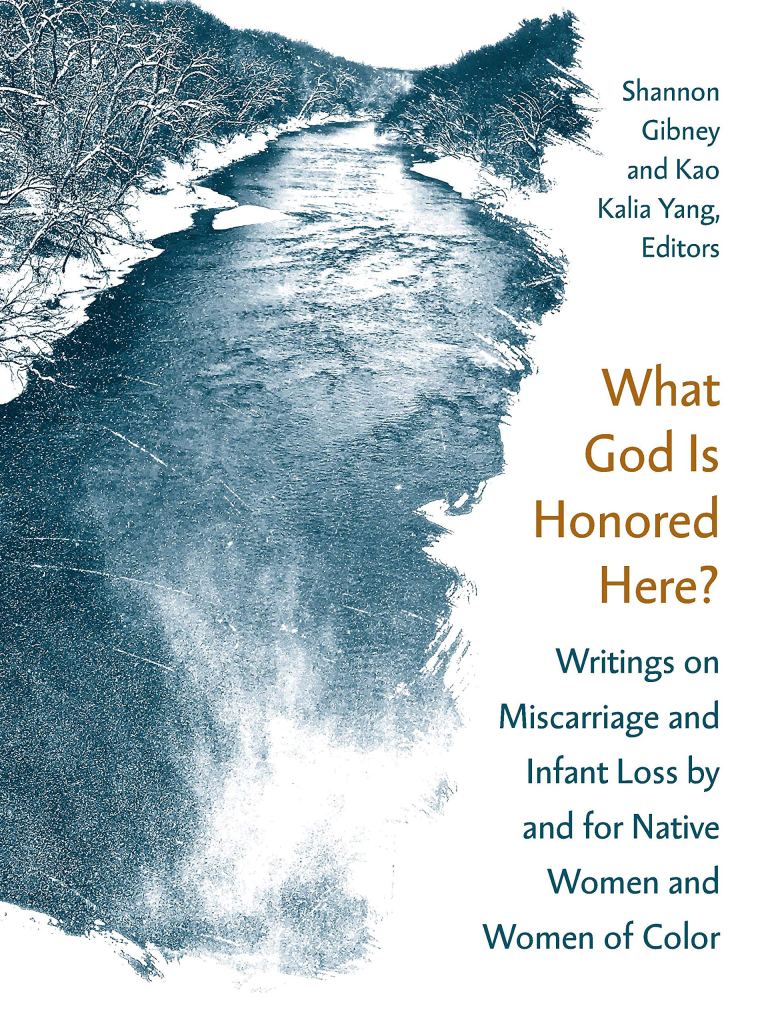
This special episode is devoted to an issue so many women struggle with, and so few people discuss. Shannon Gibney and Kao Kalia Yang, co-editors of What God Is Honored Here: Writings on Miscarriage and Infant Loss by and for Native Women and Women of Color, talk about why it’s important to give voice to this common pain.

Lara Ehrlich

Welcome to Writer Mother Monster. I’m your host, Lara Ehrlich, and this is a special episode about an issue so many women experience but so few discuss. Writer mothers Shannon Gibney and Kao Kalia Yang are here to talk about writing motherhood and miscarriage. Please share your thoughts and questions with us in the comment section, and we’ll weave them into our conversation. Shannon Gibney and Kao Kalia Yang are the co-editors of What God Is Honored Here: Writings on Miscarriage and Infant Loss by and for Native Women and Women of Color.

Shannon Gibney is an award-winning author of books of all kinds, from novels to anthologies to essays to picture books. The through line in all of her work is stories that may have previously gone untold because the speakers have not had an outlet or because the stories carry darkness and fear that we prefer to look away from. Kirkus described her most recent book, Dream Country, as a necessary reckoning of tensions within the African diaspora, an introduction to its brokenness, and a place to start healing. Shannon is a professor of English at Minneapolis College where, for over 12 years, she’s worked with refugees, ex-offenders, international and in-country immigrants, indigenous and communities of color, and students from all walks of life to tell their stories and achieve their academic and professional goals. Her children are 11 and 6, and her third child would be 7. She describes writer motherhood as “exhilarating, exhausting, hilarious.”

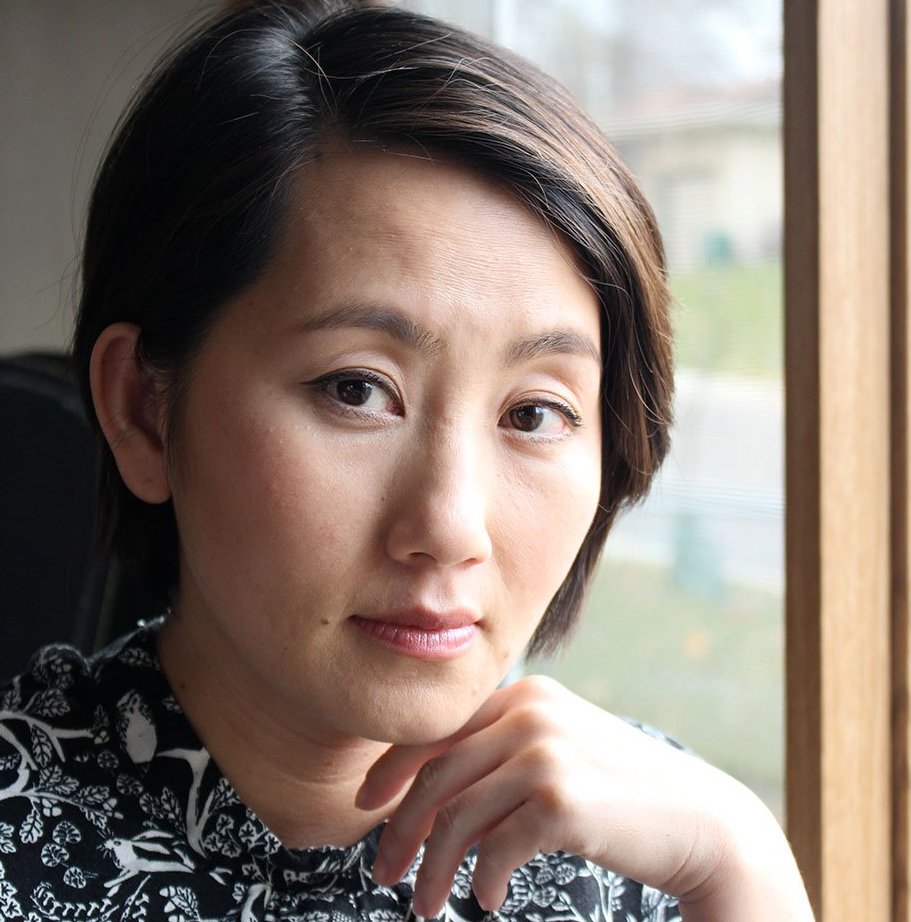
Kao Kalia Yang is an award-winning Hmong-American writer. She is the author of the memoirs The Latehomecomer: A Hmong Family Memoir, The Song Poet, and Somewhere in the Unknown World. Yang is also the author of the children’s books A Map Into the World, The Shared Room, and The Most Beautiful Thing. She co-edited the ground-breaking collection What God is Honored Here?: Writings on Miscarriage and Infant Loss By and For Indigenous Women and Women of Color. Yang’s literary nonfiction work has been recognized by the National Endowment for the Arts, the National Book Critics Circle Award, the Chautauqua Prize, the PEN USA Literary Awards, the Dayton’s Literary Peace Prize, and garnered three Minnesota Book Awards. Her children’s books have been listed as an American Library Association Notable Book, a Zolotow Honor, a Kirkus Best Book of the Year, winner of a Minnesota Book Award in Children’s Literature and the Heartland Booksellers Award. She is a recipient of the McKnight Fellowship in Prose, the International Institute of Minnesota’s Olga Zoltai Award for her community leadership and service to New Americans, and the Ordway Center for the Performing Arts’ 2019 Sally Award for Social Impact.

Please join me in welcoming Shannon and Kalia.

Kao Kalia Yang

Hello, lady.

Shannon Gibney  

Great to be here. Thanks for having me.

Lara Ehrlich

Thank you so much. Before we get into conversation, I’d love to invite Kalia to read a little bit from the book that you co-edited. A little later, we’ll hear from Shannon. Kalia, take it away.

Kao Kalia Yang 

Thank you. I’ll be reading from “In the Month of August.”

The early morning nurses and the doctors visited.

They said, “Not yet?”

We shook our heads. They put more medication inside of me.

It was noon. I could tell because there were no shadows in the room. Just the shine of the sun from the window, the wash of light from the fluorescent bulbs overhead.

I wanted to go to the bathroom. My husband helped me up from the bed. He held my hand, and we walked to the bathroom, much as we had on numerous other occasions, inside the safety of walls, within the hold of nature. He might have even swung our hands—as was his habit. Inside the bathroom, our walk was done. We stood side by side. I looked at his shoulder. He closed the door. For a moment, he held me in his arms, and the world was very far away.

He said into my hair, “You have to let go.”

My arms fell from around him.

I felt something drop in my belly, the weight I had been harboring deep inside of me, the child we had made but could not keep.

The baby came…a little boy, mouth opened like a little bird, a little boy who looked like a version of me, eyes closed, skin translucent, a little boy who weighed nothing in my arms—despite the weight, the weight of hope, the weight of humanity, the gravity of my little love story—his body was more light than anything else it could have ever been.

That autumn, we took long walks. I thought I should sit down and write. I couldn’t. The emptiness was vast inside of me. I felt hollow as the wind shifted and the weather turned. The flowers I loved started to die, one by one. The cold grew inside of me until I wished I could melt away. The contradictions in what I felt what I wanted were not lost on me. My feet meandered from the grass to the sidewalk, to the very edge of the highways, to a high bridge over water, to the edge of that very river that sliced through America, the great Mississippi River, flowing far and fast, from the future to the past.

The doctors told me that if he had been a week older, Baby Jules would have been classified as a stillbirth. They called him a miscarriage. I thought of the medical definition of the word: a spontaneous loss of a fetus before the twentieth week of pregnancy. I kept thinking there was nothing spontaneous about what I had experienced. Spontaneous in the world of writing signifies a surprise, an intervention, a positive impulse. My world of writing had nothing to do with the world I was living in anymore.

In the days after, we went through our lives, a piece at a time, looking for the parts that could hold him, a ghost baby, a dream baby, a baby that was but never will be.

I looked at autumn, my favorite season, as I had never seen it before, barren, full of bold promises waiting to die. Words made no more sense.

My annual garden, dollar-store pots full of cheerful blooms, my geraniums, marigolds, begonias, impatiens, could continue living, but I didn’t want them to. I stopped watering them. I watched them die. The blooms withered first, then the leaves started drying out in the sun and the strong winds. I thought about watering them in those final days, but my heart was so heavy I could not find the strength. What did a few more days of bloom matter when in the end, we would all die anyway?

The autumn passed between moments of life feeling almost normal, me talking to the people I love who loved me, trying to find perspective, and then other moments when I wished I had never met my husband and fallen in love with him, gotten married, gotten pregnant, when I wished I had never delivered a dead baby into the world—a baby the world would never know as mine. Then, I would cry and cry and cry until there were no more tears, until the throbbing in my head grew stronger than the beat of my own heart.  

Lara Ehrlich

Thank you, Kalia, for your bravery and for reading your personal experience here today. I really appreciate it, and I’m sure listeners do as well. According to March of Dimes, about 10 to 20% of known pregnancies end in miscarriage. It is believed that approximately 50% of all pregnancies—those might be pregnancies before a woman knows she is pregnant—end in miscarriage, and yet it’s something so few talk about, so thank you both for this anthology of women’s stories. It is such a vital resource for women who are going through this, often in silence. Tell us a little bit about your own experience, Kalia. Did you feel as though you had to suffer this loss in silence? And that’s a question for Shannon, too.

Kao Kalia Yang

No, I’m a very open person. When I was expecting my first child, it was very public. I told my friends on social media. I wasn’t hiding the experiences that I that I was feeling in my body. My mother had suffered seven miscarriages, so I knew that it was it was possible. And yeah, miscarriage is not something a writer yearns to understand from that place, and yet, it was a story that came upon me. When I went through my experience, I was so taken aback. I had no idea it was possible to love a baby in the process, and that the world couldn’t quite feel my grief with me, or there were no other places where I could express that. I went to social media. And that was how Shannon first came upon this loss. I’ve always been an open person, and there was nothing to indicate to me that I should be silent about this as well.

Shannon Gibney  

Kao Kalia Yang suffered her loss about a year before mine. I saw that post. We are both writers based in the Twin Cities. There’s a growing number of us BIPOC writers, but there’s not that many of us, so we all know each other, and we follow each other’s work. We were acquaintances, and I saw that post, and it affected me. But, of course, things affect you one way when they’re not you, and they affect you a different way when you experience them yourself.

About a year later, I was pregnant with my second child. I was 41 and a half weeks pregnant, so the baby was 10 days late. I went into labor and went to the midwifery clinic, and they tried to find the heartbeat and couldn’t find it. It was at that point that I was rushed to the hospital. I’ll read a little bit from that section later on, from my piece in the book that details what happened. But yeah, I mean, the shock of it, right? I think Kao Kalia Yang really hit the nail on the head when she said these things happen, but you just don’t think it’s gonna happen to you. There are a lot of different reasons for that, but there’s a big cultural silence around this.

Kao Kalia Yang and I, in talking about the process of getting this book together, always say that we were doing what writers do, which is looking at literature to reflect our experience as a way to start to heal, as a way to start to put some of that trauma in perspective. I don’t want to say get rid of it, because it’s still there, but each of us, in our own ways and in our own times, went looking for things—any books or movies, articles—especially around indigenous or women of color, but we were not finding things that really spoke to us. Kalia, do you want to talk about that a little bit?

Kao Kalia Yang

It was maybe about a month after Shannon’s loss. We were pregnant at the same time. Shannon was a little bit before me, but I was in the hospital. I’d put on water weight—that week was particularly hot in Minnesota—and I’d gone in to see the doctor, and they were a little bit concerned about the water weight. They wanted to know if I wanted to induce, that it was time. I did not want to induce. I turned on my social media as I was trying to make this decision, this hard decision in the doctor’s office, and I saw a post from Shannon, and it was, “If you’re pregnant, and it is time for your baby to come out, consider inducing because the risk of stillbirth goes up the longer you wait.”

Shannon’s post made the decision for me—for the delivery of Shengyeng, my second born, but the first child that came to me alive. Our stories then were linked in ways that we couldn’t have predicted. We were chatting, about a month after her loss, and she said, “One day when you’re ready, when I’m ready, would you ever want to put together something, because I’ve been looking…”—and I, too, had been looking. I’d spent a whole year looking. And so immediately, I said yes. When we’re both ready, let’s do this. And that’s exactly what we did. And that is, of course, the seed of What God Is Honored Here.

For both of us, there was no question that we had to deliver something to the world, something to the women who had experienced similar losses, something, I think, for each other and ourselves.

Lara Ehrlich

When did you feel ready to bring those stories together? How did you know you were ready? What was the decision around that process?

Kao Kalia Yang

I had, after my daughter, given birth to identical twin sons, and I knew that that was it for me. I had coded in the experience of delivering the boys, and the risks were too high. And then one day, Shannon wrote me, and we met up at my favorite coffee shop in the city from the days before this pandemic. That really was where the conversation began. Shannon had, by this time, given birth to her youngest, Mawe. She also knew that it was the end of those years. We could finally meet these stories and place them somewhere in the spectrum of our lives, in ways that we couldn’t have earlier. Before the boys, I would have never been ready to meet Baby Jules in the way that I am able to today. I think we were then ready to carry not only our own stories but the gravity of others. I think that process that happens inside when the heart flowers up, and you know that you can hold a lot more tears than you were able to before.

Lara Ehrlich

How did you invite others to join you in this book?

Shannon Gibney  

We have extensive contacts ourselves. The writing world is small in general. And then for women of color and indigenous woman, it’s even smaller. But also, we knew that there were people who maybe didn’t consider themselves writers who had stories to tell and just needed a push and some support and some access to create something powerful. We wanted a representative collection. We wanted to make sure that we had Black woman stories, Latina woman stories, Native women’s stories, Asian-American woman stories, and stories for Muslim women—not just women who identify as Christian.

We knew we wanted that, but we also knew we wanted the collection to be very strong writing. I understand that everybody processes things differently, but for me, it just increased my pain because it made me feel more isolated to encounter the stock language around stillbirth and miscarriage, like, “Oh my angel,” you know … “now she’s in heaven, and I know my heart will never be the same.”

Kalia and I are both open people—I’m a little blunter than she is, for sure, although when you get to know her, she’s very blunt in the best way possible. But anyway, when I read literature and stories, I want to be confronted with the truth, especially around pregnancy and birth and infant loss, but a lot of other things, too, like women’s bodies. I’m 46 now, and I don’t know how many more years I’ll have until I go through menopause, but that’s another thing nobody really talks about. Like, what is that actually like in your body?

There are all these things that are shrouded in mystery around women’s bodies, and a lot of it is painful, difficult stuff, so I really wanted stories that were like, no—this is what happened. This is how it felt when I was rushed into the bathroom in the hospital because I thought I had to go to the bathroom, but actually it was my baby coming out. You know, I had to balance one foot on the lever of the toilet, and three doctors rushed in to catch her, and there was blood and gunk everywhere. It’s like, I wanted that. I wanted that real visceral depiction of that, and I wasn’t finding it anywhere—and not in a sensational sense but just like this is what really happens when you go through miscarriage.

We have a piece in here about sudden infant death syndrome, which is also horrifying and very sad. Rona Fernandez, the writer, just depicts that so vividly, and it breaks your heart, but it is incredibly welcome. So, that’s what we wanted. We put out a call, and, I mean, it really wasn’t that laborious, in terms of trying to figure out what pieces we need to make this a multifaceted collection.

I will say I’m glad I had a partner like Kalia. A lot of people have said to us, “Oh my gosh—how could you go through all those stories of women losing babies?” I’m not gonna say it was easy, I’m certainly not going to say it was fun, but I will say I felt called to do this work. That’s the kind of writers that both Kalia and I are, and I think it would have been too much for one person. I really do. I’m very grateful that I had somebody like Kalia to walk the journey with me, and it brought us closer together—definitely much closer together. We’re really close now.

Lara Ehrlich

Could you talk about the process of editing the stories while respecting the voices of the women who contributed—the logistics of word choice and narrative structure, all the craft parts of the stories that feel like they could possibly be antithetical to the raw emotion of the women writing the story. But first, Kalia, did you have something to add to what Shannon was saying?

Kao Kalia Yang

I do. I think one of the most important things about this journey for me—and I think for Shannon—is knowing that we were not alone. In putting together this book, we felt our togetherness rise. That was one of the gifts of this experience. For all of the hurting, there was in that so much hope and so much beauty, especially at those early launch events.

In terms of the editing, I think one of the hardest things to ask was for our writers to linger. There were moments, and we knew those moments are so real, when a writer wants to run fast across a landscape of trauma or grief. One of the hardest things we had to ask contributors was to just slow down. And some of them said, “I need more time,” or “every time I try, all I find is tears, all I find is space.”

What Shannon and I had to do was ride that very fine line between being sensitive to the needs of our writers but also guiding this project along. Because we were a group moving in concert; we’re going to the same place, and we could only make it there if we didn’t lose anybody along the way. I think that’s really where the generosity of Shannon’s heart, and the patience of my own, were able to come together.

So, beyond just the word choice, Lara, beyond the level of the language itself, we wanted to give them creative freedom in terms of crafting the thing, so Shannon and I didn’t mess too much with structure. There were parts where we wanted them to linger, parts that needed to be cut a little bit here and there.

This was not a book Shannon or I would have voluntarily said we wanted to write or edit. And yet it was the project that had fallen upon us, as writers. I think when we said we would do it, there was a kind of responsibility that we were taking on, that neither Shannon nor myself wanted to take lightly. That was the hardest part, definitely—I don’t know if Shannon would agree, but I suspect so: asking people to linger.

You know, when you say the face of miscarriage: the baby dropped into your hands, what happened? Soniah Kamal, one of our contributors, wrote that while the baby dropped through her hands, the baby’s body slipped her fingers, but the head was still there, the head the size of a quarter. And what to do with the face of your baby? That question was the question that Soniah wanted to run by. And that was what I asked her as an editor. And her courage astounded me, at the thing she wrote. Shannon and I, you know, our hearts pause for a bit of time. What was it for you?

Shannon Gibney  

Yeah, I mean, the amount of bravery and brilliance; all our contributors in the collection pushed us through the really hard parts. And that doesn’t mean there weren’t moments, especially when the book came out, where people had differing responses to certain descriptions of things. People maybe got activated by some kind of discussion, and we had to work through some things, so I don’t want to be romantic about organizing with BIPOC folks because I do a lot of work in that area. I think that just makes things harder in the long run. People are people, regardless of our racial and cultural backgrounds, and regardless of what we’ve been through and made it through and what we carry with us and what we’ve let go of.

We sort of talked about the process of making the book and certainly afterwards, too, because now we have a whole group that we keep up with and share information and good news, stuff like this. People want to jump on and watch and comment and whatnot. We often say that the process of putting the book together is sort of like a template for processing trauma, in a lot of ways.

Kao Kalia Yang

And I’ll just add, Lara, there was the violence of what we had experienced, and then there was the violence from, in so many ways, white majority culture. From the very onset, when we published the call, we got personal messages from white people saying, “Why are you isolating us? Why are you excluding us?” And then, when we got the submissions, white men submitted, and we, as women of color editors, made decisions. We said, I’m sorry, your piece is not a good fit for this collection. We got pushback, and that continued on right to the evening of our launch event. There was a person whose social media icon was a rifle, and they posted in the launch page.

There were all of these forces that we were contending with, beyond just the experiences that we’ve undergone or the experiences of collecting these voices into this collection. We were also meeting certain forces in the majority culture along the way, where Shannon and I understood that there always a measure of risk that we were taking.

I think at every point, the writer decides who you want to be, whether you’re going to give in to these bigger forces that are trying to push down voices and presences like yours, or while you take up that space, and you do so with dignity. And every turn, Shannon and I didn’t respond personally, but we chose to do the work that was before us as courageously as possible. In that way, you’re the process, and you’re the courage that it took to undertake such a project and to carry through with it.

Lara Ehrlich

That’s unsurprising but devastating to hear at the same time. Can we talk a little bit about the need for a collection like this to be by women, specifically? A man’s story about miscarriage, of course, is heartbreaking as well, and there’s a pain and a loss there—but this is a collection for women. Could you talk a little bit about the need for women’s stories of loss and giving voice to what happens in a woman’s body? Shannon, you talked a little bit about the language surrounding that. We could talk a little bit about guilt and shame and the way women’s bodies are portrayed in literature generally. Shannon, during our planning meeting, you talked about how women’s bodies are often objectified as sexy or desirable. Is there a place for women’s bodies in other iterations?

Shannon Gibney  

I have a lot of favorite movies for a lot of different reasons. In Bridesmaids—Kalia and I bonded over this random scene—they’re all trying on bridesmaids’ outfits, and then they discovered that they’ve eaten this really bad meat at this Brazilian restaurant, and this disgusting, hilarious, revolting scene ensues, where everybody just starts vomiting and diarrhea. And Kristen Wiig, in an interview talking about it, was just like, you know, women are just not really allowed body humor, like full body humor. She’s like, I just wanted to do a full-on bash, unapologetic, woman’s body humor scene. I think that’s one of the reasons why I just love that scene.

That ties into our conversation here because I do feel like there’s these very particular ways that women are embodied in popular culture, and in American dominant discourse. We’re allowed to be objectified sexually, certainly, and in this cult of motherhood, as long as all your buttons are in a row, you know, you can be a mess, but you can’t be a grotesque mess. We don’t want to hear about the fluids. We don’t want to see the fluids. We know that miscarriage and infant loss and dead babies happen, but we don’t really want to know about how that happened in the body and what that feels like and what are the ramifications of that, in terms of recovery and all this stuff. We really don’t want to hear about that as a culture.

I think Kalia would be a good person to talk about the domain of white men in the genre of memoir. It’s just been so dominant for so long, and that definitely is something we want to shatter.

Kao Kalia Yang 

Shannon’s absolutely right. And I think it’s important for us to say, as women, and to speak to the truth of a bigger world: maternal health is incredibly understudied. When cars get into accidents, airbags are tested on men dummies, not women. Across the board, when you start talking about marginalized women and their health care, there’s the start of studies, but even on the level of women, we’re less than 30% of all of the research that is done about how safe it is to be in our cars or how medications affect our bodies. We’re under-thought and under-considered—in literature, yes, but also in the medical industry.

For Shannon and I to put together this collection, we were speaking to all of that, as well as the history in this country and other countries, about women and children and the separation. I’m thinking immediately about what’s happening at our southern borders. I’m thinking about the Hmong refugees and what happened in Laos. The Central Intelligence Agency of the United States of America came, and said, “We want your children to fight the war”—8, 9, 10, 11 years old. Americans did not make army boots for children. And every time a bomb fell, because Laos is the most heavily bombed nation in the world, only the world didn’t know it, it was the children whose boots fell off their feet first. That’s how people knew that they killed children.

In the African American context, we have this history of slavery. And then, of course, now the school to prison pipeline. There are so many reasons why women are separated from their children in this country that we as a country have never reckoned with.

This book brings all of that grief into focus. Beyond experiences of miscarriage and infant loss, we’re talking about all of the forces that have created all these divisions, all the sad, broken mothers, mothers who have to be stronger than they are to hold some idea of family and legacy. I knew at the onset that we were tackling all of these things. By focusing on the very specifics, we speak to the universal. And so that is exactly what we’re doing here.

I have younger sisters who are in graduate school, and they read this book, because I co-edited it, and one of them had been a women and gender studies major, and she said, “I wish we had a book like this. College women need books like this.” This is also what happened to our bodies. And the fact is, as a women and gender studies student myself, there were no such books in my experience, so there are all of these secrets that we are forced into hiding from each other, from other women, all along the way. Part of the work of this project is to begin to make some noise. We need representation in research. We need representation in literature. But more importantly, we need you to understand that our lives are important to the whole of this operation. The human experiment.

Lara Ehrlich

Thank you. You’ve just got me streaming tears here. Sorry. Shannon, go ahead.

Shannon Gibney

My mom, who’s a former therapist, always says we’re a grief-averse culture, and most western cultures are. We don’t want to deal with grief. I don’t want to appropriate Hmong culture, but it has ceremonies and outlets in place to help people productively channel their grief in a way that we don’t culturally have in mainstream American culture, and that has all these ramifications. You can’t let go of something if you haven’t had it moved through you.

Lara Ehrlich

Shannon, something else you mentioned in our planning session was that women as caretakers protect others from our own pain. Can you talk a little bit about that, about what our conditioning as caretakers sets us up for when experiencing loss like this?

Shannon Gibney  

It looks like Kalia wanted to say something.

Kao Kalia Yang

I was just thinking about how, yes, we have rituals in place, but in this pandemic, all of those rituals for grief have been effectively obliterated. We cannot grieve together. That is the essence of communal grief, and we cannot grieve together, so I think about that and about the layering of that for women who have undergone miscarriage and infant loss in this pandemic. These are the undercurrents of our existences. They’re not on pause because we’re going through something else right now. I cannot begin to conceive of what it must have been like for so many women who’ve experienced loss at this time, when our focus is on the magnitude of this big thing and all of the tests related to COVID that we are suffering from. Also layered and complicated is that onion of womanhood that nobody really wants to peel back the surface of. I think this speaks directly to the responsibilities and goals of so many women as caretakers.

Shannon Gibney  

Totally. Thank you for that current contextualization. I was just reading a story in the Washington Post, talking about grieving from the perspective of psychologists and therapists, and I’ve definitely seen it with my friends who have lost loved ones during the pandemic. It just makes it so much harder when you cannot say goodbye and gather with people.

So, the book launched in October 2019, so we had probably a good six months of events at bookstores. We have a really vibrant book industry and bookish culture here in the Twin Cities that’s very supportive. The audiences were always smaller than we thought they might be—again because this is such a difficult topic, I think, for folks to embrace—but there was one woman I remember, an older white woman who came up to me after I read my piece, and said, “You just said it. You just said, ‘The baby’s dead.’” She looked like she was in her 60s, maybe. She was like, “I never felt like I could say that, just say what happened. I had to sort of dance around it delicately—she didn’t make it, we lost her, or she’s in heaven now. I never could just lay out the bare truth of my baby died. She’s dead. Because I knew that other people couldn’t handle it, and I had to take care of them and their emotional needs.”

And it just struck me. I mean, I felt like in this process, so many older women have come up to us and shared these stories. Earlier times, when our culture was even more closed about these losses than we are now, and just the added layers of grief that that created for them, that they are still working through, because a woman is never going to forget a baby that she’s had ever, no matter what the outcome is. A friend told me her mom was on her deathbed and wasn’t ready to go. Everybody has different belief systems, but she saw her child that she had lost, her baby that she had lost, and then she was ready.

I’ll read just a little bit from my piece. It’s called “Sianneh: The Trip Was Good.”

I don’t want to be here.

I lie down on the bed.

The doctor sits on the chair beside me. She squirts some transmission fluid on my raised stomach, and an image of a baby lying on her back, feet up, comes onto the screen. The baby is not moving. The baby has no heartbeat.

Two more doctors come into the room and stand next to [my midwife] Amy, who is seated in the corner.

“Okay,” says the doctor with the ultrasound probe. “So yes. The baby has no heartbeat.” She puts the ultrasound probe down and stands up.

I look from her back to the screen, and the baby still isn’t moving. “Okay,” I say. I want to ask her how to get the heartbeat started again, but some part of my brain is telling me not to say that.

“I’m sorry,” she says. “I’m so sorry.”

I look to Amy, then each of the three doctors beside her. Discomfort drains their faces, though I can see they are trying hard to mask it. I wonder how it feels to have to tell a woman something like that and then still be expected to remain professional. It must not be easy. I asked if I can go to the bathroom.

Once inside the bathroom, I grip the sink until my knuckles are white, and stare into the spotless mirror. The woman looking back at me has dark -brown eyes that hold nothing. What was once a sharp chin is now round and plump. Her hair freezes all over from the humidity. I turn on the faucet as high as it will go, and flush the toilet. Then I scream. The woman in the mirror screams and lets go the sink as she does it. She wonders if she is just a copy of herself today, and if her real self is back at home, washing dishes. She does not want to go back into the patient room, because she knows they will tell her what she has to do next, and she does not want to know what she has to do next. She does not want to leave the bathroom, because she will have to say to her husband, Our baby is dead. She does not want to call her mother, because her mother will cry, and nothing will make her stop. She does not like to see or hear her mother cry. She will have to rewrite the story of the pregnancy, and the baby coming, the happy house, her young son so eager to be a brother. Now the story will center on a chapter in which the eagerly awaited baby dies in utero, never to be cuddled and warmed in her arms, never to scream and demand a diaper change, never to suckle her breast. The woman does not want that story. She is not ready for it, for what it will mean—not just now, today, tonight, but forever, for the rest of her life. The weight of that story could crush all other stories of her life and the lives of those she loves. She does not want that. She is too tired, and she wants to sleep. She wants to awaken.

I place my hand on my belly and tell my baby I love her. Then I open the door. I shuffle slolwy back to the room, telling myself this is real with every step.

“What do I have to do?” I ask them.

Lara Ehrlich

Thank you, Shannon. It seems like an obvious question to ask, and I know that you both have been asked this question. You’ve told me that people ask you, why can’t you just get over it? It shouldn’t even be a question somebody should ask. I think anyone who hears your stories would immediately understand why you can’t just get over it—but could you talk about that question and the how it’s been asked of you, and why women are expected just to get over something that is so powerful?

Kao Kalia Yang

For me, the question really begins with us, not in the history books of America. When people read about American history, they read about the Vietnam War, what happened in the war to the Americans. They don’t read about the 32,000 men and boys commissioned to fight and to die on America’s behalf in Laos. They don’t write about the countless women and children who were slaughtered in that war. We are secret because the Central Intelligence Agency expected that none of us would surface from the hot humid jungle, where we felt like jungle fruit, rotting among the leaves. And yet, here I am.

People ask me all the time, who are you? And where are you from? And I try to explain, but nothing makes sense until I talk about that war. Nothing makes sense about how I am and who I am until I speak to the undocumented. The same is true of my miscarriage, who I am as a mother, who I am as a wife, who I am as a daughter, who I am as a friend, who I am as a human being.

My husband and I go back to this very, very tiny moment. Three months after the miscarriage, I go to my mom and dad’s house. My mom had seven miscarriages after I was born, but I’m sitting on their toilet, and I’m not crying, but I feel liquid on my thighs, and I looked down and I noticed that it’s the milk coming from my chest, from my breast, that without a baby, my body is creating a substance that falls in the wake of my tears. And I start crying because I don’t know what to do and I don’t quite know how to navigate the moment. I hear this gentle knock on the outside of the door, and my mom says, “I’m here.” And that was enough. You know, that was enough. I knew what was waiting for me when that door opened.

In many ways, I imagined that one day when I’m very old, when my children are grown up, and if I don’t remember any more, that this book here means that when I opened that door, there will be someone there who understands, there will be someone there that gets at the heart of who I am. Why is this book necessary? Because I know that that door opens for everyone, and when it is my turn, even if I don’t remember any more, I wanted to remind me of myself—what it has cost, what it has given, what it has granted, in this experience.

Shannon Gibney  

There are so much many parts to that question. Because it’s not about getting over; it’s really about acceptance. What is real? This really happened? No. I grew this person inside of me, and they died before they came out, and that is something that is written in my body forever. It’s written on my soul, and that’s not something I have a choice about. I have a choice about whether I share how that affects me, which is really what that question is pointing to. I don’t want you to share this with me because it makes me feel pain, and I don’t want that, which is a normal human response. It’s misguided. There’s no way you can avoid pain as a human being. Plenty of people who try usually end up with other problems, like addiction but no meaningful relationships in their lives. It just doesn’t work.

And the thing about it is, the reason why I feel pain, such searing pain that cleaves you, just cleaves you, is because of the immensity of the love that I had and still have for my daughter. You can’t have one thing without the other. You just can’t. That’s the problem with this whole grief-averse culture. Oh, I just want to be happy. Well, then you’re gonna have to be sad sometimes. That’s just the way it goes.

People always comment on my two living children, how they always mention their sister all the time. I’ve got a sister—oh, but I’ve got another one. She’s just dead. To him, it’s just a fact, right? He loved her and she’s not here now. And they make up all kinds of stuff, like if she were here, we’d have to get a bigger car. It wouldn’t be enough. We’d have to get another bedroom. There wouldn’t be enough room for her. “She’d probably laugh at that joke because Molly laughed at it”—you know, whatever, all this stuff.

My mom was talking to my son recently. They were making this book project together. And they had a whole two-page spread about her, and my mom was like, “Some people don’t like to talk about people they love who have died.” And she said my boy’s face just fell, and he was like, “Why?” And she’s like, “Because they don’t want to feel sad.” And he’s like, “But she’s my sister.”

It’s just a question that doesn’t have a response because it answers itself. Like, why did you walk here? Because I walked here. Why do you love me? Because I love you. In the Buddhist tradition, we call it a Kōan. Like, there is no answer.

Lara Ehrlich

That touches on something I’ve always wondered about: the traditional three-month period where you aren’t supposed to tell people you’re pregnant, in case you lose the child. I remember telling just my closest family that I was pregnant; I wanted the people I loved and who loved me to know I was pregnant so that if I lost the baby, they could gather around me and support me and help me through it. Although I didn’t tell my boss or my friends or anyone else beyond my family, if I were to get pregnant again, I think I would tell everyone widely, as soon as I knew, for just that reason.

That goes back to the ruling last week in New Zealand, where women now have a grieving period when they’ve suffered a miscarriage. Why that isn’t the norm in the United States probably goes back to ingrained biases about health care and women’s health. What I’m getting at is: What do you both think about that three-month waiting period? And do you agree with me that it protects others from the possibility of your pain, and then ostensibly puts you in a position where if you suffer loss, you’re suffering in silence?

Kao Kalia Yang

I think one of the most beautiful things about that is that it acknowledges there is a loss to begin with. That is still a question. How many months? How many weeks before a loss becomes valid? Women will say, “Oh, but mine is nothing like yours.” Or it was too early. There was this whole discomfort around the language. What is valid? What are we allowed to feel in the space and time of three months, acknowledging that we’ve suffered something and that our hearts our body need time to gather itself? I think that is the gift of an acknowledgement. It is kind of the opposite of what goes on in this country, in so many countries, where we’re expected to continue with life, as if that part of our living bodies had never happened.

Shannon Gibney   

And also, a lot can happen any time. I mean, my case, I’m one in a million, right? There are women who have all kinds of predispositions toward dangerous birth outcomes and all kinds of things. I wasn’t one of them. I was in perfect health, nothing was wrong, and I lost my baby 10 days after she was due. She was a full-term baby. I hate to tell people, but it’s a myth. It’s this mythology, right? It’s sort of like, “Oh, is it safe after three months?” It’s like, no. Then it gets to, well, who are we really protecting here?

Lara Ehrlich

Yeah, it’s not something you hear about in childbirth classes or when you go to the hospital tour. In my case, they didn’t even talk about the possibility of a C-section. It was all, like, “Oh, but none of you probably will need to worry about that.” Of course, most of us probably need to think about what would happen if we needed a C-section. I’d rather know. And, of course, miscarriages are never mentioned in any of those classes. Then you’re left trying to seek out your own support and resources after the fact, when you’re least equipped to do so. Kalia, you mentioned early on that you wanted to talk about how this experience has changed you as a writer.

Kao Kalia Yang

I’ve always loved languages. But when I suffered the loss, the baby who died inside of me, when it was time for me to write again, I had the hardest time trusting words. It was as if the language itself had betrayed me. All of the beautiful words that I stored inside my heart for a time when I would need it, none of them were able to do the job.

It took having Shengyeng, and I want to say this because it is true. If I had never had Shengyeng, if the baby I lost was as close as it came for me, that experience would be fundamentally different in my life. But because there was Shengyeng, I remember when she was first born, I was holding her feet in my hands, and I could feel the throbbing of her heart, and I remember being, perhaps 6 years old, and holding a little bird for the very first time and feeling the beat of the bird’s heart. Something inside of me was able to fly again, because of her. But the flight was now so much more treacherous than I had ever imagined. I knew the fragility of life in a way that I couldn’t have conceived of. And now I think whenever I write, I write from this place, that cherishes life so much more than before. Before, life was this gift that I’d been granted and I could explore in any way that I wanted to—run across its terrain, jump and fly, whatever I wanted to do, dig if I wanted. But now there’s this kind of gentleness with which I approach all living things, because of the loss of the living thing inside of me, because of my own fragile life in the days after. There were so many moments when, if I closed my eyes, I believed I could slow my heart. And I believed I could die right along with my baby. Just close my eyes and slow everything down. I never knew that could happen before. And now because I know that, that informs everything I do on the page, the sensitivity of my touch, the gentleness of my regard for everything that lives; how hard it is to live. I wanted to speak to that, how we are forever changed by our experiences, and how these experiences enable and embody so much of who we are across the realms of our lives.

Lara Ehrlich

Thank you, Kalia. Shannon, same question to you.

Shannon Gibney

I’m a very high-functioning person, and I couldn’t do anything for like, two months, maybe more. My best friend flew out from New York, and she organized my friends here into different tasks. People brought us food, people took out the trash, people washed dishes, people picked up my son and dropped him off at daycare. I literally could not do anything, and my body was healing, but my mind was not there. It took time for me to come back to language, to the written word. I, too, couldn’t write for a while, which is really hard because writing and reading are a really a big part of how I make sense of the world and my experience in it. So that was hard. I wasn’t scared about it because I knew it would come back when it was time.

I think the experience has made me a different kind of parent, too, because when you’ve had a loss like that, you know how fragile and lucky you are for all the life that you have. With my next pregnancy, it’s like hyper-vigilance, to an unhealthy level, when she was in utero and after she came out. Both my children. I will check on them even still now, when they’re sleeping. I just want to make sure they’re breathing and there’s no problem, because it can just be snatched away from you, at the smallest moment and when you’re not looking or maybe even when you are. It’s not up to you, at a certain level, and is therefore terrifying and also humbling.

I feel deeply that if you’re writing and you’re not telling the truth, I don’t know why you would write. We can’t choose the truth that we’ve been tasked to document. That’s what has been given to us, and sometimes it might feel too heavy, and sometimes it might be too heavy, but that also is how it is. I feel like it’s changed me in so many different ways. Certainly, before becoming a mother, I wasn’t writing about motherhood. And certainly, before stillbirth and pregnancy loss, I wasn’t writing about that or even really thinking about that. And those are definitely huge. They become huge parts of my writing.

Lara Ehrlich

Thank you both so much. Kalia, do you have anything final to add?

Kao Kalia Yang

Just want to say thank you for having us. And Shannon, I want to say this to you. I don’t think I’ve ever formally said these words aloud. Your grace and your generosity as a human being, as a mother, as a friend, and a sister has been a gift to me, not only in the making of this book but in making the world softer and gentler. We know what’s going on across this country. You know, particularly with AAPI hate presently. But even in this moment, your friendship and your generosity has somehow made everything easier. It’s easier for me to go outside among strangers, because I know there are some strangers like you in the world. I wanted to say that to you, that yes, our journey began with What God Is Honored Here, but our journey travels far beyond that. Thank you both.

Shannon Gibney  

Thank you, Kalia. Kalia is as gorgeous a speaker as she is a writer. I think that that’s the other gift of this project. I have a soul friend, and that’s also somebody that has your back, too. And there’s, unfortunately, far too few examples of that for African-American women and Asian-American women. Kalia and I both talk about our friendship publicly, because we want a model that for other people, what the possibilities can look like.

Privately, in our own friendship, it’s like we just try to support each other, professionally and personally. Sometimes, it can be very hard being a woman of color writer. Being a writer is hard anyway, and then if you come from a historically marginalized community, it’s just another level of difficulty, so we really try to leverage our resources and our knowledge and our connections, so I just also want to thank you, Kalia, for being this real light in my life and through this process.

And, Lara, thank you for having us on for this really important conversation. We appreciate you making the time.

Lara Ehrlich

Thank you both for joining me, for your honesty, for your advocacy for your book, and just for yourselves.

Jennifer Chen Transcript


Writer Mother Monster: Jennifer Chen

March 25, 2021

Jennifer Chen is a freelance journalist who has written for the New York Times, O: The Oprah Magazine, Real Simple, and Bust on subjects ranging from emotional labor and pro wrestling to miscarriage and the Stop Asian Hate Movement. She has an MFA and BFA in dramatic writing from New York University’s Tisch School of the Arts, and is an alumnae of Hedgebrook, a women’s writing residency. Jennifer lives in Los Angeles with her TV-writer husband, twin 5-year-old daughters, and a snorty pug named Chewbacca. She describes writer-motherhood in 3 words as: “longest shortest time.”

Lara Ehrlich

Hello, and welcome to Writer Mother Monster. I’m your host, Lara Ehrlich, and our guest tonight is Jennifer Chen. Before I introduce Jennifer, thank you all for tuning in. You can watch this interview as a video, listen to it as a podcast, and read the transcript on writermothermonster.com. And if you enjoyed the episode, please consider becoming a patron or patroness on Patreon, starting at just $3. I’ll send you a Writer Mother Monster pin.

With no further ado, I’m excited to introduce Jennifer. Jennifer Chen is a journalist who has written for the New York Times; O, the Oprah Magazine; Real Simple; and Bust on subjects ranging from emotional labor and pro-wrestling to miscarriage and the Stop Asian Hate movement. She has an MFA and BFA in dramatic writing from New York University’s Tisch School of the Arts, and is an alumnus of Hedgebrook, a women’s writing residency. Jennifer lives in LA with her TV writer husband, twin 5-year-old daughters, and a pug named Chewbacca. She describes writer motherhood in three words as “longest, shortest time.” And as always, please chat with us in the comments section, and we’ll weave your comments and questions into the conversation. Please join me in welcoming Jennifer.

Jennifer Chen 

Hi.

Lara Ehrlich

Thank you so much for joining me. Let’s just jump right into the early years of mothering twins!

Jennifer Chen

Well, it was really just figuring out how to be a mom to two babies but also how to continue writing. My agent told me that she was leaving a month before I found out I was pregnant with them. So, I was like, oh, I have to find a new agent, but I’m also gonna have babies. It just totally threw me off. That was the curveball. Originally, I was like, okay, well, I’ll write a new book. And it took a really long time to write that new book. I probably finished it two and a half years later.

I asked my writing teacher, “What do I do? How do I still write when I have these babies at home?” And he said, “Could you write for 15 minutes a day? Do you have 15 minutes?” And I realized when I was pumping, that was 15 minutes. I would wake up in the middle night to pump for the next day’s feeding, at four in the morning, and I’d be in my laptop, attached to my breast pump. I don’t think anything ever made it into the final book. It was terrible writing. But I was just exercising a muscle in the dark. I was like, I just need to have one, little space where my brain isn’t occupied by these two beings. And so that was what I did.

Lara Ehrlich

I remember being afraid that I would never write again. I had that feeling of “If I can’t figure out the time to write, am I no longer a writer? Will I ever be a writer?” It sounds like when you were able to make that time and finish something, even if it wasn’t the piece that you hoped it would be, that it could sustain you and keep you moving and feeling like you were a writer.

Jennifer Chen

Yes. I had a lot of fears when I was pregnant that I wouldn’t write after they were born. And then every mother writer that I asked was like, “You kind of just do it. You just figure it out in the midst of all that stuff.” I think that was really helpful to hear. I just got more creative with my time and got really more efficient. The writing self-doubt—I was like, I don’t have time for that. I just have time to write. That really helped, because I used to labor over my writing, but then it was like, I only had this small amount of time. Just write. Even if it’s garbage, just write.

Lara Ehrlich

I’m sure it wasn’t garbage. Nothing’s wasted, right? I listed all the amazing places you’ve been published, and I want to talk about the journalism side, but first, how’s the fiction side going? What happened with the book that you wrote while you were pumping?

Jennifer Chen

I queried that, and I signed with an agent in December 2019. She gave me an edit letter, we worked on the revisions, and then we were psyched to get out on submission. I think we went on submission in June or July, in the middle of the pandemic. My book is a YA contemporary, but it’s pretty dark. There’s a school shooting in it. We can always kind of knew that it might not be for everybody. I think it was especially hard realizing that nobody wants to read anything dark right now. But there was nothing I could do about that. We just had to keep going. So that book’s out on a second round of submissions right now.

This week, I’m just about to turn in a draft of a YA rom-com that I’m really excited about that I wrote last fall. I just wanted to work on something fun. It’s been really a heavy year, and I had written a lot of heavy stuff, so I was like, let me just do something for fun—for me. And then it just turned out really well. I got feedback, and I’m working on it to send to my agent, because I really want it to be a really good draft for my agent to critique. That’s where things are with fiction.

Lara Ehrlich

That’s exciting. A lot of things happening. I think it ties into something you said you particularly wanted to talk about tonight, which is finding joy in difficult times. It sounds like one way you’re doing that is by writing something fun. Can you talk a little bit about that decision to work on a rom-com and that departure from really dark fiction?

Jennifer Chen

When I was on submission, I wanted to work on something new and different, because I had been working on that book for a really long time. And also, that would get my mind off the submission process. I listed a few ideas and ran them by my agent, and she was like, “You sound the most excited about the rom-com.” And I’m like, “Yeah, I think it would be fun, and it’s an idea I’ve had for a while.” When I decided to start working on it, it was fun. I set it in Los Angeles, and it included a lot of things that I really love personally, so it felt really easy to write. I know that sounds weird to say, but it just felt like a relief.

During the day, I was researching and reading statistics and seeing the awfulness of what was happening to the Asian-American community, so when I wasn’t doing that, I was in this other world, and it felt really light and fun. I just let my brain go somewhere else for a little bit. Now that I’m rewriting and revising it, I look at it, and I’m like, “You saved me.” It really saved my mental health. I think it was the one place I could go and have fun with these characters. No one else was reading it, so it was just me. It was very humorous and light, just two kids falling in love. That felt like a really nice place to escape to, versus the reality of where we were at physically.

Lara Ehrlich

I’ve been reading a lot of romance for that reason: you just want something fun to escape to. I’m trying to write a romance, but it keeps veering into dark territory. Maybe I’m just not cut out for fun. I don’t know. I would be nice to have more fun with writing. Let’s veer into that darkness for a second, with the Stop Asian Hate movement and what has been happening. Even before last week’s shooting, you had been writing about the Stop Asian Hate Movement. Can you talk a little bit about that writing and also what it’s been like for the last week or so?

Jennifer Chen

Sure. If I could circle all the way back to March 2020, my girls were at the time in preschool, and their preschool shut down March 13, so they came home. My editor at what was then called oprahmagazine.com—now oprahdaily.com—had emailed me and asked, “Do you want to write about why “Kung-Flu” and the “Chinese Virus” is racist?” And I said, “Yes. When is it due?” And she said, “Can you give it to me tomorrow?”

If my kids weren’t home, I could easily pull that off, but this was maybe one week into quarantine, and my husband and I had to split up childcare, so my girls were with me when I was writing it. What I decided to do was write in the backyard while they played—just making sure they’re safe, while I’m going to get this draft on. I told them to pretend like I wasn’t there unless there was an emergency, and they just stared at me for a good 10 minutes, and then they were bored of just looking at me and started playing, and I wrote that piece.

I started at noon, I think, and finished at 5 p.m., and I believe it went live the next day. That was a really new experience for me. That’s not what I had done pre-pandemic, but it taught me a lot about writing something that quickly, because I also had to contact sources, I had to look up statistics, and do it all pretty quickly.

I feel like what it taught me was that all those 15-minute sessions I did when my girls were six weeks old gave me the muscle to write as fast as possible and not be thinking “I don’t know if this is good.” I just did it. I mention that because I think when people say 15 minutes a day, some people think it’s not going to make a difference. I thought that, too, but it’s made a huge difference in my life. Now an hour, to me, is very luxurious.

When that piece came out, a lot of friends and family shared it, and friends of friends, and I got a lot of not nice comments back, like, “This isn’t real racism.” And it really struck me. For the first time, I realized people don’t get how serious this is. I wrote about it again, for the same editor in July, as attacks continued, and the numbers just kept going up. That was sort of a blip on the radar.

The third piece I just turned in in February, and what was striking was that in the middle of it, I got really emotional, because I had to look at photos and look up headlines about Asian elders being hurt. That just felt really awful to look at—seniors being slashed up and bruised and beaten. I just started crying. Then I tweeted something about being sick of writing about this. This is my third story. Like, I’m mad. And that tweet went viral. I honestly didn’t think anybody would notice, because nobody had noticed the other pieces.

From that, people started reaching out to me to talk about it. I honestly didn’t think people were reading and caring. I know that sounds harsh, but I had been writing about this for a year. Then last week’s shooting, to me was really just heartbreaking. Now I’m working on a new piece. I interviewed a Georgia senator who’s Asian American, and she and I talked about what we could do to help.

What I go back to with these pieces that I’ve written is really using my platform to help raise awareness but also give people real tools to use, like these are some simple things that you can do to help. That has motivated me. It’s been really hard to write about, honestly. I can’t talk to everyone that wants to talk about it, because it’s too much. It’s really too much. It’s a passionate topic, but I also recognize I have to step away from it. That’s why I wrote the rom-com. I needed something with a really mild conflict.

Lara Ehrlich

Thank you for talking about it here. It’s important to touch on these topics, but I also want to respect that you’ve been asked to speak on this a lot, and that you don’t need to be the spokesperson for the Asian community. We’re here to talk about writing and motherhood. As you’ve been writing these pieces, specifically the first one with your daughters in the space with you, how has the writing of those pieces made you reflect on motherhood?

Jennifer Chen

That piece in particular, I had been writing in my head before my editor even asked me to write about it. I had been angry, and I think what has motivated a lot of what I’ve written about is my kids, because I want a better world for them, and why not use this opportunity? I needed to be able to feel like I was contributing to changing my daughters’ lives at some point.

It also reminded me the first days of motherhood. It felt like you were running a marathon that you’d never signed up for, you never trained for, I didn’t have the right shoes. But I got there, and it turned out really well. Being a mother doesn’t give me skills to be a better writer, but it’s taught me how to write quickly. It’s taught me to write in my head. A lot of the stuff that I’ve written has been ideas I get while I’m doing dishes or walking the dog. I let my brain go. Then I’ll get an introduction or a sentence and I’m like, oh, that’s what it is.

Lara Ehrlich

Yeah, dig into that a little bit more about the sentence or the moment when you realize this has legs.

Jennifer Chen

As a writer, I really like taking classes. I took a class called The Fast Draft Method with Lindsay Eagar, a mom of three who has written 25 books in one year. Some of those are ghost written books, but I was like, how the hell did she do that? So, I took her class. It gave me so many great tools. One of the tools that I implemented in my writing was that you can be writing all the time. It doesn’t have to be on a computer, typing everything. She was like, “When can you write yourself an email? Can you audio message yourself if you can’t get to paper?” All this stuff. She gave these little tips and tricks. Ultimately, she said to get faster at it, you just have to exercise that muscle.

That really helped me draft this book, where I ended up writing 2,000 words a day, in addition to my journalism work. I would block out something like 1 to 3 p.m., I’m gonna write 2,000 words. She had writing exercises where you would time yourself with a timer. She’d be like, “Okay, write 500 words in 10 minutes.” I feel like that kind of challenge pushed me to say I can do this. I don’t have to sit here and labor over every single word.

The best tip that came from her class was if you hit something that you want to research—like where is this exactly in Los Angeles—put in a placeholder. I put brackets, like, “find the exact address.” She said do it later. Because once you go out on the internet, and you’re looking at the map, you’re on another track. That really helped me realize I can do all that stuff later on during a separate writing session. That freed me up. I wrote that first draft in October, and I finished before the holidays and Christmas.

Lara Ehrlich

I think that’s so smart. Putting things in brackets. I do that, too. Even if it’s a scene, like, “something interesting must happen here.” It’s, of course, painful to go back and be like, oh, I still have to write something interesting. But whatever you need to do to move forward, I think, is valid. I think there’s this misconception that we have to sit at a desk with pen and paper or laptop, and that’s writing. But writing in your head or jotting something down to yourself in your phone or dictating to yourself is all writing. Anything that gets words out is writing.

Jennifer Chen

Yes, definitely. One of my friends has a great podcast with writers called 88 Cups of Tea, and she interviewed Tamora Pierce, a YA fantasy writer, and she said this. She shared this story about when she would cross the street, when she was waiting for the light to change, she would write in her little notebook. And I was like, oh my God, that’s genius. Just to take those little stolen moments. I should just carry a little notebook, or if I can’t get to something, I record myself saying it in a voice memo. All of that stuff has really added up to me realizing I have a lot more time than I thought I did.

I felt very much like I couldn’t have written that whole story with my 4-year-olds staring at me. I remember when I said yes to it, and then she’s like, “Can you turn it in tomorrow?” My brain was like, I don’t know. But I’m gonna try to figure this out. I feel like that’s what motherhood is.

I’m an only child. To have twins … I was like, I don’t know how to do this. I just remember being like, well, I would make mistakes. I mean, I fed one kid and forgot to feed the other. It was, like, 3 a.m., you know. Those things taught me that you’re gonna make mistakes, and then you have to do it over again tomorrow and figure out what you did wrong and not do it again. It taught me to be flexible. I think I was a lot more rigid about writing. My routine was I have to be at my desk with my laptop and the perfect music playlist. Now I’m like, I can do it while I’m walking. I think that’s a really great skill to have as, as a writer and a mother.

Lara Ehrlich

Let’s go back to twins for a second. And expectations. At what point did you learn that you were pregnant with twins?

Jennifer Chen

It’s an interesting story, because previously, I had two miscarriages. I very quickly knew that I was pregnant, because I tracked my cycle. I knew. My OB-GYN did an ultrasound at six weeks, because we had trouble before and were trying to figure out if this one was viable or not. When she told me there were two, two fetuses in there, I looked at her and I’m like, “I don’t know what you’re talking about.” I didn’t do any fertility drugs. I don’t have twins in my family. It just was a shock. The biggest shock in the world, really. But it was great to know it at six weeks, because that gave us a lot of time to get everything ready—even though nothing can prepare you, really, for becoming a mom to two babies. I took “how to raise twins” parenting classes and all that stuff, just because I thought I’d ask other twin parents how you do this.

Lara Ehrlich

What were some of the things you imagine were particularly challenging with twins that might have been different with a solo child?

Jennifer Chen

My husband was home for six weeks, and then he went back to work. My biggest fear was being alone with them. Because before that, they were in the hospital, I had my mother-in-law, I had other people. And then when he went back to work, I was like, how am I going to feed two babies at the same time? I was still learning how to breastfeed them. At that point, you’re feeding every three hours and changing diapers and all of that stuff.

I asked other twin moms, and I would go on Facebook groups, I had a twin mom friend who I would text all the time—that was really helpful because they’d already been there, like “I propped up one baby on this Boppy while I did the other.” I never would’ve thought of that. I made a lot of mistakes, like, oh crap, I didn’t get this bottle warmed up in time, and now my babies are screaming. But there were other women who had done it and they were helping me figure it out and gave me so many great tips. Like, how do I bathe them if I’m by myself? Strap one into a little baby seat and swap them out. Asking other moms really, really helped me. Like, why reinvent the wheel when other people have done it before me?

Lara Ehrlich

Yeah, totally. Community and support and Facebook groups, if we can find a really good one that’s non-judgmental—I think that’s so important. Do you mind if we talk a little bit about miscarriage? You’ve written a lot about that subject. Tell me why it’s important to you to write about miscarriage, about something that so many women feel shameful about and don’t talk about?

Jennifer Chen

You know, my first miscarriage, I didn’t really know that much information. I didn’t know anybody else who had gone through it, and a lot of my friends already had kids or were pregnant. When I pitched the essay to an editor at BuzzFeed, and she said, “Oh, yeah, I’m interested in reading it.” I was like, “Oh. I have to write it.” So, then I wrote it. And she and I worked on editing it.

This was January 2015. She was about to post it, and I freaked out. Maybe nobody else other than my best friends and my husband knew that this had happened, so I started freaking out, knowing now everyone’s gonna know. I was very purposeful in selling it to BuzzFeed, because they had a huge reach. It’s also men and women reading it. I really wanted to target outside of the women magazine market, because I thought more people need to talk about this than just women. But I remember contemplating pulling it. And then my husband actually said, “I think you’re going to help a lot of people. I think there are more women than you know who have gone through this and really need to hear that it’s not shameful.”

At the time, my editor was like, “If you get any comments underneath, can you respond?” It got to 700 comments. I emailed her and was like, “I can’t respond to all of the comments. I could spend all day doing this.” She and I didn’t realize that it would kick off this big thing. It really taught me that the thing that I felt really scared about was actually the one of the things that people still write to me about, and that was 2015. People still share it, because it still happens, obviously. That was the first time I wrote something that I felt really scared to share. Writing about it really helped me really release that shame.

The beautiful thing that came out of it was a lot of people emailed me. People shared their stories with me because they felt comfortable. I’m an actual stranger to them, but they wrote their stories. It was men, women, people in different countries, Scotland, India. It amazed me how many people responded and shared their stories. It made it really clear to me that everyone has a story around this and just need to talk about it.

Some women were like, “You’re the only person I’ve told.” And I’m like, oh, gosh, can you talk to your mom or a best friend? I really encouraged them, because when I talked to my friends more openly, I realized a lot of people went through miscarriages, we just weren’t talking about it. No one ever publicizes that. It’s not like people put it up on a Facebook status. I only see pregnancy photos and newborn photos. I realized, if we could just show our vulnerability, and what’s the reality and the truth, then it’s not as scary as it felt.

Lara Ehrlich

Can you talk a little bit more about that fear of publishing? And thank you for giving voice to those experiences and supporting other women in that way and advocating. You said that word shame and that you hadn’t told people, and I think, as you’ve said, that’s such a common feeling for women who have experienced a miscarriage. Why do you think you felt that sense of shame and fear surrounding it?

Jennifer Chen

I remember thinking somebody is gonna think it’s my fault, that I made it happen, that I didn’t do the right things. I really didn’t know that much about miscarriage. In high school, they teach you all sex ed and pregnancy, but I didn’t know anything about the female body in terms of when a pregnancy doesn’t go to term or the different types of miscarriage, or if someone loses a baby at 20 weeks versus six weeks. I didn’t know any of that. I felt really ignorant about my own body. It wasn’t widely talked about.

When I started opening up more, I realized there is no shame in it. But I think there’s shame when you don’t hear anybody talking about it, or when you think you’re alone and you think that you’re the only person who’s gone through this. As a writer, if something scares me, it usually means that there’s something good there. I just keep writing through it, even if it feels scary or hard.

I knew that first piece about why “Kung-Flu” and the “Chinese Virus” is racist, people were going to push back and be angry about me calling it racist. But I also felt that I’m gonna say it because I think that’s what it sounds like to me, and what it feels like. I think sometimes, my greatest pieces have come out of these places of vulnerability and shame and fear, because I think we all have that feeling sometimes on different subjects.

Lara Ehrlich 

Yeah, definitely. It’s so scary to write from that place of vulnerability. But those are the pieces that touch people the most and connect with people. Can you talk a little bit more about putting yourself out there in such a public and vulnerable way and receiving feedback from people you don’t know in those comments sections? Whether they’re writing to tell you something heartbreaking, raw, angry or violent. How do you protect yourself against that?

Jennifer Chen

That’s a really good question. Because 2015 and 2021 are very different. In 2015, I got some trolls on that miscarriage essay, some women who said it’s not a big deal and why is she crying about this, who cares. But as a public writer, as somebody who’s on social media, I do get weird comments and racist comments, and I block those people. And then, in particular, the BuzzFeed piece, and this most recent Stop Asian Hate movement piece, a lot of people reached out.

I can’t respond to every single person, so I told myself I’ll respond to the people that I can. You know what feels feasible. I think people don’t realize how many people will reach out after something’s been published. It’s been really sweet, but I can’t answer everyone. I think everybody wants to talk about it. I got very clear with myself on what I can do and what I can’t do. I still have to write, I still have to be a mom, I still have to have my own boundary of what feels good for me.

With social media, they always say don’t read the comments, but it’s part of my job to respond to people. I try to remember what my greater good is in writing the piece, especially that piece where people really push back with “this isn’t racism” or “you don’t like this because Trump said it”—all that stuff. I would respond to them and say, “If you actually read the piece, this is what I’ve laid out.” It just actually helped me write the other pieces, because that viral tweet was a response to those first comments. I think it touched a nerve and a lot of people, and a lot of people responded to me from that.

I think there is something, even if it sounds weird, in the negative comments. I can get something out of it—like this is clearly what people are talking about or what they’re fixated on, or maybe this is the next piece that I write.

Lara Ehrlich

We have a question here from Kennedy Miller: “What tips do you have for people trying to maintain that space between the public reality of being a writer on social media with the private life of your own family?”

Jennifer Chen

I’m glad for that question, because up until this point, my Instagram did include my family. After the Oprah piece, when a lot of people started following me who I didn’t know, I realized quite quickly I have to archive my posts and take my kids out of these photos. They’re super cute. And I have a million of them. But I don’t know a lot of my followers now, and I don’t feel like it’s safe. I don’t ever put them up on Twitter. I reserve that for Facebook, where the public can’t interact with me.

But I do write about my children. They’ve been in newsletters of mine; they’ve been in stories of mine. I recognize now that because of being on a platform where people want to interact with me, I don’t really want them to have access to my children, particularly because when I’m talking about racism, it’s unnerving for some people, and I don’t want them to ever use my children negatively.

On Twitter, back when We Need Diverse Books was first starting out, I tweeted about it, saying it’s great, and these trolls were attacking me and saying that promoting diversity is white genocide. They took photos of mine that I had up on Twitter and would just say really mean comments about how ugly I was, all this stuff. I decided I’m not gonna post anything personal on Twitter ever again.

And obviously, my writing is personal, but I’m not posting my photos. I don’t share my daughters’ names on Twitter. That gave me the lesson of “there’s only so much I want to give to people.” I left my Instagram with my kids on it until just maybe last week. It felt a little scarier with people I didn’t know following me and also because I’m talking about something that pushes buttons. I thought maybe I’ll just create a personal account where my friends can see photos of the girls.

Lara Ehrlich

It’s unfortunate that that has to be the case. I feel that, too, and I don’t have many followers on social media! I’m not sure I’ve ever named my daughter or shared a picture of her where her face is visible and just for those same reasons and respecting her autonomy and her privacy. And yeah, it can be a scary place, a very powerful place, but a very scary place to be on social media.

Tell me a little bit more about writing about your girls and about whether you’ve had to draw boundaries yet. I’m hearing from other writer moms who have said that when the kids were younger, it was easier to write about them, and as they got older and more willful, it becomes harder because their stories diverge from our own. Are you there yet with 5-year-olds?

Jennifer Chen

It’s interesting, because I have written a personal essay that I’m working on editing, and it’s about something very personal that happened to my kids. I really debated whether I was going to publish it or not. I didn’t intend to. I’ve been working with an editor on it, and it has been really wonderful. I went to a parenting journalist conference, and there was a panel about personal essays. They had said they usually ask their kids if it’s okay to write about them, but their kids were, like, 9, 14, 11. When I talked to my daughters and said, “I’d like to write about this—are you okay with it?” They said okay, but I also recognize they’re 5. They don’t know what Facebook and Twitter are.

So, I’ve been really hesitant, like, let me think about this. I think it’s an important story to share, but I felt like maybe I’m not honoring their wishes. But my husband said, “I think you’ll shed light on something that happens to young women and girls.” It’s been a debate I’ve been having with myself. I don’t have an answer to it. I do think, as my girls get older, I will ask them. I feel like they are obviously going to eventually read some of this stuff and be part of the world.

At that panel, they pointed out that you don’t know how your kid is going to react. You just don’t know if they’re like, cool, this is great, or they don’t want it to be out there. So that was helpful for me to remember. But they’re 5 and their permission doesn’t feel quite like they understand what they’re giving permission to write.

Lara Ehrlich 

My daughter’s almost 5, and I think about that, too, particularly right now during the pandemic, where I feel compelled to write about some experiences of motherhood, when you have a child who’s home and not socializing with other children and the questions and fears I have around that. But, just like yours, my daughter’s too young, and she thinks it’s cool that I’m writing things, but she has no idea what exactly that means. It’ll be interesting as they get older to have that conversation, the evolving conversation. And they might not care at all.

It sounds like your husband’s very supportive and encourages you, and maybe sometimes gives you that little extra push. Could you talk a little bit about that? He’s a writer as well. I remember one essay that you wrote, another very personal piece about what it’s like to be in a marriage with two writers and some tension that existed there. But it also sounds very supportive.

Jennifer Chen

My husband’s a TV writer, and he writes right now predominantly in animation, so we do very different things. Since living in Los Angeles, I do journalism and books, which is not what a lot of people are here to do. If you say that you’re a magazine editor, they’re like, what’s that? So initially, it was hard. What he’s done is very well-known. He worked at The Daily Show with Jon Stewart, he wrote an episode of The Simpsons, he’s just more recognizable. Early in my career, I didn’t have Oprah Magazine and all that stuff yet, so it was hard. I felt like no one cares what I do.

What switched for me was me realizing that I really like what I do. I love what I do. I don’t want to do what he does. I just settled into knowing these are the things I’m passionate and excited about, we can do totally different things, and it’s okay. That’s when things changed and my career started taking off more because I focused on the things I want to do and the places I want to be published.

I think now it’s really evolved into a relationship where we can help each other through some of the story stuff. He always wanted to be with a writer. He was like, “I always wanted to get married to a writer, because we’d have all these conversations.” I didn’t. I was like, I don’t want to deal with it. I don’t want to have to deal with somebody’s neuroses. But now it’s really great because I have somebody who understands when I’m like, “Oh, my God, I have to write this down.” He’s like, “Okay, go.” Or if he’s got to do something for work, it’s been really beneficial and supportive. And in particular, I think he can see the things that I can’t, and I can see the things that he can’t in his work. I think he’s always pushing me to do stuff that scares me.

Even when interviews started rolling in, I was like, I don’t want to be on them. I’m a writer, I want to be behind the computer. And he’s like, “Well, I think it helps for people to see you and to know that this is happening to a real person.” So, you know, I’m grateful. And initially, I think, my professional jealousy was over what people thought of my writing. People would say, like, “Oh, who do you write for? What do you write for?” And I always felt sort of like, oh, I’m not as good as him. But in reality, it’s just different. We do different things. It’s okay. So yeah, I am grateful to be with a writer. It’s been such a blessing in my writing life, to have someone who understands the intricacies of the creative, but also business, life of being a professional writer.

Lara Ehrlich

I love that you said that you realized what brought you joy in your career and what you wanted to be working on, and that allowed you to stop comparing what you did to what he did. I think that’s a lesson that a lot of people never learn, or it takes a long time. I think I’m still reminding myself of that every day when I meet somebody who is a writer who’s doing something really impressive. So, thank you for articulating that. Have you noticed that your daughters are picking up on the fact that you’re both writers?

Jennifer Chen

Yeah. It’s cute because before the pandemic, they were able to visit my husband’s office. Since he works in animation, there’s a lot of art up because the artists are doing storyboards, and he has a lot of toys, and they just think it’s really fun. I think they just think that’s what we do. I’m like, actually, our work is fun. I have a home office that I’m in right now and they come in, and they want to write at the desk, so we’ll write together sometimes. I think they get to see all the stuff that we do. And we talk about our careers and stuff. I think it’s important to share that with them because I love how they see the world so fresh.

I’m laughing because there was one weekend where Brendan took the girls to the playground, and I said I want two hours to just work on this book, and they’re like, “Come to the playground.” I’m like, I just need two hours to write, and when you’re done, we’ll have lunch and all that stuff. And Claire, at the time, I think was 3. She came back and she said, “Mom, where’s your book?” And I said, “I need more than two hours!” And she was like, “What?” She just was so confused. It made me laugh, because of course you don’t know that it takes a long time to write a book.

I see how creative they are in their art, and they’re reading and noticing things. It’s helped me become more joyful in my own writing. I don’t know if you have this with your kids, but we have to read the same book over and over and over and over again. I think a lot of people think children’s picture books are really easy to write, and now that I’ve had to read some of them over and over again, I’m like, no, if it’s really good, I don’t mind hearing it five times in a week. If it’s really not good, then it’s like torture.

It’s taught me that when they’re laughing, what they think is funny and what they notice on the page—and not that I aspire to be a picture book writer—but it lets me see stories in a different way. Like, that visual joke came across to you? That sort of stuff. It’s really changed my creativity, because they have such a fresh way of looking at things.

Lara Ehrlich

How do you carry that into your own work?

Jennifer Chen

Writing the book that I wrote when I was pregnant and didn’t have kids yet, I didn’t know what it was like to be a mother. I think when I was revising it and working on the mother character, who was very two-dimensional, I was able to write that in a where I now understood what it’s like. If my kid is in danger, what that might feel like. I think it gave me a depth to my writing that I wouldn’t be able to write as a non-mother. But it was more that I had an awareness that I don’t think I had before of what it’s like to be a parent.

There’s a school shooting in my book, so I was researching a lot of school shootings and reading about the parents and how they reacted. I was like, oh, I totally understand now why this would feel super terrifying to not be able to reach your kid on the phone—all of that. It just infused more reality into my piece. And I think the book came out stronger because I had that empathetic feeling of what that might feel like for parents.

Lara Ehrlich

Tell me just a little bit more about the sense of joy and play and creativity that you’re learning from your girls and watching them approach life with a fresh perspective. Can you talk about how their joy weaves into your joy and writing or how your joyfulness might impact your mothering and of your girls?

Jennifer Chen

Yes, I’d love to share just one cute story. The day that I found out about the Atlanta shooting, I had, that afternoon, spoken to college students in Texas, and they were asking me really important questions about racism, and it was a really great but tough conversation. And then I got that news, and I just felt so down and hopeless.

I like to read before I go to sleep, I think it helps my brain go somewhere else. When I went to bed, and I pulled out my book, Claire had tucked a little note underneath. And it was like, “I really like Hello Kitty” and she put Hello Kitty stickers on it. And I was like, oh my god. She had no idea, but I was having such a bad day, and I felt like this little note she left made me smile and made me remember there’s good in the world. The next day, I said, “Did you leave me that?” She’s like, “Yeah, I left it as a surprise.” And I was like, “Well, thank you, because it really made my day.”

And that, to me, is a reminder of how much they bring back to me—especially when I feel like today felt really hard. And then I come home, and we’re just being silly. It feels really nice to not always feel so serious and dark and deal with such sad things. Their silliness and their joy just make me laugh and feel hopeful.

Lara Ehrlich 

Thank you. Let’s end on a note of hope and joy. Thank you for sharing that. That’s a great story. And thank you so much for joining me tonight and for talking about some really difficult subjects in such an eloquent and insightful way. It’s been such a pleasure.

Special Episode: Writing Motherhood & Miscarriage

When I read literature and stories, I want to be confronted with the truth, especially around pregnancy and birth and infant loss and women’s bodies.

shannon gibney

(March 31, 2021) This special episode is devoted to an issue so many women experience, and so few people discuss. Shannon Gibney and Kao Kalia Yang, co-editors of What God Is Honored Here: Writings on Miscarriage and Infant Loss by and for Native Women and Women of Color, talk about why it’s necessary to give voice to this common pain.

FROM THE EPISODE: READING LIST & REFERENCES

What God Is Honored Here: Writings on Miscarriage and Infant Loss by and for Native Women and Women of Color

Shannon Gibney 

Kao Kalia Yang

RESOURCES FOR GRIEF & BEREAVEMENT

From What God Is Honored Here

March of Dimes

International Stillbirth Alliance 


Shannon Gibney

Shannon Gibney is an award-winning author of books of all kinds—from novels to anthologies to essays to picture books. She writes for adults, children, and everyone in-between. The through-line in all her work is stories that may have previously gone untold. Sometimes these perspectives have remained hidden because the speakers have not had an outlet for their stories; other times, the stories carry darkness and fear that we prefer to look away from. What God Is Honored Here: Writings on Miscarriage and Infant Loss by and for Native Women and Women of Color (University of Minnesota Press, October, 2019), exemplifies this approach, as does Gibney’s most recent novel, Dream Country (Dutton, 2018), which Kirkus describes as “a necessary reckoning of tensions within the African diaspora—an introduction to its brokenness and a place to start healing.”

Kao Kalia Yang

Kao Kalia Yang is an award-winning Hmong-American writer. She is the author of the memoirs The Latehomecomer: A Hmong Family Memoir, The Song Poet, and Somewhere in the Unknown World. Yang is also the author of the children’s books, A Map Into the World, The Shared Room, and The Most Beautiful Thing. She co-edited the ground-breaking collection What God is Honored Here?: Writings on Miscarriage and Infant Loss By and For Indigenous Women and Women of Color. Yang’s literary nonfiction work has been recognized by the National Endowment for the Arts, the National Book Critics Circle Award, the Chautauqua Prize, the PEN USA literary awards, the Dayton’s Literary Peace Prize, and garnered three Minnesota Book awards. Her children’s books have been listed as an American Library Association Notable Book, a Zolotow Honor, a Kirkus Best Book of the Year, winner of a Minnesota Book Award in Children’s Literature and the Heartland Bookseller’s Award. Kao Kalia Yang is a recipient of the McKnight Fellowship in Prose, the International Institute of Minnesota’s Olga Zoltai Award for her community leadership and service to New Americans, and the Ordway Center for the Performing Arts’ 2019 Sally Award for Social Impact.


sound bites

Writers look to literature to reflect our experience as a way to start to heal, as a way to start to put trauma in perspective. @GibneyShannon

In putting together this book, we could finally meet these stories and place them somewhere in the spectrum of our lives, in ways that we couldn’t have earlier. Before having my boys, I would have never been ready to meet Baby Jules in the way that I am able to today. I think we were then ready to carry not only our own stories but the gravity of others.

Kao Kalia Yang

It made me feel more isolated to encounter the stock language around stillbirth and miscarriage, like, “Oh my angel,” you know … “now she’s in heaven, and I know my heart will never be the same.”

Shannon Gibney

When I read literature and stories, I want to be confronted with the truth, especially around pregnancy and birth and infant loss and women’s bodies. @GibneyShannon

“There are all these things shrouded in mystery around women’s bodies, and a lot of it is painful, difficult stuff. @GibneyShannon

One of the most important things about this journey for me is knowing that we were not alone. In putting together this book, we felt our togetherness rise. That was one of the gifts of this experience. For all of the hurting, there was in that so much hope and so much beauty.

Kao Kalia Yang

One of the hardest things to ask was for our writers to linger. There are moments when a writer wants to run fast across a landscape of trauma or grief. One of the hardest things we had to ask contributors was to just slow down. And some of them said, “I need more time,” or “every time I try, all I find is tears, all I find is space.”

Kao Kalia Yang

There was the violence of what we had experienced, and then there was the violence from, in so many ways, white majority culture. From the very onset, when we published the call for contributors, we got personal messages from white people saying, “Why are you isolating us? Why are you excluding us?” And then, when we got the submissions, white men submitted. The evening of our launch event, a person whose social media icon was a rifle posted in the launch page. We were meeting certain forces in the majority culture along the way, where Shannon and I understood there is always a measure of risk that we were taking. At every turn, Shannon and I chose to do the work before us as courageously as possible.

Kao Kalia Yang

The writer decides who you want to be, whether you’re going to give in to bigger forces trying to push down voices and presences like yours, or while you take up that space and you do so with dignity. @kaokaliayang

“There are particular ways women are embodied in American dominant discourse. We’re allowed to be objectified sexually, and in this cult of motherhood, as long as all your buttons are in a row. You can be a mess, but you can’t be a grotesque mess. We know that miscarriage and infant loss and dead babies happen, but we don’t really want to know about how that happened in the body and what that feels like and what are the ramifications of that, in terms of recovery and all this stuff. We really don’t want to hear about that as a culture.

Shannon Gibney

There are particular ways women are embodied in American dominant discourse. In this cult of motherhood as long as all your buttons are in a row, you can be a mess, but you can’t be a grotesque mess. @GibneyShannon

There are many reasons women are separated from their children that our country has never reckoned with; the forces that create broken mothers who have to be stronger than they are to hold some idea of family and legacy. @kaokaliayang

Women need representation in research. We need representation in literature. We need you to understand that our lives are important to the whole of this operation, the human experiment. @kaokaliayang

In this pandemic, all of our rituals for grief have been effectively obliterated. We cannot grieve together. I think about the layering of that for women who have undergone miscarriage and infant loss in this pandemic. These are the undercurrents of our existences. They’re not on pause because we’re going through something else right now. I cannot begin to conceive of what it must have been like for so many women who’ve experienced loss at this time, when our focus is on the magnitude of this big thing we are suffering from. Also layered and complicated is that onion of womanhood that nobody really wants to peel back the surface of.

Kao Kalia Yang

After a reading, an older white woman came up to me and said, “You just said it. You just said, ‘The baby’s dead.’” She was like, “I never felt like I could say that, just say what happened. I had to sort of dance around it delicately—she didn’t make it, we lost her, or she’s in heaven now. I never could just lay out the bare truth of my baby died. She’s dead. Because I knew that other people couldn’t handle it, and I had to take care of them and their emotional needs.”

Shannon Gibney

A woman is never going to forget a baby she’s had ever, no matter what the outcome is. @GibneyShannon

I grew a person inside me, and they died before they came out, and that is written in my body forever. It’s written on my soul. @GibneyShannon

The reason I feel such searing pain that cleaves me is because of the immensity of the love I had and still have for my daughter. You can’t have one thing without the other. @GibneyShannon

When my daughter was born, something inside of me was able to fly again. But the flight was now so much more treacherous than I had ever imagined. I knew the fragility of life in a way that I couldn’t have conceived of. And now I write from this place that cherishes life so much more than before. There’s a gentleness with which I approach all living things, because of the loss of the living thing inside of me, because of my own fragile life in the days after. That informs everything I do on the page, the sensitivity of my touch, the gentleness of my regard for everything that lives; how hard it is to live. I wanted to speak to that, how we are forever changed by our experiences, and how these experiences enable and embody so much of who we are across the realms of our lives.

Kao Kalia Yang

If you’re writing and not telling the truth, I don’t know why you would write. We can’t choose the truth that we’ve been tasked to document. @GibneyShannon

There’s a gentleness with which I approach all living things because of the loss of the living thing inside me. That informs everything I do on the page; the gentleness of my regard for how hard it is to live. @kaokaliayang

Jennifer Chen

“I don’t have time for self-doubt. I just have time to write.”


(March 25, 2021) Jennifer Chen is a freelance journalist who has written for the New York Times, O: The Oprah Magazine, Real Simple, and Bust on subjects ranging from emotional labor and pro wrestling to miscarriage and the Stop Asian Hate Movement. She has an MFA and BFA in dramatic writing from New York University’s Tisch School of the Arts, and is an alumnae of Hedgebrook, a women’s writing residency. Jennifer lives in Los Angeles with her TV-writer husband, twin 5-year-old daughters, and a snorty pug named Chewbacca. She describes writer-motherhood in 3 words as: “longest shortest time.”

FROM THE EPISODE: READING LIST & REFERENCES

Where to Find Jennifer Chen
Jennifer Chen’s website
“What Pro Wrestling Taught Me and My Immigrant Grandmother,” New York Times
“Why I Don’t Want My Miscarriage to Stay Secret,” Buzzfeed

Stop Asian Hate Movement
About the movement
Atlanta shooting
Jennifer’s writing on the Stop Asian Hate Movement:
“How You Can Join the Stop Asian Hate Movement”, Jennifer’s website
“Yes, Calling Coronavirus ‘the Chinese Virus’ or Kung-Flu is Racist,” Oprah Daily
“Racist Attacks Against Asian Americans Are Still on The Rise During COVID-19,” Oprah Daily
“How You Can Join the Stop Asian Hate Movement,” Oprah Daily

Organizations
Tisch School of the Arts
Hedgebrook
We Need Diverse Books

Authors, TV Shows, Podcasts
The Daily Show with Jon Stewart
The Simpsons
Lindsay Eagar‘s The First Draft Method
88 Cups of Tea podcast
Tamora Pierce


sound bites

“I wrote for 15 minutes while I pumped. I was exercising a muscle in the dark. All those 15-minute sessions gave me the muscle to write quickly without thinking, ‘I don’t know if this is good.’” — @jchenwriter

“I don’t have time for self-doubt. I just have time to write.” — @jchenwriter

“In March 2020, my girls’ preschool shut down and my editor at oprahdaily.com asked, ‘Do you want to write about why ‘Kung-Flu’ and the ‘Chinese Virus’ is racist?’ And I said, ‘Yes. When is it due?’ And she said, ‘Can you give it to me tomorrow?’ What it taught me was that all those 15-minute sessions I did when my girls were six weeks old gave me the muscle to write as fast as possible.

I use my platform to help raise awareness, but also give people real tools to use; some simple things that you can do to help.

“The first days of motherhood, it feels like you’re running a marathon that you’d never signed up for, you never trained for, you don’t have the right shoes. But you get there.” — @jchenwriter

“Being a mother doesn’t give me skills to be a better writer, but it’s taught me how to write quickly. It’s taught me to write in my head.”

“You can be writing all the time. It doesn’t have to be on a computer. If I can’t get to something, I record myself saying it in a voice memo. All of that stuff has really added up to me realizing I have a lot more time than I thought I did.”

“I’m an only child. To have twins…I was like, I don’t know how to do this. I fed one kid and forgot to feed the other. Those things taught me that you’re gonna make mistakes, and you figure out what you did wrong and not do it again. It taught me to be flexible. I think I was a lot more rigid about writing. My routine was I have to be at my desk with my laptop and the perfect music playlist. Now I’m like, I can do it while I’m walking. I think that’s a really great skill to have as, as a writer and a mother.”

“Asking other moms for advice really, really helped me. Why reinvent the wheel when other people have done it before me?”

On writing about miscarriage: “That was the first time I wrote something that I felt really scared to share, and it’s one of the things people still write to me about.” — @jchenwriter

“I didn’t know much about miscarriage. In high school, they teach you about sex and pregnancy, but not the female body, when a pregnancy doesn’t go to term. I felt ignorant about my own body.” — @jchenwriter

“As a writer, if something scares me, it usually means that there’s something good there. I keep writing through it. My greatest pieces have come out of these places of vulnerability and shame and fear.” — @jchenwriter

“We have to read the same book over and over and over and over again. I think a lot of people think children’s picture books are really easy to write, and now that I’ve had to read some of them over and over again, I’m like, no, if it’s really good, I don’t mind hearing it five times in a week. If it’s really not good, then it’s like torture.”

Rosanna Warren Transcript


Writer Mother Monster: Rosanna Warren

March 11, 2021

Rosanna Warren has been publishing “poems of riveting, compassionate darkness and social conscience for nearly 40 years” (LA Review of Books). Her most recent book of poems is So Forth (2020). She is the recipient of awards from the Academy of American Poets, The American Academy of Arts & Letters, the Lila Wallace Foundation, the Guggenheim Foundation, the American Council of Learned Societies, and the New England Poetry Club, among others, and she was a Chancellor of the Academy of American Poets from 1999 to 2005 and is a member of the American Academy of Arts and Letters, the American Academy of Arts and Sciences, and the American Philosophical Society. She teaches at the University of Chicago. Rosanna has two daughters, ages 37 and 35, and two grandchildren, a boy and a girl, ages 6 and 3. She describes writer-motherhood in three words as “frazzled, passionate, surprised.”

Lara Ehrlich

Hello, and welcome to Writer Mother Monster. I’m your host, Lara Ehrlich, and our guest tonight is Rosanna Warren. Before I introduce Rosanna, thank you all for tuning in. You can now listen to Writer Mother Monster as a podcast on all major audio platforms or read the interview transcript on writermothermonster.com. If you enjoyed the episode, as always, please consider becoming a patron or patroness on Patreon to help make this series possible. Please also chat with Rosanna and me during the interview. Your comments and questions will appear in our broadcast studio, and we’ll weave them into the conversation. And now I’m excited to introduce Rosanna.

Rosanna Warren has been publishing “poems of riveting, compassionate darkness and social conscience for nearly 40 years” (LA Review of Books). Her most recent book of poems is So Forth (2020). She is the recipient of awards from the Academy of American Poets, The American Academy of Arts & Letters, the Lila Wallace Foundation, the Guggenheim Foundation, the American Council of Learned Societies, and the New England Poetry Club, among others, and she was a Chancellor of the Academy of American Poets from 1999 to 2005 and is a member of the American Academy of Arts and Letters, the American Academy of Arts and Sciences, and the American Philosophical Society. She teaches at the University of Chicago and taught at Boston University, where I first met Rosanna in a class called Eccentric Moderns, which we’ll talk about. It is not hyperbole to say that Rosanna was one of the best professors I ever had. And I’m not saying that just because she agreed to come on the show with me today. She also has two daughters, ages 37 and 35, and two grandchildren, a boy and a girl, ages 6 and 3. She describes writer-motherhood in three words as “frazzled, passionate, surprised.”

Rosanna Warren 

Thank you, Lara, so much. It is really lovely to rediscover you so many years after we were reading Hart Crane together.

Lara Ehrlich
Thank you so much for coming on with me today. I was telling you before the show that there were many others who were in classes with you at BU and elsewhere, of course, who are very excited to that you’ll be on the show with me tonight, so hello to all of you as well, BU friends, excited to have you and please comment and chat with us in the comments tonight. So, Rosanna, I’d love for you to read the poem that you came prepared to share with us, if you’re ready.

Rosanna Warren
I have it here at my fingertips. This is a poem to one of my daughters, so it seemed like an appropriate offering for this evening. This daughter, whose name is Chiara, is a psychiatric social worker, and she works with very, very needy people.

For Chiara

Leaves crackle beneath our feet—tinder, kindling—
as we walk by the brook, the crab-apple tree
a crimson pointilliste nimbus.
You want to hold each wounded soul in your hands.
Autumn flares. The damaged, the human berserk,
find their way to you. I don’t know how you sleep.
In the Gorgon’s blood, one drop is poison, the other heals.
Fevered autumn, autumn I adore
croons an old song. We stroll the road
scuffing dust. And come upon
a garter snake lying motionless,
its tail, we guess, nicked by a passing car.
When we nudge it, it flips to its back in an agonized S,
squirms, but can’t advance. Its belly gleams.
We edge it into the grass. Do we stop seeing
when we walk away? The brook prattles on.
Home’s far off. Dusk settles, slowly, among leaves.
That’s not mercy, scattering from its hands.

Lara Ehrlich 

Thank you. That was just as powerful as I remember your poetry and your presence as being, so thank you. And tell us a little bit more. Let’s start with that poem. Tell me a bit more about it, and why it is dedicated to your daughter, titled after your daughter.

Rosanna Warren

This poem became very important to me for the two half lines, “Do we stop seeing / when we walk away?” It just seems to me a fundamental ethical question in life, about how we acknowledge the suffering of others, whether we can acknowledge the suffering of others, and to what extent, to preserve ourselves. Maybe we just walk away, don’t want to see. I can’t speak for other people. I know that for myself, there are times when I say the story’s unbearable, I can’t read this article anymore, I can’t solve everybody’s hunger in the world. And yet, there’s the impulse that we should care for each other. My daughter who works with severely suffering people does a kind of job I could not do, to have the stress level of trying to manage caring for people who are desperately needy, and day in day out. Somehow people who do that kind of therapy and caring must develop, I think, a really extraordinary spiritual strength and psychological strength to be able to hold that suffering and continue their lives and try to help people. But I guess we all, in some way, figure out our own balance and our own way to try to acknowledge the suffering, or at least acknowledge that we’re not acknowledging it.

Lara Ehrlich 

I wish that before this interview I had revisited the notes from the class I took with you. I still have them all somewhere in the house. You’re bringing back memories of that class, because we talked about this type of issue. Yes, we looked at lines within poems, we looked at words, but we also talked about these big, philosophical concerns of humanity and the poet’s responsibility to address them. That’s something I really took away from your class. Can you talk about those two lines in the context of poetry and the importance of poetry, and the lines that you repeated: “Do we stop seeing when we walk away?”

Rosanna Warren

Well, this poem is, in a way, pretty simple. It’s an anecdote of a mother, or I guess we don’t know it’s a mother in the poem — it’s an “I” speaking to a “you” — taking a walk, finding a wounded snake, and in a sense, not doing the merciful thing. I think if I’d been courageous, I would have probably killed this snake, put it out of its misery, and I just couldn’t do it. It was cowardice. I just couldn’t, so we just got it off the road, which was the cowardly thing to do, though I’m not a vet. Maybe a vet could have saved it. But you know, we were in the wilds of Vermont and there was no better route. Anyway, it is a morally troubling scene, and painful, just painful, to see another creature’s pain and to feel implicated.

I try not to write poems that explain themselves too much. I try to have the poem be suggestive, to have the objects and actions and colors in the poem do the work for the imagination, but in this case, I allowed myself to be extremely, brutally direct: “Do we stop seeing when we walk away?” — and I’m okay with that, of allowing poems to sometimes speak very directly, if it’s not too crude.

I hoped the scene around it would make it complex enough. I think I would like poems to be unsettling in different ways, and for occasionally a line to feel like a knife stab.

Lara Ehrlich 

Yeah, and grapple with these big concerns about morality and violence and our moral imperative.

Rosanna Warren

I chose this poem when you invited me to be on this fascinating podcast because it’s something that any anybody who’s a parent has lived. Motherhood seems to be so profoundly about caring, and a deep lesson in caring.

Lara Ehrlich 

Let’s talk more about that. I was going to ask you if your daughter had read this poem.

Rosanna Warren

Yes.

Lara Ehrlich

Does she recall that moment? Or what does she have to say about this poem?

Rosanna Warren

I think she thought that it wasn’t an invasion of her privacy. I try to be really careful with my friends and family members about my poetry. Some poets take a few more liberties than I do with other people’s private lives. I tried to set some boundaries. I know my children would like me to set some boundaries. But she seemed to have forgiven me for this poem, or I don’t think she thought I really needed forgiveness for this poem. I wouldn’t think so. But I’m sure we both cared about the snake, were both upset by the snake.

Lara Ehrlich 

Absolutely. Let’s shift to motherhood for a second and talk about your children. You have two girls, both in their mid-30s now, and two grandkids. But let’s back way up, even before I knew you at BU and your kids at that time were teenagers—which is horrifying to me, that that was 20 years ago—and tell me a little bit about new motherhood. Did you always want to have children?

Rosanna Warren

That really interesting. No, I didn’t. When I was a young person, from childhood through my adolescence, I wanted to be a painter. I saw myself as an artist. I worked really hard at it. I was drawing from the age of 3. I went to art schools. I was also writing, but that was private. I didn’t see myself in a conventional family at all. I also was uncomfortable with the role of being a, quote, “girl” in high school. It was unbearable. Those awful dances. I just thought the whole thing was so awful.

Lara Ehrlich 

I’m with you there. Yeah. It’s truly terrible.

Rosanna Warren

And then you bumble your way into adulthood, and you fall in love with a few people, and you sort of try to get the hang of it. This romance stuff, when I was a teenager, struck me like a Halloween party—you had to play “girl” and put on some makeup, and thank God that’s over. But then, falling in love with somebody enough so that you could imagine having a life together, and then children emerged from that, and that just seemed so natural and beautiful. I never resented it. I just thought it was this tremendous gift—and maybe all the more tremendous because I hadn’t imagined it for myself.

Lara Ehrlich 

I understand. I didn’t either. And then, like you, it was meeting a person and then suddenly it was like, well, that just makes sense that I would want to have a family with this person. But without the person, it was just me kind of envisioning my own trajectory solo. Let’s go back to your early life because I know that you grew up in a very artistic, literary family. How did that shape you and your expectations for yourself as a writer?

Rosanna Warren

I suppose it was a piece of luck, and in some ways, not luck, to grow up in a family of writers. My mother and father were both well-known writers [Robert Penn Warren and Eleanor Clark], so in a way, that was great that I had a model of living that way. They were very disciplined. The study doors shut at nine in the morning. They didn’t open the doors until two in the afternoon. My brother and I were often in remote places in the country during the summer. We just knew that unless we had broken our leg, we were not allowed to bother our parents, so we had to figure out our own games and wander around play, which we did.

We grew up in a world where practicing an art was considered natural and not goofy. The difficulty of it wasn’t that our parents thought we should be artists—in fact, they sort of advised us against it—but when my brother became a sculptor, and I started writing more than I was painting in my early 20s, I had to deal with the social expectations of outsiders looking at me and thinking, “She’s just riding on her parents’ reputation.” In order to be a writer, in order to have the courage to go on and keep writing and publishing, I just had to ignore all that and follow the drive that I had to make these things in words. It was such a strong inner drive. I really wanted to be a painter, I tried to suppress the words, I just couldn’t.

Lara Ehrlich 

Tell me about that. What was the drive to paint and why suppress the urge or the desire to write?

Rosanna Warren

I can’t explain the drive to paint, but from the age of 3, I was drawing. And I was good at it, I think I can modestly say. I drew and painted all through my childhood and was encouraged. Also, I was born in 1953, so television existed, but my family didn’t own a television. We lived a weird, almost 19th-century life without television. When I went to school, I didn’t understand what the other kids were talking about, because they were talking about TV shows I’d never seen. I was painting and drawing and writing and playing games with my brother. I can’t tell you where the drawing came from, but it was so deeply part of what I was doing.

Then, when I went to Yale, it was a very fine art school, and I had marvelous painting teachers. Then I went to Skowhegan, which is a wonderful summer program for ambitious young artists, and the New York Studio School, so that was how I saw my life, and I was absolutely passionate about it. But the writing really did keep clawing at me, and there were things I couldn’t get into the paintings, things like saying, “Do we stop seeing when we walk away?” I couldn’t get that into a painting. That drama. So gradually, the writing took over the painting. It took me a few years. It was like a love affair, gradually dwindling and painful. When I was about 24, I realized I wasn’t painting enough to be a painter. That was painful. I still draw. I draw privately. I draw because it’s a way of orienting myself in reality, and it’s just a form of meditation. It’s not to show people.

Lara Ehrlich 

I love that, and I think others have that feeling about writing, right? Like writing in journals and so on for self-expression, with no urge to show others, which I don’t understand. Even when I’m writing in a journal, I’m thinking, someday someone will read this as part of my archives. I never quite have this sense that I’m writing for myself. I wonder what that would be like. I love the idea of drawing for yourself.

I have a comment here from Nichole Gleisner, who you probably remember, and she goes back to your parents shutting their office doors and says, “I’ve heard this described as benign neglect, and I think it can be really freeing for parent artists to cultivate this freedom.” I definitely agree, and it’s something I’ve heard a lot of the writer mothers talk about on the show. Some are very comfortable closing the door, and others are struggling with the guilt involved in closing the door to their children. And it sounds like you and your brother were able to play and to find some freedom there, but was there also any resentment on the part of you and your brother toward your parents for closing the door? And how did that carry through to your practice?

Rosanna Warren

Oh, that’s interesting. I don’t remember feeling any resentment myself as a child with my parents closing the door. It was just understood that was the way things were. They were very loving when they when they were with us. They were really with us, playing games, including us. But I know my own children missed me at times, and it was hard for them and hard for me, especially when they were little. My daughters have told me, “Mom, when you shut the door, I was crying on the other side.” I didn’t stay in the study with a little child weeping on the other side of the door, but there were tensions, which I think is partly why you have this show. This is not easy, being a mother and any kind of artist or professional person. There are costs.

Lara Ehrlich 

What was your logistical practice when you had young kids? Were you able to close the door, if they weren’t weeping on the other side? How did you balance your kids and the time that you needed for devoted work?

Rosanna Warren

I think balance might be an overstatement. I remember it more as a kind of delirium or something. I was teaching full-time and staying up very late, one or two in the morning, correcting papers or preparing class, and then getting up at six to try to walk the dog and get those children off to school. Where do you write?

I have such intense memories that maybe the mothers watching this show, perhaps the fathers, too, will have some version of this. For instance, one of the places I could try to write a poem was when I was doing the laundry. I take a big basket of laundry down to the cellar, leaving the children upstairs and their father and the dog or whatever, and I could have 10 minutes, say, in the basement, sitting on the floor with my back to the washing machine, with my little pad, and the washing machine still going behind me, scribbling in the pad. I just remember those were my laundry days. Or driving to BU and parking in the parking lot, and before rushing in to teach, giving myself 10 minutes in the car, resting the pad on the steering wheel. I have these memories so intensely, because there were times when that was all I could get.

Lara Ehrlich 

Thank you for sharing that. I feel like particularly when we talk to writers who are very successful and have a lot of work that they can show for their career, it’s hard to remember that that work wasn’t written all at once or even at a desk. I think there’s that perception of sitting at a desk behind a closed door, working from 9 a.m. to 5 p.m. or whatever it is, and so many women I’ve spoken to have said, much like you did, that they write or did write when their kids were younger in the laundry room or in the car or while on walk, those carved-out spaces. You clearly got a lot accomplished in those carved-out spaces, but maybe not all at one time. You didn’t certainly write an entire book in the laundry room during one sitting.

Rosanna Warren

No. But I also was lucky in that I got some leaves from Boston University. I’m very grateful to Boston University for so many reasons. For one thing, they took a chance on me when I was young, and I don’t have a Ph.D. They really took a chance on this young whippersnapper, would-be writer, and gave me a chance to see if I could teach and be useful. And I tried to be useful. But also write books. I was grateful to BU for giving me leaves, and I’m very grateful I got some grants. You mentioned the Guggenheim, which was in the American Council of Learned Societies. Those were just absolutely blessed opportunities to buy me out for my teaching time for a year or a half year.

The Guggenheim was 1985, and that, too, was life changing. I was trying to write a biography of the French poet Max Jacob. The book that I started in 1985 just came out in 2020, if that gives anybody courage to keep on going. I dragged a 6-month-old baby and a 2-year-old to Paris on a Guggenheim, which … it’s prestigious, but it’s not much money. I lived in a dark hole next to the Bibliothèque nationale de France, and I had with me a very wonderful ex-BU student, who was sharing our difficulties on a tiny, little stipend and the chance to be in Paris. She took care of the kids for four hours a day, while I ran to the library or did interviews and rushed back so she could go off and do whatever she wanted in Paris. I think it’s insane, when I look back at what I did, dragging a baby and a toddler to Paris. We all survived. And the book came out in 2020, for God’s sake.

Lara Ehrlich 

It’s amazing. Congratulations. Heather Liz in the chat says, “I find children tend to accept absent fathers who are not around or shutting the door for their work. My own various-age children still hold a double standard for me and my writing versus my spouse.” Did you find that? Tell us a little bit about your spouse and what that working relationship was like.

Rosanna Warren

Well, I should say, I am now divorced, but not because of that. We had a very good marriage for many, many years. My spouse was also a professor at Boston University in Classics. We were both harried, exhausted, passionate teachers, writers, scholars, and I felt we were really in it together, supporting each other, so that was great. That was not a problem.

Lara Ehrlich 

I see Heather asking about children’s perspectives, when they’re old enough to voice them, about their mother’s or their father’s absences. Heather adds, “It’s infuriating to know that my shut door hurts more than all the hours my spouse is gone, engaged in work.” I wonder that about my own daughter. Will she weigh my absences more heavily than the time that my husband goes to his job? Without getting too much into your children’s personal lives, have you found that your children have given you feedback about the time that you spent away from them?

Rosanna Warren

My elder daughter is now a mother of two young children, and she a very hard-working lawyer, and they’re experiencing same kind of stresses, she and her husband being professional people and having very young, needy children, especially during a pandemic year. This has been so awful especially for women and mothers dealing with children at home. We don’t have to quote all the New York Times articles we all know, but it’s been a dreadful year for families under super stress. I mean, you and I are talking now about normal stresses, which are hard enough. To go back to that wounded snake in my poem, I just hope in any family that there’s enough basic trust and enough basic structure of caring that the children would fundamentally feel that they’re loved. I think that’s the fundamental strength any person needs to get through life. I just have to trust that that’s going to sustain us through our difficulties.

Lara Ehrlich 

I think that’s a great point. It’s something I struggle with, personally, particularly during the pandemic, when my daughter hasn’t been in school for a year. My parents live 15 minutes away, so they’ve been watching her during the week, so I can do my day job and try to fit in the writing around the laundry, like you described. She is loved, and she feels no lack there, but there’s still the guilt of not being the one who is doing the loving during the majority of the day. I think that’s a very good point to bring up: as long as the child feels loved, and it doesn’t necessarily need to be by the mother actively all the time. It could be from others who love your child.

Rosanna Warren

And that the mother’s time and the father’s time, when they’re there, is good time. Time that is really engaged. There are so many marvelous things to say about having children. One of my revelations about it was that you’re no longer the center of the world. That was an important lesson. I don’t know if I was egomaniacal before having a child, but having a child, you realize you are not the center of the world anymore. Your whole cosmology has changed. You got your fundamental imperatives to care for somebody else. That’s amazing, and that’s carried through the whole rest of my life as this profound lesson.

The other thing that I feel, among many things, from having children, is the mystery of personhood. It’s an extraordinary miracle that a creature has come into the world who has grown to be a person, and you couldn’t have predicted anything about this person. It’s like watching a seed turn into a little sprout and then grow leaves and grow up into the sun. It’s astonishing. I do feel it is miraculous. I’m in awe. The whole rest of our lives, I think of us as struggling to become people. I think it’s probably not ended until we’re in our graves. But you really see it in a baby and then a young child.

Lara Ehrlich 

How did that work its way into your work, watching a person unfold?

Rosanna Warren

Oh, I’m not sure I could even say, because it happens at so many levels. It’s not something I’ve ever addressed explicitly in poems, but maybe it’s a sensibility of that feeling of approaching life with awe—as much as watching a bear. We’re way off in the woods here. I’ve been in COVID-19 retreat in a cabin in the Catskills for an entire year, and we have black bears around here, so watching the bears this summer and fall—I watched them, too. They’re not people, but they’re creatures with very strong imperatives to live their own lives. I watch them with as much awe as I watch my fellow human beings.

Lara Ehrlich 

How did the realization that you weren’t at the center of the world—and that the center of your world shifted to keeping this other person alive—develop and grow? How did that change your work?

Rosanna Warren

Well, again, I’m not sure how to answer that. Maybe it has to do with noticing what is in your field of vision, what are you caring about, what are you seeing, what’s the poem’s crisis or trouble? Because I never intended to write poems or be a writer, the poems have to have an urgency. They have a demand, a problem to solve, and some kind of trouble is the germ of a poem for me. The trouble is often not about me, the writer, so much as something outside me in in the world in relation to the consciousness that is perceiving. I’m getting a little abstract here.

Lara Ehrlich

That’s okay!

Rosanna Warren

But not being the center of the world is a problem in vision. It’s almost a problem in optics. Where are you standing? Who’s perceiving what? What is the material of the poem? What is going to give it the urgency? What is going to give it the trouble?

Lara Ehrlich 

This is probably a mean question, but is there a poem that you wrote, before you became a mother, that if you were to rewrite it, or to write it now as a mother, that the optics would shift? Could you give us an example?

Rosanna Warren

Wow, that is hard. Because it’s a long time ago. Hard to say. But I guess some of the poems of romantic distress or erotic distress of young womanhood, where the wounded self is at the heart of things, the wounded angry self, the vengeful self, that whatever those poems are, it’s not that they’re less interesting to me, they have their own kind of energy. I think I honor that energy, that young woman energy, of erotic drama. Partly, it’s just getting older but also getting older and having children and grandchildren and a different experience of life, as one even inevitably does getting older, but that’s no longer the drama that interests me now, to write about myself. I’m interested in reading those poems written by whoever’s writing them.

Lara Ehrlich 

I’m interested how that ties back to you as a young woman in high school hating those dances and resisting sort of that idea of girlhood. I connect with you so much there. I resisted that girlhood so much that at times I tried to have some of my male friends call me by a boy’s name so that they would accept me as one of their group rather than perceive me as a girl with all the weaknesses I perceived as coming along with that. Tell me about 13-year-old Rosanna Warren. What were you like at that age?

Rosanna Warren

Oh, probably insufferable. Reading Dostoevsky and drawing all day and being shy and getting along better with my dog than with kids my age. I’m looking at a poem here that I published a few years ago called “A Way.” It was originally published in Poetry Magazine, and now it’s in my book So Forth. I’ll just read a few lines. It has a scene from when I was in my very early 20s, probably still in college, a summer in Paris in a painting program, and meeting some guy on the street. It’s about this Halloween drama of gender roles.I won’t read the whole poem. It has an epigraph from a pop singer, Marianne Faithfull, whose early incarnation was singing in a very sweet, little girl voice. Then, when she had a period of terrible drug addiction and living on the street, her voice got rough and kind of really interesting. Anyway, “A Way”:

The whole trick of this thing    …    is to get out of your own light.
                       — Marianne Faithfull

She said she sang very close to the mike

to change the space. And I changed the space

by striding down the Boulevard Raspail at dusk in tight jeans

until an Algerian engineer plucked the pen from my back pocket.

As if you’re inside my head and you’re hearing the song from in there.

He came from the desert, I came

from green suburbs. We understood

nothing of one another over glasses of metallic red wine.

I was playing Girl. He played

Man. Several plots were afoot, all

misfiring.

That’s the beginning of the poem. It’s an oblique way of responding to your question. But I guess, every one of us, whatever gender we are or want to be or find our way to, I imagine as humans, we’re fumbling to become whole people, the kind of wholeness that we imagined for ourselves. And we’re trying to find circumstances in which we’re allowed to do that. I feel it’s kind of an extraordinary time now, where in some cultures and societies there is more freedom to experiment with those roles and find ways to be comfortable in one’s body. There weren’t those freedoms, for instance, for the most part, in the 1950s when I was born.

Lara Ehrlich 

You talked a little bit about how poetry might be a place to play with or try on some of those different roles in exploration of yourself.

Rosanna Warren

Yes, exactly. It’s a theater of possibilities. It is where we experiment with consciousness and where we can take all kinds of imaginative and emotional risks, because finally, as I often say, you’re doing it in the privacy of your study. You’re not hurting anybody, at least until you publish. Maybe that’s, in a larger sense, why we need art. It is the symbolic realm. Think of Greek tragedy. It’s the realm where the Athenians could gather for four days in a year and play out their worst nightmares. And in their comedies, play out their hysterical, obscene desires, and wit and humor—those tensions that might otherwise blow up a society.

Lara Ehrlich 

That’s amazing. Let’s talk about what happens to your poetry or to that playfulness once it moves from your own office to a book that someone else is holding.

Rosanna Warren

Well, you don’t control it anymore, right? It’s out of your hands, and it becomes impersonal, however personal it felt when you crafted it. It becomes an object when it’s exteriorized. I don’t know what else to say, except that I am fascinated by the way the personal is metamorphosed. It’s almost an alchemy into something that becomes an art object. However, whatever fiction of personality is in the artwork, it is outside yourself. Now, of course, with all the social media, all these ways that people can publish their images and their writing, where we’re, in a sense, in a culture that’s increasingly saturated with expressiveness, it’s kind of glorious, the forms that expressiveness takes.

Lara Ehrlich 

I love that. Nichole has a question for you: Have you found the pandemic changing the form of your poetry at all? Nichole is finding that she’s gravitating to small, compact forums.

Rosanna Warren

I’ve been writing a lot in this retreat up in the mountains this year. We came here March 14, 2020, escaping, having no idea that we’d be here a year later, like so many people. And I found that more than the pandemic, it was the politics of this year that so terrified me. I had a strange bifocal vision of being peacefully in our cabin and seeing no other human being, except for once a month going out to get groceries and basically living on beans and rice and tinned fish. We were being really super careful.

And the outside world politically, feeling that our democracy was under severe threat in ways I could not have imagined. It just shows how naive I was. I could not have imagined earlier in my life that we would have this kind of threat, of a militant oligarchical revolution and takeover destruction of our democracy and suppression of the vote, so that affected my writing. It certainly did. I was trying to find ways to figure out how to put that horror, that fear, that anger into the shapes that would be honorable poems. And each new poem is a new struggle. It’s certainly put on enormous pressure. Besides doing the modest political activism that you can do if you’re an older person in retreat, which is writing a lot of postcards and doing “support the vote” efforts around the country.

Anyway, so the pandemic was bad enough with the politics for me. What continued to be terrifying, I have to say, is what has been revealed about our country and its divisions and the fragility of our institutions. I’ve now got up on a soapbox, and I’m sorry. But it does affect artists in different ways. How can it not affect our vision? And our forms?

Lara Ehrlich 

Have you seen any patterns in the forms that your poems have taken in the last year? Have they gotten shorter or are on a soapbox and they feel bigger? What’s the scope of the poetry you’ve been writing for the last year?

Rosanna Warren

Well, I don’t want to be on a soapbox. Not a good place for a poem to be. So that’s part of the discipline. That’s part of the aesthetic challenge, to put political anger and angst into a poem and yet still have it be a poem that works as a poem. They haven’t gotten longer or shorter, but they’ve gotten urgent in a certain way. There’s one that’s coming out shortly on the website Poem-a-Day called “Boletus,” which is the name of a mushroom. And you think it would be a poem about mushrooms, but it’s a poem about being poisoned and violence seen through nature. The way I work is to try to get at questions obliquely, because for one thing, I would like my poems to be meaningful in 25 or 50 years, not just 2021.

Lara Ehrlich 

Yeah, definitely. Which actually leads to another question from our listeners: How do you know when a poem is finished?

Rosanna Warren

That’s an eternal question. I think the French poet Paul Valéry said a poem is never finished; you just give up. Well, that’s a really good, serious question. I don’t necessarily know. I stick my drafts into what I call a compost heap, and I let them sit there for a while, decomposing or stinking or doing what things do in a compost heap, and then look at it a few weeks later and see how it looks to me then. And then I stick it back in and then look again, and if after some of this compost heap process, it still seems to hold together, then I would send it out to a magazine and see if any editor wants it. They might not. Or they might. That’s great.

Giving public readings is another kind of test. But it’s not, for me, a really good test, because you cannot exactly fake a reading. But you can give an emotional, dramatic performance of a poem, and it gives you the illusion that it might be a good poem. It could even give the audience the illusion. But then when in the cold light of day, looking at it on paper, you might say, well, that’s a cheap move, or that’s fake. I just takes a lot of self-criticism and vigilance, which is why I like the question.

Lara Ehrlich 

I love the compost metaphor. I also love the articulation of how performance can imbue work with a glimmer of something that it doesn’t inherently possess or that it doesn’t have yet. Can you talk a little bit more about poetry as spoken performance and poetry in the cold light of day, if you’re holding it on the page?

Rosanna Warren

Well, both are really important to me. I do love performing poems, other people’s as well as my own. I like to think of poetry as originating in music and song. As you probably remember from our classes, I used to translate ancient Greek lyric poetry. These poets really matter. They were performers. There was no separation then, in the seventh and sixth century, before the Common Era, of musical performance, of singing and dance, occasionally accompanied by an instrument, a flute or a stringed instrument. By the time that performative convention gets lost, by the time you get to Roman poetry, which I also love, that’s more text-based but it remembers the lyrical Greek conventions, all of which is background.

This is in my mind, because I’ve translated those Greek poets, I’ve translated the Latin poets. I have a lot of poems memorized—English poems and French poems—that I chant to myself. And so, when I give a poetry reading of my own work, I do really love the performance. I throw myself into it. I feel it’s good. If it’s working, I feel possessed, in a kind of trance-like state, even. But I’m also aware of the dangers. I am aware of the possibility of deluding myself. So, it’s just a matter of trying, as I say, to stay vigilant. And then the critical mind is also part of creating poetry.

Lara Ehrlich

I never thought about the performative part taking over the non-performative part of poetry. That’s really interesting to hear.

Rosanna Warren

Honor them both. And especially now, with the world of spoken word poetry and young people having this marvelous forum for memorizing and performing. This is terrific. It’s almost like bringing back Ancient Greece.

Lara Ehrlich 

That’s lovely. Social media has returned us to Ancient Greece. Let’s completely switch tacks for a second here and talk about grandkids. How is the experience of watching your grandchildren grow up different than raising your own children? What’s it like to be a grandmother?

Rosanna Warren

Oh, it’s delicious. This year of the pandemic has been hard since I haven’t seen them in person since last July. We do Zoom games, but it’s not as satisfying. I think I’ll just repeat myself and just talk about the awe of seeing a person grow into a person. My granddaughter, Adelaide, who just turned 6, when she was about 3, I just remember, I was amazed. She was so small. I was going to visit and take her for a walk or something. It was summer, so I was wearing sandals, and she saw I had a band aid on one of my toes, and she got really worried. And she said, “Grandma Rosanna, you have a boo-boo on your toes. Does it hurt?” This tiny child was really concerned that somebody else might be hurt. And so, I had to say, “Oh, it’s okay. It doesn’t really hurt that badly.” I just give this as an example of the miracle of personhood and of the child already developing empathy and awareness that other people have lives and they have feelings, too.

Lara Ehrlich  

Absolutely. Have you learned anything from your grandchildren that surprised you? My own parents are remembering things that they’d forgotten about having very small children around.

Rosanna Warren

It’s partly the inventiveness. One of the glories of being a grandparent for me is rereading all those books that I loved as a child. I loved reading with my children, when they were little, too. Winnie the Pooh and, you know, The Wind in the Willows, just rediscovering all these stories and having the children be just as absorbed in them as I was. We inhabit all these worlds together, but the children are also making up their own worlds and inventing games and characters. They can play by themselves—talking to themselves and making their toys talk and making a whole imaginative world without any grown-up interfering and saying, why don’t you do this or that? That just seems so precious and probably the beginning of where human culture starts, this freedom to imagine and to make shapes, to act out dramas.

Lara Ehrlich 

I really admire that in my daughter, because I have lost my ability to do that, as I think most adults do—your ability to just kind of be absorbed in your own play without worrying about any outcomes or productivity or anything like that. I find it invigorating but also challenging to sit quietly with her and play with blocks or Legos or something, because I’m always reminding myself that I have to be there in the moment with her and I shouldn’t be thinking about work or something else I should be doing. I find that my parents have a lot more capacity to do that with her than I do now. I don’t know if it’s that we’re in different life stages or what, but what about you? Were you able as a mother early on to sit and play with your kids, or were you distracted by intellectual things?

Rosanna Warren

I was distracted, possibly by intellectual things, but also, as happens in many families, my own parents were getting seriously ill and dying when my children were young. I was squeezed with having to take care of elderly, suffering people and very young children, and teach, so I was certainly distracted. Reading aloud was always a very big part of our family life, from my husband and myself reading with our children every night and having supper together and talking, trying, no matter what was going on, to have some core to family life, even with all the other emergencies that were around us.

Something I learned as a parent, not when the children were small but as they were getting to be teenagers, one of the most painful things was that there were things happening in my children’s lives that I couldn’t fix. They skinned their knee, you can bring out the band aid and the magic words and the hugs, but inevitably, life is gonna hurt them in some ways that Mom cannot fix. Having to respect boundaries in that way and learn to step back. I guess my answer comes from your question about stepping back and letting them play freely.

I also want to let them play and make up their own games. There’s so much directive parenting these days, I think it’s important to let children figure out their own games. But then, there are certain kinds of troubles they’re going to get into. That was maybe the hardest thing for me as a parent to understand, that there were certain things I could not fix—and then figuring out, well, what can you do? Maybe you can just try to be somehow present without being pushy. It’s hard. I can tell you, I haven’t totally figured it out yet.

Lara Ehrlich 

Let me know if you do. But I think that’s probably true for all mothers and writer mothers. I think the acknowledgement that we’re still figuring it out is a good place to end. Thank you, Rosanna.

Rosanna Warren

It’s been fascinating to think about these things out loud.

Lara Ehrlich

Thank you. It’s been such a pleasure.

Katie Peterson Transcript


Writer Mother Monster: Katie Peterson
November 19, 2020

Katie Peterson is the author of four collections of poetry, including A Piece of Good News. Her fable in lyric prose, Life in a Field, was selected by Rachel Zucker for the Omnidawn Open Books Prize and will be published in April 2021. She has received fellowships from the Radcliffe Institute, the Foundation for Contemporary Arts, and the American Academy of Arts and Letters. She collaborates with her husband, the photographer Young Suh, and they have shown their work at the Mills College Art Museum and the Contemporary Jewish Museum in San Francisco. Katie, Young, and their daughter, Emily, live in Berkeley. She directs the MFA program in Creative Writing at UC Davis. She has one daughter, who is 3, and she describes writer-motherhood in three words as “always play first.”

Lara Ehrlich 

Hello, and welcome to Writer Mother Monster. I’m your host, Lara Ehrlich, and tonight’s guest is poet and mother Katie Peterson. Before I introduce Katie, I want to thank you all for tuning in and to let you know that you can now listen to Writer Mother Monster as a podcast on all major audio platforms or read the interview transcript at your leisure all on writermothermonster.com.

If you enjoyed the episode, please consider becoming a Writer Mother Monster patron or patroness on Patreon. Your support helps make this series possible.

Now I’m excited to introduce Katie. Katie Peterson is the author of four collections of poetry, including A Piece of Good News. Her fable in lyric prose, Life in a Field, was selected by Rachel Zucker for the Omnidawn Open Books Prize and will be published in April 2021. She has received fellowships from the Radcliffe Institute, the Foundation for Contemporary Arts, and the American Academy of Arts and Letters. She collaborates with her husband, the photographer Young Suh, and they have shown their work at the Mills College Art Museum and the Contemporary Jewish Museum in San Francisco. Katie, Young, and their daughter, Emily, live in Berkeley. She directs the MFA program in Creative Writing at UC Davis. She has one daughter, who is 3, and she describes writer-motherhood in three words as “always play first.” Welcome, Katie.

Katie Peterson 

It’s good to be here.

Lara Ehrlich

It’s good to see you! We knew each other many years ago when you were professor of the practice of poetry at Tufts University. Now you’re in Berkeley; tell us who lives in your house with you.

Katie Peterson 

The people who live in my house are me, my husband Young Suh, who was born in Korea and came here to do an undergraduate degree at Pratt and then ended up doing a graduate degree at the Museum School, Boston. He’s a photographer. He also teaches at UC Davis. And our daughter, Emily, who was born October 12, 2017. She was born in the middle of the Santa Rosa fires. Since then, we’ve had a number of fires in California. But the reason why I always remember that is my labor was very long, like four and a half days, and I was already very late, and we could barely go outside because of the smoke. The great thing was we were in a hospital, protected from the smoke, but the bad thing was it was really like being in a dark tunnel for that whole time. And then when we drove Emily home from the hospital, we were driving down one of the streets on the way to our house—a suburban street three blocks away from the highway—and a stag crossed the road. This beautiful stag, right in front of our car. I think it had been driven down from the hills by the fires. We were sitting there in the car with Emily, and this stag crossed the road on this regular, suburban street. It was incredible.

Lara Ehrlich 

Talk about metaphors. That’s amazing. If you’re comfortable with it, can you talk about what you mean by the labor being long? Four days is pretty intense.

Katie Peterson 

Yeah, it was. It’s fun to talk about. I mean, what an experience. And we haven’t domesticated the experience of labor and childbirth enough that we all talk about it all the time. I think I was 41 and a half weeks. They had let me go that long because I was perfectly healthy, and the doctor was indulging my desire for a natural pregnancy. But finally, they induced me. And nothing worked. Like, they did every single intervention under the sun to get Emily to come out. They finally did a C-section at five in the morning or something.

There are probably some other mothers listening who know that the experience of taking a childbirth class is sometimes completely and totally useless to you. That’s was true for me. Finally, they did the C-section, and she came out, but the other thing that was true was that my doula kind of went AWOL. And so, it was really my husband there with me. He did not sleep—like ever. I barely slept. He was really, really good at it. And all of the nurses in the ward came through and were like, “Who’s your doula? How did you get a male doula?” They all thought he was the doula. So, I think I fell in love with him all over again, through that experience.

Lara Ehrlich

I don’t know if you knew Young back when I first met you. Can you talk about how you met and tell us a little bit about him?

Katie Peterson 

We met at Yaddo. We had the art colony love affair. I think of him as an introverted personality. When we first met, I really admired the way he took pictures, because there was so much quiet around his person. And there was this combination between being really relaxed and being really precise, which is very much a part of his pictures. He did a series of pictures about the wildfires in California that have been exhibited a number of times—this was all from the 2008, and then the 2013, wildfires—and they’re haunting. His eyes were on them, trying to reckon with the fact that he thought they were very beautiful. He tends to find beauty in things that I think feel destructive or dangerous. And his photographs—the California landscape and the American national parks—to me, are very unique, because he finds the whole American nature thing really terrifying. And for me, it’s been such a central thing about my poetry and writing—the American landscape and the West, kind of trying to bring a feminine voice to the West. He loves those landscapes, too, but they’re terrifying to him, so there’s this aspect of the sublime in his pictures that I really admire.

Lara Ehrlich 

You actually hit on the next question I had, because, like you said, your poetry very much deals with the land, nature, and those quiet spaces that can contain deep emotion, like fear or desire. Cn you talk a little bit now about your poetry, for those who have not yet had the pleasure of reading your work? What inspires you?

Katie Peterson 

It’s hard to start with one thing. Sometimes when I look at my own work, it feels like a combination between a classic American nature poet and a sexy, metaphysical John Donne. I think the poems have landed in landscape because I grew up in the West, but by temperament and character, I’m a Bostonian, and I loved living there because I had that fast-paced neurosis.

I talk really fast, much faster than people in California, and here I’m often mistaken for an Easterner, though I know what I am. I remember at some point, at a dinner party in Boston, someone looked at me and said, “Did you know that Massachusetts Avenue is the fastest street in the country?” And I said, “What do you mean?” And this person said, “When I heard you talk, I thought everyone who’s walking down Mass Ave. in Boston talks as fast as that—you must be from here.” And I looked it up the next day, and it’s true that the pace of people walking in Mass Ave. in Cambridge is faster than New York. They’ve clocked it.

So, I really relate to the intensity of being in your head during a Northeastern winter. And a lot of the poets I love, like Elizabeth Bishop, are so Yankee in some way; they have that Eastern sense of texture and intensity and complexity and depth. And that’s all true, but I grew up around the airy landscapes of California and the big vistas at the Sierra Nevadas. So, I think of those things as coming together in the work.

And likewise, I think that, especially in recent work and in the last book, A Piece of Good News, I really wanted to bring together things we think of as extremes of the inner life, like desire and fear and contemplation and these irreducible aspects of our public and political existence, like thinking about who the president is or thinking about the future, or what it feels like to be in an urban space, thinking about rural spaces, or vice versa. There are a lot of poems in A Piece of Good News that take place in a rural space, but the character is thinking about an urban space. And there’s a long poem that takes place in an urban space, which is all about ranging across the rural spaces of the country.

Lara Ehrlich 

What was it like moving back from Boston to Berkeley?

Katie Peterson 

It was a shock. It was the hardest thing I think I’ve ever done, besides grieve. I moved because I loved someone and because I wanted to have a child. And because I got a tenure-track job at a wonderful school with writers that I really admire—all these great reasons. But I left behind the best friends I’ve ever had and the city where I first became an independent person.

And I think specifically of my best friend, the poet Sandra Lim, who was my everyday person. For the first year that I was in California, I can’t tell you how I mourned her not living down the street from me. It was really difficult. And now I think of it and I think, “Wow, what a thing that you could live to love someone that much.” But at the time, I thought, “What the hell am I doing? Why did I do this?” It was literally like a feeling of being unmoored.

When I think about it, I think it descended first as a kind of panic, like, “What am I about here? How do I belong here?” And the other thing I realized, as the months went on, was it had so much to do with confronting the person I had been because I grew up in Menlo Park on the peninsula and had lived my whole life there until I went to the East Coast. So now the idea in my life is I’m supposed to live integrated with my childhood self and my relatives, like I’m supposed to live an hour away from my dad and be okay with it. Like, what? That was not what I had planned for my life. To be raising a child in, essentially, the place where I grew up was nothing I ever anticipated doing.

Lara Ehrlich 

You know, I’m right there with you, having moved back to Connecticut, 15 minutes from where I grew up, with my 4-year-old daughter. It’s interesting, and you see people that you went to high school with at the grocery store—or used to, before the pandemic—and it’s sort of like, “Oh, I never really wanted this to happen.”

Katie Peterson 

I was gonna say, I certainly wouldn’t be the first writer to move to a new place and gain a new persona, right? And to then sort of have to be the person that I was before I was a writer and the writer self at the same time. Well, that’s been weird.

Lara Ehrlich 

Tell me about that self before you became the writer self. And then we’ll get to the self you became once you became a mother. But who was former Katie? And who was writer Katie? And now who is Berkeley Katie?

Katie Peterson 

I don’t know—who was that person? I mean, you know, it’s hard for me to say who I was. I guess it’s easier to say to talk about what the world felt like at that time. Because I think the world felt different. I grew up in the ’80s in California. The California that we think of is a place fueled by the dot-com boom, where it’s too expensive to live and where income inequality has torqued out community to mean that billionaires live in the same zip codes as the homeless. There was boom bust here when I was growing up, but it was definitely more of an ordinary place, I’d say, and it felt beautifully far away from other places in the country, like “unique and special” far away, and there were so many open spaces. All these neighborhoods where there are now McMansions were empty lots, or there would be some lady, you know, with chickens in her backyard or things like that. There was still a wildness, even about the most sedate neighborhoods.

I think that has changed. And that sense of smallness has changed. I grew up in a Catholic family and we all went to Catholic schools, and yet, everyone I knew was some form of progressive Democrat. Is there still that world somewhere? I don’t know. The world has changed, and we’ve changed with it. I know that when I went to the East Coast, one of the things that really changed me was living in a city, because even California cities don’t really feel like cities, in a way. I think there is something about living in a city that lets you think about being a political self, like living in a community with others really publicly, even if you don’t know them, even if they’re anonymous to you. Coming back to California, this weird land of faux homesteaders, I see all the cracks in political community here and all the difficulties we have in California coming together on things. There are other things we do really well. But I think about that a lot, why it’s so hard for people to come together here and the strange mixture between the rural and the urban.

Lara Ehrlich 

You mentioned what you had expected your life to look like. What did you expect your life as a mother would look like?

Katie Peterson 

I think it’s important to say my mother died in 2008, and I miss her every day. She had cancer. She didn’t get as many years as we all would have liked for her to have. And when she died, I was filled with two twin senses: the first, this feeling that I would never be a mother, and the second, this incredible hunger to be a mother.

I lived in that really divided state mentally for like, three years, because I hadn’t found the partner. The summer before I met Young, I had basically decided that I was going to have a baby on my own and had made plans to do it. I’d saved the money to do it. I think I was 38 or something like that. And then I met Young, and all of a sudden, this thing that I both thought was impossible and I really wanted became possible in the eyes of another person who also was a man. Like it was so strange that it happened.

I think it’s less that I had a fixed idea of my destiny than I had gotten to the point where I didn’t think that a traditional life with kids in a house in the suburbs was what I was going to be looking at. I had such good friends, and still do, that my sense of being loved was quite vibrant, and I was already imagining ways in which I could continue to feel loved without being married or having a family. So, no one was more surprised than me. But it was also something I think I really wanted.

Lara Ehrlich 

Was there much conversation, or was it something Young wanted, too, and it was sort of like, okay, we found our person—now we’ll make this happen.

Katie Peterson

I think he was very surprised at how much wanting to have kids with me was a part of the initial discussion. He’s the one who brought it up. That’s the way he saw it. He wasn’t interested in dating me. He was interested in something grander.

I’m in the middle of trying to decide how honest to be… I think a lot of my women friends at the time, including me, were having disappointing encounters with men of our generation who had complicated feelings about what they called settling down. I think of it as a hallmark of my generation that people felt complicated feelings about those things.

I actually think my students who I’m teaching in their 20s feel something else. They don’t always want a traditional life. But I don’t think of the men that I teach in their 20s and the men that I’ve taught as this population of men that me and all my friends seemed to be dating for 10 years. I don’t think they meant anything bad by it. I just think we were raised in a generation with a lot of ambivalence about family.

And then I met someone from another country, from Korea, and family is so important there. He was able to sort of combine a really traditional understanding of that with the wholly new self that he had to be in this country. And he’s an artist, so he doesn’t see boundaries as fixed; he sees them as super complicated. It was not the first time but the most significant time that I was ever able to talk to someone I was in love with about what having a child with them would be like and mean. Then, in the years since, I’ve talked to all these people I know who are married and have kids, and they were like, “Oh, yeah, we talked about that early on.” Especially people I know who are religious. I think that’s conditioned as part of it. But those just weren’t the people I met when I was doing the poet thing for 10 years. And then I got really lucky and I met the right person.

Lara Ehrlich 

No, I’ve heard that from so many people. You’re not alone. I’ve heard from many of my friends who were dating, in their 20s and 30s, these men who, as you’ve said, were ambivalent about not just family but career and a future and what a future could look like. It was sort of this sense, “I live in the present, and I don’t want to think about 10 years out.” To be fair, there are probably a lot of women in our generation who feel that way, too.

Katie Peterson 

I think that’s true. I think I was one. I didn’t always date people with a future in mind. But I do remember the time it changed for me. I was dating somebody, and we were talking about what the future would look like, and this person was like, “Well, I don’t really want to think about the future.” And I remember it coming to my head as a statement: This is really boring. Really boring. I think I said to the person, “I think that would be really boring for me to keep dating you without talking about the future.”

I think about my daughter when I think about this, because my mother didn’t talk to me enough about this kind of stuff. My parents were so much in love, and they were so generous with each other’s foibles. It was both a great model and a terrible one, because I think marriage is for real. I have this great marriage in my imagination. But my mother had no other advice than like, deal. I could have used more advice.

Lara Ehrlich 

Was it because she passed away that you then felt such a hunger to become a mother yourself? Or was that something that had been brewing for a while and came to a head?

Katie Peterson 

I literally didn’t think about it until she died. And then I had to talk to my therapist about that, and my therapist was like, “You didn’t ever think about it?” And I was like, “Yeah. I really, really didn’t.” I think I thought I’d think about it later, and then all of a sudden it is later. But you don’t realize it’s becoming later.

I think at first I just felt a sorrow that my mother was going to die and she was never going to see children that I was going to have, and that was an experience I wasn’t going to get to have. But I didn’t think about it consciously like that. I actually think it came to me. I remember waking up, when my mother was really at the end, at four in the morning and thinking, “I need to have a child immediately, with anyone.” I think of it as the first biological feeling I had, too.

Something that I’ve thought about a lot in the last year is whether to have another baby. I don’t know whether you had this experience, but it was like as soon as Emily was two and a half and getting really oppositional, everything in me was like, obviously, I need to have another baby. It almost felt biological. I actually love being the parent of one child. But it seemed to come into my dreams and into my thinking and into all these other aspects of my life—as a thought and as a conversation, almost without me even. I didn’t think about it rationally. I think it came from my body.

Lara Ehrlich

I love that, and I want to talk about that more. Maybe you and I are alike, in that I am very much an intellectual person who doesn’t pay attention to my body, pretty regularly. So, motherhood was never a biological thing for me either. I never sort of felt the urge to become a mother. It was a lot of conversation and thinking and talking to my husband and my therapist. What are the pros and cons of becoming a mother? And finally, it was like, okay, well, either we’re going to do it or not. So, we’ll just do it, and hopefully, it’ll turn out okay. So, to hear you talking about this biological hunger for motherhood is so fascinating, and I wonder if you could talk about that and how it works in tandem or against the intellectual side of you, the side that creates, that parses words and creates structures within language.

Katie Peterson 

The thing that’s coming to my mind is that during the nine months of pregnancy and the month right after it, all these things happen in your body that you can’t refuse. You can’t refuse the heartburn, you can’t refuse contractions, you can’t refuse back pain. And then you have a baby, and you’re supposed to breastfeed that thing, which is so crazy. Talk about an experience that’s both biological and intellectual! There are all these biological things happening, but your brain can’t help but reflect on the strangeness of the experience.

And also, so much of it is about whether it works or not. As soon as you’re involved in something that may or may not work, you’re involved in your intellect in some way. And also the way you’re hungry. You’re really hungry while you’re pregnant, and then you have the baby, and when you’re breastfeeding, you’re really hungry. I remember some Berkeley person said to me, “Well, it must be really nice to feel so close to your body.” And I said to the person, “I live here [points to forehead]. When this is over, I’m coming back here.” And the person looked at me like I was a horse.

I feel like I want to go back and kind of correct or edit myself and say I know that people talk about a biological clock ticking, and just to be clear, I was 42 when I had Emily, and I think that surely was part of it. But I think that the part of us that dreams is also the part of us that uses language, and I think that language is all mixed up not just in our subjective responses but in everything else we do. We use it for everything. We use it for politics, we use it for religion, we use it for family, we use it for our work, the way you do one thing is the way you do everything.

There was no way I was going to carry a baby and then give birth to it without being ruminative, conceptual, philosophical, desiring of making generalizations about the experience, kind of idiosyncratically obsessed with what was most conceptual at the root of the experience. In my poems, I like to play around with abstractions. The other day, I wrote a poem in which I talked about God, money, and power. And I looked back at it, and I thought, I really have come into my own, if I’ve let myself write a 12-line poem, in which I use the words God, money, and power.

I do remember, when I was pregnant, an abiding interest in all of those conceptual matters kind of mapped on to the experience. Don’t worry, I was also just super sleepy all the time. Biological reactions. I remember having terrible contractions in the hospital and trying to write in my journal and Young took it away from me, and he’s like, “You’re not supposed to be lying on your back while you have contractions.” I was like, “Oh, sorry.” I relied on him a lot.

Lara Ehrlich 

I’ve heard other moms, including myself, say that they had grand plans of cataloguing the experiences of both pregnancy and childbirth, those early days breastfeeding. I had the grandest plans of documenting it all in my journal, so I could come back to it later in literature. I did not write a single word probably until my daughter was a couple weeks or maybe even a few months old. Were you able to write when you were pregnant and during those first early weeks?

Katie Peterson 

I’m trying to think. I wrote two or three poems that I bet will find their way into a next book, if it happens. But for the most part, I wrote notes and things in my journal that I’m glad I wrote down but that were not in the form of poetry.

I have a first-year poetry student right now who’s a mom with two kids, and she’s been writing these poems that are very interrupted, like, they have lots of backslash, slashes, and dashes and everything. She just wrote one, and I didn’t think it was very successful, and then we talked about it. I said to her, “There’s an idealism sometimes around motherhood—everything about it—that you could write poems about pregnancy while you’re pregnant, that you could write poems about childbirth while you’re having the baby.” One person can: Rachel Zucker did in The Last Clear Narrative, a wonderful book, but for the most part, that’s not how my mind works.

I need distance from the experience to talk about the experience. And the thing about being pregnant and having a baby is, I wasn’t interested in thinking about another time in my life. When I think about it, I think it was the time in my life that I was most interested in thinking about the time right before me. Now I wonder whether what I’m trying to say is that the writing of poetry sometimes relies on being in one time, thinking about another. And there was something utterly present about a lot of that time that I was experiencing.

I think that when Emily was asleep as a baby, I really longed for that to be a wonderful time to write poems. And I sometimes sat with a notebook and tried and really wanted to be in the moment of the poem, but I wasn’t. I’d still like to write about those things, as that happened, but I’d like to write about them tumbled into my other experiences. I’d be interested in 10 years to write a poem about the day I had Emily and try to remember and reconstruct that day. I think it might get interesting to me later.

Lara Ehrlich 

That’s so fascinating. I think, like you said, not just with poetry but in fiction as well, the distance from those important events can make for stronger writing, rather than being in the midst of it and trying to piece together a narrative. I did the same thing. I sat with my notebook and tried to write while my daughter was sleeping, and then you kind of fall asleep or that’s your one chance to take a shower, and writing doesn’t really take the precedence.

Katie Peterson 

And I think it still happens to me. I’ve been trying to write an essay about the Republican senators and why they’re so evil, basically. I wanted to write something about self-respect. I look at them and think, “Well, you’ve lost your self-respect.” I think with prose, I really feel it, and I wanted to talk to you about this. Poetry can sometimes be a fragment, but when you’re trying to write a piece of prose, say it’s 5,000 words, and you lose track of something, there could be a thought there, and you can lose it. Like motherhood can actually make you lose it. And the thing that I’ve been trying to tell myself is, “But it’s here somewhere.” So, I may just have to jog the thought back by doing something like washing my hands or taking a shower or doing laundry or doing something else.

There are two places that I think right now: one is in the shower, and one is after dropping Emily off at daycare, driving home on my own. Right now, I work at home. In those two moments, there is usually a thought that has to do with the thing I’m trying to write. Just the other day, I lost a thought when I came home because their teacher called me because I’d forgotten something that she needed at school. And I spent the next hour trying to get the thought back. I couldn’t get it back. I finally gave up and went to put a little laundry in, and it came back.

Right after Emily had been born, I felt like that constantly, like I’d have a thought and lose it completely, and the thoughts were a wandering around somewhere in me, but I couldn’t find them. It really drove me crazy.

Lara Ehrlich 

I definitely felt that way, too. And I still feel that way. Like when I’m driving or showering, those are the two times I think, because you can’t do anything else. Your brain is occupied with this task, and then, in the background, you can be thinking about something else, and that’s when it rises up to the surface.

We have a question here from Brittany O’Duffy: “I would love to hear you all expound on the animal. There’s a visceral element of these primal experiences, but how does or did that inform your creative narratives?” That’s a great question.

Katie Peterson 

I think you should answer first. You wrote a book called Animal Wife!

Lara Ehrlich  37:34 

Well, I’ll give you a short answer, because I really want to go back to you, Katie. But yes, I’m very interested in the animal and the visceral, bodily aspect of being not just a mother but a woman. I feel like as we grow up, we are afraid of—or taught to ignore—the parts of our bodies that are animal. We shave the hair from our armpits and our legs. And we’re ashamed of, and hide, our menstrual cycle—all of these things that animals in the wild experience but that we as women are taught to tamp down.

When you become a mother, it’s the most vulnerable I’ve ever felt, being immobilized on a table with pain and with this very animal experience of giving birth, when all the things we’re taught not to talk about are suddenly laid bare, and torn open in a very animalistic way. That definitely impacted my writing. After becoming a mother, I found this new interest in bodies and in the physical and the animal parts of our being. I want to turn it back to Katie and ask you that same question. It’s a great one.

Katie Peterson 

It’s interesting, because these things are hard to look at in ourselves. And then you’re looking at a child, and I think they’re easier to look at in the child. I don’t know whether your child is like this, but I bet they are. Like, Emily is really fascinated with animals. All children are, right? And for her, the world of animals is daily. It’s moment by moment, constantly checking in with what animal does she feel like, what animal does she want to be, which animals are around? She likes to call us animals. She’ll say, “I’m a baby alpaca. Are you a mama alpaca?” And she goes through the animals.

I think it’s kind of interesting. I think that’s true. I think we have all these reserved feelings about thinking about ourselves as animals, but never in my life have I thought more about another person as an animal than having a little girl.

Right now, she’s in what I read in the books is a stage that a lot of kids go through, which is really wanting to reunite with my body. And I don’t mean to say that idealistically. There’s something that sounds really sanctified about that; I don’t mean that. When she was a little baby, I always found her very independent. She didn’t love breastfeeding. Since the beginning, she has been just as attached to her father as to me. She wasn’t that cuddly of a baby to me, almost like she likes to examine things from a distance. But in the last two or three months, she goes to sleep in her own bed, and then she wakes up at three or four in the morning and comes into ours and literally wants to sleep on top of me every single night and wants to be in my lap all the time. She wants to just be here all the time. It’s so mammalian. It’s so intense. And I also can feel or think that she wants that because it’s going away. So, she always says, “I’m a baby alpaca. You’re the mom alpaca?” Well, she’s also a little girl. Now she’s 3. She can do letters—like almost, you know. She’s becoming a grownup. The animal in her is in time. It’s moving forward in time.

And I’m so glad we’re talking about animals because my next book, Life in a Field, is dedicated to my friend Bridget and her dog, Violet, and also to animals and girls because Bridget has been my good friend for so long and also because she’s the person who’s shown me what a relationship with an animal in its most beautiful form can look like. I’ve been really educated by that, not really being a dog person myself. I wanted to dedicate it to animals and girls because there’s a kind of vision in the book of “what would the world be, if we divided it up into animals and girls and not into men and women?” What if we sort of redrew the lines and instead thought, “Okay, who in a situation is an animal and who in a situation is a girl?”

The vulnerability in animals and girls is accompanied in both cases, I think, by what I would call aggression. Like really being able to see the aggression of other creatures. In the story that I wrote, a girl and a donkey become very good friends, but then they have to marry time. The last section of the book is the marriage ceremony in which the girl and the donkey each decide to marry time. Both characters have a kind of aggressive part of themselves that they have to find a way to deal with.

It strikes me that one of the things animals model for us is dealing with the consequences of our impulses, as opposed to hiding the idea that we ever had them, living not at one with ourselves but living always in struggle. I’ve grown to love dogs because they’re so attuned to the moment. All of their hungers—for people, for order, for food—they experience without shame. And that’s an interesting way of coping with being mortal. Not our way, but an interesting way.

Lara Ehrlich 

I wonder when all of that kicks in with small children. Everything you’ve described with dogs and with animals is very similar to my experience with my daughter, that there’s that lack of shame early on, about bodies and about wanting to be in your lap and wanting to be close to skin and not curbing impulses and so on. We teach kids how to curb those impulses and hopefully not in a damaging way, but that’s tricky in and of itself. I’m interested in this because my daughter, who is a year older, four, went through that stage, and then she became independent again and slept in her own bed for a good long time. But then recently, in the last month or so, she has insisted on sleeping in our bed again. In part, she says it’s because she’s lonely, and she doesn’t want to sleep alone. And how do you tell a four-year-old during a pandemic that she has to sleep alone? So, we’ve sort of gotten back to all sleeping together in the same bed, which feels, again, very much like she’s trying to recapture something that she’s moving away from. With girls, particularly, and trying to instill a sense of boundaries and ownership of your body, how are you thinking about that with Emily and with her desire to be close to you and to be in your lap? With my daughter, I’m starting to have to have those conversations like, “No, this is Mommy’s body. Please respect my space.”

Katie Peterson 

I mean, I haven’t had to do that yet! I just let her do whatever she wants, within reason. But I didn’t breastfeed for that long, so there are things she doesn’t do. Will there be a point in which she’s too clingy? So far, Emily has been pretty independent, and I kind of wonder whether she will direct her attentions towards that independence again, when it’s appropriate.

You asked me how I was thinking about it. One way in which I’m helped in thinking about it is that she goes to a really great Montessori daycare where they talk to them about the integrity of their bodies and not letting other people into their spaces if they don’t feel comfortable. It’s incredible how much she knows about that. All the stuff she knows about it, I didn’t know until I was like, 25. I think she is being raised in a different time, in a different world. I think she has a different sense of her body. I think I probably lived without an independent sense of my body from my mother’s for longer than she’s going to.

Lara Ehrlich 

How has becoming a mother changed your work? We talked about having that narrative distance from the actual act of giving birth, but how have you seen Emily and the experience of being a mother changing your poetry and your prose?

Katie Peterson 

I don’t think we have a great sense in our culture right now about what it means to grow up. We underrate growing up. Many of us don’t want to grow up. I’m sure as soon as I’m saying that, there are people listening who are like, “Ew, gross grownups, I hate them,” right? And definitely, that’s how I felt and still feel, like being a grown up is fundamentally kind of a bad thing. Who are the models for really good grownups—Obama? That’s it. It’s hard to think of that many more. Dolly Parton and Obama are really good grownups.

Lara Ehrlich 

Those are good ones!

Katie Peterson 

Yeah, there aren’t that many. I do think there’s something about parenthood, and I wouldn’t confine it to motherhood, which has to do with putting someone else in front of you, that you have to. I was raised a Catholic, and the spiritual work of selflessness is at the center of many monastic and religious traditions, and I think it changes you because it gives you some authority over life experience and also over things that you can’t always tell to somebody.

You can’t always tell the truth to everyone all at once. That’s something I think about all the time about being a mother. I can’t tell Emily the truth. I can’t reason with Emily about everything. Emily and I can’t stand in the rational truth of things when she doesn’t want me to park in a certain place and throws a temper tantrum. Dickinson said, “Tell all the truth, but tell it slant—success in circuit lies.” The truth is something that cannot be dropped on the page unceremoniously, but is its own difficult animal that needs to be cajoled and sometimes restrained.

I think of that as being something that motherhood has made me think about a lot, how many of my own feelings, I now must repress, how many of the things I’d like to say, I have to repress. That wisdom, when I think about the history of it from literature, is not from a woman but Odysseus from the Odyssey, who, more than once, sat and, through tears, listened to a story that he couldn’t react to. And nothing has made me think about that more than this pandemic and also the political situation. The week of the election, Young and I were both on our phones and going crazy and texting people, and Emily was also going crazy and was unmanageable, by the day after the election. And of course she was! Her parents were completely out to lunch. We weren’t good enough or selfless enough to put aside that to just be with her. I’m sure there are other parents who are much better than us than that.

That proved my point, in a way, to myself, which was as soon as something comes into you, as a parent, it’s part of your child’s life, too.

So when I think about being a mother, I think about being a grownup, and when I think about being a grownup, I think about being so attached to others that what you do and say and eat and feel matters in such an embodied way to somebody else. Of course, that’s true if you’re not a mother, but it’s come into relief for me as a result of being one.

Lara Ehrlich 

That leads into another question I had for you about taking the time to write and how you balance motherhood with the logistics of writing. I’ve heard others say the same thing that you were just talking about, that being present with their child is so important but sometimes impossible. Like during the election, my husband and I were also similarly consumed with the news. So, writing is another time in which you need to be consumed with something other than your child, and how do you balance those two, all-consuming things in your life?

Katie Peterson 

You don’t balance them. You unravel. You do it by any means necessary. I feel like I’m constantly letting my ideas go, my idea of how the day is supposed to go, in light of how the day really is. And you have to be educated by that. If there’s something more at stake than writing, you have to be with the fact that there’s something more at stake than writing, and sometimes there is.

I am good at making use of small bits of time and always have been. I’m glad I have that. But it’s also true that at this point in my life, I don’t think I’m interested in being type A or neurotic about getting my writing time in. I’m not sure what we’ll see—the jury’s still out—but I don’t know that I’m the kind of person who could get up to finish a project every morning early, but maybe I will be, at a certain point. It just hasn’t worked for me that way.

Young and I were like, “We’re living one life together,” and for both of us to be right with our work, we have to be right with each other. It’s like a whole system. I know it works differently for different people, but for me, that’s been really crucial.

I would say the second thing is you mentioned driving and the shower. I really had kind of given up hope this spring of really writing any poems this year, and then I started going for walks. On these walks, this poem kind of came. And then it was like, I had to go on the same walk every day. I still go on it, because there might be a poem on the walk. And I become very rigid about this walk that I go on, because there might be a poem on the walk. And I don’t have that many non-negotiables. But that has become this kind of weird non-negotiable thing. Young and I get together and talk about our non-negotiable things that we need to do in order to feel like we’re still working.

Also, I was lucky to have Emily late because I had tenure when I had her. There are things that I didn’t have to worry about, and that’s just fortune that gave me that.

So, like I was saying, I’ll be writing a poem—like, I was standing in the bathroom, writing a poem on my note function on my phone, and Young and Emily came in, and they were like, “What are you doing?” And I was like, “I’m writing a poem.” And they were like, “Why?” And I was like, “You guys are supposed to know me better than anyone. Get out of the bathroom.”

When you asked me for three words, I said, “always play first.” That’s something that I’ve also discovered this year. If I’m not right in my relationship with Emily, then it’s pretty hard for me to write a poem that I care about. Doesn’t mean that I have to be freaked out about my relationship with Emily—I think I’m actually a pretty chill parent—but it’s not like I have yet to have the experience that I know a lot of mothers have, which is having to sacrifice something with their child in order to get their work done.

Poets are lucky. We don’t get anything done. We just don’t. I think writing a novel must feel very different, or a book of essays or an academic book. We’re wasters. We’re the wasters of culture. We beautifully waste time, and it comes out and it does the work of justice. But it’s a mysterious and weird thing. The life of a poet is a lifelong dare. And I’m just in the middle of that big dare, like I jumped out of a plane and I’m still in the jump. I just have really cute company, this little goblin Emily.

Lara Ehrlich 

I had other questions lined up, but that is just the perfect place, I think, for us to end, because we’re at an hour. Katie, this has been such a pleasure. And it’s so great to talk to you again, after all this time.

Katie Peterson 

It’s good to talk to you, too.

Lara Ehrlich 

I hope you’ll come back when your new book comes out. Tell us a little bit, before we go, about the new book.

Katie Peterson 

It’s called Life in a Field, and the cool thing about the book is it was selected by Rachel Zucker, the poet I mentioned earlier who is one of the poets of my generation who’s written beautifully about motherhood. So has Katie Ford, who was written into the chat. And as a very long-time friend of mine, Katie has also written beautiful poems about motherhood.

Rachel chose the book for the Omnidawn Open Books Prize, and the publication date is April 1, 2021, when I’m sure we’re all still going to be living in our houses. We’ll probably have a virtual book launch. And the cool thing about this book is, I wrote it in the aftermath of a pregnancy that I lost in 2015. But it’s a fable; it doesn’t directly treat that topic. I wrote it as a consolation to myself, feeling like I was living in a world that I didn’t want to live in, that was my sense. The question that echoes through it is, “What do you do with the world you didn’t wish for?” It’s a story written in these small, prose-poem paragraphs, and it’s accompanied by four folios of photographs taken by Young. As you move through the four sections of the book, you also move through these folios of photographs taken by Young and arranged by both of us. And there are these two characters, a girl and a donkey, and it’s just about them learning to understand each other

Lara Ehrlich 

That sounds beautiful. I want to read that right away. I will be pre-ordering. When will it be available for preorder?

Katie Peterson 

You can pre-order it now on Bookshop and lots of other places where books are sold, and they’ve done a beautiful job with it at Omnidawn. The book layout is stunning. And Young’s photos are in full color, which is unexpected and wonderful. So please do.

Lara Ehrlich 

Yes, everyone, please. Go buy it now, and we’ll be at your launch party, and will have you back when it comes out. Thank you so much again for joining me tonight and for your honest and thoughtful conversation.

Katie Peterson  1:00:50 

And so great to talk to you about animals, and congratulations on all the attention your book is receiving. I loved reading it myself.

Lara Ehrlich  1:00:51 

Thank you, Katie. You know I’m a fan of your work too. And thank you all for tuning in. We don’t have an episode next week for Thanksgiving, so enjoy Thanksgiving, and you as well, Katie—have a good holiday and we’ll see you again soon.