Kendra DeColo


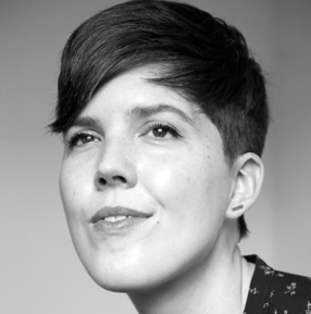
Kendra DeColo is the author of three poetry collections, I Am Not Trying to Hide My Hungers From the World (BOA Editions, 2021), My Dinner with Ron Jeremy (Third Man Books, 2016) and Thieves in the Afterlife (Saturnalia Books, 2014), selected by Yusef Komunyakaa for the 2013 Saturnalia Books Poetry Prize. She is also co-author of Low Budget Movie (Diode, 2021), a collaborative chapbook written with Tyler Mills. She has received awards and fellowships from the National Endowment for the Arts, MacDowell, the Bread Loaf Writers’ Conference, the Millay Colony, Split this Rock, and the Tennessee Arts Commission. Her poems and essays have appeared in American Poetry Review, Tin House Magazine, Waxwing, Los Angeles Review, Bitch Magazine, VIDA, and elsewhere. She has performed her work in comedy clubs and music venues including the Newport Folk Festival, and she has taught at Sarah Lawrence College, Vanderbilt University, and the Tennessee Prison for Women. She currently teaches at The Hugo House and lives in Nashville, Tennessee where she has a 5-year-old daughter and a baby on the way in August. She describes writer-motherhood in 3 words as: “Adjusting Previous Expectations”

FROM THE EPISODE: READING LIST & REFERENCES

coming soon


sound bites

coming soon

Lan Samantha Chang Transcript


Lan Samantha Chang

May 13, 2021

Lara Ehrlich

Hello, and welcome to Writer Mother Monster. I’m your host, Lara Ehrlich, and our guest tonight is Lan Samantha Chang. Sam’s new novel, The Family Chao, will be published by W.W. Norton in February 2022. She is the author of two previous novels, All Is Forgotten, Nothing Is Lost and Inheritance, and a story collection, Hunger. Sam is the director of the University of Iowa Writers’ Workshop and lives with her husband and her 13-year-old daughter in Iowa City, Iowa. She describes writer motherhood as “need more time.” Now, please join me in welcoming Sam. Hello.

Lan Samantha Chang

Hi.

Lara Ehrlich

Thank you so much for joining us. It’s great to see you. Let’s start with those three words you use to describe writer motherhood: “need more time.” Tell me a bit about that.

Lan Samantha Chang

You know, I spent a while trying to come up with three words. It’s not the easiest thing to do. I felt like I could write 1,000 words about it or just straight declarations, like “I’m through,” “This is too much.” “‘Need more time’ was what I what I came up with because, honestly, I reached a point this spring semester, where I realized that for the last few weeks, everything I do that I want to do, that isn’t part of what I’m supposed to do, is cutting into something I’m supposed to do. I just don’t have any time to do anything except what I’m supposed to be doing, which is not great for writers, not great. I haven’t actually had a chance to write for a couple of weeks.

Lara Ehrlich

I know you wanted to talk about how you actually figured out how to write a novel in the midst of all the things you’re doing. But before we get there, let’s talk about some of the things that you need to be doing. What do you need to do in your daily life?

Lan Samantha Chang

Well, I have a delightful 13-year-old daughter who’s been in the house with me since the middle of March 2020, and my husband is a teacher and spends a few days a week outside of the house. It’s basically me and Ty, my daughter, and she’s just really lovely and really not a difficult child, but it’s just different trying to get things done when someone else is in the house.

Also, I think if I were alone, I would not be cooking. I’ve been doing a lot more food preparation in the last year than I usually do during the day. When my husband’s home, he does it, so he’s great. Then there’s talking to my husband when he is around, and I also have a day job, which has turned out to be really, really time consuming during the pandemic in unexpected ways.

I am responsible for a graduate program where there are more than 90 poets and fiction writers, almost all of whom have given up locations in some other place to come here, which is great. In a usual year, they come and they meet each other, but in the last year, they’ve been giving up their life to come here and take classes online, which is complex. The university requires that they be here, but the classes are online. We’ve been rolling out a whole set of activities that don’t involve being person-to-person. I will say the students have been really lovely and have come up with a ton of outdoor events for themselves. But I do feel responsible for them. I feel like they came out here because of our program, and I have to come up with something for them to do.

On top of that, there’s teaching in the program and also administrative work, which is really challenging at any university, but I think the state university systems have been really challenged for a lot of reasons—some of them political, some of them economic and budget related, some of them related to education, and just basic reasons. It’s just been a really, really complicated year for everyone. I’m amazed that we made it through the year without some kind of massive disaster. Graduation is tomorrow, so it’s possible that we will make it through the year.

Lara Ehrlich

Well, and thank you for joining us right before graduation, too. I know that must be incredibly busy. And you were telling me before the interview, you’re having 80 people at your house tomorrow.

Lan Samantha Chang

I mean, we invited 80 people; we don’t think 80 people will make it over. Some people are still being cautious and not wanting to go to even outdoor events. We’re holding an outdoor event. One thing we did during the pandemic, and I think a lot of people did this, and I don’t know how I’m going to look at this in the future, but we moved to another house. This house is not a lot of space, but compared to our old house, which had a tiny wedge in front and then this tiny pocket in the back, it has enough space so that we can invite people over to raise a glass of bubbly to celebrate their graduations. I’m inviting the poets and fiction writers who are graduating this spring, and also the ones who graduated last spring who didn’t get anything. I mean, they basically had to shut down in March, and all of the usual festivities surrounding the end of their time in the program were abruptly canceled. It’s sort of upsetting to think about, and a lot of them are still in town. So, I ordered two cakes. One cake has their year, and one cake says 2021.

Lara Ehrlich

What brought you to the Iowa Writers Workshop?

Lan Samantha Chang

I’m married to a visual artist, and I’m a writer, and I would say that if you were going to stack up various artistic professions, I would say writer is actually more secure than visual artist. Maybe I’m wrong. I’m happy to argue.

Musician is also really bad. Actors are probably the worst, I’m not sure. I ended up getting that job that required us to move here. I went here as a student, and I knew they were looking for people, and I would chat with the administrator and we would talk about people that we thought would be good to direct the program. I would throw all these things at her, like, how about this person? How about this person? Problems always come up, like the faculty doesn’t like their writing, or they’re high strung, or they don’t want to move, they have a different job, they don’t need a job. Just a whole bunch of things. Eventually, she asked me to apply for it. This is really Dick Cheney, right? It’s like he was on the group of people looking for the vice president, and then he became the vice president.

Eventually, I applied, super late in the process, and I was one of four finalists, which turned into this weird national media zoo, like the AP decided that this would be an interesting story for them, and they ran an article naming me and the other three finalists, all of whom were white guys, two of whom were considerably older than I. They ended up giving me the job, which … I don’t know what I think about it.

I was in this stage of life where everything was happening super fast. I just published my second book, which was my first novel, which was just a terrible process of writing—it was so hard to write that novel. I can count on one hand the number of times that I truly enjoyed working on that novel. So, when I was finished, I sort of raised my head up, and it felt like it was seven years later. I felt like Rip Van Winkle, like I woke up and everything was different: I was getting married, I was thinking of having a family, and then all of a sudden, I just happened to apply for this job thinking that I wouldn’t get it but that it would be good to practice applying for jobs, and then I ended up getting it. Next thing we know, we move everything we own from Somerville, Massachusetts, to Iowa City, and then we have a child the following year. It was crazy.

A lot of my younger students write stories about middle-aged characters, and I find this really fascinating because they’re in this wonderful period of life where they don’t actually need to think about it, but they are thinking about it. They’re trying to look ahead, and all of their characters have this sort of angsty, bored feeling. And I’m thinking, no, that’s not what it’s been like for me. It’s been one crazy thing after another, like everything is just happening, just, bam, bam, bam, bam. You hardly have any time to think, at some point. I look back, and I’m sure I’m gonna think you should have realized X, Y, and Z, but at this point, I can’t see it. I’ve got my nose right in it.

Lara Ehrlich

Oh, that brings up so many questions. I also feel the same way, and my husband keeps saying that we’re middle aged and I’m like, “How can I be middle aged? I’m certainly not middle aged.”

Lan Samantha Chang

You don’t look middle aged.

Lara Ehrlich

My birthday was yesterday, and I turned 40.

Lan Samantha Chang

Oh, wow. That’s great. Congratulations. Happy birthday. Forty is a great decade. It is an amazing decade. It’s really nice.

Lara Ehrlich

I’ll take your word for it. It feels busier than it’s ever been. So, where do we start? Back way up to your first book. Tell me about your experience of writing the first one, and then what made the second one so different.

Lan Samantha Chang

Oh, God. Okay, so I didn’t start writing until I was in my mid-20s. I really had always wanted to be a writer since I was 4 years old, but I was trying to be practical, because my parents are immigrants, and they really didn’t want me to do something impractical. I have three sisters, and they all had normal lives. My two older sisters, one’s a lawyer, one’s a doctor—they’re doing just fine.

I really reached a point in my mid-20s that I think other people I know who’ve been interested in writing have also hit, where they suddenly understand that they really just don’t want to do anything else, and if they’re not going to do the one thing they want to do in life, then it’s really hard to justify just what you’re doing. You just have to do it.

I started taking these community classes in Cambridge, Mass., and wrote some stories and applied to Iowa, actually, and came here. I had just started writing, and my big goal was that I was going to learn how to write short stories. It seemed possible and manageable and decent and all that. And I was young, I was, like, 26, so it took me a really long time to write these stories, but I worked on them for a while, and then I published them.

Meanwhile, all along, I’d always known that the thing that I’d love to read was novels. I love reading novels. I always thought it would be the most cool to try to write one, and that is where I got into trouble, because, frankly, I was under contract. I published the first book, the collection, as part of a two-book deal. It was a stressful experience for me because I’d never written a novel and didn’t understand how they’re different from stories.

I had chosen this completely ridiculous topic. I wanted my story to take place in 20th-century China, which everyone knows is just this completely crazy century. My parents are from China, and they had told me tiny things about being there in the war when I was growing up. They never really talked about it. It’s the silence that a lot of people who’ve been through political trauma or personal trauma often don’t want to discuss. I basically spent seven years reconstructing an imaginary life, four characters, one of whom was similar in age to my mother, the protagonist and narrator, because I wanted to understand and write about my parents, but also because it was under contract. If I had not had a contract, I don’t know if I would have been stupid enough to attempt this project. But when you write a proposal for a project, you sort of have to complete the proposal, so I did it. Being a Capricorn, it took me forever. I did do a ton of research.

Later, shortly after I published the book, Jonathan Safran Foer came out with Everything is Illuminated, and he revealed in interviews that he had never done any research for this book about returning to the land of his ancestors. And I thought, why didn’t I think of that? Why did I brush up my college Mandarin and ask people to read all these old newspapers? Like, why was I doing this? I could have just made it up. Part of the journey for me was simply that I needed to know for myself.

It’s a funny thing, and I don’t think every writer is like this, but after I went through that process of writing this book, I haven’t wanted to revisit that whole century in any way. I have zero desire to write anything set in the century, in the place, nothing. It was like I was working it out, and now it’s gone.

But it was horrible. It was just ridiculous. There was a point when I was trying to figure out how to end the novel. Every step in the process of writing this novel took a ridiculous amount of effort. For example, trying to figure out the point of view took years. Trying to figure out the narrator—not just the point of view, like first or third, which ended up being kind of a hybrid, but figuring out which of the characters was the narrator—took years. I remember getting to the middle and feeling okay and then having to rewrite the ending six or seven times.

Every once in a while, maybe three times total, I showed the novel to my editor, Jill Bialosky at Norton, who’s a really wonderful person and also a novelist, poet, memoirist—a woman of letters—and she would give me helpful feedback, but she was sort of experienced enough to know that I wasn’t at a point where she could really tinker. I was still at this point where what I was supposed to be doing was figuring out really big things. That just took me such a long time.

I think some of my students are much smarter than I am. They come up with these ideas, and then they’re fine with them. They just run with them, because they figured out a kind of constraint of what needs to be cut out of the picture, whereas I was stuck with way too much in the picture. I think so much of writing a novel is about coming up with a set of constraints or guidelines or a way to understand what you’re doing so that you can proceed in the right direction. Maybe I’m wrong, a ton of brilliant novels were written where the author had no idea what they were doing.

Lara Ehrlich

How did you apply what you’ve learned from that torturous process to the next novel?

Lan Samantha Chang

I had this rule with myself: you’re gonna write something short now. I was never the kind of person who was capable of writing a lot. Even my short stories aren’t very long, and it took me forever to be able to write 28 pages. It took me two years of writing stories before, and this in in 12-point Geneva font, double spaced—you know, a much larger font than Times New Roman, which is what everyone uses. Now, this is a million years ago, when Apple had Geneva as its font. I don’t know if anyone remembers this except me.

I really just think that writing something long was hard, so I thought I’d write something short. A lot was happening—I moved here, I took this job, I learned how to do this job, I had a child—and I think this second book just came out of me really fast because I had been holding it in for such a long time. It was about something completely unrelated to 20th-century China. It was about the life of some poets. What I put into it was basically everything that I had learned or thought about when I was learning to write. A lot of things, like the lines that people say in the book, are literally things people said to me. I’ve mixed it all up, and I put them all into different characters and messed with all of that, but there were literally things people said to me. Like, someone literally said to me, “I don’t think writers actually get better.” Somebody that I truly respect, who’s known a ton of writers, more than anyone I know, said this to me. She said, “I think they write better books, they learn to write better books, but they don’t become better writers.” This is the kind of stuff that I put into the book. Mostly just processing. It was much faster. It was so fast and easy. And I still really enjoy that book. I reread it, and I like it. I will not touch the other book. Won’t even look at it.

Lara Ehrlich

We have some super fans here. We have Liz Harmer, who says, “I’m a huge super fan of that novel. I adore it.

Lan Samantha Chang

Oh, I’m so grateful. Thank you, Liz.

Lara Ehrlich

Liz is an author with her own wonderful book who’s been on the show. Let’s talk a little bit about the birth of your daughter. You said you wanted to be a writer since you were 4, but did you always want to be a mother?

Lan Samantha Chang

When I was really young, I was very close to my mom, and my mom was not happy being the mother of small children in a house in Wisconsin full time. When I was growing up, I don’t think I was completely aware of it on a conscious level, but I knew it on an unconscious level. I knew that she was bored, because my mother was incredibly smart and always wanted to be intellectually stimulated, and we bored her. I know she loved me a lot, and we could really talk, but I also know that she had other things she wanted to do.

And the other problem my mother had was moving to this country when she was 18, which is an age when you’re just about to master your native language. As a writer, you’re moving into that age. She left, and I feel like she didn’t have the pleasure of writing a ton in Chinese as a young adult or adult. She came to the U.S. and had to learn a new language and never achieved the kind of confidence that she had in her Chinese. Being in Wisconsin, we didn’t run into a ton of other Chinese people, which is something I write about in my new book. She made it really clear to me.

Keeping in mind that I was born in 1965, and my mother is a creature of a generation where most people stayed at home and did not go out and get careers, she said to me, “There are plenty of other things to do. There are more important things to do than clean your house.” She was just like, “Don’t do these things. They’re a waste of time.”

One reason I think she was able to say that is because she got sick. She got rheumatoid arthritis when she was 42, which basically meant that she had to throw away some of her perfectionist strategies. She was a big perfectionist. She basically just had to give up on that. I think that’s why she was able to tell me that you just have to focus on things. I would turn my camera around so that you can see this table. It’s just covered with stuff. I don’t sit down and clean it up every day. Things like that.

I’m knitting mittens. I have a ton of pairs of mittens on this table, actually. I really enjoyed making them. I like this purple pair lot because of the speckle. Sometimes, when the students need something to raffle or give away at a reading or something, I give them a pair of mittens. And it’s just been a long winter. I did a lot of knitting.

Lara Ehrlich

Yeah, when you can’t write anymore, you need something to do.

Lan Samantha Chang

Yeah, I finished my novel this year, so basically, I had stopped knitting for the last two years of my writing this novel. Then I finished the novel, and I did an art project and all this stuff. All of a sudden, I started knitting like a crazy person. It’s back. The knitting is back. The writing is gone. Hopefully, something will happen that’ll make me start writing again and stop knitting.

Lara Ehrlich

Well, I want to talk about the new novel in a second and what’s next with writing, but first, let’s go back again to when your daughter was born. Tell me about that period.

Lan Samantha Chang

I feel so lucky that I was able to have a child. I was 42 when I had Tai. And because of my luck, I was not unhappy. I also had a super kind, generous husband, it turns out, who evolved amazingly as a father. He was always a shy person, but after we had Tai, he liked to walk around downtown. He just felt like a member of the human race after he had a child. I don’t think he did before. He just became a much more outgoing person. He’s always been reserved, and he just changed a lot.

I really loved being pregnant. It just felt really good. It felt like my body was doing something. I didn’t have to concentrate on it or focus on it. I was accomplishing stuff without trying at all. And then we had the baby. It was a lot of work and very different, and the first couple of weeks, I thought, okay, you have too many things in your life. Now you have a baby, you have a marriage, you have a job, and you have your writing. You need to eliminate one of these things in order to write, and you can’t eliminate the baby or the husband. Apply for a fellowship so that you can take some time off, or you will never write again.

So, I applied, I got a Guggenheim Fellowship, and I was able to spend two semesters working on something which turns out to be almost forgotten. I thought I was working on something else, but I never did finish that project. And it was a pleasure. It was really wonderful. First of all, it was a short book, and those are easier to write than long books, generally, but there was a period of time when I would get up and nurse the baby early in the morning, and then Rob would take the baby for an hour and a half, and I would work on this book.

I had the Guggenheim, which gave me a mental excuse to work on something that I didn’t know what I was working on. And Rob actually said to me, “Well, why don’t you work on this mysterious project for a month of your fellowship? You won’t be wasting time if you only work on it for a month.” So, I did, and it turned out I made a lot of progress. I thought, how about one more month. I just basically finished it in six months, and then I had to let it sit because my job started up again.

Then I revised it because I took my two semesters off. It was a wonderful experience. I never expect to have this experience again, where a novel just comes out and it feels right and it’s fine. It’s true that the whole time I was working on it, I thought no one would ever read it because it’s a story of a bunch of writers in an MFA program, which, frankly, is not that interesting. The novel starts with them in a program, and then it traces what happens to their lives afterward, and that, I think, is what makes it interesting.

What made it interesting to me as a project was pulling their lives out and seeing what became of the people who behaved in a certain way when they were a certain age. It was really interesting to me, especially given my job, where I was observing people all the time, wondering what would become of them. That was a real pleasure.

Then I fell into the hole. I think when Tai started running around, it was a lot harder for me to focus. I’ve always been somebody who has trouble multitasking—it’s one of my major problems—and so I really stopped writing for almost four years, which I now think, oh my God, I can’t believe I survived that. But I did do a ton of knitting, because my job is overwhelming.

I had always been one of these writers who’s kind of antisocial and always had a lot of time and didn’t really have very many people in my life, just a few really good friends, so I always had a lot of privacy, a lot of time. And even given all of that, it was incredibly hard for me to finish a book.

Then the second book was hell. Really, what happened after publishing is all is forgotten, which was a gift. After I published it, I basically had to start from scratch and construct a way to get writing done, despite the fact that I had this lovely child. I had to just start figuring that out from scratch, which is, in my opinion, the major accomplishment of my middle age—figuring out how to write the book I just finished—and I’m really grateful to everyone who helped me. My acknowledgments page is four or five pages long. It’s so long.

Lara Ehrlich

Congratulations on finishing it. That’s huge. Let’s talk about building that process back from scratch. Your daughter was 5 or 6 when you started writing again?

Lan Samantha Chang

Here’s what happened. The Vermont Studio Center invited me to come out and be a guest writer there, which basically means that you get five days at the center, and during that time, you eat your meals with everyone, you teach a class, you give a reading, and you meet with however many people who want to meet with you to discuss their work. You read their manuscripts, which is a fair amount of work, but the rest of the time, you’re free, which for anybody who’s been in a family situation is just an insane gift. It was just such a huge gift.

I remember they gave us a little apartment in this nice house, and I remember sitting in this comfy chair and thinking, oh my god, this is what I needed. I need to figure out how I can get more of this because I feel like myself for the first time in … I don’t know how many years. Tai was probably five and a half. So, I started applying to artist colonies.

The first time I applied to an artist colony, I was rejected, because I didn’t have any recent work. I didn’t look like I’d been doing anything, and the fact is, I get that, but sometimes I feel that’s when you need to go most desperately to a residency, but whatever.

I basically just scraped up time to scrape up 20 pages of something, which is really what you need, 20 pages that seem like they could be something meaningful. It doesn’t have to be a complete story, because I was unable to finish a short story at the time. I got into Yaddo, and I was there for 13 days. Tai was 7. This is a long process. You apply one year, and then you go sometime the following year. I went to Yaddo when Tai was 7. It was 13 days. I’d never spent 13 days away from her before. I was lucky because my husband adores her, so he and she had developed this really good relationship, partly based, I think, on what they do when I’m not at home.

I will tell you that the reason I ended up coming up with this strategy is that I ran into a male writer, who’s also a parent, who I had met when I was a Stegner fellow. He was not in my year. We met one year at AWP, and he’s like, “How is your writing going?” I’m like, “I’m not writing.” He said, “This is what you have to do. You have to go to these residences. You just have to go to the residency. That’s what I do.” He said, “I try to be a model father, I try to do everything I can possibly do to help my partner when I’m at home, and then when I get to have four weeks away from home every year, once a semester.”

And I thought, well, “I don’t think I can do that. I don’t think I can get away from not only my child but my job,” but when I was at the Vermont Studio Center, I used that time to apply to a residency. I got into Yaddo, I went there for 13 days, and the first eight or nine days, I didn’t get anything done. I just sat there. I don’t even know what I was doing. I think it was such a strange experience, and I felt like I didn’t have anything to say.

Then I was having breakfast with one of the other writers, and she told an anecdote about something that happened to her many, many years before the moment we were in. There was something about the way she told the anecdote, I just went back to my room and started writing. My last two days there, I applied to another residency. I’ve been basically managing to write from one residency to the next for maybe five years after that.

I have this elaborate chart of where I applied to things. I think the number of times I’ve been to some of these places is embarrassing—and embarrassing because I feel like I should have produced something by now. I think I’ve been to Yaddo three times. MacDowell twice, Ragdale three or four times. I’ve been to a place called Write On, Door County, which is this wonderful place in Door County, where you can just be left alone for a week in a house. I went to the Rome Academy, I went to Hedgebrook, which is a wonderful place. Basically, that’s how I got my book done.

Once, when I was at MacDowell, one of the really powerful MacDowell composers said that he gets six months’ worth of work done every time he goes to MacDowell for four weeks. And if that’s true, I think I’ve worked for six years on this book, not counting the work I do when I’m not at a residency.

It’s really weird. I’m lucky because my husband was willing to take care of Tai. My mother told me once that some children are angry when their mother leaves them and act out in an angry way when the mother returns. She said this to me in a warning way. At one point, she also said to me, “You’re lucky that she doesn’t get angry,” and the fact is, she doesn’t. She’s a really lovely person. But even if she did get angry, I think I would just have to explain to her that I really need to do this. I can’t not do this. The other thing that helped me start getting work in was the recognition that I was really turning the corner. I was getting quite old. My own mother died during this time. It became really clear to me that at a certain point, you just have to get your work done, or you will die without having accomplished it, which is a big deal. I got the book done.

Lara Ehrlich

For many of the women listening right now who are interested in residencies and listening to the variety of places that are available, can you talk a little bit about the logistics of applying? And as someone who directs the writing program, you may be in the perfect position to give some advice about applications.

Lan Samantha Chang

I’ve actually read for a couple places, so I can give a little information. Everywhere I’ve read for has the following thing: They don’t give the readers too many things to read, so that you’re not overwhelmed, and you can really pay attention to the applications. The applications consist of generally 20 pages or so—I think it’s pages instead of word count, so I guess that would be 6,000 words in 20 pages of a writing sample.

When I look at work for this kind of thing, the first thing I look at is the writing sample. I mean, it’s really clear. And it’s the same way with the MFA programs: the writing sample comes first. Twenty pages is not too bad, right? You can try to make your work as strong as possible for 20 pages. I try to encourage myself when I’m applying by thinking I can try to write 20 good pages of something or a 20-page story, short story, even if I want to write a novel, and I’ve only written short stories, that’s great. Short stories are great.

Then there’s always a place where you put down what you plan to accomplish when you’re here. And this is my honest opinion. If you have a plan, you should be as sincere as possible and an honest as possible in saying it. But if you don’t have a plan, because you’re just overwhelmed, you should just make something up.

Lara Ehrlich

This is some real advice here.

Lan Samantha Chang

They won’t mind if you go there and end up working on something else.

Lara Ehrlich

Yeah, they’re not going to come knocking on your door and see if you’re writing the thing you said you’d write.

Lan Samantha Chang

Exactly. And actually, the director at the time said to us on our first day, “I don’t mind if you just go stare at Lake Michigan for three weeks. I really don’t care.” And that is the kind of liberating permission-granting language that you can hear at a residency that makes you feel like okay, maybe it’s okay if I’m not super productive. Maybe it’s okay if I just do this thing. Usually, I’m there for a few weeks, and I’ll spend the first week not doing anything, and then it’ll slowly kick in, and I’ll have some amazing periods. Some people, of course, are able to work nonstop. Good for them. I’m really proud of them. But I have not been that way.

Then in the application, I think they ask you for a CV. They ask if you’ve been to other residencies. My guess is that it does help to have been to another one. That’s my guess. I also think it helps to say I have never been to a residency before. Somewhere in between those two things. Choose one of those two things to say. Because if you say, “I have never been before,” it gives a person an empowering feeling that oh, I can give this person something that will really help their writing. But if you say I’ve been to X, Y, and Z place, then the admissions committee could think, okay, this person is somebody who has been to X, Y, and Z place, so I guess we could have them here. Do you know what I’m saying? I don’t think there’s a wrong answer to that.

There’s this thing in the literary world. I feel like people love “discovering” people. That’s the big thing. So, you know, make yourself discoverable. I think that trying to be sincere, rather than trying to impress is what will make the work memorable. I think lot of the residencies really do choose people on the basis of the writing sample.

The other thing is that it is just so subjective, people’s opinions about other people’s work. I’m sure everyone knows this, but it’s just ridiculous how different people’s opinions can be on the same thing. It goes for applying to an MFA program or anything else. We change up our admissions reading committee at our program every year, because we just don’t believe that we’re getting everyone.

So, if you don’t get into such and such residency, just keep reapplying, if you have the $30 or whatever it costs to apply, and some places even have fee waivers. There are a ton of residencies that are either new or in a faraway place or low key that not everyone applies to. I’ve had really great experiences at places that are brand new or places where they don’t feed you, but you could just go and sit in a house and work and eat snacks. It’s just getting that time alone that, for me, has been a total saving experience. That’s my take on that. Do it because that gift of time.

Lara Ehrlich

I met you at Bread Loaf, five or six years ago now, and I remember that you brought your daughter with you and probably your husband, too. Were you able at that particular retreat to engage fully with your daughter there? Or did you feel torn in some ways?

Lan Samantha Chang

I think the thing that made me feel torn during the times I was at Bread Loaf was that I didn’t get to live in the same building as the other faculty. I mean, I’m just being super honest. They found me a really lovely place where my daughter and husband and I were able to live, and it was wonderful, but I didn’t get to have those late-night conversations with other faculty that I wish that I could have had. And what can you do? I was thrilled that they came along with me. I think when Tai was 12 weeks old, we were at Bread Loaf, and I think I was nursing her all the time in the front row at the little theater. People were kind to her. My students were super understanding of her being around, too.

Lara Ehrlich 

I would hope so. That was probably a year before I got pregnant, and I was really struggling with whether I could be a writer and a mother. And I have to say, seeing you there with your child was so empowering to me. So, thank you for bringing your family. You hear so much about how hard it is, you don’t see women actually doing it out in the world.

Lan Samantha Chang

I feel lucky that, for example, the people in my office have always been extremely supportive of me having her around at work and at various things. I think there was a 75th reunion for the workshop when she was 3, and she was just wandering around, and when I went up to give a talk, she would walk up and stand next to me. And actually, the people who were upset about it were the women from the generation above me who were my bosses, like the dean said that she thought she shouldn’t have been there much later, but everyone else was totally great about it. I think the only reason the dean was upset about it was because she was stressed. I think she came from a generation where people just didn’t do that. But now we’re in another generation. You can do that. You can basically do whatever.

Lara Ehrlich

Totally, and I think it’s so important. I’ve seen this so much more now with a pandemic of women working from home, myself included, who say to their colleagues, “I’m sorry, I have to go make lunch for my child,” or whatever it is. I feel lucky to be able to do that. I have a job that that encourages me to, but it’s also important for women to show their children, I think.

Lan Samantha Chang

I think it’s super important. I think it’s important to the entire society, not just to other women. I think it’s important for people to know that children exist in their parents’ lives.

Lara Ehrlich

Absolutely. Tell me about the new book that comes out in 2022. Tell us a little bit about what it’s about.

Lan Samantha Chang

You know, I’m one of four sisters, and I didn’t want to write a book about sisters. For years, I was obsessed with The Brothers Karamazov. I taught classes on the book at the workshop, where people would just read it and then we would meet and discuss. I was obsessed. I started to imagine that something I had started writing in 2005 was actually told in a voice that could carry over into a Chinese American Brothers Karamazov.

I started thinking about a present tense voice, which I’ve never, ever been interested in ever. I just started writing in this voice, and I really enjoyed it. It was fun. Sometimes I feel like the books that I’ve written can’t encompass how complicated my personality is, because I grew up in a very homogeneous community in the upper-Midwest many years ago, because we were an immigrant family. We were one of maybe three Chinese families in our town and maybe four Asian families in the town of 50,000. I’ve developed a lot of different parts of my personality. I just couldn’t find a vehicle to express it all until I came up with this project.

I remember writing Hunger and writing a fight between her father and daughter and feeling like I wanted to be able to write a scene in which people are just screaming at each other, but it doesn’t fit into the story—like people screaming at each other, people laughing, people being loud, people being contemptuous, people using a ton of exclamation points just didn’t fit into Hunger.

Hunger was a quiet book about immigrants suffering. I really felt for Hunger when I wrote it. I felt all those feelings. It was my effort to recreate the feelings that I felt our family had felt, and so, I did that. But then I also felt like there was this whole side which is basically this really loud family that ate a lot, fought a fair amount of the time, unhappy, and also laughing a ton. That was my family. I found these characters. I figured them out.

The archetypes are in the Brothers Karamazov, but they’re basically there’s three brothers and a terrible father and the brothers’ love interests, who are characters of their own. I added a dog that belongs to this family. It’s an actual dog that I know. There’s a real dog in an imaginary book. It’s great. It’s about a community in the Midwest and about a particular family in that community, and the disliked, much-hated patriarch of the family mysteriously dies. The question becomes how did he die? Was it an accident? Or was it a murder? And if so, then who did it? This runs through the whole book.

Lara Ehrlich

Oh, it sounds wonderful.

Lan Samantha Chang

I really, really enjoyed writing it.

Lara Ehrlich

I can tell from the way that you describe it that it seems like it was fun.

Lan Samantha Chang

My life is so busy and stressful, I wanted to write something to entertain myself, something that was fun.

I remember having a conversation with Lauren Groff where she said, “What percentage done are you?” And I said, “I’m 41 or 42 percent”—at the time, that was basically where I was. She said a lot of people would just go publish that book at 42 percent, but you’re gonna work on it more. She was talking about how much I wanted to work on it.

One of the things I did to encourage myself was to keep track of what percent I was on and break my work into three-month cycles. Every three months, I would stop and say, “Okay, you finished a draft,” no matter where I was, and then I would start over again. It was really helpful. You know, there’s something really helpful for me, and I don’t know if it’s true for everyone, every three months reassessing where I am, starting another three months. I have this log that I keep track of every writing day, and then at the end of three months, I stop and start another log and say, this is what I want to do for the book, this in this draft. It’s super helpful for me. It took me, what? Thirty years to come up with a strategy where I’m actually getting work done on a regular basis. I’m just much slower than the average person.

Lara Ehrlich

If you want to take a picture of your logbook and maybe your mittens, too, we can put them up on the Instagram page for Writer Mother Monster.

Lan Samantha Chang

Sure, okay. That would be exciting.

Lara Ehrlich

Would you like to read a few pages from the new book?

Lan Samantha Chang

Oh, wow. Sure. I’d like to read a little bit from the new book.

Lara Ehrlich

Send us off with a few pages.

Lan Samantha Chang

Okay, I’ll just start with the very opening. It’s called The Family Chao, and the book is in memory of James Alan McPherson, who is my beloved teacher who died in 2016. The first section is called Part I: They See Themselves.

For 35 years, everyone supported Leo Chao’s restaurant, introducing choosing newcomers to show off some real food, Chinese food in Haven, Wisconsin, bringing children, parents, grandparents, not wanting to dine out with the Americans, not wanting to think about which fork to use. You could say the manifold tensions of life in the new country focused on the future. Tracking incremental gains and losses were relieved by the fine Chao, sitting down under the dusty red lanterns, gazing at Leo’s latest calendar with a limp-haired Taiwanese sylphs that when he hated so much, waiting for supper, everyone felt calm. In dark times, when you’re feeling homesick or defeated, there is really nothing like a good, steaming soup and dumplings made from scratch. Winnie and Big Leo Chao were serving scallion pancakes decades before you could find them outside of a home kitchen. Leo, 35 years ago, winning his first poker game against the owners of a local poultry farm, exchanged his chips for birds that Winnie transformed into the shining chestnut colored duck dishes of far-off cities. Dear Winnie, rolling out her being the homemade way two pats of dough together with a seal of oil in between rising to a steaming bubble in the piping pan, Leo bargaining for hard-to-get ingredients, Winnie subbing wax beans for yard-long beans, plus home growing the garlic greens, chives, and hot peppers you never used to find in Haven, their garden giving off a glorious smell. You could say the community ate its way through the child family’s distress, not caring whether Winnie was happy, whether Big Chao was an honest man, everyone took in the food on one side of their mouths. And from the other side, they extolled the parents for their son’s accomplishments, heaping praise upon the three boys growing up all bright and ambitious earning scholarships to good colleges, commending them for leaving the Midwest. Yet everyone was thankful when the oldest, Dalgo Chao, returned to Haven, Dalgo coming home to his mother, moving into the apartment over the restaurant, working there six days a week. Dalgo, the most passionate cook in the family. Despite the trouble between Winnie and Big Chao, everyone assumed the business would be handed down fairly peacefully, father to son. And now, a year after the shame, the intemperate and scandalous events that began on a winter evening in Union Station, the community defends its 35-year indifference to the child family’s troubles by saying, “No one could have believed that such good food was cooked by bad people.”

Lara Ehrlich

Thank you. Oh, how wonderful. Remind everyone when it comes out and when to preorder.

Lan Samantha Chang 

I think preorders are starting in a couple of months, and the book is coming out in February 2022.

Lara Ehrlich

When it’s up for preorder, let me know. I’ll put it up on social so that people see that, and I’ll be the first to get one.

Lan Samantha Chang

Oh, thanks so much Lara. This has been so much fun.

Lara Ehrlich

Thank you so much for joining me.

Lan Samantha Chang

Thank you for having me.

Lara Ehrlich

Thank you. And thank you all for joining us as well.

Deesha Philyaw Transcript


Deesha Philyaw

May 6, 2021

Deesha Philyaw‘s debut short story collection, The Secret Lives of Church Ladies, won the 2021 PEN/Faulkner Award for Fiction, the 2020/2021 Story Prize, and a 2020 LA Times Book Prize: The Art Seidenbaum Award for First Fiction; the collection was also a finalist for the 2020 National Book Award for Fiction. The Secret Lives of Church Ladies focuses on Black women, sex, and the Black church, and is being adapted for television by HBO Max with Tessa Thompson executive producing. Deesha is also the co-author of Co-Parenting 101: Helping Your Kids Thrive in Two Households After Divorce. Her work has been listed as Notable in the Best American Essays series, and her writing on race, parenting, gender, and culture has appeared in The New York Times, The Washington Post, McSweeney’s, and many other publications. She is the mother of two children, ages 17 and 22, and she describes writer-motherhood as “intense, complex, evolving.”

Lara Ehrlich

Hello, and welcome to Writer Mother Monster. I’m your host, Lara Ehrlich, and our guest tonight is Deesha Philyaw. Thank you all for tuning in. Please remember to chat with us during the interview, so we can weave in your comments and questions. And if you enjoy the episode, please also become a patron or patroness to help keep this podcast going. I’m excited to introduce Deesha Philyaw. Deesha’s debut short story collection, The Secret Lives of Church Ladies, won the 2021 PEN/Faulkner Award for Fiction, the 2020/2021 Story Prize, and a 2020 LA Times Book Prize: The Art Seidenbaum Award for First Fiction; the collection was also a finalist for the 2020 National Book Award for Fiction. The Secret Lives of Church Ladies focuses on Black women, sex, and the Black church, and is being adapted for television by HBO Max with Tessa Thompson executive producing. Deesha is also the co-author of Co-Parenting 101: Helping Your Kids Thrive in Two Households After Divorce. Her work has been listed as Notable in the Best American Essays series, and her writing on race, parenting, gender, and culture has appeared in The New York Times, The Washington Post, McSweeney’s, and many other publications. She is the mother of two children, ages 17 and 22, and she describes writer-motherhood as “intense, complex, evolving.” Please join me in welcoming Deesha. Welcome.

Deesha Philyaw

Hey, Lara, how are you?

Lara Ehrlich

Great, how are you?

Deesha Philyaw

Good, thank you.

Lara Ehrlich

Tell me first about these three words that you’ve used to describe writer-motherhood.

Deesha Philyaw

Well intense, because, you know, I have to own it: I’m intense, and my children are intense. They probably would say they’re not intense, but they’re intense. So, you’ve got three intense women, and that just sort of colors everything we do. We have fun, but there is a level of intensity that we all can bring to situations. Complex—same thing. Mothering is the hardest thing I’ve ever done. Hands down. I think it’s the hardest thing I’ll ever do. Individually, we’re complex human beings, and we are these systems of needs and desires and quirks, and then you put these systems in each other’s orbit, and you are trying to figure it out. And we’re at different stages of our lives—children are going through their stages, and we as moms are going through our own stages. There’s a lot happening all at once. That’s the complexity. The last word was “evolving.” When people ask, “Does it get easier?” I tell them, “It gets different.” And that’s the evolution of it. It’s always changing—different things to worry about, different things to enjoy.

Lara Ehrlich

Yeah. Did you ask other moms that question when you first became a mother? Does it get easier?

Deesha Philyaw

I don’t remember asking that. I was really lucky in that I found this group of really great moms online whose children were older than mine. I was pregnant, and they all had older kids. They were all homeschoolers, because I thought I was gonna homeschool at that time, so I spent my entire pregnancy in these virtual conversations with them, so I could see them at different stages. I always heard, you know, “the terrible twos.” I knew about that. And then they would be talking about the things that were unique to 3 and then 4, and then this thing that happens at 7 and then 10, and I was like, so basically, what you’re telling me is that it never ends. Then there’s parenting an adult, which I’m doing now, which is its own experience. So yeah, I didn’t ask that specific question, but I’ve always been watching other mothers.

Lara Ehrlich

Did you always know you wanted to be a mother?

Deesha Philyaw

Yes. That was always part of the plan.

Lara Ehrlich

I thought I would never want to be a mother, so it took me by surprise when I realized I wanted to be. Tell me a little bit more about having always wanted to be a mother. Why did you have that desire?

Deesha Philyaw

I think for the same reason that I thought you get married, you go to college—it was just the things that you do. I thought it was what makes your life complete. I was raised by my mother and my grandmother, and my mother was a single mom. I watched a lot of television as a kid, and I sort of bought into the notion of a normal family as a nuclear family. And I had some shame around the fact that I didn’t have that kind of family, so I always wanted to have that nuclear family with me as the mom. That was always in the plan.

Lara Ehrlich

Tell me a little bit more about growing up. What was your own mother like?

Deesha Philyaw

My mother was intense. She has since passed away, but I think if she heard me say that, she would say, “I’m not intense.” She’s totally intense. And she was absolutely devoted to me. I knew every second of my life with her that I was loved. But it was suffocating, at a certain point. There are some bits and pieces of my mother and me in my collection of stories. There’s a line where the one character in a snowfall is describing her mother’s love like a blanket. In the summer, it’s suffocating. But then when you need it, you miss it. And that’s kind of how it was with my mom. She could be a little too much. She was also very critical, and that really shaped me in a lot of ways. There’s a lot of unlearning and healing I had to do. It was this sort of complexity of being absolutely loving and devoted, but she would have nitpicked me to death, if I had not eventually created some boundaries with her.

Lara Ehrlich

How did that relationship set up your expectations for motherhood?

Deesha Philyaw

Well, like a lot of people, it’s like, “I’m never gonna do that” or “I’m never gonna say that.” I think it gave me a false sense of my power as a mother. Kids are not widgets. You can’t just put in inputs and get guaranteed outputs, like, “Okay, here’s this list of things that my mother did that I wish she hadn’t, and here’s this list of things she did that were wonderful and I’m gonna do all the wonderful things and not gonna do the horrible things.” You still have challenges, there’s still things that I did that I wish I wouldn’t have done or things my kids wanted me to do that I didn’t. There’s no perfect mothering.

So, it gave me a blueprint, because there are some things that I did right. I think it’s important for us to remember as mothers. It’s very easy to focus on where we dropped the ball as parents, but to think about the things we did right: my mother’s being devoted to me and treating me like a person, that my needs were important, that I felt loved. My mother was demonstrating things that I took for granted. It was easy for me in parenting my own kids to hug and be tender with my children. I got that from my mother and did that in my own mothering.

The inverse was true, which was really listening to them. And this has been really hard. I thought it would be easy, because my mother seemed to chafe against the fact that I was a separate person, and she took my doing things differently as a criticism of her and how she did things. I just thought, you know, whatever my kids do, as long as it’s not harmful, I’m not gonna have anything to say. I want them to be their own person. And now I see that desire to want them to do things a certain way. It’s picking my battles, you know. My mother never picked her battles. Everything was a battle with her. And so I’m learning to say less, and my kids would probably say, “Really? Because you say a lot.” But they have no idea how much I keep things to myself when I want to say something. I’m trying not to nitpick.

Lara Ehrlich

Well, especially as they are getting older—17 and 22, I imagine, are the ages at which they’re starting to make choices that you really would like to nitpick.

Deesha Philyaw

Yes. Absolutely. Just letting them, as we say, “learn things the hard way.” They have to make mistakes. That’s the hardest thing to watch. I have to step back. There’s a time and place to speak and say, “I’ve been there,” or, “Here’s a perspective I have because I’m older. I’m going to give it to you. You do with it what you will.” As opposed to putting down the hammer, which, at a certain point, you just can’t. You can make suggestions, but they’re their own people.

Lara Ehrlich

Yeah, and they’re born as their own people, aren’t they?

Deesha Philyaw

Yeah.

Lara Ehrlich

How did having children change you as a writer?

Deesha Philyaw 

I started writing when my oldest daughter was 2, and she didn’t nap. So, I’ve been a mother longer than I’ve been a writer by a couple of years. It started incrementally. Writing was something that I did as an escape and as a solace for myself, because I was a stay-at-home mom and was 24/7 taking care of my daughter. I carved out that little bit of time each day, and then it started to expand over time. One thing that being a mother taught me was that time is precious, to not waste time, and find writing time where I can.

Then, over the years, having children forces you to ask, “What are your stories to tell and what are not your stories to tell?” And where your story is inter-lapped with someone else, be it a parent or a child—how do you negotiate and navigate those lines? I’ve written about my mother, I’ve written about my children, and it was always trying to figure out where my story ended and theirs started—and then still getting it wrong. I wrote about them extensively when they were much younger, when I was early in my writing career, and there are things now that I regret that I wrote about—not specific stories or anything, but just in general, if we’re serious about the concept of consent. They thought it was fun that I wrote about them, but as minors, they didn’t understand the magnitude of what was happening, and so they couldn’t give me consent. If I call myself a writer, and I do, I could have done a better job of figuring out how to write about motherhood without doing it in a way that now feels like I kind of violated their privacy.

Lara Ehrlich

Yeah, I’ve heard a lot of other writer mothers on the show talk about that line between your story and how it intersects with your children’s stories, and what the line is between yours and theirs. It sounds as though you’re saying that that line evolves, or constantly moves, and you have to figure out where it is.

Deesha Philyaw

Yeah, so I’ll give you an example. My younger daughter is adopted, so I wrote extensively about that. I had a whole column at Literary Mama called “The Girl Is Mine,” and it was all about being an adoptive mom.

When she was around 12, she was interested in doing a DNA test, and again, I asked her permission, but you know, she’s 12. I said, “May I write about why you want to do this test and also about me as your mother, knowing that you’re trying to find out as much as you can about your biological roots?” I think I was doing a really good job of respecting that line, and the editor was like, “Wow, there’s just something missing.” I was like, “Yeah, there’s a whole person missing. It’s my kid. I’m trying to respect that. I’m trying to tell the part of this that is my story.” But it just wasn’t working. The editor was saying to talk to her about certain things. I reached out to my daughter and said, “This is what I’m writing, this is what’s happening, would you be interested in writing this with me?” Then it became an alternating narrative, and we did it that way.

Lara Ehrlich

Wow. Tell me a little bit about writing with your daughter. Was that the first time you’d done that?

Deesha Philyaw

Yeah. I just told her I would send her a paragraph and ask her to write whatever she wanted to say after that, to write it in response to what I’d written. I would say I’m wondering about whatever, and then she would respond in her paragraph, and then I’d write something else, and it was wonderful, because I could relax a little bit and feel less like I was … cannibalizing is too strong a word, but it felt more right. And it was a better story, of course.

Lara Ehrlich

It’s fascinating to hear you say that there’s something missing, and then to problem solve how to address what that was in a creative way, just from a craft perspective.

Deesha Philyaw

Yeah.

Lara Ehrlich

We have a comment from Danielle Boursiquot. Hi, Danielle. She says, “It’s interesting to hear your thoughts on permission.” She thinks parents have an innate feeling of ownership of their children that sometimes that sometimes never evolves. What do you think about that?

Deesha Philyaw

That’s a benefit of my mother parenting me the way she did. I chafed against that. My mother definitely felt not so much that she owed me, but we were the same person, or I was just an extension of her. And I hated all of that and everything about it. That was one of those, I’m never going to treat my children as just an extension of myself, I don’t own them, they are their own person. And not only do I need to do that for a healthy set of boundaries and relationship with them, but that’s how I want them to engage the rest of the world. I want them to feel like they belong to themselves and that they have agency, and we don’t want our children to feel beholden to other people. We can model that in the beginning by letting them know you’re not even beholden to me, as your parent; you belong to yourself.

Lara Ehrlich

Yeah, I think that’s such an important lesson to learn. Especially, I would think, for young women.

Deesha Philyaw 

Yes.

Lara Ehrlich

Let’s go back for a second to your fledgling writing career. Because as we saw in your bio, this has been quite a year for you. You’ve won, literally, probably every award for a debut book and the top prizes for short story collections. Tell me a little bit about the beginning of writing, when your child was 2. Was that literally when you came to writing, or had you written anything before that point?

Deesha Philyaw

No, I mean, I had to write in school, and I enjoyed it, but I never thought about writing as a career. It didn’t seem practical. I was drawn to it as a form of escape. It felt good to write, and it was something that I could do for myself. I was initially writing fiction. I didn’t think about the characters as church ladies, even though they were, because I was really mining my memories and my nostalgia of growing up in the South and being in church a lot. Those women really loomed large for me. But I didn’t think of them as church ladies. They were just dissatisfied women. I was dissatisfied in my own life, but I wasn’t comfortable writing nonfiction, so I gave that dissatisfaction to these characters.

I tried my hand at novel writing, and a couple of novels just kind of crashed and burned. The third one really had legs. I started that one in 2007. I got about two thirds of the way done with that, and it also stalled. I really lost interest in the character as I had written her. There were really no high stakes, and I wasn’t interested in her problems or what she wanted, but I kept trying to write it without that awareness. It took finishing my collection to realize, oh, I don’t care about that stuff anymore.

I kept trying to write a novel I had started a decade earlier. I started changing the character a little bit over the years, but I had changed so much, so what was interesting to me in 2007 certainly wasn’t interesting to me a decade later. Once I finished this collection, I understood what was going on with that novel, but the novel was stalling.

I started writing these short stories, and I had an agent for the co-parenting book, who was ready to see a novel. She was like, “We can do this.” She’d also heard me read some of the short stories, so when she saw that I was not making any headway with the novel, she said, “You know, I like these church lady stories. Maybe you could get intentional about that and build a collection of stories around these things: Black women, sex in the Black church.” And I was like, “That sounds doable.” She even broke it down further and said, “If you can write three stories, get them published, we’ll have a partial manuscript I can pitch and shop around.” That felt more doable than “finish that novel that you started all those years ago.” And so that’s how the collection came to be. That’s kind of the arc of my fiction life.

But I had so many detours, because I had to make a living. I could make a living writing and editing, or I could write nonfiction, I could write personal essays—I was getting published to do that sort of thing. Writing for public, for nonprofits and companies and doing work that wasn’t creative—that’s how I paid the bills. And fiction was always like, “I’m gonna get back to it, I’m gonna get back to it.” It was when I could steal time. Then in 2016, I took a corporate job, and that gave me the financial stability and freed up more time, actually, for me to write fiction. That’s when I finished the collection. Then I left in 2019, and I’m back to just writing.

Lara Ehrlich

I think that’s an amazing arc, and one that makes me feel hopeful, and hopefully, a lot of women who are listening right now feel hopeful that just because you abandon a novel doesn’t mean that you’re not a writer, right?

Deesha Philyaw

That’s right.

Lara Ehrlich

And if you have a corporate job or a job that’s not in writing, that doesn’t mean that you’re not a writer. It can, in fact, help you become a writer, or to dedicate yourself more to your writing, when you’re not worried about how you’re going to pay your bills.

Deesha Philyaw

Exactly.

Lara Ehrlich

Tell me a little bit about the craft side and how you developed your craft. Once you started writing, what did you do to write a novel?

Deesha Philyaw

I did a couple of things. The first was really dorky, which was, I wrote to writers. Like, if I read a book, and I liked it, I figured out how to write to that writer and send them, like, the dorkiest fan mail and just ask really general questions. Like, “I want to be a writer. Do you have any advice for me?” And people would write back, which is great. It was really nice of them, because, again, very dorky. I learned a lot by asking that question.

I also read a lot of books on craft, and I never went back for an MFA. I have a bachelor’s in economics, and I have a master’s in teaching. I just never felt like going back to school for another degree, so I would take classes everywhere—classes, conferences, retreats, workshops. But Literary Mama was definitely a big part of my writing education. I wrote the column there for four years, I think every month or every other month.

We were all edited by two editors, which was a fantastic education. There were about a dozen columnists, and we would edit each other, as we had time. I learned a lot through the experience of editing other people’s work. That was really helpful.

And then, just finding writing communities, finding writing buddies, people who could be my readers. You know, you need your champions. It’s like your mom putting your stuff on the refrigerator. People who are gonna cheer you on, no matter what. But in addition to those people—and sometimes it’s the same people, but not always—you need readers who can love you enough to tell you the truth and not just blow smoke up your ass. To tell you when something isn’t great and how you can make it great, or if it’s good, how you can make it great. People who have the skill to give you that kind of feedback. I started building that network and building those relationships.

Lara Ehrlich

You said you went to conferences and workshops and things. Let’s talk about the logistics of that. Where did you steal the time from to do that?

Deesha Philyaw

You know, the funny thing about divorce—I’ve had this experience, and I’ve heard it from other women—is that it’s sad, but sometimes you get more time, once you get divorced, because you have a set schedule of when the kids are going to be with their other parent, and you can plan things, as opposed to what happens for a lot of us, when you’re under the same roof, you are just the default parent, always on call, on duty. Shout out to my co-parent. He’s always been a hands-on father, so that was never an issue for us. If anything, with me, it was being able to pull myself away.

Over time, I started being able to do that. But a lot of times, I had to leave the house to do it. Once we split up, I knew which days I didn’t have my kids, I knew which weekends I didn’t have my kids, and I could actually be present with my writing in the same way that when my kids are with me, I could be present with them. I know that that’s not always the case for mothers that either don’t have a partner that prioritizes us getting a break, or sometimes we treat the other parent like a secondary parent, as opposed to like our peer. They’re just as good. They may not do things the way we would do them, but we have to let them, because that’s their kids, too, and that’s how we get a break. So, sometimes, it’s just being willing to let go. When we got divorced, I was able to have a regular schedule, and then I didn’t have to have the discipline. It was just built in.

Lara Ehrlich

Yeah, the difficulty in taking that time for yourself really speaks to me—my husband is willing to give me that time, and I have trouble taking it. I have trouble just going upstairs to my desk and closing the door. I hear that from a lot of women. I’ve heard, likewise, from many of the guests who are divorced, that they found it freed them up in many ways.

Deesha Philyaw

Is that quote from Carl Jung, something like, “The greatest burden a child must bear is the unlived life of its parents.” Jung was saying that we think the worst thing is they’re gonna feel abandoned or they’re gonna feel unloved if we’re not there. But the worst thing for them is if we’re not there for ourselves, if we’re not showing up for ourselves and the things that we want to do and the things that we’re passionate about, to have unrealized dreams as a mother. That affects the kids.

Lara Ehrlich

Have your daughters talked at all about you as a writer and the example that you’ve set for them in following your creative pursuits?

Deesha Philyaw

No, I don’t think we’re there yet with them being that meta about it, but I know that they’re proud of me. I know they’re really happy for me. My oldest, I don’t know if she’s finished the book, but every now and then, she’ll text me and she’s like, “I really liked this part,” and that makes me feel really good. And my youngest hates when I say this, but the loudest she’s ever screamed was when she realized that Tessa Thompson started following me on Instagram. She’s been monitoring our accounts, and when she saw that, that was exciting. Not the awards or anything like that, but Tessa Thompson. Then when I said that, she was like, “No, that’s not true. I was excited before.” So, in fairness, I will tell both sides of it. But yeah, they’ve been celebrating with me, and I want to believe that it matters to them, because I’m always also encouraging them to do whatever they want. I’m the parent that’s like, “I think you should take a gap year,” and they’re like, “I don’t want to take a gap year.” I’m like, “No, really, take a gap year!”

Lara Ehrlich

You’re saying they were celebrating with you this year, and you’ve had a lot to celebrate. Tell me a little bit about what this year has been like. We were talking, before the interview started, about how exciting it’s been, but also in the midst of a global pandemic, the two sides of it.

Deesha Philyaw

Yeah, celebrating, but also knowing that more than one thing can be true at a time. There’s a lot of things that I’ve celebrated, and then there’s times when I’m just feeling really down, because I’m isolated. I spent half the time in the pandemic by myself, except for my dog, because my kids are with their dad part of the time, so that’s been really difficult. The awards are wonderful and validating, especially after so many years. People tell you short story collections don’t sell, I’m on a University Press, it’s a debut—all of those things. So, it was a wonderful surprise, and the opportunities that have come from it, having it adapted, but also having this larger platform and being able to then support other writers in ways that I would not have been able to before—all of that’s wonderful. Then, at the end of the day, there’s a deadly pandemic happening, and I’m sitting in my house by myself. That’s still hard. That’s still lonely. I had to show myself that grace and say yes, both things can be true. I’m completely honored and grateful, and today was really hard.

Lara Ehrlich

Yeah, definitely. And you’re working on a novel now, you were saying before the interview. Can you tell us anything about the novel?

Deesha Philyaw

There’s a church lady in it. Some things certainly have changed since I started in 2007, but what is the same is the main character is the wife of a mega church pastor. And in the Black church, the pastor’s wife is referred to as the First Lady. And she’s dissatisfied in her marriage and her station in life—that thread is the same. I’m looking to do some different things than I started in 2007. I’m also looking to make it a satirical novel. It was a little too on the nose for me as I was writing it, and there’s just a lot of funny stuff that was in the original draft. Everything else that wasn’t funny, felt navel gazing. I’m like, I got a solution for that.

Lara Ehrlich

Okay, so this is the same novel that you started in 2007?

Deesha Philyaw

Same basic premise and main character, but she herself is different. I realized that one of the challenges I have as a writer, that I’m constantly working on, is raising the stakes. Like, when you and I logged on earlier, I was like, I just had this huge epiphany about this novel and it was like I ratcheted up the stakes for her in a way that I hadn’t before, with the scandal that she gets involved in. You know something with your head, but you don’t always apply it. There’s something in writing called “murder your darlings,” like, don’t be precious with your character. You have to have bad things happen to them. They have to be people who aren’t us who do things that maybe we wouldn’t do. I thought I had done a pretty good job with that, but I was coddling her into oblivion, into boredom. I didn’t care about her because she was so boring, so I had to give her some edges, some prickly parts. Now that she’s a little more prickly, there can be more at stake. And now I think it’s juicier than it was before.

Lara Ehrlich

Let’s talk about dissatisfaction. I’m also interested in dissatisfaction, as I think probably many writer mothers are. Tell me about this dissatisfaction in 2007 and the through line for the novel now. How is that changing?

Deesha Philyaw

Well, and let’s say, the dissatisfaction started in 2000, when I started writing. This 20-plus years, I think it’s dissatisfaction based on not being content with what we’re told we’re supposed to be content with, and also not being content having done everything right. Then it’s like, okay, I did all of that, and now I’m miserable, but you’re supposed to be satisfied. For those of us who are married, or we’re married heterosexually, if you found a good man, you’ve had these children, you’re financially stable, the world tells you that should be enough. Certainly, you’re happy.

In the first incarnation of the novel, the pastor’s wife had that exact thing. She was married to a good man, she had a nice house, they had a nice life. I’ve been married twice, so one of my in-laws from the second marriage was reading this synopsis that I’d written of the book as it was then, and she was single into her late 40s and had not been partnered, and she said, “Well, that seems really like an interesting story, but can you make sure to explain why she’s so unhappy? Because I don’t get it. Because she has everything.” And it’s like, but what if she doesn’t love him? Or she doesn’t feel loved by him? Like I had mentioned, it was kind of a loveless marriage, and he was really married to the church and not to her. All this person could see was she’s got a husband, a nice house, good standing in the community—why is she miserable? I think that rings true for a lot of us.

Lara Ehrlich

Yeah, that if you have all the right ingredients, that will make you happy. I think about that a lot, too, and about a restlessness underneath that, and what is it that we want? What was it you wanted?

Deesha Philyaw

This idea that we even have wants, because of how we’re raised to take care of everybody else’s needs and wants, and we’re not raised to take care of ourselves first. Sometimes, we exist to serve that whole. There’s a continuum, but for many of us, the range is really small in terms of what we should aspire to. Personal satisfaction is low on the totem pole. Sexual satisfaction, low on the totem pole. That’s not how we’re conditioned. Then, even when we do small things for ourselves, like take time out to write, you’ll hear women say, “I feel like I’m being selfish.” It’s like taking care of yourself isn’t selfish.

Lara Ehrlich

Yeah. Now there’s the whole culture of self-care, too. Like it’s sort of like a luxury just do basic things, like take a shower. Tell me about your own restlessness and how it’s changed and how it’s come out in your writing.

Deesha Philyaw

My marriage—we met in college, and our first date was my 18th birthday, so that’s how long we had been together. We got married a year after college. I married really young, and certainly there are people who marry young, and it works out for them, but for myself, I didn’t know who I was, so how do you commit to spend a lifetime with someone when you’re still in process, and so were they. That was the difficult part, trying to figure out who I was and who I wanted to be. And that was evolving. Looking at the reasons for getting married and what they represented for me. There was that “normal.” I broke the cycle of women in my family who didn’t marry, so marriage was like winning the lottery. Why did I have to marry when I was 22? I didn’t. Why not wait? But it was this idea that I had gotten the brass ring, so you grab it, and you hold onto it—you don’t let it go. As opposed to, you got a whole life to live. You can date this person, you could live with them, but you don’t necessarily have to make this huge commitment at 22 years old, when you don’t know who you are. And so those kinds of growing pains start to show up. That’s what happened for me.

Lara Ehrlich

Yeah. Where you grew up and when you grew up, were your peers also getting married pretty much out of high school?

Deesha Philyaw

A couple of my friends married young. Now that I think of it, I don’t think any of those marriages lasted. My friends in college typically married later. But I was growing up with the idea that being a woman and having someone commit to you was like “now everything will be fine.” But there was not enough conversation about the quality of the relationship or why marriage was not like traveling and seeing the world or writing a book or something like that. Marriage was presented as an accomplishment.

Lara Ehrlich

How do you feel about it now?

Deesha Philyaw

If people are happy being married, I’m happy for them, but personally, I am looking at the marriage as an institution. And I don’t see the point. Because you can have a huge commitment. And queer folks did this forever—had huge commitments without the legal stamp of approval, so it’s clear that you don’t need marriage to have a commitment. And we also know, from those of us who get divorced, and also when people who have bad marriages, having a marriage doesn’t guarantee a good relationship.

So, you know, why? That’s always my thing: why? There’s a young person in my life, not my child, who is 19, and she was telling me she wanted to get married. I was like, “Absolutely not.” And I started doing the whole “tell me why.” “Because this,” and I was like, “You don’t have to get married for that. You can have that and still not get married. What does marriage give you that you can’t have without it?” There are certain legal protections, okay. Other than that, though. I don’t think marriage guarantees fidelity or compatibility or good sex or any of that kind of stuff. I’m not anti-marriage, but I question it. I’m happy for people who are happily married. I love that.

Lara Ehrlich

No, it’s funny. I mean, I’m happily married, and my husband listens to the podcast, so I should be careful what I say, but I’m not sure I would get married again. Honestly, like you said, it’s so much more a legal thing than anything else. And I think, as you’re saying, you could have a partnership that lasts a long time, and it doesn’t need to be legally bound. I’m with you there. Tell me a little bit more about writing and motherhood. What did you learn craft-wise from revisiting this novel after having written a collection of short stories? What did writing a draft teach you about writing a novel?

Deesha Philyaw

It taught me that I can write fast. I thought I was somebody for whom every story has to take a year. No, it does not. It also taught me the importance of experimentation and pivoting and flipping things, because when I got stuck with the novel, it was “Oh, I don’t know how to move forward.” When I got stuck with stories, it was, “Well, I’ll move on to something else,” or “I’m gonna try it this way,” or, “What if.”

If you’re someone who likes a lot of certainty, which I used to be, and I think I still kind of am, that was difficult, to take that approach. But I had a deadline to meet, and also, I had fun. I’m trying to bring that same sense of “what if” and fun and play and experimentation to writing. I’ve never been an outliner, and that requires a degree of trust—that you trust that without any kind of outline, if you just write and tell yourself the story as you’re going, these gems will emerge. And it happens. I think sometimes you forget it happens until you do it again.

Having this short story collection and stories that turned out well, I know now that I can write 20 pages, and I might just get two paragraphs, and that’s a good thing. It’s not time wasted or anything like that. That is literally what drafting is. I think in that way, I have more confidence now that things will work out and that I will discover things.

I see writing as a process of discovery. There’s a quote that says you’re writing to find meaning, not necessarily to tell people what happened. In the process of writing, you’re finding meaning for yourself in what happened, whether that story is a real story or a made-up story. Just delighting in the process and having a different perspective on urgency. I have a sense of urgency around writing, because I feel very much, especially during the pandemic, like we are so mortal, that we don’t have forever. But instead of that doom and gloom urgency, this urgency of “I want to tell this story. I want to see what happens next.” I’ve gotten to a place where I feel more confident and playful as a writer. And I think that will make me, first, finish this novel, and it’ll be better than it would have been before.

Lara Ehrlich

I’m always interested in the how short story writers switch to novels and vice versa. I started with a novel, too, and it was a laborious process, a five-year process, and I finished it, didn’t end up selling, and that’s fine. But pivoting to short stories felt like you’re saying, sort of freeing, and there’s a sense that if something’s not working, you can turn it on its head because it is only a short story. It’s like you can wrap your brain around it, and it’s hard to have that same sense of playfulness, at least when you’re a beginning writer, and you’re trying to write this important, epic novel, or whatever it is you’re working on.

Deesha Philyaw

In the beginning, too, I don’t know that many of us actually believe in drafting, like we say we do. We’re still editing as we go along, and that will always hinder you. I’m finally at a place where I will write a shitty first draft, as Anne Lamott said, and then go back in and revise and polish it up. I can do that. I get it now.

Lara Ehrlich

Let’s talk a little bit more about Church Ladies, and then I would love for you to read a little bit from it. Tell me about the stories and putting the collection together. I’m finding people are always interested in how you select the stories and that process, whether it’s organic, or whether you set out to write a collection. You told us a little bit about your agent; can you talk a little bit about the process of completing the collection and thinking through the stories that would come together as part of Church Ladies?

Deesha Philyaw

As I mentioned, my agent said, if I can get three stories published, that would be the basis for a manuscript. By the time I had the third story published, I actually had six stories written, and one of the stories is called “Peach Cobbler,” and I like to share that that was one that was not published and yet now is the story, when people have a favorite story, 9 times out of 10, it’s “Peach Cobbler.” That just shows that publishing and editing and rejection is all very subjective.

There were the six stories, that was the partial manuscript, and it sold with those six stories. Then I had a word count that I had to build to from that. I decided that one of the stories was just kind of the weakest link, I didn’t care for it, and I also didn’t feel like I was so interested in it that I wanted to go and fix it and revise. So, I was like, I’ll just pull it out, and that gives me more words to fill. Then I had about two dozen or so pieces of stories, everywhere from a sentence long to 20 pages long and everything in between and looked at those and picked maybe 10 or 12 and wrote a one-sentence synopsis of each one. I gave it to five or six friends, some of whom are my regular readers and some who were not my regular readers—I wanted to have this range of people read these synopses and ask which ones would you want to read the whole story. Very quickly, five or six stories rose to the top. I was like, you know what, that’s it—these are the stories I’m going to start writing, and I’m going to write until I get to this word count, and that’s how I’m going to finish the collection. It ended up being four stories that got me to the word count.

In terms of ordering the stories, I felt that “Eula” should be first because it was the first story I had published, so it was a little sentimental, but it’s also one of the most provocative, explicit stories in the collection, and I wanted to open with a bang. It also touches on all the themes that show up in the other stories. I thought, what a wonderful introduction. People can decide right away if they really want to read this or not.

Then I wanted to mix up the stories so that you didn’t have really long stories back to back or real heavy stories back to back. “Dear Sister,” I think, is the funniest story in the collection, so sandwiching that between two heavier stories. I knew that I wanted to end with. I always think of the end like a sigh, whether it’s this collection as a whole or individual stories, because a sigh can be satisfaction, it could be resignation, it could be frustration, but it’s a sigh. And “When Eddie Levert Comes”—that’s the story that felt like a sigh to me. So, I had my bookends, and then I had a few rules for ordering things in the middle. It came together pretty well.

Lara Ehrlich

I love ending with a sigh. You hear people say, “Where do you start a story?” Start with a character or a sentence or whatever. And I love when people say, as you just did, there’s a feeling or an emotion that you want to evoke instead. I want to come back to Church Ladies and have you read for a second. With the novel, do you have an emotion that you’re starting with or that you want to evoke? Is it a sigh novel?

Deesha Philyaw

It will be like a satisfied sigh because, you know, I want it to be satirical. I do want people to laugh, but there’s also some serious stuff. It’s still based around this idea of church and the boxes that church compels us to try and squeeze ourselves into that don’t fit and the shame and the fear and the guilt—serious, heavy topics but handled satirically.

I’m really inspired by Paul Beatty’s The Sellout. The way he opens that novel is fantastic. The main character is at the Supreme Court, the real Supreme Court, so he mentioned like real justices by name, and he’s, if memory serves, under a table, but he’s also smoking a huge blunt. And then after that amazing opening, the rest of the story starts with, how did he get there? How did he end up at the Supreme Court? He’s a Black man accused of enslaving another Black man, so not funny—slavery’s not funny—and yet, this whole premise, and how it’s presented, is actually hilarious.

I’m going to try to do something like that. I’m, again, opening with a bang, and then handling these kind of weighty topics, but in a way where there is some levity. You know, with satire, you really are taking aim at something, so there’s a sharpness there, and there’s a seriousness. I took a workshop on satire, and it was pointed out that if you don’t have any love in your satire, it’s just sneering, you know, and I’m not gonna write a sneering novel. It’s mocking something that you love. Those are kind of the parameters that I’m working with right now.

Lara Ehrlich

Oh, that sounds like such a wonderful novel. I seriously can’t wait. And since we have a few minutes left, what will you read for us today.

Deesha Philyaw

I’m gonna read the first two pages of “Peach Cobbler.”

Lara Ehrlich

Please do.

Deesha Philyaw

My mother’s peach cobbler was so good, it made God Himself cheat on his wife. When I was 5, I hovered around my mother in the kitchen, watching—close enough to have memorized all the ingredients and steps by the time I was 6, but not too close to make her yell at me for being in the way and not close enough to see the exact measurements she used. She never wrote the recipe down. Without having to be told, I learned not to ask questions about that cobbler or about God. I learned not to say anything at all about him hunching over our kitchen table every Monday, eating plate after plate of peach cobbler and then disappearing into the bedroom I shared with my mother. I became a silent student of my mother and her cobbler-making ways, even when I was older and no longer believed that God and Reverend Troy Neely were one in the same. I still longed to perfect the sweetness and textures of my mother’s cobbler. My mother, who fed me TV dinners, baked a peach cobbler with fresh peaches every Monday, her day off from the diner where she waited tables. She always said Sunday was her Saturday and Monday was her Sunday. What I knew was that none of her days were for me. And for many of those Mondays, off and on during my childhood, God, to my child’s mind, would stop by and eat an entire eight-by-eight pan of cobbler. My mother never ate the cobbler herself. She said she didn’t like peaches. She would shoo me out of the kitchen before God could offer me any, but I doubted he would have offered, even if I’d sat right down next to him. God was an old fat man, like a Black Santa. And I imagined my mother’s peach cobbler contributing to his girth. Some Mondays, God would arrive after dinner and leave as I lay curled up on the couch watching Little House on the Prairie in the living room. Other times, my mother and God would already be in the bedroom when I got home from school. I could hear moaning and pounding like a board hitting a wall. As soon as I entered the house, I would shut the front door quietly behind me and tiptoe down the hall to listen outside the bedroom door. “Oh god, oh god, oh god,” my mother would cry. I could hear God, too, his voice low and growly, saying “yes, yes, yes.”

Lara Ehrlich

Wow. I have to say that’s one of my favorite stories in the collection, too. And amazing job reading it, too. Thank you so much for joining me. This has been such a pleasure.

Deesha Philyaw

This has been wonderful. Thank you.

Tananarive Due


Tananarive Due is an award-winning author who teaches Black Horror and Afrofuturism at UCLA and is an executive producer on Shudder’s groundbreaking documentary Horror Noire: A History of Black Horror. She and her husband/collaborator Steven Barnes wrote “A Small Town” for Season 2 of “The Twilight Zone” on CBS All Access. A leading voice in black speculative fiction for more than 20 years, Due has won an American Book Award, an NAACP Image Award, and a British Fantasy Award, and her writing has been included in best-of-the-year anthologies. Her books include Ghost Summer: StoriesMy Soul to Keep, and The Good House. She and her late mother, civil rights activist Patricia Stephens Due, co-authored Freedom in the Family: a Mother-Daughter Memoir of the Fight for Civil Rights. She has a 17-year-old son and 35-year-old stepdaughter and describes writer-motherhood in three words as “every single day.”

FROM THE EPISODE: READING LIST & REFERENCES

coming soon


sound bites

coming soon

Kim McLarin Transcript


Kim McLarin

April 22, 2021

Kim McLarin is the author of three critically-acclaimed novels, the memoir Divorce Dog: Motherhood, Men, & Midlife and Womanish: A Grown Black Woman Speaks on Life and Love. Her most recent book is a critical and personal examination of a favorite novel: James Baldwin’s Another Country. McLarin’s nonfiction writing has appeared in The New York Times, Glamour, The Washington Post, Slate, The Root and other publications. She is a former staff writer for The New York Times, The Philadelphia Inquirer, The Greensboro News & Record, and The Associated Press. She is an associate professor and graduate program director of the MFA in Popular Fiction Writing and Publishing in the Department of Writing, Literature and Publishing at Emerson College. Kim has two children, ages 21 and 23, and describes writer motherhood in three words as “contradictory, depleting, enriching.”

Lara Ehrlich

Hello, and welcome to Writer Mother Monster. I’m your host, Lara Ehrlich, and our guest tonight is Kim McLarin. Thank you all for tuning in. Please remember to chat with us during the interview. Your comments will appear in our broadcast studio, and we’ll weave them into our conversation. And if you enjoy the episode, please also consider becoming a patron or patroness to help keep this podcast going.

Without further ado, I’m excited to introduce Kim. Kim McLarin is the author of three critically-acclaimed novels, the memoir Divorce Dog: Motherhood, Men, & Midlife and Womanish: A Grown Black Woman Speaks on Life and Love. Her most recent book is a critical and personal examination of a favorite novel: James Baldwin’s Another Country. McLarin’s nonfiction writing has appeared in The New York Times, Glamour, The Washington Post, Slate, The Root and other publications. She is a former staff writer for The New York Times, The Philadelphia Inquirer, The Greensboro News & Record, and The Associated Press. She is an associate professor and graduate program director of the MFA in Popular Fiction Writing and Publishing in the Department of Writing, Literature and Publishing at Emerson College. Kim has two children, ages 21 and 23, and describes writer motherhood in three words as “contradictory, depleting, enriching.” Now, please join me in welcoming Kim McLarin. Hi, Kim.

Kim McLarin

Hi, Lara. Nice to be here. Thank you so much for having me.

Lara Ehrlich

Of course. Thank you so much for joining me. I want to start by asking you about the three words you use to describe writer mothers: contradictory, depleting, and enriching.

Kim McLarin

Wow, those were off the top of my head because it was an intriguing question that you asked me. So let me see. My children are grown, so I don’t process it in the same way I did when they were young. When thinking about motherhood and writing, I cast myself back into how I felt when my kids were young and I was trying to write, and the first word was “contradictory” because motherhood requires being present, being available, being self-sacrificing, and being a writer requires being absent from other people, because you need to be by yourself. I also wanted to acknowledge that other side, because I think often it’s not acknowledged. That is also what the third novel is about: the sanctification of motherhood and the refusal to acknowledge that sometimes it’s kind of sucky. Sometimes it’s hard.

Lara Ehrlich

Yeah, hard but joyful. And it can exist as both sometimes at the same time. Tell me a little bit more about that novel and how you worked through those issues and questions for yourself in the writing of it.

Kim McLarin

It’s so long ago now, I can barely remember, but at the time, it was so overwhelming. That was my third novel. And I had another idea. Originally, I started writing a different novel, and I just couldn’t. My kids were still pretty young and at home—my daughter might have been in kindergarten or first grade—and I was at home with them. I had moved to a new city, Boston, so I didn’t have a lot of family, I didn’t have a lot of help or support, so it felt like it was all me. I was married, but my husband was working.

The novel evolved out of my experience, because the other novel that I was trying to write, I just couldn’t get it done. And so I thought, well, let me at least start pouring what’s happening to me now into a book. It turned into that novel and that character, and it was great. I actually think it’s one of my better novels, because it’s so raw and because I was honest about it. I was in the thick of it. It’s not just about me or motherhood. It’s also about my mother and my grandmother and generations of Black women, mothers in particular, and the demands and expectations and all that kind of stuff. Once I started thinking about it, I thought, this is very rich material. Let me pour everything into it. And I was able to get it done; I don’t remember much. It’s both: you remember it impeccably, and a lot of it’s a blur. I couldn’t tell you much about the writing of that novel, other than I was able to get it done, because I know because it exists.

Lara Ehrlich

Yeah, the proof is there. You talked a little bit about the expectations you had for yourself as a mother and how that can make you feel depleted. Sometimes when you feel weighed down by the expectations—either the expectations that you set for yourself or society sets for you. Can you tell me a little bit more about that? What was the standard you were holding yourself to?

Kim McLarin

My mother’s life and my life were very different. My mother raised five children by herself after my parents’ divorce, and my father was not as financially supportive as he should have been. We were very poor. Very poor. And that was a struggle for her. She did a tremendous job, given what she had, but there were deficits in terms of love, or at least outward expressions of love, and engagement and all the stuff that we would consider good motherhood. I’m speaking very carefully here, because it’s not about blaming her or judging her. She did the best she could with the tools she had, and she did a tremendous job. She got us all safely to adulthood, which was her goal and her accomplishment. For a Black woman raising five children in the South at that time period, that’s a hell of an accomplishment. We’re all actually productive, contributing members of society. There’s a nurse and the other’s the head of public health … we’re pretty accomplished. So, she did a good job.

I felt both the obligation to do that good job but, at the same time, to try to make up for the deficits that I felt as a child. At the same time, my ex-husband is white, and I’m living in a little white suburb and operating in a white world, so the standards that I am surrounded by are different standards. I don’t want to get into too much, but that kind of “go to every soccer practice” and “stand on the sidelines and cheer”—not just the games but every practice. That kind of standard, which was not the standard, just generationally, that my mother had. My mother never went to any kind of art events. You didn’t go to your child’s sports game. It was just ridiculous.

It was a ridiculous kind of thing, but everybody around me was doing it. And, and I was not. It’s not my natural temperament. I remember once actually driving my kids to a soccer game practice, taking them to the field, then coming back to get in the minivan to do some work in the minivan. And somebody said something to me about it. I was actually there, but I was not standing on the sidelines. So those kinds of middle-class white standards. So: we had the standards of my mother, the middle-class white standards, and my own fear that I wouldn’t be as loving and as present because of my own upbringing. There was just a hodgepodge of demands and expectations from sources internal and external. Finally, at some point, I realized it was ridiculous. My only job was to be the best mother I could be, and that’s all I could do. The rest would just follow, and it did. I think they turned out okay.

Lara Ehrlich

You’re already veering into what I wanted to ask you about next, which is now with a little distance from those soccer games and your kids being small, I’m sure your expectations for yourself have changed with time. Looking back, though, at those earlier days, how do you perceive what kind of mother you were?

Kim McLarin

I was the best mother I could be at the time. That’s the answer. In many ways, I was a damn good mother. I tell my kids, “I have the videotape to prove it.” Last year for their birthdays, I took all the old VHS, because I was afraid they would disintegrate, and put them on CDs and digital. I was watching through them, and there’s birthday parties and random dancing in the living room to REM on a Sunday night, and there’s just walking down the street. I was actually far more present and engaged than I remember myself being. I was far more giving of myself than I remember myself being.

If you had asked me that question five years ago, I probably would have said I wasn’t as good a mother as I should have been. I would have been much harder on myself. Now, in retrospect, I know not only was I the best mother I could have been, I was actually a pretty damn good mother. I did everything. I baked cookies, I hid Easter eggs, I sprinkled oatmeal on the snow, so that Santa’s reindeer could eat it.

And more importantly, I tried to teach them about who they were. I tried to teach them about the reality of growing up Black in this society. I tried to make them understand, to teach them to be proud of their history. I tried to teach them to care about other people and to not aspire to those American middle-class white values that can often be so destructive. I can tell from the young people that they are today that I did a pretty damn good job. They’re pretty awesome young people. I think they will contribute to the world in important ways. That’s the job. I don’t care what they accomplish, although they’re on their way to accomplishing a lot, but who they are as people—they’re good people, so I think I did a good job.

Lara Ehrlich

It sounds like you did. We have a question here from Kennedy Esmiller, but I think that you just answered it. She said she’s interested in what you said about your mother accomplishing her goal as a mother. What are some of your goals as the mother? I think you just you just articulated them, but is there anything else you would add to that?

Kim McLarin

Yeah, my main goal, in retrospect, was to raise good human beings. It wasn’t to raise rock stars or entrepreneurs or people who would get into Harvard, although, I have to say, my son is at Harvard. But it wasn’t to raise accomplished people; it was to raise good human beings, caring human beings, because there are so many uncaring human beings out there. To raise thoughtful human beings, that’s the job. Human beings who can stand on their own and make their decisions.

That’s the other thing I did. Which again, five years ago, I might have been uncertain about. I really wanted to teach my children to take agency and to take initiative and to learn to navigate the world. Those were my goals as a mother. And, quite honestly, my other goal was to not lose myself in the process, because that’s what my mother did, to some extent, and it cost her, and it’s too bad, because she could have done so much with her life as a woman.

Lara Ehrlich

Yeah, I hear that from so many people. In part, that’s why I started this series, because that was my biggest fear in becoming a mother—the idea of losing myself. And part of that, for me was writing, because that’s how I attach value to myself, in many ways. Is that same for you? Was writing a big part of what you were trying to hold onto as you navigated motherhood?

Kim McLarin

Oh, yeah, absolutely. I knew I was a writer long before I had any interest in having children. I wasn’t sure until the last minute whether I was going to have children, but a writer was who I was from the time since I was 6, really. I knew really early that I wanted to write. If you ask me to identify who I am, writer would be up there—quite honestly, far earlier than mother. I think about myself as a writer who has children. Even when my kids were young, I rarely defined myself as a mother, and I certainly didn’t define myself as a mom. I sacrificed a lot. I did a lot to become a writer, to be a writer. I worked hard to be a writer. And so to have that just kind of go away because I had children would have been really hard.

Lara Ehrlich

Yeah, I completely get that. Were there times when your children were young, or even as they were growing up, that you felt as though you were losing Kim?

Kim McLarin

Oh, sure, yes. I think especially in retrospect. It seems overwhelming and endless, that time, and then, as everybody says, in retrospective, it goes fast. Certainly, when my children were young, especially before they went to school, those years especially. You don’t have time to, like I said before, sit in a study for four hours and write. If you’re lucky, one gets a nap, the other one’s up. When they were older and went to school, it got easier. But still, there were times, because they still took priority, and they should, when I was not as productive.

I used to tell people that I wrote my first novel, Taming It Down, before I had children. When I first started writing, I would write 1,000 words a day. Because I was a journalist, I was used to writing on deadline. I said, I’m going to write this novel by setting myself a deadline. I looked up how long the average novel is—it’s 50,000 words—I said, fine. If I write 1,000 words a day, 50 days, I’ll have enough. And I had taken a year leave from New York Times to do this. So, I had a deadline. If I didn’t write this novel, I was gonna have to go back to the New York Times, which I didn’t want to do, because I was miserable there. I had to write the first draft in three months. I would sit down every morning, and I would not let myself get up until I’d written 1,000 words a day. And I did that. I did the first draft in like two months. Then I revised it and all that kind of stuff.

Then, the second novel, I had my daughter, and it took me about two years. The third novel, I had my daughter and my son, and it probably took me three or four years. So, you could see how this was going, right? If I keep having kids, I’m never gonna write again. There was a real cost. That doesn’t mean that it was a bad thing, but there was a cost to my productivity to having children.

I like to look at things as they are, and maybe that’s not true for all writers. Toni Morrison would get up in the morning and write these amazing novels, parent her two kids, then go to work full-time as an editor and come home. She was a superhuman, right? But for me, there was a cost, and that’s okay.

Lara Ehrlich

I’m interested in the distinction between productivity and … I don’t want to say quality, but the content, because there’s a difference, right? You used the word enrichment. Are you writing more enriched, even though the productivity has lowered?

Kim McLarin

Probably, yes. I think a writer’s job is to explore what it means to be human, so the more experiences that I have about what it means to be human in all kinds of ways, manners, and capacities, then yes, my writing is inevitably going to enrich. In that regard, absolutely, motherhood enriched my writing. It taught me a lot about what it means to be human, about love, about self-sacrifice, about curiosity about how human beings come into the world. And about how little control we have. We’d like to think we can shape our children—and we can, to some extent, and then you can’t. It taught me forgiveness for my own mother. It taught me understanding of my own mother and her life. It enriched me as a human being, and therefore it absolutely enriched my work, without question. Yeah, I think that’s true.

Lara Ehrlich

Yeah, that’s good to hear. I think a lot about the capitalist idea of productivity and the white supremacist culture that enforces the idea that you need to be productive to be a successful person, when maybe you write one book in five years, and it’s a better book than you would have written if you’d have written three books in five years. I’m trying to reconcile that for myself, as well.

Kim McLarin

I think that’s a really excellent point. It is a trap, a capitalist trap, that you are only as good as your latest product and what you’re producing. I remember my editor used to say you’re supposed to be producing a novel every two years, and you should do that so you don’t lose your readership. They induced this kind of anxiety, and that’s unfortunate, and it is counterproductive. At the same time, it is also true. The American public has a very short attention span. Both things are true. Productivity, in the sense of this capitalist demand that your value is wrapped up in what you’re producing, is not good or healthy, and it’s wrong. I also do believe that, like athletes and scientists, anybody who is immersed in their field, you have years when you’re going to be at the peak of your abilities. For me, what I meant by productivity is that it would be good to produce the best things I can while I’m at the peak of my productivity. The good thing about writing is you can keep writing. I’m 56, 57? Sometimes I forget. I’m already starting to see that I don’t feel as compelled about writing. I don’t feel as compelled to write as I used to. I’m trying to figure out what that means.

Lara Ehrlich

That’s really interesting. What did it feel like before? What did the compulsion feel like?

Kim McLarin

I felt like I had to write or die. I really felt that in my youth, in my 20s and 30s. Writing was a lot of things, but one thing it always was, was “listen to me,” as Joan Didion said. It’s a way of imposing yourself. And it was a way of making a world that was hostile and wanted to render me either invisible or dead or both acknowledge me and deal with me. It felt necessary, just like breathing was necessary, and it doesn’t feel that way anymore.

I think that’s probably coming with age and less belief that it makes a difference in changing the society. I think I used to believe you can change America. I don’t know that I believe that anymore. I’m sorry to say that, but I think it’s true. Like I said, I’m currently figuring this out, and I’m writing an essay about it, about why I might not want to write anymore. I might retire from writing. I’ll write an essay about it and see what I think about it.

Lara Ehrlich

Still writing to figure out about your will to write.

Kim McLarin

Yeah. In as Didion said, “I write to understand what it is I’m thinking”—that was the other reason writing was so necessary for me, because it’s in the process of writing that I understood what I thought and what I felt and what I believed. Now I think I know more about those things, without having to write.

Lara Ehrlich

Yeah, that makes perfect sense. It actually leads into a question here from Lucette. She says, “Have you ever lost desire to write? If so, how did you manage? If not, how did you maintain the will and desire to continue writing?” It sounds like you’re grappling with that right now. But were there other times?

Kim McLarin

Earlier when my kids were young, did I lose the desire? No, I don’t remember losing the desire back then. I remember losing the energy and the time. But I always had a million things I wanted to write. I teach writing, and I tell my students who ask about writer’s block, “I don’t personally believe in writer’s block.” I believe if it’s not coming, it just means you don’t know enough. It depends on what you’re writing. If it’s your novel, maybe you don’t know enough about your characters. Maybe you don’t know enough about the questions that they’re asking. Maybe you don’t know enough about the world in which they’re building. If it’s an essay, maybe you don’t know enough about what you’re trying to investigate.

When I feel stuck—I will say stuck, not blocked—I go for a walk or hike or go out and garden or do something physical, and almost inevitably, 90 percent of the time, it works. All of which is to say, I don’t really believe in writer’s block. It’s just a part of the process. There were times when I was stuck or couldn’t figure it out, but that didn’t mean I didn’t desire to write.

This is actually the first time in my life that I’ve lost the desire to write. That’s why I’m talking about it. Because it’s surprising. It’s like, what is this? The good thing about being a writer is that you can be curious about what’s going on instead of frightened by it. I’m curious about it. I don’t know what I’m going to do about it. I’m gonna write about it and see if I can figure out what it is. It may be that I’ve said everything I had to say. It may be as simple as that, and that would be okay. If I’ve said everything I had to say, then I’ll go open a bakery or something. I can do other things. I mean, I actually do other things, like baking. I like sewing. It’ll be okay.

Lara Ehrlich

Tell me a little bit more about changing the world. I’m wondering when the waning of interest in writing happened. Did it coincide with this last year that you and I were talking about before the interview started—all of the things that we’re dealing with right now? Do you think that has anything to do with it? Or is that separate?

Kim McLarin

That’s a good question. I think that definitely is part of it. My writing has always been political. I referenced Joan Didion before referencing the George Orwell essay “Why I Write,” and Orwell says, putting aside the need to make money, put that way aside, people write for four or five reasons. One of them is aesthetic pleasure—some people just like words and language. I forget the other ones, but one of them, he says, is trying to show either the way you think the world ought to be or trying to show people the way it really is. Political in that sense. And that has always been me.

There are other reasons, too, but that’s the primary impulse for me. I’m saying stuff that I don’t understand why everybody else is not saying it, and why don’t you guys see this, and then fix it? As I’ve grown older, and I’ve seen cycle after cycle in this society of racial oppression and police brutality and white backlash—quite frankly, what it is, is Black progress, white backlash, Black progress, white backlash. After you see a couple of those cycles, you start to understand, okay, this is America, this is the cycle. And all the pleading and all that. Far, far, far better writers than me, James Baldwin told us all of this, pleaded with us, pleaded with America, you know, blah, blah, blah. And here we still are, 20, 30 years after his death. I guess it would take an act of faith greater than I have to believe that things will change. I guess maybe I still hope they’ll change. I always wrote with the belief that what I wrote mattered. And as I’m saying this, I know people are going to be like, I do still believe it matters. But I guess I also hoped it would change things, as I said, and I don’t believe it has changed anything, so then the question arises: why keep writing? I could be planting a garden or baking some bread and feeding people or something. I’m honestly grappling with this right now, so what I’m saying to you is all very raw and very uninformed. But it’s the truth.

Lara Ehrlich

Yeah. How would you as Kim change, if you stopped writing? Earlier, you said that part of what makes up your identity is that you’re a writer. What does that mean to you?

Kim McLarin

Yeah, well, the good news is that my sense of self and identity has shifted. When I was 20 or 30 or even 40, that was a huge part of my identity. It still is part of my identity that will always be intact, even if I never write another word. I got a shelf full of books and a bunch of essays in magazines. But it becomes less vital. My identity as a wife, as a mother, as a friend, as a person in community and in connection with other people—relationships become more important as I get older, understanding that our time on this Earth is limited. I’m already going to leave behind these books. They’re either gonna go the way that most books go, which is into obscurity or, hopefully, those that remain. And as James Baldwin said, when it all comes to ruin, and the young people are digging in the rubble, looking for something to begin again, they’ll find my work and use it to begin again. That’s what Baldwin said he’d hoped for his work. That’s my hope for my work, that when it all comes to ruin, and I think it will, people digging in the rubble will find it and use it to begin again. To answer your question, my sense of myself would not, at this point, change because I’m just Kim. Kim is fully baked, at this point, right? It wouldn’t change in the way it would have 20 years ago.

Lara Ehrlich

I think you do need to open a bakery.

Kim McLarin

I got really, really good at baking bread and cakes, and I love it. Because it’s good for me as a writer, too. It’s different, right? It’s tactile. It’s concrete. You begin and you end, unlike writing, which is endless. And it’s nurturing. You can feed people, and people love it, and they respond. In some ways, it’s a perfect complement to writing because writing can be so open-ended, especially when you’re writing a novel or book. It just takes forever. You can work all day, and people say, “What did you do?” And you’re like, “Well, I wrote.” And they’re like, “What do you got to show for it?” If I bake all day, I got something to show for it. You can see it. So, yeah, I’ve really gotten into baking. I really love it.

Lara Ehrlich

Yeah, I love that. Have your kids read your books?

Kim McLarin

I don’t know, because they don’t talk about it with me. I can guess that my son probably has not. I think he just thinks it’s too weird. My daughter, I think, has read some of my books, but I think it’s hard for them. I have given them all books, I’ve signed them, but they’re very young adults, new adults, and they’re still figuring out who they are and where they stand, and my guess is that they will read it later, when there’s some distance. They have to make that transition from seeing me as their mother to seeing me as Kim, as a writer, as a person who has a whole life. I think they’re just making that transition now. My books deal with grown-up stuff—sex and all that kind of stuff. I don’t think they really want to know.

Lara Ehrlich

Yeah. How has your relationship with your kids changed as they’ve started to see you as a whole person, separate from Mother?

Kim McLarin

I think it’s a transition. I think when they were younger, they might have wanted a more traditional mother. They might have wanted a mother who revolved her sense of self around them more completely. I was very adamant about not doing that. Once they were in school, I kept working, I was writing and teaching and public speaking. When they were younger, they might have wanted a mother who was more like Ozzie and Harriet or whatever the contemporary reference would be. I don’t watch TV that much anymore. I think now, as they are turning into young adults, we can talk, we have great conversations about the issues that I’m passionate about, the stuff I have been writing about, racial justice, Black liberation. We can talk about those things as adults. I think they often come to me with questions about them, because they know I know this stuff. I’ve invested time and energy into it. I think it’s pretty good.

Lara Ehrlich

Have those conversations changed your perspective on the issues that you’ve been writing about for so long?

Kim McLarin

That’s a good question. I don’t know. It’s hard to say. I don’t know that those conversations in particular have, because I also teach young people, I teach people who are my kids’ age, so I’m in conversation with young people all the time, so those conversations, collectively, have exposed me to things that I was not aware of and opened my eyes about things and expanded my understanding, simply because this generation is dealing with stuff that is different, and I am aware of that. I do take that into consideration, and that does expand my consciousness, which I think is good.

Lara Ehrlich

Yeah. Can you give me an example of one thing in particular that they’re dealing with that is different from your generation? And how it’s caused you to think about that issue?

Kim McLarin

In terms of racial issues in general, and I see this with my kids and students I teach, I think students of color and, in particular, Black students of this generation came of age with an expectation of equality and justice that I didn’t come of age with. I think that actually makes it harder for them. I think that’s why there was so much shock and outrage at George Floyd. I mean, there should have been shock and outrage anyway, but I see in young Black people not only anger and frustration but a woundedness that I think, quite honestly, did not exist in people of my age, because we didn’t expect that. I didn’t expect to be loved, quite honestly, by America. I didn’t go into white spaces, when I’ve lived and worked white spaces all my life: Duke University, Phillips Exeter, New York Times. Every place I’ve ever worked is a white space, but I never entered those spaces expecting to be welcomed and loved. People of my children’s age and my students often do enter those spaces expecting to be welcomed and loved, and when they’re not, it is devastating in a way that it wasn’t personally devastating for me. Does that make sense?

Lara Ehrlich

Yes.

Kim McLarin

So, I didn’t realize that. My students would say that they were really hurt and they’d cry and be crushed by some racist comment by some professor or some racist statement or some microaggression, and I would say, yeah, that’s outrageous, it’s messed up, but why are you hurt? I can understand outrage, but hurt? And they explained it to me and then then I understood.

It has broadened my consciousness, because their experience is different from my experience, and I have to honor their experience. I feel very sorry for their experience, because it’s, in some ways, worse. My mother taught me don’t expect to be loved. You’re going there to get your degree, your computer, you’re going there for business, and then you come home to be loved. Don’t expect to be loved there. In some ways, I think we were protected in a way that this generation was not.

Lara Ehrlich

Tell me a little bit about James Baldwin’s Another Country and your most recent book.

Kim McLarin

There’s a really wonderful small press called Ig Publishing out of New York. They published my collection Womanish, and they have a series called Bookmarked, which is about the way in which writers write about a book which left a mark. So: Bookmarked. Very cute. They asked me to write about a novel that meant a lot to me, and I picked Another Country, because it’s my favorite James Baldwin novel. I’d read it many, many years ago, so it was an interesting experience to go back and read it again and read it critically. This ties into what we’re saying about change and growth. When I read it the first time, I read it as a reader and loved it. This time, I read it as a writer and as a literary critic, so the book is an exploration of that. It weaves in some personal memoirs, history, and connection along the themes that are explored in that book, which are masculinity and Black womanhood, sexuality, sex and race relations, and the possibility of connection between all of those things. It is my first book of literary criticism. I don’t have a PhD in literature, although I do teach, so it was a really wonderful opportunity to exercise those different muscles, which is different than writing novels and even writing an essay. Writing fiction, writing nonfiction, and writing criticism—these are different. I enjoyed it. Yeah, I think it was really interesting.

Lara Ehrlich 

Let’s talk a little bit about the different types of writing that that you do and have done. I’m just looking at the list here in your bio. You’ve got novels, you have memoirs, you have critical and personal examination, the James Baldwin novel, you’re a journalist, and you ghost wrote a book with the daughter of Malcolm X. Tell me a little bit about all those different types of writing. Where did you start? What was your entry point into writing?

Kim McLarin

I’ve also written a one-woman play. I just wrote that, actually. I turned my, my memoir, Divorce Dog, into a one-woman play that’s in development right now. Hopefully, it will be coming to the stage. Possibly in Connecticut. I’ll let you know.

Until middle age, I considered myself a novelist, first and foremost. Fiction was my first love, and that’s what I wanted to do, and that’s what I wanted to be, and that’s what I wanted to write, and that’s the first thing I published. I published a couple of short stories. Early on, I never considered myself a short story writer. I do think they’re different muscles—sprinters versus marathoners. Some people can do both, but most people are going to be better at one or the other, and I was never good at sprinting short stories. I’ve never really gotten the short story thing, although I would love to, and I may do that now because it’s easier to write them. But I consider myself a novelist.

Then I wrote essays. I turned to nonfiction, really out of self-preservation, quite frankly. I needed a book for tenure. That’s the truth. I needed to produce a tenure book, and they wouldn’t consider my three novels because I had already published them before I went on the tenure track, so it was easier to write these essays. I had published a couple of these little essays, but someone asked me to put together a collection. I just discovered that I actually like nonfiction. I had avoided it for a long time, because I didn’t want anybody to think I was writing about myself, and I didn’t want people to focus on whether it was real or not. I wanted people to focus on truth.

I think in fiction, you can tell a truth that is bigger than what’s real. I tried to make that distinction between reality and truth, and I was more interested in truth, but then I realized that you could tell a truth in nonfiction, too, in a way that even though you appear to be writing about yourself or some subject, you’re really writing about something bigger and more universal. I actually really like writing essays now. There is focus. There are little ways to hit a subject and then get out of it.

Then I wrote that play, which is fun. I don’t think I’ll write any other plays. Playwriting is a whole different monster. I don’t think I would do that. And the ghost writing is just co-writing. The book with Ilyasah Shabazz was actually co-writing, because my name is on that book. I’ve done ghost written books, where my name is not on it, and I can’t tell you who they are. The one was real Ilyasah Shabazz was because she was Malcolm X’s daughter, and I adore Malcolm X, so I wanted to help out. The other ones have been either for the experience or, quite frankly, the paycheck. It’s a great way to make a paycheck. I think more writers should get involved in it. It’s interesting. You learn that celebrities are very self-involved, more so than writers.

Lara Ehrlich

Just generally with ghost writing and co-writing, do you meet in person? What’s the process of doing that? Does it depend on the person?

Kim McLarin

It depends on the person. With Ilyasah Shabazz, we absolutely met in person. Other people I’ve met in person. You spend a lot of time with them. Now you can do it via Zoom. The last one I did, we did it via Zoom. The important thing is to spend a lot of time with that person, because you’re not only getting down to the story but the rhythm of their voice and their mannerisms and the way they think. So, yeah, you just spend hours every week. That’s the most important thing, to meet weekly, if not daily, depending on what your deadline is, in order to get their voice. It’s actually good practice for a writer because you really have to put yourself aside, and that’s useful when you’re writing a novel, because you really should be doing that with your characters, too. It’s actually very good training for a writer, in addition to being a nice paycheck. It’s interesting to get out of your own head and really try to understand this person’s journey and the most compelling way to tell it.

Lara Ehrlich

Yeah. Are there difficulties with putting yourself aside in some ways? I imagine, if I were listening to someone tell me their story, as much as I’d be trying to capture their voice and their way of narrating, I might, in my head, be writing a novel, their story for myself. Is there some of that going on, too?

Kim McLarin

At first, it is, but I think you quickly learn after two or three, and I’ve done more than that. Here’s where the journalism background was helpful, too. I had a background in journalism, which kind of is the same thing. It’s not about you. And it’s certainly not about the story you would tell. It’s about telling the story before you and the best way that the story wants to be told and, in this case, the best way that the person wants to tell it. There was some of that at the beginning. This is why I say I think I’m done with this, even though, again, it’s a very nice living: the challenging thing is when the person is not as thoughtful as you might hope they would be. You would ask them a question about something, and you really want them to grapple with the question, and they don’t want to grapple with a question, or they don’t understand the question. One of the people I worked with, is a very prominent political person, not from this country, who achieved a great deal and who had to leave her children— literally leave her children—behind. I asked her if she had any regrets about that, and she said, “No.” And that was the end of the conversation. I believed her, too. That’s the worst. Like, how do you write that?

For me, writing is about being honest. In my essays about motherhood, I put down all my honest, conflicting feelings about motherhood. If I’m not going to tell the truth, what’s the point in doing this? So, when I’m working with somebody, and they’re like that, that’s frustrating. You’re like, wow.

Lara Ehrlich

It’s a short chapter, right?

Kim McLarin

Yeah, right? Next chapter.

Lara Ehrlich

Since we’re coming up on an hour, let’s end with if you could give a message to writer mothers who are listening, in whatever stage they’re in, what message would you give them?

Kim McLarin

Wow. I’m not good about giving advice or messages. I do appreciate that you said “message.” The first thing that came to mind was that campaign for young gay people, “It gets better.” For those who are in the thick of it, because when you’re in the thick of it, it can seem overwhelming, and I do think it’s important to say, “This too shall pass.” The reason people say that is because it’s true, but it also allows you to relax and enjoy where you are—and it is a joy, it is a gift, it’s a privilege to raise these young people, and if you can really understand that, it really will get better.

I would also say always save a part of yourself. I think that’s important. It’s important for your kids, too. I’m glad that I did this, for our daughters to see us not totally negate ourselves in the service of motherhood. I think that’s a gift to you, and it’s a gift to your daughter and to your son. Save some for yourself.

Lara Ehrlich

Thank you, Kim. This has been such a pleasure. And I love that final message. It’s been just great talking with you.

Kim McLarin

Thank you for having me. I really enjoyed it.

Sadie Hoagland Transcript


Sadie Hoagland

April 29, 2021

Sadie Hoagland is the author of Strange Children and American Grief in Four Stages, which earned a starred review from Kirkus Reviews. She is an associate professor of English at the University of Louisiana at Lafayette and the former editor of Quarterly West. Her work has been featured in Electric Literature, Mid-American Review, Five Points, Writer’s Digest, Women Writers, Women’s Books, and elsewhere, and her work has earned four Pushcart Prize nominations.

Lara Ehrlich

Hello, and welcome to Writer Mother Monster. I’m your host, Lara Ehrlich, and our guest tonight is Sadie Hoagland. Thank you all for tuning in. Please remember to chat with us during the interview, so we can weave in your comments and questions. And if you enjoy the episode, please also become a patron or patroness to help keep this podcast going. I’m excited to introduce Sadie.

Sadie Hoagland is the author of Strange Children and American Grief in Four Stages, which earned a starred review from Kirkus Reviews. She is an associate professor of English at the University of Louisiana at Lafayette and the former editor of Quarterly West. Her work has been featured in Electric Literature, Mid-American Review, Five Points, Writer’s Digest, Women Writers, Women’s Books, and elsewhere, and her work has earned four Pushcart Prize nominations. She has two children, ages 6 and 2, and she describes writer motherhood as “exhausting, hilarious, real.” Please join me in welcoming Sadie. Hi, Sadie. It’s great to have you.

Sadie Hoagland 

Thank you. I’m so excited to be here. I even did the back of my hair.

Lara Ehrlich

I have not done the back of my hair in probably a full year, and the front is barely okay. You look great. Thanks so much for joining me. Let’s start by telling me a little bit about your three words that describe writer motherhood. You said, “exhausting, hilarious, real.”

Sadie Hoagland

I think all of the writer mothers in the audience certainly can relate to the first one. Especially if your children are still young, you’re just never guaranteed a night’s sleep, never guaranteed eight hours. It’s just exhausting in terms of the kind of relentlessness of responsibility as well. My 2-year-old still needs constant supervision. We’re still in that stage of all-hands-on-deck at all times. And breathlessness, I would say, in terms of exhausting, but it’s also hilarious. Even the exhausting moments are hilarious. Last night, my 6-year-old came in and just stood in our room for a minute and then said, “My leg hurts,” and went back to bed. Which is pretty funny. Like, when you take a minute from just being like, “Oh, why did I get woken up?” You kind of take a step back to be like, did that occur to her to come in? Obviously, she was fine. She went right back to sleep. It was just one of those moments of the things they do and say that give you a glimpse of an entirely different psychic world. We keep a book—I’m sure you do, too—of all the hilarious things that your child has said. It’s definitely hilarious.

And it’s definitely real, in a couple different ways. One is that I feel like the responsibility is so real, and you don’t get that before you have children. It’s too abstract. I think even though you sort of understand you’re going to be responsible for these children, when you actually have them, it feels like such an intense responsibility, not just in terms of their care and their physical needs but also their social and emotional needs. It’s the idea that I’m the person that teaches you this, I am the person that’s responsible for ensuring that you are growing in the way that’s going to make you into a good person. As much as I love being a writer and working with my imagination, and children are very imaginative, there is also a really grounding sense of the reality of caretaking.

Lara Ehrlich

Yeah, absolutely. I remember reading somebody’s tweet that said it’s kind of like you see your kid acting in a certain way, and you think, Oh, where’s that kid’s mother? Oh, it’s me. Like, I’m the one responsible for reprimanding or teaching. Tell me, did having your first child prepare you for having your second, or were they completely different experiences?

Sadie Hoagland

There’s a lot of similarities. They’re both really high-energy kids, and their go-to mode is just sort of happy, which is really nice. But they are different personalities. Our daughter is the oldest, and she’s pretty fiery. She has been since she was a baby—very alert, very aware, very ready to speak up at any moment. Our son is definitely more laid back. I don’t know if that’s because we were more laid back with the second child. But I do think some of it is personality with him, because even since he was born, he’s so much more mellow. He kind of just believes us when we’re like, “Everything’s gonna be fine. Go to sleep.” At the same time, he seems like a little less independent than our daughter. But we’ll see. It might just be his age.

Lara Ehrlich

Did you always want to be a mother?

Sadie Hoagland

I guess, yeah. I definitely did have “oh, that’s what we do” growing up. I think when I decided to be a writer, in my early to mid-20s, I thought that might be incongruent. I wanted to explore my independence. I did a lot of traveling. Before I met my husband, I wasn’t sure that that would really fit into my life. I was very happy. I think a lot of young women are at that age to just kind of see where everything was going. But then once we got married, we both start really thinking, yeah, that would be really fun. We definitely got in a lot of backpacking trips and traveling beforehand. We definitely didn’t rush right into parenthood, which I think now I’m really grateful for. We had that time together before we had children. And by that time, I felt a little bit more confident that I could balance the identity of being a writer with the identity of being a mother.

Lara Ehrlich

Yeah, my husband and I were married for about six years before we had kids, for that reason. Also, because we wanted to spend the time together. I wasn’t sure whether writing and motherhood could coexist, like you said. It’s definitely, I think, a question that a lot of the guests on the show have struggled with, in the decision to have children, whether they would lose the writer part of themselves. Tell me a little bit about that decision to become a writer in your mid-20s.

Sadie Hoagland

In college, I majored in psychology, but I’d been taking all the creative writing classes. I think there’s a lot of barriers to becoming a creative writer, and one of them is that people tell you, “That’s not a good career, to make any money doing that.” So, I just sort of thought, well, okay, I’ll be a psychologist, and I’ll get to work with people, and that will be fun. But towards the end of my college career, when I was looking at clearer paths, I really just kept coming back to no—I want to write. I want to try it out. If I fail, I can always go back to psychology. I left college and started doing internships for magazines and some freelance journalism writing. It took about three years before I finally decided to go to graduate school and get serious about this and take the time to really pursue it.

Lara Ehrlich

What was it about writing that drew you in?

Sadie Hoagland

I always wrote, even as a child, and it’s really fun to watch my 6-year-old now. She’s the voracious reader, and she’s starting to write her own stories. And I’m like, obviously, trying not to get overly excited and freak her out. I loved reading as a kid, and I think that when a kid loves reading, they just want to try that on. I wrote this novel when I was maybe 8. It was on, like, stationery paper that had monkeys on it. It had, you know, Chapter One: The Neighborhood Dog Goes Missing. I think it was a five-chapter novel. I felt really excited. I had a family friend who was a small-town newspaper writer, and she was very encouraging, like, “Keep doing it, just keep doing it.”

Then I started writing plays for my friends, and, much to their dismay, we would act them out. A lot of them were sort of fairy tales gone wrong—like, the fairy tale starts out how it normally starts out, and then Rapunzel just gets fed up and scales down the tower. We were really into those. I just kind of always wrote. I got some encouragement in high school and then definitely in college from creative writing teachers who would say, “You have some talent,” which is always really reassuring to hear when you’re younger.

Lara Ehrlich

What led you to writing a book, to go from journalism to a novel?

Sadie Hoagland

I did the magazine writing for a few years, and a couple of longer-form journalism pieces, but I had been writing essays and nonfiction and fiction during that time. When I applied to graduate school, one of the things those programs do is encourage you to do a book-length manuscript with the format of the program, your thesis, and dissertation and things like that.

So, once I got there, it was clear that they wanted a book-length project at the end. And by that time, I was writing fiction, so I ended up writing a novel, that I never did anything with, for my thesis for my master’s. But the whole time, I was also working on the short stories that became American Grief in Four Stages. And not long after finishing that, I started the novel Strange Children. Actually, maybe it was right before I finished. I started thinking I was writing a couple stories, which became the first couple of chapters.

Lara Ehrlich

Tell me about the novel that you didn’t end up doing anything with. I think we all have a project like that. What did it teach you about writing?

Sadie Hoagland

I had just read W. G. Sebald’s Austerlitz, which is a very hypnotic novel; the language and the rhythms of his writing kind of draw you in. And honestly, I think any reader that’s read that book and picks up this novel will be like, “Oh, look, she just read Austerlitz.” It definitely has the same kind of rhythms. I kind of used the momentum of reading that to start, and I wrote it relatively quickly. It was under 200 pages. It was actually about motherhood, as well. It was, interestingly enough, about unhappiness in motherhood, which I think is one of the things that I was grappling with at the time.

This was before I was married, and I was in that space of “how do these equate?”—motherhood and writing. It follows three generations of women, and the middle generation, the mother, had struggled a lot with postpartum depression. She has a narrative that’s both the most poetic but the darkest of the two, and then the daughter was a horse veterinarian, which was kind of fun, because I got to do a lot of research on horse veterinary practices.

The grandmother was very much a “this is how you be a lady” type, very much modeled after my own grandmother. I never got to a point where I understood what that novel needed to come into fruition, but I did recently resurrect those three characters, the mother, the daughter, and the granddaughter, into another novel that I’ve written, and the daughter has changed quite a bit. Well, they’ve all changed quite a bit, but some of the tension that is between them, the generational idea of how you succeed being a woman and the friction of that between the three generations of adult women is definitely still present in this new novel, which is called Circle of Animals, which I just finished a draft of.

Lara Ehrlich

Congratulations.

Sadie Hoagland

Thank you.

Lara Ehrlich

Tell me, if this book was centered on motherhood, and you were in your master’s program and not yet married, was it that was sort of percolating there about motherhood? And what were you grappling with at the time before it was even really a possibility for you?

Sadie Hoagland

I think what I felt at that time about motherhood was ambivalence. I think ambivalence is really underrated. The idea that we have many emotions towards something, and some of those emotions are conflicting, and yet we still hold them. I think, at that age, I felt very excited about motherhood and the idea of it but also not sure if it was possible with my writing life. I think before you have children, you’re just not sure that your heart is going to expand in the correct ways. I think that’s a fear.

I talk to younger women about this, my students that have asked, “What if I have a child and it’s the wrong decision?” They have that kind of fear. I think some of it was grappling with that, so writing a character that expressed the worst possible scenario of emotional wreckage after giving birth, I think that allowed me to think about that in ways that were both artistic but also personal—thinking what’s the worst thing that could happen? And to see how her daughter is fine and her mother is stepping up different ways as well.

Lara Ehrlich

Tell me about American Grief in Four Stages.

Sadie Hoagland

American Grief in Four Stages is a collection of short stories that thinks about grief and trauma from the perspective of this really beautiful statement in Leigh Gilmore’s The Limits of Autobiography: Trauma and Testimony, where she says trauma is a space where language fails us. I was leaning into that idea of, what is language in this space of grief? And why do we only have clichés to express our sympathy to someone who’s just lost someone or experienced something devastating?

I wanted to write against that, so I started writing stories that had what I have come to call an extreme language posturing. They’ll come out and say the things that we never say, like, one story begins, “We knew my sister was different after all, the day she was murdered”—like a really kind of shocking statement that throws into relief all the things that we don’t usually say surrounding death, when we don’t give details, or we’re abstract, or we just sort of say, “I’m sorry,” and we don’t have ways to think about the narrative of healing and how someone gets to that fifth stage, which is acceptance.

I think that book is also expressing the idea that there is some grief and trauma that is not going to be accepted in the same way as others.

Lara Ehrlich

Do you mind me asking what kinds of grief and trauma those are, and if they were traumas that you were grappling with as you were writing the stories?

Sadie Hoagland

Sure. There’s suicide, there’s murder, there’s an overdose of a friend. There are much subtler versions of loss, too. I shouldn’t say that, because no one’s gonna want to read it, especially after what a difficult year we’ve all had. But there are moments of lightness, and there are moments that think about loss in much subtler ways.

There’s a story called “Father Writer,” which is about the moment that you realize you’ve lost the previous version of your child—like, your child is still there, but you’ve lost the little one that they were, and how that continually happens in parenthood.

There are a few other stories that deal with different moments in history and what loss meant. There’s one about the Salem witch trials. Another, about Aztecs, is definitely supposed to add some comedy. There’s a couple of different emotions that you go through reading it, so it’s not so heavy.

Several people close to me had experienced loss, including my husband, who lost his father to suicide, and my best friend lost her brother to suicide, and I was really grappling with being the person standing there, totally unable to say anything that would help and also witnessing how difficult particularly suicide is to recover from for survivors, because there isn’t a narrative that makes sense. There isn’t a way in which we can say, “That’s why that happened.” I think if there was a narrative, it was legible to a mind that was sick and not legible to a well mind. I think it’s one of those things where a lot of the ideas we have about grief and moving on and recovery don’t fit as simply.

Lara Ehrlich

Tell me a little bit about how that book was received. What kinds of feedback and notes did you receive from readers, and what was the launch experience like?

Sadie Hoagland

One of the things that I didn’t anticipate but was grateful for at that time, is someone would maybe have read the book, maybe have read a chapter or a story, or maybe have just heard me read, and they would open up to me and tell me, “I experienced this, and I haven’t been able to talk about it, and I’m so glad that you’re mentioning how difficult it is.”

One of the things that I would talk about in my readings is that we don’t really have, in mainstream American culture, any kind of grieving traditions, like many cultures do. Many cultures have traditions where you wear white for a certain amount of days, you follow a certain diet—these rituals that help the grieving person to signal that at this moment, they are existing outside of society, and to help others around them know that as well. We don’t have anything like that, so lot of people expressed a sense of, “Oh, we can talk about this now,” which I really appreciated.

Of course, it was a pre-pandemic launch, by a few months, so I did get to have an in-person reading, which was wonderful. Right before the pandemic, in February 2020, I got to go to Pittsburgh and do a couple of events, which was really fun. I had some friends in the area that came, and now I’m looking at it like the most nostalgic thing. It was at a little bookstore, and there were hugs, and I was eating in a restaurant.

This launch is very different, for Strange Children, but I do still feel like I’m able to connect with people. I will miss the kinds of conversations that happen, I think for a lot of writers, in that moment after reading when someone comes up and says something sort of astounding, or is really generous with how much they share in that moment.

Lara Ehrlich

Yeah, I definitely missed having that. You and I have books from the same publisher. Mine came out in September, right during the midst of the pandemic. But what was so nice is having these really interesting conversations like this that we can have in a virtual space that we couldn’t have in person and talking to people like across the country who suddenly can just dial up and not have to travel and get a hotel and all that stuff. I’m excited to see what you do for your virtual tour. Strange Children comes out May 18, right? Could I put you on the spot and ask you if you’d like to read a little bit of it?

Sadie Hoagland

Okay. The plot of the story is that a 16-year-old boy and a 12-year-old girl in a polygamous community fall in love. It’s an illicit and forbidden relationship, and they’re caught. The 16-year-old boy is exile from the community, and the girl is married off to his father. A year later, she gives birth to his father’s child, and he commits a crime in the city, which then kind of reverberates back onto the community. The community starts to unravel, both from external pressures, but also from a kind of internal strife going on.

The story about this community falling apart is actually told by the adolescents of the community. There are eight narrators. There’s one narrator who is an outsider who’s been affected by one of them. She’s a ghost. She gets the prologue and also has a section not too far in, and they’re both quite short, but they both kind of give a top down description of the community, so I thought that would be a nice kind of setting of the story to me

Here’s the prologue:

Listen. Out of the desert silence, the sound of dogs panting, yelping, a distant barking in tempo. They came here that very week after the fire burned the prophet’s house. Smoke curled up, then bloomed above the pink mesas. Ash fell like snow on the red Earth, and the temple and the houses of the faithful, airborne to breed. For days after, even the smoke seemed to sink, to hang about and brown the quiet air, and out of this fog the dogs came. They came with tongues hanging out and dust frosting their fur, they came wagging their tails and striding through the remains like victors. The children took to them right away, sneaking them bits of pig fat and whispering them names like chickpeas and bone. Listen, sometimes things are over before they begin. So, remember this moment, picture it, a burned town, a missing prophet, of people wandering in the desert. And when it is over, I’ll be right back here to the end, listening to the dogs freckling the pale hush that lay over Redfield. But first, the children. Listen. These strange children spoke the beginning and the after, and they burned the ends together deep in the morrow of our hearts. They cleared a place for us, a place to feel for in the dark.

And this is another section that she has, a couple chapters later:

Listen, I’m the ghost of the dead girl. I’ve come to Redfield to watch the end come as the beginning backwards to get forwards to die, to be reborn, to bear witness and then testimony and try my hand at being the one who is first prophecies. The one who asked you if you believe a whole world can disappear. I saw Redfield, half-finished houses and old ranchettes, skinny horses, knobby grass, sagebrush and cliffs that went from red to white like puckered lips as they wrinkled down to the mouth of the town. I saw them all, the children, the women, the sisters, blonde Anna Lou and redheaded Emma, their brother, Levi, who was overripe and you could tell had gone from too sweet to half rotten as he grew. His sister Mary, his mother Elizabeth, his half mother’s shrewd Tressa who had a cadence of skin as white as snow. I saw the changeling boy man tie, I saw him and his mother Beth in her pain, in his pain, in the littlest ones’ pain. I wanted to turn away. I saw the prophet and knew I’d be back for him. First, I needed to talk to her, to Emma, across our worlds like speaking through wool. I tried to tell her what he’d done to me before it was too late, who he really was. I see her tender ear, a cave and the night. I can walk in there past her thick red hair. I can make my body, sound my bones, syllables. Once I am in, I whisper, “Murderer.” I come out in time to watch her start a week to touch her throat, to catch her breath, and shiver in the bleach like them.

Lara Ehrlich

Thank you, Sadie. It was beautiful. I was telling you before the interview that you and I were in an event together where I heard you read and immediately called you and asked you to be on my podcast. It was just so lovely. So thank you. Let’s talk about the practicality of writing a book with two small children.

Sadie Hoagland

Yeah, it is not an easy thing. I see conversations on social media sometimes from other writers who’ve just recently had children and ask another person like me, how do you do this? Like, tell us the secret. I love hearing the different strategies that people come up with to find that time. But I have not found one solution that I’m just super excited to share and bottle and sell to everyone.

I think when I was in that graduate school space of wondering whether writerhood and motherhood mix, one of the things that had me worried was that very few of my female mentors, who I admired so greatly, had children, but one of them did, and I asked her, is it okay? Do you find time to write? How’s that going? I just wanted to know. She was a prolific writer and successful, and she kind of looked at me and said, “I don’t find time to write; I steal it.”

I think of that phrase often. I think of stealing time. I don’t have the time, and no one’s going to present the time to me on a platter and say, “Would you like to write for four hours today?” I just find, every week, the little pockets that I can. The past couple of years, I’ve been working a lot under deadlines and revisions and things like that, and that’s been helpful, because when I have an authority outside of me saying, “This is important. Get this done,” I prioritize it in a way that I wish I would prioritize for my own creative, generative work.

I’m also in academia, so I follow that work schedule. Summers and holidays always seem to present these open spaces of time where I could get more done. Of course, that’s not really true anymore. But there are times when, if I can get childcare, that’s what I can be doing, so that’s really, really helpful.

But there have been times, like when I was finishing the edits for Strange Children, when, at one point, I just set my alarm. I’m not a morning person, but I just set my alarm for 5 a.m. because my daughter was waking up at around quarter to 7 at that point, before my son was born. I would keep my laptop right by my bed and just kind of move the computer onto my lap and, like, sleep write. Then, I’d fully come awake to try to finish what I had to do. I did that for, I think, three and a half weeks, and it got done.

Lara Ehrlich

I hear you. We were talking about ambivalence and how your female students are grappling with that ambivalence themselves. What do you tell your female students who come to you and ask how you balance writing and motherhood?

Sadie Hoagland

I think, ultimately, for everyone, obviously, the decision to be a parent is a very personal one. I think the key thing to note for young women thinking about being a writer and a mother is that anyone needs to be incredibly disciplined to be a writer. That’s something that I tell all of my students. You have to have a lot of discipline and a lot of ability to go on, despite very little encouragement.

I think all of those qualities become maybe even more important if you’re going to balance parenting or even certain kinds of employment that are time-consuming. And especially if you add both of those, that discipline factor will definitely need to be there. I think after you have children, you’re like, “I don’t remember anyone saying how much time and work this is, especially when they’re young.” I think that, of course, they did tell us, and you just can’t hear it. I don’t know if it’s the pregnancy hormones or what, but you just cannot hear that. And then when you experience it, you’re like, oh, wow, this is really different.

For me, it’s absolutely worth it. I love being a mother, and I love hanging out with my children. But at the same time, I have lots of friends that are not parents, and I sort of wonder what they do with all their time. I have this secret fascination. I wonder if they just write on the weekends, and then they just go out? It’s kind of this foreign world to me. So, I think that those qualities that you have to have to be in this business, you have to have even more of them.

Lara Ehrlich

Yeah, that’s actually great. I’m thinking about discipline and persistence. And not only do you not get a lot of encouragement in this business, you get a lot of rejection, the opposite of encouragement. You have to want it pretty badly.

Sadie Hoagland

And one thing about that, before I had children, I let myself dwell on some of those rejections. When you have children, you’re like, that’s just my ego. I gotta move on. I’ve got to, you know, make dinner. Children bring you out of yourself and your artistic tendencies, if you have any.

Lara Ehrlich

Yeah, let’s stick with that for a second. Tell me how having children has changed you as a writer.

Sadie Hoagland

One of the short stories in American Grief is “Father Writer,” and the gender is switched, but the sentiment … I mean, I write dark things. I think once I had children, I became much more careful about how I engage that darkness. I’m not one of those people that are like, “Oh, that’s incompatible,” like, children are all innocence and bubbles and flowers. I don’t think that at all. There’s this really wonderful Edith Pearlman story called “Honeydew,” where the father’s child gets really sick. It’s told from the perspective of one of the women who’s a caregiver in the house. She finds out that he’s been drawing these pictures of dismembered children and shoving them in a drawer. It’s kind of comparing that to an amulet. Like, he’s kind of letting his mind get into the darkest place possible, so that he can grapple with this fear of losing his child, because he doesn’t know what else to do. And he thinks that somehow maybe that act will serve as some sort of prayer or ritual that would save the child, and the child ends up being fine. That story really spoke to me as a parent. There was a sense in which my writing didn’t change tremendously, but my attitude towards it did. I felt like, oh, if I’m gonna write this, I better write it for a good reason. If I’m going to engage with like darkness or really violent moments, I want to do that with a sense of responsibility, and I know the responsibility to my children. I think the world seems a little bit heavier. Maybe it’s what we talked about earlier, that sense of realness to it all. It suddenly feels very real.

Lara Ehrlich

Yeah. Now, as a fellow dark writer, I hear that. Before my story collection was published, I also had a novel that didn’t go anywhere, and it was very dark, and it was about children. And I don’t think I could write that same book today. Not that there isn’t darkness in childhood, and I think I was responsible in writing it, but there was a sense of abandon that you could write when you don’t have children. And then when you do, darkness has a certain weight to it that it didn’t before. Tell me about some of the fears or anxieties around parenthood or the joys that you put into Strange Children and the next book that you just finished the draft of.

Sadie Hoagland

I had done a lot of Strange Children before I had children, but one scene I did post-children was the childbirth scene, which I’m really glad I didn’t try to write before giving birth. I think I could have done it with research and everything, but I’m assuming it was better because I had had children.

I think I wrote the next novel with a larger sense of story—not that I wasn’t interested in voice and language with the same passion, but I also was more interested in these large, structural story questions. In Circle of Animals, I feel like there’s a sense of redemption. It’s not a happy ending, but it’s not an unhappy ending, either.

Some of the ways in which that book is organized both speaks to the fact that one of the things that happens when you become a parent is you get your act together pretty quickly, if it’s not already together, and one of the functions of having so much less time is that when I went into writing that novel, I wanted to have a plan. I wanted to be able to know what I was going to write on Tuesday morning. I can’t just sit and stare at my computer and maybe make some notes for two hours. That’s not going to fly. I need to use those two hours. I didn’t outline the novel chapter by chapter, but I certainly had a better sense of where I was going and wanting to use the time on the page and the time in my personal life in the best, most efficient way possible.

Lara Ehrlich

Did that change the actual writing at all?

Sadie Hoagland

Yeah, I think it did. Strange Children is mostly first person, so when I would sit down to write those, I would almost think of it as I’m inhabiting this character. Where are they in the world? And what are they seeing? What are they hearing? And writing these monologue pieces for these characters. But when I was looking at a book from a bigger-picture standpoint, it was more like when you’re playing with her dollhouse figures, you’re kind of moving them around, and you have to figure out how to make those movements. I think there’s actually a lot more movement in the second book. It’s partly because it’s not in an isolated cult community for 90 percent of it—they’re moving, they’re going, they’re driving through different parts of California, they’re seeing different things, they’re going back and forth to work, and I’m keeping track of them in that larger sense way. I think it must have changed the writing, to that extent, for sure.

Lara Ehrlich

I wonder, too, if it changed the prose. I did something similar, I used to be very exploratory and write by hand in notebooks and take forever to write something. And that’s certainly not a bad way to write. But I found that once I had a child, and that was when I also finished a draft of a novel, writing that was very similar to what you’re describing—like, okay, I have a limited time to work, so I need to figure out what the next chapter will be. And then write the next chapter and then figure out what the next chapter will be. I feel, like you, that lent some additional sense of movement to the book.

Something I grapple with is whether it makes the prose less or more to the point, more blunt, or crisp, rather than in the exploratory prose. I feel like sometimes you go off on a tangent, you come up with this gorgeous line that you can weave back in somewhere else. But that’s something I’m still trying to parse for myself, whether a more regimented writing schedule means more regimented prose. I don’t know. What have you found?

Sadie Hoagland

I think that’s a really good point. I think it’s absolutely true. I have a friend who’s a writer who says that she always likes a writer’s first novel best, because that’s when they’re kind of learning how to write a novel and making those exploratory moves that aren’t really necessary and that they later learn they didn’t need to do but that are interesting and create a depth to the prose that maybe isn’t necessarily there if you’re going from point A to point B to point C. I have wondered that.

Obviously, all of our books have special places in our heart, but I definitely feel like Strange Children is the book that taught me how to write a longer piece, probably in the most complicated way possible. I don’t know why I decided to have eight narrators. I could’ve made it a little easier on myself. But at the same time, I was so language focused in it. I really feel very proud of several sections of that book.

Circle of Animals has an element of mystery, and I was interested in using the tropes of the mystery genre but in productive and fresh ways. But it does think a lot more about the reader, which is maybe a good thing. I’m writing with one eye on the audience in a way that I definitely wasn’t for Strange Children, partly because I think when I was first writing the novel, it took me forever to admit that I was writing a novel, because I think I didn’t want to freak myself out or something. With Circle of Animals, I just said, oh yeah, that’s definitely what I’m doing. Like, absolutely.

Lara Ehrlich

Do you think that has something to do with the confidence that you’ve gained in the fact that you can write a novel? Now it’s okay to say this is going to be a novel?

Sadie Hoagland

Yeah, I think so. I think confidence, experience, all of the ways that you grow and mature as a writer and a person. I’d love to have both the raw sense of aimless prose and the tight storyline. I think when you get writers that can do that—I think Toni Morrison is a writer who can do that—you get pretty extraordinary books.

Lara Ehrlich

We have a question here from Kennedy Esmiller. She says, “I’m curious about the multi-generational characters you mentioned, resurrecting for a new book. What was the experience of stepping into those different mother perspectives, originally and now?”

Sadie Hoagland

That’s a great question. The mother character is the middle generation. The mother that I wrote in graduate school was just a very dark personality. She was also grieving. She had a real difficulty connecting with her baby. And that led her to withdraw into herself. And in the second book, the Circle of Animals, she wants to be a good mother. She would have a hard time connecting, but everything about the identity of mother just bores her. Like she does not like the idea of being making peanut butter sandwiches, she would not be into Pinterest—that’s not her thing. She’s a hippie, she’s very free-spirited, she wants her daughter to grow up and be independent and different. It doesn’t make a lot of effort to do the kinds of things that a good mother would do, like pack a backpack or make lunch—those kinds of things just aren’t important to her. Larger issues are. She is a much more connected mother, but an ongoing theme, or maybe an inside joke between the mother and daughter, is her inability to mother in a traditional way. The grandmother is really similar in both books, and she’s a little bit more peripheral of a character, but she’s a white glove kind of lady, just very traditional in terms of how women should act, and her daughter is a definite rebellion of that.

Lara Ehrlich

You said the grandmother was based on your own grandmother. Tell me about your mother and about you growing up and your grandmother in the multi-generational true-life experience.

Sadie Hoagland

My grandmother died when I was 12, so I think a lot of the ideas I have about her are very childlike ideas, that we have to be really polite. But I think she had a very adventurous personality, from what I hear. I think probably the majority of what I was taking in as a child and witnessing the relationship between my mother and grandmother is that large generational gap between pre-feminism and post-feminism. I think a lot of families have the same kind of issue growing up. My mother is a wonderful mother. She is really inspiring in the sense that she’s so generous. She actually has my child right now as we speak, my youngest, and she’s been doing our daycare all year, because we had him in daycare, and with the pandemic, it just got too complicated, so she stepped in. I’m very lucky.

I think that her dedication to being a mother is different than the one her own mother had. I would have to ask her more about that. But I get the sense that she’s one who would never miss a birthday, wants everything to be just right, and I don’t think her mother was exactly the same way. I think her mother was more interested in the social appearances type of thing, but I’m not exactly totally sure about that. Did I just absorb that as a child? Or was it really true?

Lara Ehrlich

What kind of expectations did you have for yourself of what type of mother you would be?

Sadie Hoagland

That’s a great question. I think especially in this last year, with the stress of the year, and as my daughter gets older and there’s more potential for conflict—because they can make decisions and not listen to you—I definitely feel like it’s almost easier to say in a moment, this isn’t the mom I want to be. I don’t want to be yelling. I take a step back. I want to be emotionally available. That’s probably the most important to me. And to be able to be present with them, partly because, gosh, it goes so fast, as everyone always says. It really does. It’s so wild being a parent, because you’re like, I have all these interesting things to teach my child, and they’re like, I don’t care. Once in a while, they’ll get interested, but really, my daughter’s world is everything that she finds fascinating, and she is taking that in such different directions that I did as a child. And similar ones, too, like she loves reading. It’s really fascinating to watch.

Part of my expectations of being a mother have shifted. I’m not necessarily the tour guide anymore. I’m kind of along for the ride, ready to give some feedback or some correction if needed, but really, they don’t need us, I don’t think, in quite the way that we can imagine. I think part of that is the age of my oldest. She’s going from me and her dad are her whole world to “Oh my gosh, have you heard of elementary school? It’s amazing.” She tells us jokes. I’m like, wow, you have this whole life now that has nothing to do with us. We only get the glimpse of it that you choose to share, which is particularly true this year, when we’re not allowed by the school building. We could see some things going on Zoom for half a year, but we weren’t getting the same sense of here’s this community, this social world that you’re part of.

Lara Ehrlich

Yeah. You mentioned, when we were talking about American Grief, that some of the stories were about the loss of a child in the form that they once were, like the little baby that you’ll never have again, but you still have the same person, so it’s not a real loss, but it feels very viscerally like a real loss. I know what you mean by that, and I’m sure anyone listening will know, and you look back at pictures or videos of this little person, and it’s like you miss them, but they’re sitting right next to you. I think about that a little bit in what you were saying, that the more they grow up, the more they move away from you and have their own lives, the more exciting that is, in some ways, because isn’t that your role as a parent, to usher them along that path, but also kind of devastating? Because they’re moving away from you?

Sadie Hoagland

Yeah, it really is. It’s that mixed bag where you’re just so happy. Particularly with my daughter, she’s so independent, and I’m so proud of that, and I’m so happy for her that she is completely confident, and I’m the one that wants to follow her in the building. I’m the one that’s not quite ready to let go. I stopped myself. I don’t go in the building. I’m not allowed there anyway right now, but I would stop myself, because I want her to feel that competence and independence. And, and but at the same time, I’ve been surprised at how hard it is. It’s so difficult to watch them move away from you, and it’s totally part of life and completely normal. I can’t imagine when she’s 13.

Lara Ehrlich

I’m excited for and dreading when my daughter goes to kindergarten in the fall. I joke, but I’m kind of not kidding when I say that I’m going to follow the bus to school on the first couple of days—make sure she gets off the bus and that she’s not crying because somebody teased her or whatever. If you were to give a message to any writer mothers listening, what message would you offer?

Sadie Hoagland

Hang in there. Just keep going. I’m just so excited about your podcast, because I think we all need to know that there are others like us, and I think younger women need to know that yes, it’s possible to do it, you can have this, you can be a writer and a mother and a monster—all of those things. I think it’s really important for us to know there are other women doing this, that it’s completely possible, and to kind of keep that in mind, especially on those days where it doesn’t seem like you’ll ever write again because you’ve got so many other things to do. The other thing I would say is one of the things I’d like to do when I get time is come up with more resources for women writers and mother writers in particular, because I think there are so few opportunities. There are more than there were 10 years ago, but I think there should be even more.

Lara Ehrlich

Thank you so much, Sadie. And congratulations on the publication of Strange Children and good luck with the virtual tour. I hope you’ll keep us posted.

Sadie Hoagland

Thank you so much for having me. It’s been a delightful conversation. And again, thank you for having this podcast and connecting all these other writers.

Lara Ehrlich

Thank you, Sadie, and thank all of you for tuning in.

Stephanie Burt Transcript


Writer Mother Monster: Stephanie Burt
April 24, 2021

Stephanie Burt

Lara Ehrlich

Hi everyone, and welcome to Writer Mother Monster. I’m your host, Lara Ehrlich, and our guest today is Stephanie Burt. Before I introduce Stephanie, thank you all, as always, for tuning in, and please chat with us during the interview. We’ll be able to see your comments in the comment section and we’ll weave them into the conversation. And if you enjoy the episode, please become a patron or patroness to help keep the podcast going.

Now, I’m excited to introduce Stephanie. Stephanie Burt is a professor of English at Harvard. Her most recent books are After Callimachus: Poems and Translations and Don’t Read Poetry: A Book About How to Read Poems. A chapbook of poems about superheroes and other pop culture figures will appear from Rain Taxi this summer, and another full-length collection of poems from Graywolf in late 2022.

She’s also at work on an anthology of queer and proto-queer poems from before the 20th century with the critic, scholar, and musician Drew Daniel and is part of a fan collective on a book about the X-Men. Stephanie has two children, ages 11 and 15 and describes writer-motherhood in three words as “busy, conflicted, resourceful.” Please join me in welcoming Stephanie.

Stephanie Burt

Hi.

Lara Ehrlich

Hi, Stephanie. Thank you so much for joining me.

Stephanie Burt

It’s an honor. I’m not sure where to go from here, but who is? I know many parts of the world are still completely in it, but around here, it feels that we’re coming out of the pandemic-imposed isolation just a little bit, and I feel like coming back out into the world, in the way that a lot of us have tried to engage with it all the time—through videos and podcasts and things and on this high-quality podcast— feels good. Also, I promised you Lockheed [holds up a purple crocheted dragon].

Lara Ehrlich

Tell everyone who this is.

Stephanie Burt

Okay, so this iteration of Lockheed was crocheted by my friend Fiona, who is very, very good at running tabletop role-playing games, which we can talk about. I own a couple different Lockheeds in different media that people have given me. As some of you know, Lockheed is the purple space dragon and loyal companion of Kate Pryde of the X-Men, the Red Queen of the Hellfire Club, the captain of the Marauder privateer—the figure about whom I have altogether too much to say. It is one of my favorite rabbit holes, and we don’t have to start there.

I also want to introduce you to another of our favorites around here [holds up an octopus plush doll], and one who has nothing to do with the X-Men but quite a lot to do with poetry. This is Octavia Rivets Parsley, who follows the naming convention of the characters of Catherynne M. Valente novels, which you may be familiar with. They’re the Fairyland books. They’re good for reading aloud to kids. Octavia spills a lot of ink because she’s a writer and an octopus and is a very good parent. I don’t know if she thinks of herself as a mom. She generally gets very quiet on the subject.

Lara Ehrlich 

That’s amazing.

Stephanie Burt

If you know something about octopus parenthood, you know why she might want to not admit it one way or the other.

Lara Ehrlich 

And for anyone who doesn’t know about octopus parenthood, now we have homework.

Stephanie Burt

Yeah, it’s actually really disturbing. Octopi are super smart, and you shouldn’t eat them—and I say this as someone who eats cows.

Stephanie Burt

Their relationship to couplehood and reproduction is not one you would want for yourself. Is that right, Octavia? That’s right, Octavia.

Lara Ehrlich

Should we say more about that, or should we look that up on our own?

Stephanie Burt

They die.

Lara Ehrlich

Okay.

Stephanie Burt

Generally, motherhood is the end of their lives. I know it feels like that for humans sometimes, but for an octopus, it’s sadly literal. It’s okay. We can move on.

Lara Ehrlich

Well, that was a good transition into motherhood. So, you have all the mothers lined up and ready to go?

Stephanie Burt

No, some of them are upstairs. Also, some of them are pretty clearly non-binary parents. At some point, I suspect—I mean, I’m a very boringly binary trans girl, but I suspect you’ve had some non-binary parents on the podcast. We can talk about parenting and gender and how they are more than five genders, but we don’t want to lead with that either. You’ve probably got some questions to ask me. I’m gonna shut up now.

Lara Ehrlich

All of those things are perfect. Let’s talk about the three words that you used to define writer motherhood: busy, conflicted, and resourceful.

Stephanie Burt

Yeah, if you want to be a good parent, and especially a good mom, and do other things, you’re busy by definition. And you’re busy even if you have the finances and local and regional availability of people to help you. And many of us don’t. Now we’re finding we need other resources for our teen, and we’re learning how to get those.

Part of the busy-ness is realizing that there are a lot of things you can do if you learn how to sort what’s important to you, what’s important to the people you care about, and what’s actually not important. You learn how to sort what is actually your job from what seems like it could be your job, but you can delegate or blow it off, and how to sort what’s on a deadline from what’s not on a deadline.

I think a lot of us feel pressure to put our kids first every minute, which is not, in fact, helpful, even though putting your kids first every day is generally a good idea.

A lot of us feel so much pressure to do this or that or the other thing that has a deadline, and if it doesn’t have a deadline, we don’t do it. That means things that are of the highest significance to you personally—and maybe to your family or to the other intimates in your life—never get done.

I’ve tried to encourage the people around me to figure out what deadlines are fake and which ones are realand to find time to do the things that we actually want to do. But sometimes you just can’t. So that’s busy.

Conflicted … I don’t know if that requires explanation. Your kids need you, or someone like you, constantly when they’re little, except when they’re sleeping—and then, who knows when they’ll wake up. The more people like you who are around you, the less you have to be on call all the time. And even as your kids get older and want more time without you or want more time with adults who aren’t parents, there is still the conflict of “should I be doing something for my household right now? Should I be doing something for my kid? Am I letting my partner, or one of my partners, do something I should be doing?”

My history, because of what my work situation has been and because I was so lucky in the way I was treated professionally early on, has been of sometimes letting my partner or my partners do things that I could have done and sometimes doing the thing myself. And there’s a conflict around that, however it shakes out. Everyone who’s a parent has their own take on that.

I’m a mom, I am a parent who is a woman, and that makes me a mother, and I really like being a mother. Until the early 20-teens, people thought it was a dad, and that felt really awful, and I didn’t understand why it felt so bad until I figured out why it felt so bad.

For several years, I tried to be sort of non-binary gender fluid—what my pronouns are depends on what context you encounter me in person, mostly in order not to be super disruptive to the people I was already close to. That was better than trying to be a guy, since I am a woman, but not as good as transitioning and saying, “Hello, I am a girl. My pronouns are she her, and I’m a mom.”

It took a while.

I have had some experience not only of being asked, “How can you do all these things and still be a mom?” but the experience of being rewarded for the lesser amount of engagement, less than 30 percent of the household work that people expect dads to do in couples that are straight-appearing. I have experienced of a lot of kinds of privilege I didn’t want, some of which I no longer have and some of which, unfortunately, are matters of habit. I think about that a lot. I’ve been able to get out of things at work by saying, “I’m sorry, I have to go parent, I will be right back. My kid needs a sandwich.” And I love doing that. I recognize that some of my colleagues who are cis women who have less job security than me, can’t or won’t say, “I gotta go from this meeting, I’ll be back in 10 minutes, my kid needs a sandwich,” because they think it makes them look unserious. And that’s fucked up. Everybody should be able to say, “I’ll be right back. My kid needs a sandwich”—unless you are, you know, a cardiac surgeon in an operating theater or onstage in King Lear or onstage in Cloud Nine. There are very few things that aren’t worth interrupting if your kid needs a sandwich, and I want to encourage everybody to walk away from their meetings if their kid needs a sandwich and try to set an example of that. That’s conflicted.

And also, the conflict within parenthood, whether or not you’re a writer, whether or not you’re making art actively that day, the conflict between doing things for your kid and letting your kid do the thing and saying, “I’m sorry, kid, I’m busy—do the thing yourself.” It’s very, very hard. It’s especially hard for me because I was raised by a de facto stay-at-home mom, and I think those of us who were raised by parents who did gender in that way maybe have a harder time with some boundaries. If your model of how to be a mom is you must give up everything for your kids all the time, that’s wonderful if your kid is one and you have an adequate access to childcare because you have to live that way anyway, but if your kid is 10 …

Lara Ehrlich

I hear what you’re saying about feeling as though telling your kids to do something for themselves is conflicting. I also grew up with a mother who was there and did everything with me and still helps my child when she has to go to the bathroom, and I’m like, “She could do it herself.” But my mom goes with her, and that’s hard to break.

Stephanie Burt

Yeah. We’re trying to work with our older kid, who’s very, very shy and is 15, who’s wonderful with people he knows but really has a hard time coming out of his shell, to the extent that we’re looking at what would be the right school for him now, and we don’t have an answer quite yet. We have hypotheses. But it’s hard for me to remember when to ask him to do more things himself and when that’s not an appropriate demand for that particular kid.

I think that’s not only a learned behavior that has to do with stay-at-home moms, I think it’s also a birth order thing. I think older children are more likely to find themselves being taken care of in that way that can be excessive. And second children, third children are maybe more likely to say, “I’ll just go make my own sandwich.” I don’t know how weak a correlation it is, but it’s a correlation. Our younger one, who’s 11, will make their own sandwich, if necessary, although, honestly, they know how to, especially in pandemic, order a sandwich. They’ll order sandwich after sandwich, and they never eat the crust.

Lara Ehrlich

Oh, yes, sure. What can you do.

Stephanie Burt

My younger one … we like a lot of the same things, but we don’t like a lot of the same foods. Of course, I like a lot of weird foods. So, that’s conflicted. Should we just go to resourceful?

Lara Ehrlich

Yeah.

Stephanie Burt

You have to find not just inner resources but outer resources. You have to know how to ask for help. I think I told you I’ve gone from “let’s not tell people” to “it’s helpful to be open about this.” We are a poly household. I have multiple partners. I don’t want to talk about their lives, because that’s not my story to tell, but I can absolutely say having multiple adults who are close, who are family, who are trustworthy, who have been in our pod during the pandemic, and who were just there is so great. These are adults who our kids know, that one or both of their moms trust absolutely, and who give our kids resources, from personality types to specific kinds of know-how that their pair of moms happens not to have. The older I get, the more I see it—there are a lot of ways to be a good mom and a lot of ways to be a good parent—and the more I’m a fan of the ways that have more than two adults and adults who are not blood relatives.

Lara Ehrlich

They used to say, “It takes a village,” right?

Stephanie Burt

I mean, it’s associated with a very fascinating, very flawed human being who turned out not to be great at running for office, but the slogan’s good. The slogan’s exactly right. That’s something that my mom likes to say, “it takes a village,” and she would know, because when I was little, she didn’t have enough help, and you could tell. I’m their only daughter. I have three younger brothers, and by the time my youngest brother showed up, there was a lot more help available, and she was happier.

Lara Ehrlich

I’ve been really open with the fact that my parents live 15 or 20 minutes away from us, and the only way I’ve been able to do anything, including this podcast, is because they’re watching my daughter. Otherwise, I would not be able to do anything. So yeah, the more adults, blood-related or not blood-related, however you can build a village, I think that’s so important. Tell me a little bit more about yourself as a child.

Stephanie Burt

I was so bad at being a child. Oh, man. I wrote a book about this. It took me a long time to realize that most people in our culture were happier as children than as teenagers, because I found the emotional roller coaster and the complicated social life of being a teenager absolutely fascinating, even when it was miserable. And, I mean, of course people thought I was a boy, so that sucked, but at least I was able to hang out with girls and be part of the set of very geeky social worlds and have an actual group of people to play role-playing games with and be on a quiz bowl team and have, in a lot of ways, a pretty satisfying, geeky teen social life, as opposed to being a child, which I was terrible at. The world of childhood was extremely gender segregated, which is still true in a lot of places but less true than it used to be. I had very few friends. My parents didn’t know I was a girl, because I didn’t tell them, and I’m old enough that they wouldn’t have understood or would have understood and concluded that I was gay, which I am, I date women, but—

Lara Ehrlich

It’s more complicated.

Stephanie Burt

Right, right. I really think that for a while they thought I was going to grow up to date guys—not that there’s anything wrong with that, but, no, gay here. But that’s a different rabbit hole.

Me as a child: I loved reading, I loved reading about chemistry and biology, and I read a lot of science fiction and fantasy and a lot of comic books, and I didn’t read anything realist. I didn’t understand what the attraction was to realist fiction. I was probably in my early 20s before I really understood why people read realist fiction. Now I teach a science fiction class, and I read less realistic fiction than I did 10 years ago, but I still like George Eliot.

I read a lot. I had a couple friends, one I was very close to, and we just spent all the time that we could creating our own long, intricate narrative involving Star Wars figures, like little action figures, and we repurposed and renamed them in order to make them part of the science fictional future where they have their own adventures. So, that was really fun.

His name was Danny, and I think he’s a lawyer in Chicago now, but when he became a teenager, he decided that he wanted to have a teen boy’s social life and drive around and do teen boy things. We moved away, from Montgomery County, Maryland, to Washington, D.C., and instead of having one friend, I played with Star Wars figures in the closet—literally, by the way, in the closet. I made new friends who I could play tabletop role-playing games with and do theater tech with and be in high school debate with and be on a quiz bowl show. I was a terrible high school debater, but I really liked quiz bowl. So anyway, I was terrible at being a child, and my parents worried a lot. I decided in first grade or so, after seeing some Star Trek, which my father had on after work, that I have a great deal in common with Mr. Spock, and enjoyed pretending to be Mr. Spock, which apparently is a very common trans girl thing.

Lara Ehrlich

Really?

Stephanie Burt

Oh, yeah. The thing about Mr. Spock is he’s a very good model for trans girls, especially trans girls who are not out to themselves yet and for people assigned female at birth who don’t like performing femininity and therefore for early women in science. If you think of yourself as Spock, you don’t have to perform masculinity or femininity.

Lara Ehrlich

Oh, wow.

Stephanie Burt

You can just perform fascinating.

Lara Ehrlich

Okay, let’s talk more about this.

Stephanie Burt

The end of the previous thread was my really wonderful, kind, thoughtful, normy parents decided, understandably, although mistakenly, that I thought I was Mr. Spock, and therefore, that was the beginning of my adventures with child psychiatry. Apparently, I fell down a lot as a child. I had a relationship to my body that was not very productive and predictable, so I was sent to the kinds of physical therapy that kids who have CP are given. I don’t remember that, but I remember years and years of adventures with a very well-meaning child psychiatrist, who is not around anymore but who tried very hard and was not the right psychiatrist for me.

But they knew that something was wrong, and it was clear if you were interacting with me as a child in any way—other than “can you please give us the right answer on a test?” or “what’s your favorite Samuel R. Delany novel”—there was clear that there was something weird and kind of wrong. Today, of course, we’d be talking about the autism spectrum.

A number of my friends, not so much through the poetry community as through science-fiction communities and comics and fandom communities, are self-diagnosed adults with autism. But again, generationally, I wasn’t there. I was just terrible at being a kid, and so, I have this fairly optimistic and idealized view of teen life, when, in fact, for so many people, ninth grade is the worst, and actually, fifth and sixth grade were the worst. Long answer. We can talk about Star Trek.

Lara Ehrlich

Maybe Star Trek leads into this, but you mentioned that for the first however many years of your kid’s life, you were perceived as a dad. Did you know you wanted kids, and did you have a sense of whether you wanted to be a dad or a mom?

Stephanie Burt

I knew that I hated everything about masculinity for me. It’s great for guys—like, we’re raising one. It’s great to be guy if you’re a guy. I knew that if someone had told me, at any age at all, “Here’s a button. Push the button and you’ll be a girl,” I would have pushed the button. Actual transition, when people are already thinking of you as someone with your deadname, it’s a little more complicated, and I was very scared. I was scared of disruptions, I was scared that I wasn’t trans enough, I thought I was not a good candidate for transition. My generation—I was born in the early ’70s—was told you that you had to be suicidal and also, possibly, that you had to date men. It’s just a lot of garbage, but that’s what they told you, so I just kind of kept on trying to be a guy and accumulating friends and job responsibilities and bylines.

I knew that I would rather be a girl and, therefore, didn’t want to be dad, because dads are guys. My father is a very, very good, generous, helpful person and is very comfortable being a guy, but, you know, I’m a girl.

Did I know I wanted kids? The answer to that is I didn’t know. I didn’t know that I wanted kids or that I was on a track to have kids until my wife and I got together, and it was clear she knew that she wanted kids, and it was clear that if we were going to stay together, one of the good reasons for being together was we’d be good co-parents, which I hope we are. It was clear that if we chose each other, that would mean me choosing kids, so I knew I wanted kids as soon as I knew that I wanted to be with her.

I knew myself enough to know I would only be an okay parent with the right one or more co-parents. Lo and behold, that’s how it turned out. I love being a parent. Belmont, the book that I wrote that came out around the time our younger one was born … that’s a really rough, sad book. I have trouble reading from it now—although I’m maybe going to read a poem from it to you later—because it’s a book about trying to be an adult and settling down and getting a house in the suburbs. I love the town we live in; I think we made the right choice. But it’s a book about realizing that you’re a normal adult, in a lot of ways, and it’s about having small children and the time and energy demands of small children.

But it was also a book about trying to be a dad, which sucked, because I’m a mom. When I go back and look at it, it’s a book that’s full of settling. Not settling for people, but settling for roles, and resignation and trying to cover certain kinds of bitterness with other kinds of happiness, and the happiness was genuine, but the bitterness was also genuine, because you can only go so far before your egg cracks. I don’t know if that’s a term that our wonderful cis viewers and listeners who have stuck with us this far will know.

One of the things that’s absolutely changed from 2013, when Belmont came out, to now is the rise of trans-lit for trans readers and of trans culture. I hope I have a lot in common with the moms who are cis women, since a very large majority of moms and moms who are writers are cis moms, but I feel like now there’s something called trans culture and trans-lit that’s there, and I’m able to share experiences with both other trans people and the large, overlapping sets of communities and mothers.

Lara Ehrlich

That’s great.

Stephanie Burt

And with parents who are not women. The next thing I want to see that I haven’t seen yet, in terms of writing about being parents, is a lot of people who you know and I know are raising kids whose pronouns are something other than he/him or she/her. Increasingly, there are parents whose pronouns are something other than he/him or she/her, and we need to hear the stories, and instead we have the The Argonauts. Argonauts is a very interesting book, but this thing happened in YA in the early 2000s—there was a wave of books that say, “Hmm, someone I’m close to has a weird gender. How weird for me.” And then the next wave is, “Hi, I’m the one with the weird gender. Can I have the microphone, please?”

Lara Ehrlich

Yeah. Are we there yet, or are we starting to see that?

Stephanie Burt

We’re there with other kinds of writing. I don’t think we’re there with writing on parenthood yet. I know parents who are memoirists and essayists, and I know non-binary people who are memoirists and essayists, but I don’t know that there’s an overlap yet. I’m thinking of a close friend whose pronouns arexe/xem/xyr, with an X, who’s gonna be a parent soon, and I hope that in a few years, if that’s the kind of writing that xe wants to do, that some editors will get in touch with xem. Yeah, that’s the future.

Lara Ehrlich

Yeah. If you were to write that parenting book—

Stephanie Burt

I’m a mom—that’s not my parenting book.

Lara Ehrlich

Yep, that’s right. What would you want to see in those parenting books? What would you want to read in those parenting books?

Stephanie Burt

In those parenting books, I would want to see two things. First, I would want to see role models for today’s non-binary kids. Some of them would like to be parents when they grow up. And second, I would like to see models and constructive advice and what works, because there’s so much completely justified rage out there.

There’s so much, very merited, wish to just forking dynamite, the heteronormative and mononormative and cisnormative and patriarchal institutions and habits and unspoken expectations that have prevented so many of us either from being the parents we want to be or from finding other kinds of creative and interpersonal fulfillment. There’s just so much crap in the way, some of which was always oppressive and some of which served a purpose in a society that no longer exists.

I would like to see more of what’s worked. I would like to see more honest, imperfect, weirdo, “This works for me but not for you” and “here’s how this thing happened.” There are a couple books where a mom and their kid collaborated. I believe Hilda Raz wrote one with her son, who transitioned as an adult. It’d be fun to see more collaboration of various kinds.

I’d like to see role models—like weird, imperfect, painful, here’s how we got here, here’s what we could have been differently, here are some things that worked. Because rage is valid, but rage is already available.

And then here’s something else about the literature of parenthood and maybe a mother in particular: I just got done reading a very worthy and thoughtful book, in which almost everything that was being celebrated by this literary critic was revolutionary or subversive or designed to undermine things or attacks on all that is or visions of destruction.

I think being responsible for young people is a good reminder that rage will only take you so far, that in some ways, the revolution is the easy part, that we don’t just need to see what is broken, we need to figure out how to do better. And sometimes that means building a splint or a life raft or just figuring out how to make it through the day.

And sometimes that means really building something that other people can use that can be shared. I’m creating new habits and new family structures and, dare I say, new institutions. And that’s not just something that we’re trying to live. My kids and I have a lot of challenges still, but we’re not all by ourselves in the middle of the ocean. We have other adults who are there for us—and there in various ways for our kids. It’s something I’m trying to write about.

What I’ve told people about the set of poems that I’ve been writing was that Belmont was about a lot of things that weren’t working, and Advice from the Lights, which I’m pretty happy with, is a poetry book that’s my childhood book and my trans coming-out book. It’s another book about teens, because everything I write has some kind of teen superhero presence in it. It’s a book that has visions of social life and visions of my own past and my own identities, but it’s not a book that has queer communities or adult communities. The next book of poetry that’s going to be out is a book about finding community and, in particular, queer and trans community but also fan communities and parenting communities. It’s a book about finding your people, and that’s something a lot of us need.

Lara Ehrlich

Definitely.

Stephanie Burt

And your media empire with this podcast is a small part of that. Thank you.

Lara Ehrlich

Tell me a little bit more about the community of motherhood. My guest last week was saying that she felt very stifled by the sort of white, middle-class mother performance, and she mentioned going to soccer games and feeling the judgment if she wasn’t at every game or clapping on the sidelines. If she took her work to the soccer game, she was judged by the other moms. It sounds like you’ve built a really strong and supportive community of other parents. Are there communities of parents that haven’t been as supportive or accepting?

Stephanie Burt

I want to see and acknowledge the pervasive reality and difficulty of the problem your other guest described. It is real. But I haven’t seen it, and I haven’t seen it for two reasons. One, is it that kind of pressure to go to every soccer game, to make sure your kid is playing soccer, and not to bring your work to the soccer game, that can be felt internally. You can feel that pressure on yourself. That’s what you grew up thinking being a good mom was—don’t bring your work to the soccer game. And I haven’t felt that as much, and I think that has to do with having friends who are very strong, professionally oriented moms, in the sciences in particular, but it also, unfortunately, has to do with being raised with the expectation that I would excel in a career and have time left over for kids, rather than the reverse, because the people who raised me didn’t know I was a girl. Trans moms and trans women feel other kinds of pressure to perform femininity and womanhood, especially visually.

But the pressure of “how can you possibly put your career ahead of your kid, you need to have your eye on the ball at all times, and your kid is the ball,” I didn’t quite grow up with that. It is real, and it’s bad, and it’s in a lot of places, but it’s not as much inside my head. I felt guilty for pursuing my career, but I did it.

The other thing that I’m seeing about how my experience has been different is that the friend groups we had when our kids were young and the friend groups that we’ve maintained have been, by and large, groups of strong women who pursued either serious creative endeavors or fairly demanding careers or sometimes both. A lot of that has to do with the way that you meet other moms and other non-mom parents. When your kids are young, it’s often through your childcare arrangements, and that means that stay-at-home moms meet other stay-at-home moms, and assistant professors of chemistry who were taking advantage of 40-hour-a-week daycare meet other assistant professors who were taking advantage of that daycare. The fact that our primary childcare provider was on campus, Harvard University Daycare, meant that there were women who would bring their work to the soccer games, and that made me feel okay about bringing my work to play dates and children’s theater and so on—although, when your kid’s onstage, you watch the kid. But when they’re off in rehearsals, you don’t watch the empty stage. You grade papers.

My friends were people who were doing that, who were moms and sometimes dads, so we happen to have a group that was very academic. I think that created other problems. It created the sense for our kids that “you need to do good in school because that’s how you get a job,” but that’s a separate problem from the pressure to be a perfect sideline mom.

Also, neither of our kids had any interest in team sports, so soccer was just not a thing. We tried fencing, which I actually recommend, if your kid wants individual, physical competition, because it stays co-ed for a very long time. You don’t get the segregation of kids by imputed gender, which can do a lot of harm. Fencing parents, some of them are preppies, but it’s very international. I like the fencing parent community. We left that community largely because our older kid, who was the one who was the fencer, wasn’t really suited for an intense sport. He was very short. Very short. And if you are a very high-level fencer, there are ways you can use your small size to win as well as lose, but if you’re a lower-level fencer, it generally happens that if one kid has shorter arms on the other … you see where this is going.

The soccer sidelines thing is real pressure, it’s terrible, and it’s everywhere, but it didn’t hit me. I was always able to say, “I have a lot of homework.” The thing that we did see was with my older one, who has always been quite shy, when he was smaller and would have playdates, the parent had to stay for the playdate. You couldn’t leave. I learned to bring my work and hang out with other parents and learn about their work, parents who were often academics or quasi-academics. I would say, “I need to be within 10 feet of my child, and I’m going to sit here and grade 20 papers and listen to you talk about your particle accelerator.”

Lara Ehrlich

That actually sounds really amazing to me, especially now in pandemic times.

Stephanie Burt

There were really two moms who I bonded with the most over this stuff. One is in tech, and the other, she and her partner were both faculty in the physical sciences at Harvard, and she got tenure, and he did not, so they both got wonderful jobs in the University of California system, where they are really enjoying raising their kids who we miss very much. A few years after they left New England, she won a MacArthur Genius Grant and has been on TV, this episode of Nova, in which she explains why there is a moon.

Lara Ehrlich

Oh, my gosh,

Stephanie Burt

She figured out why there’s a moon. I really miss those playdates. We miss that kid.

Lara Ehrlich

That sounds incredible.

Stephanie Burt

I’m sorry, I can’t explain why there is a moon.

Lara Ehrlich

Yeah, I was just gonna say, I kind of need to know now. I have to look it up.

Stephanie Burt

She’s a very good writer, but mostly she coauthors papers in nature on why there’s a moon.

Lara Ehrlich

I want to make sure that we leave time for you to read the poem that you prepared for us.

Stephanie Burt

I prepared two.

Lara Ehrlich

Great, even better.

Stephanie Burt

This is so much fun. It’s really an honor. Okay, so this is one of the poems that I think really worked out pretty well from near the end of Belmont. “Butterfly with Parachute.” The piece of children’s art described in the poem really happened.

“Butterfly with Parachute”

A real one wouldn’t need one,

but the one Nathan draws surely does:

four oblongs the size and color of popsicles,

green apple, toasted coconut and grape,

flanked, two per side, by billowing valentine hearts,

in a frame of Scotch tape.

Alive, it could stay off the floor,

for a few unaerodynamic minutes;

thrown as a paper airplane, for one or two more.

Very sensibly, therefore,

our son gave it something, not to keep it apart

from the ground forever, but rather to make safe its descent.

When we ask that imagination discover the limits

of the real

world only slowly,

maybe this is what we meant.

That’s from Belmont, which is, I guess, two books ago, and then I’ll read you a brand new one. If you’re a magazine editor and you want this one, get in touch. As of now, it’s homeless. It will probably be in the next book next year, unless I decide I hate it by then, which happens. It comes from taking walks during the pandemic and seeing how trees deal and how we deal, and it comes from being worried about raising a tween and raising a teen.

When they’re little, unless they have really serious, visible, physical health problems, and sometimes even then, we are told they’ll be fine. Kids are resilient. Kids will get through anything. And that could be true, but as they get older and have to make decisions and try to thrive apart from us, minute to minute or day to day, you realize that nothing’s guaranteed. There are a lot of paths to a flourishing adulthood but also a lot of paths that may not lead there. And that’s scary. This is also a poem that inverts the title of the plot of one of the most frightening books I’ve ever read, and if you know the book, you know the book.

“The Taking Trees”

Like poplars, they cracked dramatically open when frozen.

They burn to renew, like the sharp scented pine.

They send their asymmetrical spinning seeds into the blackening furrows of open fields, tire grooves, hoofprints, the gradual edges of streams.

Like maples, they shade the next generation.

Like Oaks, they thrive in shade.

Unlike us, they give their errant children to each according

to their needs.

Their rootlets hold one another in line.

No martyrs, they sent us out into scrub to build or gather renewable materials

daily for almost a century.

They say without knowing it’s true,

“We too will do fine.”

Lara Ehrlich

Thank you.

Stephanie Burt

I think it’s finished.

Lara Ehrlich

It’s beautiful.

Stephanie Burt

Glad you like it.

Lara Ehrlich

And I loved listening to you read. Tell me about the poems. Tell me about the space between the first one you read and the last one you read.

Stephanie Burt

I love that question. They’re both kind of pretend landscape, pretend naturalist poems, in a way. I love imaginary animals. I love the way the world looks. I love making things up. I love science information, especially the life sciences. I don’t really have a green thumb. I don’t have the patience or the schedule to be a bird watcher. I don’t really. I’m not terribly observant, but I see some things. I like reading about them. And that all of that is information, the various kinds of real trees, that’s all true. I’m not answering your question.

The first one is a poem about watching a preschooler be awesome, and the second is a poem about watching a tween and being scared. You’ve given these kids so many things, and by that age, you know what you can’t give them, and you hope you can get those things from other adults. You watch them and you hope they’ll be fine, and you hope they’ll be able to balance taking for themselves and saying what they need and getting what they need against the kind of giving that you want for adults.

One of my tests for my giving too much is asking am I being a martyr, or am I being generous? What choice would I want my kids to make when they grow up? Do I cancel this event? Do I blow this person off? Do I perform this aversive task because it might help someone else?

And I really don’t know where my own boundaries are. I don’t have a sense of how much is too much.

I’ve written about this in other poems. We are told as mothers and as people to just trust your instincts, you’ll know when enough is enough. I don’t know those things. I have no idea. I know what books I like reading and what music I like listening to and what my favorite comic books are and why I identify with certain fictional characters and who I love and who I care about and who I want to like me and who I want to be good to and hang out with and how much time I want to play tabletop role playing games.

I know what I want, but I don’t have instincts that tell me where the right boundaries are, so sometimes I have to ask other kinds of questions: Are you being giving or are you being taking? Are you giving too much? Are you taking too much? One of the questions that I asked that is a little easier to answer is what kind of decision would you want your kid to make?

That’s a poem about looking at a whole bunch of allegorical trees that know when to take and when to give and support one another with their root lifts and thinking, well, can I have that for myself? Can a kid grow up to be sturdy like those trees—which are not, of course, The Giving Tree, a book of terror.

Lara Ehrlich

Yes. It’s a wonder that that’s still considered a book about a friendship. It’s so scary.

Stephanie Burt 

“The Giving Tree is a book about what we’re told to do to ourselves as mothers: destroy yourself in the hope that your adult child, who is paradigmatically a son, will come back and cry over your stump when you’re dead.”

Lara Ehrlich

It’s horrifying.

Stephanie Burt

Yes, it is, but it’s true to the experience of self-abnegation that a lot of us are told makes motherhood, and again, that’s the wrong answer. What’s the right answer?

Lara Ehrlich

What kind of mother do you want to be for your kids?

Stephanie Burt

Oh, busy, conflicted, resourceful, generous. I want to be a good listener. I want to be someone who sets the right boundaries for that kid on that day. And the right boundaries for one kid on one day are not the right boundaries for another kid on another. I want to be someone who’s really good at reading my kids, to know what that kid needs on that day. I want to be someone who shares their interests, as much as appropriate and no more so, and I want to be someone who gives them the right amount of space to grow. And someone who is able to put them in a space where they’ll find friends and they’ll find other adults who will help them grow, because I know I can’t do it all myself. No one can.

Lara Ehrlich

Sounds like that’s a great mother. I think I’ll close with a question I’ve started asking, which is, if you had a message for writer moms, what would that message be?

Stephanie Burt

I think the message is reach out. Right? Like, you’re not as alone as you think you are, and if you are, now you won’t be. You deserve supportive friends, and you deserve space and time, and you keep reaching out until you find people. If you don’t have the energy, if you’re just out of spoons all the time, keep reaching out, where there might be people who share your interests and share your problems and share your disposition. And if you do have the interest or the energy, there’s someone who you can share that energy with besides your kid. Don’t self-isolate—which is a hell of a message for the end of the plague. Of course, it’s not over in other countries. If the plague is ending for you, you’re lucky, and I’m lucky. Oh, and also, this is not your fault. Like, the more self-help advice we get, the more we feel like if it’s not working, it’s our fault. And no, it’s not your fault.

Lara Ehrlich

Thank you, Stephanie.

Stephanie Burt

[Whispers] It’s the patriarchy.

Lara Ehrlich

That’s, like, the subhead of the podcast.

Stephanie Burt

We get to think about how to build things and make things better. In some ways, I’m coming from so much privilege. I know that I’m still part of the problem, because I’m implicated in the system that benefits me, even though I’m also doing the best I can as a mom. I want to acknowledge that.

Lara Ehrlich

This has been amazing.

Stephanie Burt

Thank you for staying tuned. The audience may not know, we had to reschedule this a couple times, because the first date that we had, I had just been vaccinated and was literally delusional.

Lara Ehrlich

And then the second date, I wasn’t feeling well. This has been such a pleasure.

Stephanie Burt

Bye, everybody. Thank you.

Lan Samantha Chang

I thought, “Okay, you have too many things: baby, marriage, job, writing. You need to eliminate one to write & you can’t eliminate the baby or husband. Apply for a fellowship to take time off, or you’ll never write again.”


(May 13, 2021) Lan Samantha Chang is the author of a collection of short fiction, Hunger, and two novels, Inheritance, and All Is Forgotten, Nothing Is Lost. A new novel, The Family Chao, is forthcoming from W.W. Norton in 2022. Her work has been translated into nine languages and has been chosen twice for The Best American Short Stories. She has received creative writing fellowships from Stanford University, Princeton University, the Radcliffe Institute for Advanced Study, the Guggenheim Foundation, and the National Endowment for the Arts. She is the Elizabeth M. Stanley Professor in the Arts at the University of Iowa and the Director of the Iowa Writers’ Workshop.

FROM THE EPISODE: READING LIST & REFERENCES

Lan Samantha Chang
The Family Chao
All Is Forgotten, Nothing Is Lost
Inheritance
Hunger
University of Iowa Writers’ Workshop
Rip Van Winkle
Everything is Illuminated
Jill Bialosky
Liz Harmer
Guggenheim Fellowship
Vermont Studio Center
Stegner Fellowship
AWP
Write On, Door County
MacDowell
Ragdale
Hedgebrook
Rome Academy
Bread Loaf
The Brothers Karamazov
Lauren Groff
James Alan McPherson


sound bites

“My second novel was just a terrible process of writing. I can count on one hand the number of times that I truly enjoyed working on that novel. So, when I was finished, I sort of raised my head up, and it felt like it was seven years later. I felt like Rip Van Winkle.”

“A lot of my younger students write stories about middle-aged characters who are angsty and bored, and I’m thinking, ‘No, that’s not what it’s been like for me.’ It’s been one crazy thing after another!”-Sam Chang, @IowaWritersWksp

“I didn’t start writing until I was in my mid-20s. I really had always wanted to be a writer since I was 4 years old, but I was trying to be practical, because my parents are immigrants, and they really didn’t want me to do something impractical.”

“I reached a point like many writers where they suddenly understand: If they’re not going to do the one thing they want to do in life, then it’s hard to justify doing anything else. You just have to do write.”-Sam Chang, @IowaWritersWksp

“My mother said to me, ‘There are more important things to do than clean your house.'”-Sam Chang, @IowaWritersWksp

“I stopped knitting for the last two years of writing this novel. Then I finished it, and all of a sudden, the knitting is back. Hopefully, something will make me start writing again and stop knitting.”-Sam Chang, @IowaWritersWksp

“I really loved being pregnant. It felt like my body was doing something. I didn’t have to concentrate on it or focus on it. I was accomplishing stuff without trying at all.”-Sam Chang, @IowaWritersWksp

“I thought, ‘You have a baby, marriage, job, writing. You need to eliminate one to write and you can’t eliminate the baby or husband. Apply for a fellowship to take time off or you’ll never write again.'”-Sam Chang, @IowaWritersWksp

“When Tai started running around, it was a lot harder to focus. I stopped writing for almost four years. Now I think, ‘Oh my God, I can’t believe I survived that.'”-Sam Chang, @IowaWritersWksp

“The first time I applied to an artist colony, I was rejected because I didn’t have any recent work. The fact is, that’s when you need to go most desperately to a residency.”-Sam Chang, @IowaWritersWksp

“I’ve been basically managing to write from one residency to the next,” taking small breaks from motherhood and a demanding day job.-Sam Chang, @IowaWritersWksp

“When my mother died, it became clear to me that at a certain point, you have to get your work done, or you will die without having accomplished it. I got the book done.”-Sam Chang, @IowaWritersWksp

When applying to residencies, it’s okay to admit that you’ve never been to one before. “The admissions committee will think: ‘I can give this person something that will really help their writing.'”-Sam Chang, @IowaWritersWksp

“In the literary world, people love ‘discovering’ people. So, you know, make yourself discoverable.”-Sam Chang, @IowaWritersWksp

“I’ve had really great experiences at new residencies or ones that don’t feed you, but where you can just sit in a house and work and eat snacks. That time alone has been a total saving experience.”-Sam Chang, @IowaWritersWksp

“I think it’s important to show your children–to the entire society, not just to other women. I think it’s important for people to know that children exist in their parents’ lives.”-Sam Chang, @IowaWritersWksp

Sometimes I feel like the books I’ve written can’t encompass how complicated my personality is. I grew up in a very homogeneous community in the upper-Midwest. We were an immigrant family; one of maybe three Chinese families in our town and maybe four Asian families in the town of 50,000. I’ve developed a lot of different parts of my personality. I just couldn’t find a vehicle to express it all.”

“In my new book, I added a dog that belongs to the family of characters; an actual dog that I know. There’s a real dog in an imaginary book.”-Sam Chang, @IowaWritersWksp

“My life is so busy and stressful, I wanted to write something to entertain myself, something that was fun.”-Sam Chang, @IowaWritersWksp

“To encourage myself, I broke my work into three-month cycles. Every three months, I would stop and say, ‘Okay, you finished a draft,’ no matter where I was, and then I would reassess and start over again.”-Sam Chang, @IowaWritersWksp

Deesha Philyaw

We think the worst thing is for our kids to feel unloved if we’re not there–but the worst is if we’re not there for ourselves; if we’re not showing up for the things we’re passionate about, to have unrealized dreams as a mother.


(May 6, 2021) Deesha Philyaw’s debut short story collection, The Secret Lives of Church Ladies was a finalist for the 2020 National Book Award in fiction and won The Story Prize and the PEN/Faulkner Award for Fiction. The Secret Lives of Church Ladies focuses on Black women, sex, and the Black church. Deesha is also the co-author of Co-Parenting 101: Helping Your Kids Thrive in Two Households After Divorce, written in collaboration with her ex-husband. Her work has been listed as Notable in the Best American Essays series, and her writing on race, parenting, gender, and culture has appeared in The New York Times, The Washington Post, McSweeney’s, The Rumpus, Brevity, Ebony, and Bitch magazines, as well as many others.

FROM THE EPISODE: READING LIST & REFERENCES

Deesha Philyaw
The Secret Lives of Church Ladies
Co-Parenting 101: Helping Your Kids Thrive in Two Households After Divorce
Best American Essays
Literary Mamacalled “The Girl Is Mine”
Carl Jung: “The greatest burden a child must bear is the unlived life of its parents.”
Tessa Thompson
Anne Lamott
Paul Beatty’s The Sellout


sound bites

“Kids are not widgets. You can’t just put in inputs and get guaranteed outputs.”-@deeshaphilyaw

“I was a stay-at-home mom and taking care of my daughter 24/7. I carved out a little bit of time each day to write, and it started to expand over time. Being a mother taught me that time is precious.”-@deeshaphilyaw

“Having children forces you to ask, ‘What are your stories to tell and what are not your stories to tell?'”-@deeshaphilyaw

“I want my children to feel like they belong to themselves and are not beholden to others. We can model that by letting them know they’re not even beholden to me, as their parent: You belong to yourself.”-@deeshaphilyaw

“I was dissatisfied in my own life, but I wasn’t comfortable writing nonfiction, so I gave that dissatisfaction to my characters.”-@deeshaphilyaw

“If I liked a book, I sent that author the dorkiest fan mail and said, “I want to be a writer. Do you have any advice for me?” People would write back. I learned a lot by asking that question.”-@deeshaphilyaw

“You need readers who love you enough to tell you the truth and not just blow smoke up your ass–to tell you when something isn’t great and how you can make it great.”-@deeshaphilyaw

“It’s important to find writing communities who can be your readers. You need your champions. It’s like your mom putting your stuff on the refrigerator. People who are gonna cheer you on, no matter what.”-@deeshaphilyaw

“We think the worst thing is for our kids to feel unloved if we’re not there, but the worst is if we’re not there for ourselves; if we don’t show up for what we’re passionate about, to have unrealized dreams as a mother.”-@deeshaphilyaw

“My dissatisfaction was based on not being content with what we’re told we’re supposed to be content with, and not being content with having done everything right. For those of us who are married, or married heterosexually, if you found a good man, you’ve had these children, you’re financially stable, the world tells you that should be enough. Certainly, you’re happy.”

“For those of us who are married, or married heterosexually, if you found a good man, you’ve had these children, you’re financially stable, the world tells you that should be enough. Certainly, you’re happy.”-@deeshaphilyaw

“For many of us, the range of what we’re raised to want is really small. Personal satisfaction, sexual satisfaction, is low on the totem pole. When we do small things for ourselves, like take time to write, we feel selfish.”-@deeshaphilyaw

“I grew up with the idea that when someone committed to you ‘now everything will be fine.’ But there wasn’t enough conversation about the quality of the relationship. Marriage was presented as an accomplishment.”-@deeshaphilyaw

“I have a sense of urgency around writing because I feel, especially during the pandemic, that we are mortal; we don’t have forever. Instead of doom & gloom urgency, I want to tell this story & see what happens next.”-@deeshaphilyaw

Sadie Hoagland

Women need to know it’s possible to be a writer and a mother and a monster, especially on those days where it doesn’t seem like you’ll ever write again.


(April 29, 2021) Sadie Hoagland is the author of Strange Children and American Grief in Four Stages, which earned a starred review from Kirkus Reviews. She is an associate professor of English at the University of Louisiana at Lafayette and the former editor of Quarterly West. Her work has been featured in Electric Literature, Mid-American Review, Five Points, Writer’s Digest, Women Writers, and Women’s Books, and elsewhere, and her work has earned four Pushcart Prize nominations. 

FROM THE EPISODE: READING LIST & REFERENCES

Sadie Hoagland
Strange Children
American Grief in Four Stages
Quarterly West
W. G. Sebald’s Austerlitz
Leigh Gilmore’s The Limits of Autobiography: Trauma and Testimony
Edith Pearlman’s “Honeydew”


sound bites

“Even the exhausting moments are hilarious.”

“By the time I had children, I felt more confident that I could balance the identity of being a writer with the identity of being a mother.”-@sadiehoagland

“I think there are a lot of barriers to becoming a creative writer, and one of them is that people tell you, ‘That’s not a good career, to make any money doing that.’”

“I think ambivalence is really underrated. I was excited about the idea of motherhood, but was also not sure if it was possible with my writing life.”-@sadiehoagland

“Before you have children, you’re not sure your heart is going to expand in the correct ways. Writing a character who expressed the worst possible scenario of emotional wreckage after giving birth allowed me to think about that in ways that were both artistic and personal.”

“What is language in the space of grief? Why do we only have clichés to express our sympathy to someone who’s just experienced something devastating?”-@sadiehoagland

“There’s a moment when you realize you’ve lost the previous version of your child; the little one they were. That continually happens in parenthood.”-@sadiehoagland

“No one’s going to present time to me on a platter and say, ‘Would you like to write for four hours today?’ I just find, every week, the little pockets that I can.”-@sadiehoagland

“The key thing for young women thinking about being a writer and a mother is that you need to be incredibly disciplined and motivated, despite very little encouragement.”-@sadiehoagland

“I write dark things. Once I had children, I became more careful; if I’m gonna engage with darkness, I’d better do it for a good reason and with a sense of responsibility.”-@sadiehoagland

“I’d love to have both a raw sense of aimless prose and a tight storyline. When writers can do that—like Toni Morrison—you get pretty extraordinary books.”-@sadiehoagland

“My expectations for being a mother have shifted; I’m not necessarily the tour guide anymore, I’m kind of along for the ride.”-@sadiehoagland

“Women need to know it’s possible to be a writer and a mother and a monster, especially on those days where it doesn’t seem like you’ll ever write again.”-@sadiehoagland