Meagan McGovern Transcript


Writer Mother Monster: Meagan McGovern

March 3, 2021

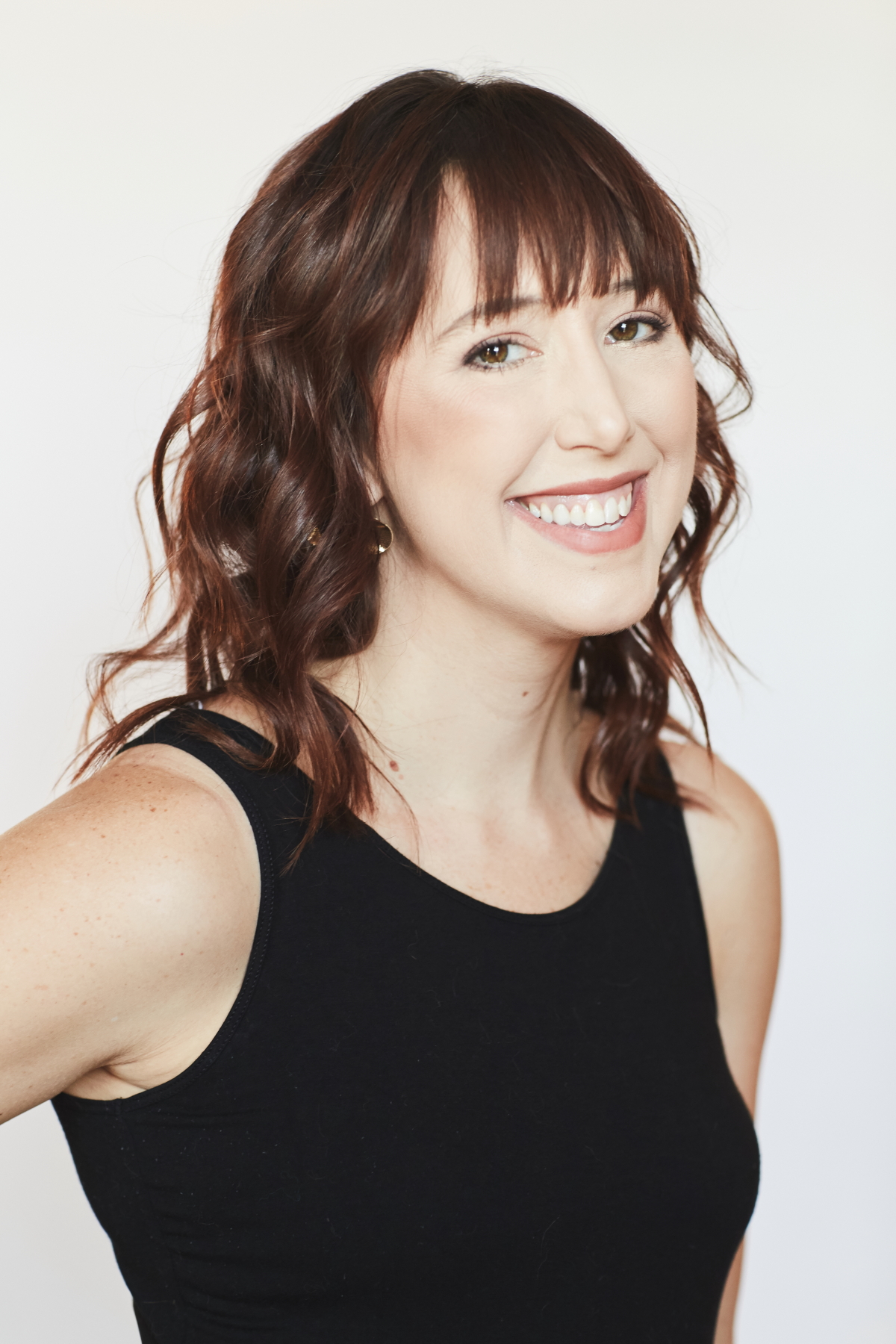
Meagan McGovern writes fierce, funny, and true stories about the American food system, homeschooling, social justice, and the odd quirks of American life. She lives on a farm teetering on the far edge of the country in Washington state, raising beef, chickens, and children. She recently went viral in braids and a Target prairie dress, but her children, 10, 16, and 20, don’t think it’s nearly as funny as she does. She’s just finished a memoir about growing up on the run with a mother who was a con artist.

Lara Ehrlich  1:19 

Hello and welcome to Writer Mother Monster. I’m your host, Lara Ehrlich, and our guest tonight is Meagan McGovern. Before I introduce Meagan, thank you all for tuning in. And you can now listen to Writer Mother Monster as a podcast on all audio platforms, or the interview transcripts on writermothermonster.com. If you enjoyed the episode, please consider becoming a patron or patroness on Patreon. I’m a one-woman band at the moment, so your support helps make this series possible. Please also chat with us during the interview. Your comments and questions will appear in our broadcast studio and we’ll weave them into the conversation.

Now I’m excited to introduce Meagan. Meagan McGovern. Meagan McGovern writes fierce, funny, and true stories about the American food system, homeschooling, social justice, and the odd quirks of American life. She lives on a farm teetering on the far edge of the country in Washington state, raising beef, chickens, and children. She recently went viral in braids and a Target prairie dress, but her children, 10, 16, and 20, don’t think it’s nearly as funny as she does. She’s just finished a memoir about growing up on the run with a mother who was a con artist. We will talk to her about all these things and more in just a second. But first, welcome, Meagan.

Meagan McGovern

Hi. Glad to be here.

Lara Ehrlich  2:49 

Thank you for joining us. So first, let’s kick off with something I’m sure everyone wants to hear about: the infamous viral Target prairie dress. Can you tell us where this initiated and where it took you?

Meagan McGovern  3:04 

Sure. I mean, it was such a funny thing that in the middle of this pandemic, when we’re all stuck here, Target thinks that what everybody wants is a prairie dress. I know there was a throwback to prairie dresses and Holly Hobbie and Little House on the Prairie. But you would think that now that everybody is on Zoom and doing high-tech things to connect with each other, the last thing people want to be reminded of is being their grandmothers and being stuck out in the middle of nowhere.

When I saw it, I was like, “Well, I live on a farm in middle of nowhere. Let’s go ahead and play that out.” And once I did, starting with the pictures, I realized that this is everybody’s worst nightmare. Every single job that was lost in the pandemic was a woman, and every single mother had to deal with childcare. Very few fathers had to quit jobs or anything else. And all of a sudden, people are cooking again, they’re making bread again, and we’re dealing with a plague, and it feels very much like you’re in the 1890s, stuck in the middle of nowhere, baking bread, watching children, and not allowed to go out and work and not allowed to go out in society. It was kind of a throwaway thing that I thought maybe 100 people would see. I didn’t imagine that it would have 55,000 shares, and that people would start following me. All of a sudden, I started getting friend requests. The next day I had 700 friend requests. Then it was 22,000 people following me. And I was like, I’m not really that funny. I don’t know if I’m gonna be this funny every day, but I’ll see what I can throw out there. You can always post pictures of baby goats. Those are always popular.

Lara Ehrlich  4:50 

I have to say I love goats. I had goats growing up. Although we were not farmers. You mentioned being funny and the humor, and that’s something I cannot understate is how funny that post is on Facebook. And for all of you who aren’t familiar with it, make sure to read each of the captions under the amazing images. Because it’s sort of a satire of living in the 1800s on a farm during the end of the world, which had captured everyone’s feelings very precisely.

Meagan McGovern  5:24 

What kind of life is it, you know? If you had said to somebody five years ago, you’re gonna be at the point where Donald Trump is president, you’re fighting over toilet paper in the middle of a plague in the middle of an economic collapse, and there going to be people storming the Capitol … I’ve had enough of the dystopian science fiction novels for one day.

Lara Ehrlich  5:48 

Yeah, definitely. And it’s got some well-needed levity to the horrors that we are still living through, although Trump is gone. We were talking before the interview about being a public figure now and what that’s like for you, because you are, for better or worse, very visible on social media.

Meagan McGovern  6:11 

It’s interesting. I’ve always been a writer, and I used to work for the Houston Chronicle. I used to be a newspaper reporter for years. And 5 million people would read an article of mine on a Sunday. But it was other people I was writing about—the president or what the mayor was doing or the Violence Against Women Act, something like that, where I could go in and sell other people’s stories, but I didn’t have to expose my own feelings. I had a curtain behind me in my words.

But these, if I screw up, everybody hears it. If I say the wrong thing, everybody comes back to me and says, “No, actually, these were your words.” A few years ago, I hurt a friend of mine’s feelings pretty badly. I said, “I didn’t mean that.” She said, “You’re a writer. You know what your words mean. Everything that you say has double the meaning. Because when you say something, you have every idea of what that impact is.” I was like, that’s not fair. Oh, maybe it is. Maybe I do actually have to be careful about what I say.

Lara Ehrlich  7:14 

Yeah, and there was an interesting thread on your page the other day that I found myself following as a spectator, where you were writing about your experience with your son, who has autism.

Meagan McGovern  7:28 

I have three children, and I don’t really like to label them, but they are all quirky. They all have challenges. I mean, they’re odd. They’re odd birds, all of them. But they’re my odd birds. They’re my little flock, and we do what we do to get through. And yes, we struggle with ADD—I mean, I am all over the place. If you read three of my posts, you will know that I am all over the place. I am out in the garden while I’m also cooking, while I’m also supposed to be writing a book when I’m doing an interview, while I’m also homeschooling. If somebody asks me what I do for a living, I have no idea. I’m a gluten-free baker, but I’m also a writer, but I’m also a mother. So, we all have ADHD, we are all scattered, and we just kind of pull it together.

I wrote a post about my quirky family that I embrace, and somebody wrote back and just pushed back on it and said that it was not the appropriate way to discuss this, and I was coming at it from the wrong perspective. The conversation around autism and about ADD has evolved over the last 15 years, incredibly, the same way that the conversation about race and about politics, and the conversation about who we are as Americans has evolved.

Somebody who hasn’t been following that, somebody who is new to the discussion about what autism is, or somebody who’s new to discussing race, if they jump into a conversation on a Black Lives Matter activists post about race, they’re going to have a whole different vocabulary, understanding, background, and semantics.

If somebody who is transgender and is 40 years old and went through this 20 years ago and is steeped in activism has a page and somebody else jumps in and says, “Let me tell you what I think about trans people,” there’s such a disconnect with layers and layers and layers of meaning and nuance, that every conversation you get into, especially online, you have to know where the other people are coming from and what their language means, what different words mean, in different contexts. It becomes harder to navigate conversations than it used to be.

Lara Ehrlich  9:42 

Yeah, and especially on your personal page, when people are coming to your page to argue or to bring their agendas to where you have a following. How do you navigate that?

Meagan McGovern  9:57 

Well, I have a very clear policy on my page. One of my favorite expressions is “the devil doesn’t need an advocate; he’s got plenty. I’m good.” And the other one is that on my page, you will treat people like you’re in my living room, and these are my friends. These are people I have invited into my living room, and they are people that I like and respect, and you will not come in and say unkind things to each other. You can say you disagree, you can have an interesting conversation, you can jump in and talk about whatever you want to talk about, but the minute somebody is disrespectful or unkind, I’m gonna ask them to leave the same way I would ask them to leave my living room. People have to realize that this is not a public forum, like the Fox News comments or the New York Times comments, but the page of a real person. You’re not standing in the middle of a public park arguing with each other. You’re standing in somebody’s house who has invited you in, and you can go away and go argue somewhere else if you don’t like it. My overall direction is to be kind.

Lara Ehrlich  11:11 

Tell me more about your writing career. You mentioned some of the journalism that you’ve done. Take us from the very beginning, from the discovery of the power of words, to where you are now.

Meagan McGovern  11:24 

Well, my mother was an interesting character. She was a reporter in New York City in the 1950s and 60s, and she got to interview The Beatles during their first concert, when they came to wherever it was—Madison Square Garden or something. She was 5 foot 10 and blonde and very pretty, and one of the first female reporters out there, so she got a lot of attention. She told us stories growing up—all we heard was she was a fashion reporter and a celebrity reporter. And she had quite a way with words. So, I had always been open to the idea that writing is a good way to make a living, and it’s an interesting way to tell stories and connect with people.

When I went to college, I was going to go for creative writing and write novels, and the people who were helping with my education said, “You can’t make a living writing novels. You got to have a career the day you get out of college. You can’t just live on a sofa for the next five years.” Alright, I’ll try journalism. And it was fun. I worked in Houston at the Houston Chronicle. I worked out in College Station, Texas, which is through A&M University, and I was a very liberal, young, naive person who had no idea what A&M was, or College Station, Texas, and that was eye opening.

I was a police reporter in Conroe, Texas, where I worked with the sheriff’s department. I saw my first deaths, I got to work with the police in arrests, and there was a flood that came through and killed a lot of people and I went to the scenes and saw the bodies, and that was a lot.

Then I switched to editing for a while, and that was a lot of fun, too, because it made me a better writer. When you see how badly these people turn in their stories, you think, “I can’t believe I ever did that.” Then I did feature writing. And then I had kids, and my kids were challenging, so I stopped working for money and started working for my kids instead.

All the time, I’ve been writing in the background. I’ve been writing a book about growing up with my mother, which I never published. I’ve been talking about it for years, but not done anything with it. I think the time has finally come that it’s the right time to publish, so that’s what I’ve been working on. And, you know, Facebook posts. That’s been my outlet. I used to have a group of women I wrote with every day. We would write 100 emails in the course of a couple days. And when Facebook came around, that turned into another outlet. It’s almost like a newspaper: you have a deadline, you can only write one thing, and then it goes away, just like a newspaper. It’s not like a book, where you go back and you have to edit and edit and edit. Once the Facebook post is up, and people have seen it, you need to move on to the next thing.

Lara Ehrlich  14:31 

Yeah. Let’s talk about the memoir first and about your mother. You said in your bio it’s about your mother, “the con artist.” Can you tell us a little bit more about that?

Meagan McGovern  14:46 

That’s a two-word way to describe her, and I don’t know if that’s fair to her. She was a character. She was a writer. She was one of the most brilliant women anybody has ever met. She was sharp, but she had a troubled childhood. She had a fantastic life in New York City as a journalist, and then she met my father, an actor in New York City, around 1968 or 1969, and he was a drunk. He was a character. He wanted to be Jack Nicholson or Paul Newman. He ran with Jack Nicholson and Paul Newman and wanted to be one of them. He was always kind of on the outskirts of it and never managed to break free into next tier of acting. He did a lot of theater work. They both brought out the absolute worst in each other, and absolute chaos ensued.

He left his wife and small child for her, and she left New York City. They had run-ins with mafia, they had run-ins with debt, they had run-ins with police officers, and they ended up getting run out of New York City. After they left, they went to Los Angeles, where they started over again. They had four children in five years, and I was the oldest. They were okay, but my dad finally had enough of it when I was 10 years old, and my mom took the four of us and didn’t know what to do with herself. She had four little girls under 10 years old. We just went on a spree all over the country when she didn’t know where to go. We had $600 a month to live on and child support.

We went to upstate New York for about a year, and she had no money. She got renter’s insurance on the place we were living in, and she burned down the house with everything we owned, took that money, and took us to Texas. We lived in 8 or 10 houses in Texas, then we went back to Los Angeles, then we went up to Oregon, and then we went back down to Los Angeles. Then we went to Connecticut, at which point I was 17 or 18. I said, “Okay, I’ve had enough. I’m staying here.”

And my mother went off on her way. She went to South Carolina and then the Bahamas, then Europe, and she just kept going and going and going and there was never any income—it was always insurance checks and kiting checks, and she would get $1,000 from relatives and start a new bank account, and you can write a lot of bounced checks on the $1,000. You can live for three, four, five months before they’re gonna arrest you. So, you go to the next town, and then you need $1,000 to set up, and you can do it for another four or five months.

I went to 27 schools in six or seven states, I think. I can’t remember. I was the only one watching my sisters when I was 10, 11, 12. When this whole thing started, they were 4, 6, 8, and 10. I watched them all and took care of them, cooked and cleaned and did all of that and swore I would never have children. I was never going to take care of little kids.

It was interesting. I mean, she was fantastic, in a lot of ways. She was funny, and she was smart, and she was clever. And she also was hard to live with, and you never knew which way was up and you didn’t know when you got home if the electricity was going to be on and if you were going to be having a playdate with your friend, or if there was gonna be a moving van in the driveway. It was hard to keep up with people. I ended up living in a world of books and literature, which also probably helped my writing a lot. My sisters, I think, had an even harder time than I did because they were younger. But we got through it.

There was a lot of laughter. One of the things that my sister keeps saying is your books aren’t funny enough. It was funny; I wasn’t. It was funny, but it’s hard to write about how funny it was. And one of the key things in my book that I ended up telling is that when I was 10, I found out about my father’s son from his first marriage and that I had an older brother, and I was like, “That’s impossible. I’m the oldest. That’s it. There is no way I have an older brother.” And eventually I got to meet him.

When I was 20 or 21, my mother finally started telling me some of her stories, and I found out that she had three children she’d given up for adoption before she had us. She was very Catholic and didn’t have the resources. She had this whole life before us. She hadn’t met my dad until she was 30. Then, a couple of years ago, two of the brothers showed up—two of the babies showed up, my older brothers. We ended up connecting through 23andMe. I met one of them last summer, and I’m talking to the other one via Facebook. It’s been an interesting journey, because they’d call up and say, “So tell me about my mom.” I’m like, “Oh, boy. Wow. Where do you want me to start?”

And I’ve always been pretty annoyed that I’m 5 foot 5, when my mother was 5 foot 10. One of the brothers is 6 foot 7. So unfair. I would have loved to have had older brothers when I was growing up. I don’t think they deserved the childhood I had. I don’t think anybody deserves that childhood. But it would have been interesting to have them there and to see what would have happened if they’d been around. And if there had been more openness, there would have been a way to connect everybody back then.

Lara Ehrlich  20:54 

Yeah, that sounds incredibly challenging.

Meagan McGovern  21:00 

It was a bad childhood, and I was very angry with my mother for it. But on the other hand, all children really need is the stability of knowing somebody really did care about us and love us. And my mother’s sisters were always around, and they were not able to step in and fix it, but we knew we had a place to go if things got really bad. We were never going to be homeless. Even though we were homeless, we weren’t ever going to be really homeless. It’s a safety net under the safety net kind of thing.

Lara Ehrlich  21:31 

That makes sense. And you said that because of that, you did not want children, which I can understand. You had a lot of responsibility when you were growing up. At what point did you decide you did want children?

Meagan McGovern  21:46 

When I was 27, 28, I was going to take my career as a copy editor and run away. I was going to go teach English in Prague or do something in Europe. I always wanted to have an adventure. I wanted to do my own life, get away from my family, not be stuck as being identified as the oldest of four or the oldest McGovern girl or any of that. I wanted to go find myself. I met my husband—sadly and wonderfully, I met my husband—and that was the end of that idea.

Because he had a job, and in order to make money, he had to actually go to work every day. I had never been around somebody who had to work nine to five, Monday through Friday, every single day to make money. I’m like, what is this? We can’t just run away? He had money in a savings account. I’m like, if you have money in a savings account, why aren’t we spending it and going to Europe? He’s like, that’s not the way it works. He owned a house, and I was like, if you own a house, why aren’t we selling it and running around?

When we got engaged, we flew to Paris together. He had the money to go, because he hadn’t been blowing all his money on wild things. It was eye opening and amazing to see the kind of things that you could do if you actually had a job and worked and saved money. We joke about it, and it’s kind of a silly cliche, but I build all the castles in the air, and he runs around under my castles, trying to build foundations, as fast as I can create the castles, and it has worked. It has been a very good partnership. When I met him, I said, it turns out I didn’t want any children, I want your children—you. Having your kids, that works. And it’s been really good.

Lara Ehrlich  23:44  

Yeah, it sounds like he helped build a foundation, not just under castles but under your life a little bit.

Meagan McGovern  23:51 

Yeah, and he would never have thought about going to Paris that way. That just wouldn’t have occurred to him. It was just adventure. We really complement each other well. It’s been almost 25 years, and we haven’t looked back from anything.

Lara Ehrlich  24:10 

Tell us more about your kids. You have three, right?

Meagan McGovern  24:15 

Three kids, and we have a bonus with us now. My nephew came to live with us a while ago, and he’s fantastic. He’s actually out on a boat right now. He’s a boat captain. And he’s 30. My oldest is 20, and he is in college in Minnesota. He’s a Dungeons and Dragons enthusiast and a medieval history guy, and he’s very, very into the stuff that he’s into.

We debate back and forth whether he’s geeky or a nerd, but he’ll call me up and say, “Did you know about the history of capitalism in the 1920s and how it affected gender equality?” No. No, I didn’t. And he gets very into that kind of stuff. He’s a good egg.

My middle is pretty fantastic. He’s 16. He is the one who had autism when he was little. I know you don’t grow out of it, but when he was 2 or 3, he did not speak. We didn’t think he would be functioning as an adult and be able to speak. He was tough. He had a really rough start to things. His first 18 months, he didn’t stop screaming. Now at 16, he still likes what he likes. We talk a lot. He loves the platypus. He was, like, the world’s leading expert on the platypus for seven-year-olds for a long time, and we went to every museum to see every Australian animal we could find, we went to the kangaroo places, we did a marine mammal study because he was into orchids for a while.

And then, the year that Barack Obama got elected, I think he was 4, and I gave him an electoral college map because we’re homeschoolers. We’re those geeky people. And he started coloring red and blue into the states. That was it. He’s been hooked ever since. He’s been into politics. He can name every senator and most representatives and tell you the junior senator or senior senator from their state, how many percentage points they got elected by, what their biggest problems are in the state, why they’re going to get reelected or not.

He’s right now focused on the Del Rio Grande and the valley there and why they switched from blue to red in the last section and what they’re gonna do and how many percentage points they need to swing back. He’s got a whole Twitter account about it. He loves to take out his game board of the electoral college. Somebody will say, “I just don’t understand how the electoral college works and why if you win the popular vote, you might not win.” And he comes in.

He’s actually turned out to be the most socially adept of any of us, which I never saw coming. He likes to study other teenagers and people around him and say, okay, that’s how they dress, that’s what they do, that’s how they talk, and then he just goes and blends right in and wears those clothes, which I’ve never been able to do. I can’t figure out how to dress or what to wear. He’s good at it. And he gets kind of annoyed that we don’t try to fit in. So, for 16, he’s doing pretty good.

He was on the rowing team last year, and it’s been hard for everybody. He went from rowing three hours a day to no exercise at all. We got this farm because he needed goats. He needed animals. Right now, we have two or three cows and five goats, and he has chickens and a dog that he adores that sleeps in his bed, and he has barn cats and everything else, and he has everything he needs to thrive.

And then I have my little one, whose name is Scout, and she is 10. She was born when I was 41. The other day, she said, “Tell me what life was like pre-Scout.” I said, “Well, I kind of waited for you forever. I was gonna have a girl first. You were planned. You were my little girl. You didn’t come around until 10 years later. Everybody was already born, you had two older brothers. I waited and waited, and you finally showed up.” She said, “I wish you’d have had me when you were 30 instead of 40.” I said, “Why?” She said, “Well, because then you could take me to the park and take me places. You’d have energy to do stuff besides house projects.” I was like, “Look, kid, that’s not fair. Covid is the whole reason we’re not going anywhere.” She’s like, “Uh huh. We could go to a picnic, if you wanted.” I’m like, fine, use the guilt, twist all the screws. And of course, we ended up in the park having a picnic that night. She’s the one who really gets how things work and what to say and what to do. I write a lot of Scout stories.

Going back to being a public figure, that’s my favorite thing to do—to write about my kids and to talk about their personalities and their quirks. I’m okay talking about it here in a public broadcast. Do I want pictures of my kids in front of 20,000 people? Do I want their names and where they live and what school they go to and a picture of my pubescent 10-year-old girl on Facebook? It was great when it was my friends and family and people that I knew in real life, but 20,000 people, not so much.

Lara Ehrlich  29:52 

How are you navigating that? Are you doing anything differently?

Meagan McGovern  29:56 

Yeah, I’m doing a lot differently. I’m saying things like “my son” or “my middle son” or “my oldest son,” instead of “Sawyer.” I’m not posting pictures of my kids nearly as much. I might post one or two pictures, if they are innocuous, generic photos. I’m not posting videos of Scout singing her fantastic songs or her artwork or any of the things that sort of bring my page to life. People love to hear funny stories about Scout, because she’s fantastic, but they’re her stories, and I think that every person has a right to their own stories and their own privacy. Of course, she doesn’t mind me sharing them with my sisters and my aunt and the people who were on Facebook a while ago. Does she want me sharing them with people who are in Australia or Prague who don’t know her? I don’t know.

There’s a lot to navigate, there’s a lot to figure out—what to say and what not to say. I have felt not silenced by Facebook with having more followers, but certainly the depth becomes shallower. I don’t jump in and say, “Oh my god—did you hear about this thing in politics?” Because I can’t. Because not everybody’s going to agree with me. It used to be that everybody agreed with me, because that’s why they were friends with me on Facebook. Now, not everybody agrees with me. Not everybody wants to hear bad language. They don’t know who my kids are, and they don’t know my politics, and it’s hard to get into the depths of that. I find myself talking about things like gardening and cooking more, which are pretty innocuous topics, but they’re safe and they’re connectable. Gardening is relatable. My politics, maybe not so much.

Lara Ehrlich  32:02 

Yeah. Yeah, you’re a human being.

Meagan McGovern  32:06 

Right. It’s hard to make sure that I’m not at all stifling myself, but I also don’t want to piss people off. Last thing I want. And I really enjoy that I have people that that like me and that I am connecting with, and there are a lot of people that I am really having fun with on Facebook. At the same time, if you got 20,000 people turning on you, I’ve seen that happen. That’s not something I want to happen because I wasn’t careful with my words.

Lara Ehrlich  32:31 

Yeah, absolutely. We see those in cancel culture. Let’s go back to something else I wanted to ask you about. I want to get to the farm, too, because there’s a lot there. But tell me about homeschooling.

Meagan McGovern  32:45 

Homeschooling is fantastic. And now it doesn’t get a bad rap on it. Homeschooling is not at home, and it’s not schooling. That’s the best way that I know how to describe it. I’ve written an article about this on Medium, but I’ve talked about it for years. You are the contractor; you are not the builder. If you consider that an education is a home in the analogy, every child needs something different. My middle child needs probably a cabin in the woods with lots of animals around him. My older child needs Hogwarts and Oxford College and ancient, deep books and medieval language. Scout may need a place in new, cool, flat in New York City, where she could study gender equity and all of that.

I would never build my son a log cabin, and I don’t think the people that are building Oxford are the same people who should be building log cabins. You need different people to do those things. My job is just to go find the people who can build those things and who are good at that, and then connect them with my son. If my son wants to learn about politics, I can’t teach him about politics, but I can get him into great classes, and I can teach him how to find what he needs to learn.

My older son took fantastic classes in literature through The Lord of the Rings, and he took classes in dystopian movie science fiction and dystopian movies. I think he’s taken five different classes in science fiction. I’ve never read any of those books. But he dives deep into them, and he’s able to work with great teachers and great writers.

I think people who think they can’t homeschool think that homeschooling is sitting in front of your kids trying to teach them, and I don’t teach my kids anything. I get out of the way and let them learn what they want to learn. And even now, when I moved into this house eight years ago, we had 3,000 books, and they were mostly homeschooling books. I had a bin of books about Rome and ancient Greeks and books about medieval knights and another box of books about Vikings and one about Shakespeare. And now, I’m finding that with Scout, we don’t use the books, and I’m kind of heartbroken over that, since I’m a writer and a book person and a book nerd. But it’s just as much fun to go and watch the Romans reenactment and watch the troops and watch the generals and see all of it on YouTube, as it is to read a book about it that’s static and everything else.

And of course, I want my kids to be able to dive deep into great literature, but you can do almost anything on YouTube. I tried to teach myself to knit years ago, over and over again, from a knitting book. Couldn’t do it. YouTube—I got it in a couple of hours. You could rewind and go, “Oh, that’s what you’re supposed to do.” I don’t understand how anybody is sitting in a regular classroom. I don’t learn through watching lectures. I would much rather have it on a piece of paper in front of me, where I can skim through it, get it, go on to the next, next, next, and not wait for somebody to finish all of their words.

If I have the option of sitting through a lecture in a college course or being able to watch YouTube, skim through all the PowerPoints, get through all the things, just get the points that I want to get out of it and move on to the next, why would I sit there for hours and hours and hours of lecture?

I think that school’s old fashioned. School is outdated. The idea that any child can’t choose what they want to learn is horrific to me. Why would anybody have to learn certain things in third grade and certain things in fourth grade and certain things in fifth grade? Why not, if your kid’s really into ancient Greek, let them spend three years learning all about ancient Greece? And then later on, learn about the other stuff. We’ve spent 20 years now, learning by experience.

We go to museums, and we’ve done other field trips. We did a fantastic trip I wrote about, the Little House on the Prairie road trip, where we went from here to South Dakota and explored everything from Yellowstone to Laura Ingalls’ house, and we got to sleep in a covered wagon on her property. That was our American history world tour.

Homeschooling doesn’t look the same for everybody. If it does, you’re doing it wrong. It shouldn’t look like school, and it shouldn’t feel like school. School is a way to teach 30 kids at once, and you do crowd control. Homeschooling is individualizing, customizing an education for each child, and farm school more than anything.

Lara Ehrlich  37:45 

And you’ve set up a network, right?

Meagan McGovern  37:47 

When we moved here, there was no network. The network here was for Christian home schoolers, and that’s the way that most homeschooling started out in the ’70s. It was for Christian home schoolers who didn’t like the government advocacy in their education, so they, to their credit, did a very good job in every state making sure that homeschooling was legal, and that homeschooling was controlled by the parents. Because of those laws there, everybody now has a fantastic network of homeschoolers in every state, but a lot of them are conservative Christians. The whole core of the point of the Christian curriculum is to teach that evolution is wrong, so a lot of the science is terrible, and a lot of the books are from a perspective I’m not interested in. They started from a perspective of having books to give to missionaries in other countries, so they had curriculum that they could send to missionaries in Africa to teach students. They were very, very traditional public schools. It doesn’t fit anything we’re doing.

When we got here, there was a Christian homeschooling network here, and we went to three meetings and said, “Okay, next.” And we set up our own.

Now we have, I think, 1,400 families in the network, and it’s mostly just a Facebook group. We have a “not back to school” picnic in September, and we have some classes, and every Wednesday—when there’s not Covid—we have a fantastic park day with anywhere from 50 to 200 kids running around on the beach or in the park and talking, and all the moms get together, some dads get together, and talk, whether they’ve got a kid who needs biology class that you’re in or how to get a biology class going or what the best writing program is. It’s been a good source for me to be able to share knowledge. I’ve been homeschooling for 20 years, so when people come and they say they’re having an issue with something, I’ve probably seen it before. I probably got a good curriculum to go to, and I’m a good resource to have.

Lara Ehrlich  40:06 

It’s amazing. I am sure that a lot of women out there listening right now who have been homeschooling their kids in the pandemic version of homeschooling …

Meagan McGovern  40:18 

They don’t get to see homeschooling. They see the worst of it, and people keep writing about why the homeschooling sucks. I’m like, yeah, it does. I thought you loved homeschooling. Right now, I don’t. I like homeschooling when we have park day. In this group that we’re in, we have homeschool skiing, we have homeschool ice skating, homeschool roller skating, park day, archery club, chess club, math club. I ran three different book clubs. We have a homeschool for each group with goats. None of the people who are pandemic homeschooling will ever see the best part, that we have all of the museums and all the parks to ourselves. Every day, the museums are empty. Every day, the movie theaters are empty. We get to go do all of that. Not anymore. We’re stuck at home.

And the other huge benefit to homeschooling is that you get to pick your curriculum. If your kid wants to be a chef, and everybody comes in and says what’s the best curriculum. Like, do you want to be a ballerina or a chef or an architect or a lawyer? That’s what homeschooling is. You go learn about what you’re interested in. Of course, you need reading and writing and math and everything else, and you don’t want to shut doors. The most key point to all of this is that you don’t want to handicap your kid by not teaching them things that they might need to do if they go from one path to another, if they change paths. But there’s nothing wrong with going down 100 different paths to find out what you want to do and follow your passions.

The homeschooling pandemic version, where you have to sit in front of a computer and click all day long and sit in front of Zoom meetings all day long—it makes me want to throw up, thinking about it. So many people are miserable. I’m like, of course you’re miserable. This is not homeschooling. I don’t know what this is.

Then I get the pushback—well, the teachers are doing the best they can. Of course, the teachers are doing the best they can, but it still sucks. And of course, this is a miserable way to do it. There are hundreds of thousands of children whose only meals come from school, the only human connection they get is from teachers, teachers are the only people who are safe. I would never take that away from people who need public schooling. But at the same time, I don’t think anybody is served by Zoom meetings all day long.

Lara Ehrlich  42:54 

No, definitely not. I want to follow that thread, because I do meetings all day long for a different reason. You do so many things, and you have been doing so many things for 20-plus years, even before you had kids, and now you have a nephew there and you have this homeschooling network, and you have a farm with all these animals, and you’ve written a memoir, and you have a public persona through which you’re writing. How do you also fit your writing in? Let’s talk logistics.

Meagan McGovern  43:32 

You know, I would love to see an article about Tolkien and Lewis. You always hear how Tolkien and C.S. Lewis were good friends, and they’d talk about the writing at Oxford and everything, but nobody ever said to them, “When do you feed your kids?” and, “When do you do the cooking and grocery shopping and your laundry?” You know, and who gives the kids baths? I would love to see an article about their children. And we know the answer to that. We absolutely know what the answer. Tolkien had four kids under 10 when he was writing Lord of the Rings, and he didn’t do laundry, he didn’t clean up. He had a maid and a housekeeper and a wife. Maybe the wife was the maid and the housekeeper. I don’t know.

But the answer to that is I don’t do a lot of things. I don’t clean, I don’t do a lot of dishes, I don’t do a lot of laundry. My house is a mess. I don’t care. And I don’t have housekeeping standards for somebody else. My husband does laundry because he doesn’t mind doing it, and he’s good at it and I suck at it. My kids do dishes. I do the grocery shopping and cooking because I like it and I’m good at it and I’m fast at it. And some nights we have scrounge nights. We have leftovers.

One of the key things I did learn from my mother growing up is that your life doesn’t have to look like other people’s lives. You don’t have to fit what other people want you to fit in.

There are days when I go around my living room and think, oh my god, I need to figure out how to put a rug in that matches this, and I need to get end tables. People need end tables. They need lamps. Why can’t my living room look like everybody else’s living room? And there are other days that I have piles of things, and I think I’ve gonna put all this away, I’ve got to do this and that. No, I don’t. I want to write.

I don’t want the piles to take over my life. There are people who would argue that if you were organized and on top of things, you wouldn’t have piles and they wouldn’t take over your life and you would have time to write. Okay, maybe that works for you. For me, I gotta have my piles of things and my stuff, and I just I don’t feel guilty about not having a perfect house. I don’t feel guilty about not having perfect clothes for my kids. We don’t do dry cleaning. We don’t do nice clothes. We don’t go to church. We don’t have a lot of social activities beyond homeschooling. And yes, we have to take care of cows, we have obligations. The kids yell at you if you don’t feed them, even though I keep forgetting. But the things that are not important, we let go.

I think one of the most key things you can learn is that the only things you have that matter are your time and your attention. That’s it. If I put my time and attention to having a perfect house or to making sure that it looks like other people’s houses or to make sure that other people approve of me, then that’s where my life will be spent. And I don’t have any interest in that. I just don’t. If that means that some people disapprove, I’m okay.

My next-door neighbor doesn’t approve of me. She hates me. She has a beautiful, clean yard. She doesn’t like dandelions. I have 10 acres with cows. I’m gonna have dandelions. She wants me to use Roundup on my yard. No. It’s just not gonna happen. Things like that are just not things I’ve just learned to slide off my back.

Because of that, I don’t have a lot of time for writing, but I do make it a priority. That’s what I do: write. Even if it’s just a post on Facebook, I now have a draft folder of things I want to write about, things that are important to me. Even if it’s only 30 to 40 minutes of sitting down and fleshing out an idea or working on one chapter, I think it’s worth putting my time and attention into something that has value. Because otherwise, I’m useless. I’m not good to other people. I’m not a good mother, I’m not a good wife, I’m not a good friend. I’m stuck. I am never more miserable and unhappy and grumpy and nasty as somebody who is taking care of others and there’s no light for myself. You don’t want me around you. I mean, I’m just a miserable human being and I turn bitter. I would much rather be a happy, easygoing mother with dishes in the sink and not do them. I know there are people who cannot go to sleep when there are dishes in the sink and there’s laundry to be done. I don’t care. I’d rather write.

Lara Ehrlich  48:45 

I love that. That’s very freeing. And Kristin Varley had a great comment here that I’ll just put up for us. She says, “I wish I’d been told that even once before I was 25. I figured it out at 43.” Me, too.

Meagan McGovern  49:08 

It is very freeing. It’s not even knowing that; it’s living that. It’s very hard to live that life. I didn’t know I had ADD. I didn’t know what it was. I knew that I couldn’t do what other people did. Stupid workarounds for me. I can’t hang clothes up. I just can’t. I had the idea of taking clothes and hanging them on a hanger and putting them in the closet. I tried that for 25 years. All I ended up with was piles on my end. I finally figured out that if I took out the bar in my closet and I put bins in my closet and I just threw T-shirts in one bin—I put a label on that said “T-shirts,” another one that said “sweatpants,” another one that said “jeans”—and all of a sudden, my clothes got put away. I

 had no cabinets in my kitchen, no open upper cabinets. I took everything off and I put upper shelves instead, because cabinets are where things go to disappear and never come back out. Anything in a drawer or behind a door gets hidden, and if I can’t see it, it doesn’t exist. I think because I’ve always been so quirky and had different ways of seeing things, it has enabled me to realize that I’m not going to look like other people, no matter what I do, so I’m going to stop trying.

Lara Ehrlich  50:22 

A surprising number of writer moms on the show have given some of this, like, Home Ec. advice, like the ones that you just did, and it’s amazing. Like the baskets in the closet. I’m going to try that, because the idea of hanging things up—I do the same thing. There was someone on here who has a sock basket, and she doesn’t match socks or roll them up, she just puts all the socks in there, and they don’t have to match.

Meagan McGovern  50:51 

We did that for all my kids. My kids don’t have bins in their closet because I’m not hanging up their clothes either. I mean, I’m not. We’ve tried a hundred different things, and at one point, we had all the kids’ clothes in bins next to the washer and dryer, and we had shelves with their names on them. It’s somewhat organized. That way, they couldn’t keep them in their room, and they couldn’t have them on the floor of their room, they couldn’t have messy rooms, and their clothes were just kept downstairs. You took them out of the washer, and you put boy shirts in one and girl shirts in another and girl pants in another, and they were all right there next to the washing machines. They were clean. And the kids came down every night, got clothes for the next day, and put their dirty clothes in the hamper. There were no clothes in the room and their closets were empty. In the closets, they could keep all their books and all their toys and all the stuff in the room. It was fantastic. Just because other people figured out how to use hangers doesn’t mean I’m ever gonna figure it out. I mean, there’s certain things I just don’t want to spend my time doing.

I have a lot of envy for people like Einstein, who just wore the same thing every day all day long. I mean, I would, if I had any choice. I remember in high school, a girl came up to me—and I was an odd duck in high school—and she said, “We really like you, and we want you to be part of our group. I’ve really tried hard to get them to accept you, but you wear the same pair of jeans every day, and they won’t let me be friends with you since you wear the same jeans every day.” I was like, “Oh. People notice?” She was like, “Yeah, they notice.” I had no idea anybody ever looked at anything I wore. She said, “Do you have other clothes?” I was like, “Yeah, I just don’t know how to hang them up and put them away.” And she’s like, “Well, if you just start wearing other clothes, then you can be part of the group,” and I’m like, whatever. I don’t think I wanted to be part of their group as much as it opened my eyes to the way that other people see me, because I always felt invisible and that nobody cared what I wore. I did start wearing better clothes. So, your life doesn’t have to look like anybody else’s, but if you want friends, you kind of have to know what people are gonna think is creepy and off kilter. I do try to do the bare minimum to fit into basic society.

Lara Ehrlich  53:18 

I think that’s a valid goal. I have one outfit I wear in pandemic times, too. You know, it’s like the Target prairie dress is perfectly acceptable or the sweatpants you wear every day to Zoom meetings.

Meagan McGovern  53:34 

If Target really wants a great outfit to sell, instead of the prairie dress, they should sell the Zoom outfit, where you have a fancy thing on top and sweatpants on the bottom with big pockets, and you can wear it all day long. That way, if you’re walking by a Zoom meeting, you can just drop in and then go back to what you were doing—stain-proof, wine-proof, coffee-proof.

Lara Ehrlich  53:55 

I always have to be careful when I stand up in a Zoom meeting, because not only do I wear sweatpants, but I haven’t worn a bra in a year.

Meagan McGovern  54:06 

That’s something I wrote about on Facebook right before this, that I had to go get makeup for this show because I haven’t worn makeup in a year. I just sent away for makeup. I started Googling how to do makeup. And I was like, I don’t have any followers because these makeup people at 8 million followers! I mean, that’s viral. And they’re using words that I don’t understand. They’re using things like contour and glitter and this and that and you get the perfect cat eye. I’m like, I have no idea what’s going on here. I really screwed it up the first couple times I put it on because I didn’t know how to use it.

Lara Ehrlich  54:42 

I think you look great and yeah, I’m with you. I had a photoshoot last week, and it was literally the first time that I’d had my makeup done. Even for my wedding, I did my own. I sat there, and she did all this stuff, and I was like, wow. She gave me a set of brushes. It did inspire me to get new lipstick.

Meagan McGovern  55:16 

It was fun to try it today. It was good to have new makeup. And now I can do it without looking ridiculous. But boy, the first couple times … I even tried the false eyelashes, too. I put it on halfway and was like, no. There are things I’m never gonna do again. I’m never gonna wear high heels. I’m never gonna wear pantyhose. I’m never gonna do false eyelashes. And I’m okay with that. I can live with that as my legacy.

Lara Ehrlich  55:39 

Yeah, I think you’re onto something there. And as Robin Jorgensen said here, “Patent that Zoom outfit idea. I will buy it.”

Meagan McGovern  55:50 

That’s what Target should be doing. This is our audience, people who need something that you can’t spill your wine on.

Lara Ehrlich  55:58 

Yeah, that’s a whole other conversation—the wine.

Meagan McGovern  56:03 

Yeah, no kidding. And I’m joking, but one of the things I said a couple months ago was we’re all going through really hard times, it’s tough right now, and if you need to drink, drink. If you need to hang out with people and go see people, and that’s the only thing that’s gonna keep your sanity, do it safely. And if you’ve been sober for three years, don’t drink. You know, do what you need to do to keep you sane and happy, and don’t get into whatever the society pressures are right now, because this is a rough time for everybody. You know, this is hard.

Lara Ehrlich  56:40 

Yeah. And I’ll remind people, too, that a lot of writer moms who’ve been on the show talked about trying to balance writing and motherhood, and a few of the women have really helpfully reminded me and listeners that if you’re not writing right now, that’s alright.

Meagan McGovern  56:58 

Oh, yeah, I thought I was gonna edit this whole thing. And I thought I was gonna write another book about parenting and farm life and the things I write about on Facebook, gluten-free cooking and raising children and discovering two half-brothers. There’s a lot I’d like to write about. I didn’t get anything done this year. I mean, I did, but it was gardening, gardening like a crazy person, and I painted my bedroom, and I knocked down walls, and I remodeling the basement and put in hardwood stairs. I’m not a carpenter. I don’t know anything about putting hardwood stairs. But it was something that I could engage my brain in where I could learn a whole new skill and learn how to use the saw and learn how to use everything, because it kept my mind from the fact that we’re in a horrific situation.

Lara Ehrlich  57:50 

With writing, until you have that book or even printed out pages of your manuscript, it is just sort of like this amorphous thing, either in your brain or on the computer. It feels really good right now, during this pandemic, to do something you can see, like plant a seed and watch it grow.

Meagan McGovern  58:12 

Yeah, and for me, especially since I’m editing the memoir, that’s my current project. I’m revising it, trying to get it done. I don’t have an agent right now, and that’s my next goal, to find one who does memoir. There are a lot of genres out there. If I were writing something that was teen literature, right now, everybody wants that. But memoirs are hard. I’m working on this memoir, and a lot of it is not fun stuff to write about writing about—being on the run, or all the things that were bad with my mom. Who wants to dredge that up in the middle of this whole pandemic thing? I’m gonna go write fancy Facebook posts about fun things, about gardening and about flowers and about my son and his weird hobbies. I’m not gonna write about bad things right now. I think that’s okay. I think it’s okay to indulge, whatever you need to do to keep your brain happy right now.

Lara Ehrlich  59:06 

Yeah. And you’ve obviously been connecting with so many people through those posts, because they provide a sense of joy and levity and a peek into your world, which you’ve described as quirky, but it’s also just amazing with farm animals and fields.

Meagan McGovern  59:24 

That goes back to the whole “your life doesn’t have to look like somebody else’s.” I mean, nobody wants a ’50s farmhouse that’s falling down in the middle of nowhere with goats. This is not something that a lot of people want. They might like the idea of it, but the first time they stepped in the mud and the goats and everything else, it’s a lot. It’s a lot of work, and it’s not for everybody. But yeah, man, it’s fun to write about. There are so many good things. I mean, just collecting your own eggs every day and baking bread with your own eggs and things like that is a lot of fun. There’s a lot of upsides to this. So, you know, you write about what the goats are doing today, and then something bad?

Lara Ehrlich  1:00:05 

I have so many more questions, but I know we’re coming up on an hour here. I want to ask you quickly about the farm. You mentioned you got the farm for your son. Tell us about how that came about.

Meagan McGovern  1:00:17 

We were in Texas. My husband’s from Houston and he’s lived in Texas his entire life. My husband is pretty much the all-American man. He is a fantastic human being. And he’s 6 feet tall, and he’s an engineer and he’s good looking. And he was a Boy Scout. And his parents had been married his entire life, and they got married at 21 or 22 and had him at 24. He had been to one school K through 12, all the way through, and lived in one house the whole time. And for me, it was like marrying into Leave it to Beaver. It was this whole different family.

So, he’s from Texas, and we always lived there, but I didn’t always live there. I knew there were other places I wanted to live. I knew there were other worlds out there. I kept kind of nudging him. The last summer we were in Austin, we had 100 days over 100 degrees and 30 days over 110 degrees. I had a newborn, and I was like, I’m not doing this. I can’t take her out of the house until 9 o’clock at night when it’s 90 degrees. There’s no way I can live like this anymore.

At one point, on my mother’s random trips around the United States, we lived in Oregon for a while, which was gorgeous. When my husband was looking for jobs, we he started looking for jobs up here.

My son needed wide open spaces. He was 9 when we moved here, and he was a climber, and he would go to a park and he would look for the tallest tree and then he would climb it. He was the one that, when you go to the park, mothers are going, oh my god, where is her mother? The mothers of the other kids would say you can’t follow him. He’s the one you can’t follow. I mean, he was climbing light poles with his bare feet, and he’d use his toes and his hands to get to the top. He would be fine with 40 feet sometimes. And we did a lot of going to parks and we did a lot of going out. But at some point, you need more.

His special interest was animals, and the only thing he wanted in life was a goat. So, we moved to a farm. It’s a very small farm by farm standards. It’s 10 acres, which is huge by suburban standards, but it has an enormous barn. It was built in the 1920s and has a silo that we don’t use. It has work buildings and outbuildings and a chicken coop from 1920. When we moved here, the lady next door, who was 83, was born in this house, and she had been raised here and her father built the house. He built the farm. She was able to show us where the outhouse was, which had been built in the 1930s for farm workers so that they would stop pooping in the fields.

And she showed us what the barn was originally used for, and she and her brothers would collect eggs every day from the chicken coop, and they had 2,000 chickens and they would have to collect eggs before they went to school. It was originally a 40-acre farm, and they had 40 dairy cows, and some of the equipment was still here for milking. We started off slow with a couple of goats, and my son was in love with his goat. It was his pride and joy and he adored her. He was out in the field every day, hugging her and walking around with her and training her.

I started a 4H Club for homeschoolers that showed goats at the county fair, and we went to the county fair and we showed Sonora and he won a prize for goat showing. There was a costume contest where you actually dress up goats. I mean, we did all of it and it was good. It was really good for us. As he’s gotten older, the animals are not as important. My husband actually has enjoyed the farm, too. He’s got two cows, and they’re not a lot of work. He goes to a brewery in town and gets barley for them three days a week and he takes it to the cows. That’s his thing that he does. We just butchered two cows a couple of weeks ago, and I think we got 2,800 pounds of meat, something like that, and sold it. I mean, there’s work, but it’s not a working farm where that’s all of our income. We have the goats because they keep the blackberries down, and chickens are fun.

Lara Ehrlich  1:06:20 

On that note, that’s amazing. Thank you so much for joining us. This has been really fun. You’ll see a lot of nice comments in the chat here, a lot of people saying that you’re uplifting and providing some much-needed humor and they’re vicariously living through you.

Meagan McGovern  1:06:48 

Thank you for everything.
Elle Nash Transcript


Writer Mother Monster: Elle Nash

January 18, 2021

Elle Nash is the author of the novel Animals Eat Each Other (Dzanc Books), which was featured in O – The Oprah Magazine, and hailed by Publishers Weekly as a “complex, impressive exploration of obsession and desire.” A small collection of stories, Nudes, is forthcoming from SF/LD Books in spring 2021. Her short stories and essays appear in Guernica, The Nervous Breakdown, Literary Hub, The Fanzine, New York Tyrant, and elsewhere. She is a founding editor of Witch Craft Magazine, a fiction editor at Hobart Pulp and Expat Press, and runs an annual workshop called Textures. Elle has one child, and she describes writer-motherhood in three words as “boundary-building, productive.”

Lara Ehrlich 

Hey everybody, welcome to Writer Mother Monster. I’m your host, Lara Ehrlich, and our guest tonight is writer Elle Nash. Before I introduce Elle, I want to thank you all for tuning in and let you know that you can now listen to Writer Mother Monster as a podcast on all major audio platforms, or read the interview transcripts at your leisure, all on writermothermonster.com.

If you enjoy the episode, please also consider becoming a patron or patroness on Patreon. Please also chat with us during the interview. Your comments and questions will appear in our broadcast studio, and we’ll weave them into our conversation.

Now I’m excited to introduce Elle. Elle Nash is the author of the novel Animals Eat Each Other (Dzanc Books), which was featured in O – The Oprah Magazine, and hailed by Publishers Weekly as a “complex, impressive exploration of obsession and desire.” A small collection of stories, Nudes, is forthcoming from SF/LD Books in spring 2021. Her short stories and essays appear in Guernica, The Nervous Breakdown, Literary Hub, The Fanzine, New York Tyrant, and elsewhere. She is a founding editor of Witch Craft Magazine, a fiction editor at Hobart Pulp and Expat Press, and runs an annual workshop called Textures. Elle has one child, and she describes writer-motherhood in three words as “boundary-building, productive.” Welcome.

Elle Nash 

Hi, thanks so much.

Lara Ehrlich 

Thank you so much for joining me. I’m excited to talk with you about writer motherhood and about Animals Eat Each Other, your amazing, tight, vicious novel. So, let’s just get started. I want to ask you, who lives in your house?

Elle Nash 

I currently live with my parents and my partner and my child. We moved here right at the beginning of the pandemic. I didn’t think it was gonna be a long-term thing, but, you know, unfortunately, we’re still here.

Lara Ehrlich 

And how old is your child? You said you have a daughter?

Elle Nash 

Yeah, she’s toddler age. She just turned 3 this year.

Lara Ehrlich 

And before the interview, we were comparing notes, because my daughter’s 4 and I remember the 3-year-old period pretty well, that sort of wild time when they’re learning that they have a willpower, and they start expressing themselves. You’re kind of right in the thick of that toddlerhood.

Elle Nash 

Yeah, definitely. I think the thing with toddlers is that they’re just learning that there’s things they can control about their world, and they really want to do anything to exert that control. It can be tough, but I spend a lot of time really pushing her to be as independent as possible, because I think that really helps temper a lot of that desire, when she feels like she can control certain parts of our world—because there’s a lot that kids can’t control, which is super frustrating. I think that’s where the brunt of a lot of that difficulty comes from.

Lara Ehrlich 

Yeah, I think you’re absolutely right. It must be so hard not to be able to control your surroundings, to eat when you want to eat or go to the bathroom when you want to go to the bathroom. It’s the most basic human rights that you kind of have to learn how to do as a child.

Elle Nash 

Yeah, definitely. And I think it’s tough, too, because they’re just learning how to communicate, and they don’t necessarily have all the words or the nuance to communicate exactly what they’re feeling. Like there’s so much inside them that they’re just trying to get out.

Lara Ehrlich 

Yeah, oh my gosh. Did you always know you wanted to be a mother, or was it something that snuck up on you?

Elle Nash 

No, I never grew up having these thoughts of being a wife or a housewife or getting married or even being a mom or anything like that. I think around the time I was 26, I remember I was doing yoga a lot, and I was really burned out in my job, and one of my friends was a nanny, and I was like, man, that would be a really nice job to have. That just seems so much easier than what I’m doing with my life. Nannying is also really difficult, but it was like the “grass is greener” syndrome. Then, I don’t know. I just started to have this really strong drive for that. It felt right. But of course, I think I was still scared for a couple of years before I really jumped in and was ready to be a mom.

Lara Ehrlich 

Do you remember what the turning point was? Was there a specific instant that you knew that it was time? Or did that kind of creep up on you as well?

Elle Nash 

No. I think if I had waited to be ready, it probably never would have happened. I think it was just one of those things where I kept thinking, “When is going to be the right time?” It was like, maybe I should have my finances in order, or should wait until this or that. And frankly, it’s never gonna feel that way. It never felt that way. I just had to jump into it.

Lara Ehrlich 

We did the same thing. My husband and I were married for eight years before we finally had a child. I’m a planner, so I was like, I don’t I don’t know how to plan for this. I don’t know when the right time would be or what needs to align in order for this to make sense. Every mom I knew said the same thing that you just said: there will never be any right time, we just have to jump in.

Elle Nash 

Yeah, and it was tough, because at the time, when I was wanting to be a mom, I was having such a hard time with work. It was really affecting my mental health. I had made the decision to change my profession, right after my book got picked up. Mentally, I could not handle working in an office environment anymore. I quit my job and started going back to retail. I worked at a grocery store for a while. We just tried to make ends meet, because I was like, I just can’t do this. While I was working in the office, I was like, I can’t imagine being a mom this way. I can’t imagine working full-time and trying to manage a household and a relationship and be a mom all at the same time. It just seems so difficult. I don’t know how working moms keep it all together. Although now I am a working mom, and you just figure it out. But at the time, I definitely did not feel ready for it.,

Lara Ehrlich 

Was that right around the time that your daughter was born, that your book was picked up? What was the timing?

Elle Nash 

No, that was 2016. We ended up moving to a really small town in Northwest Arkansas to scale back on our living costs, because we had been living in the city and we weren’t getting anywhere. We’d decided to restructure and live smaller, and I wanted to focus on my mental health and writing and my husband wanted to find a better job. When we moved there, I was working as a barista, he was job hunting, and we were scraping by. I had to go on Medicaid, and we would go to food banks and stuff occasionally. But we made it work. And I actually think I was happier. I think that I turned in the final draft of my manuscript for Animals a year later or so later, like the day before I went into the hospital to give birth.

Lara Ehrlich 

Oh my gosh. It’s interesting to look back, too, because now you have the benefit of hindsight and you can sort of see how things aligned in order to make it possible for you to do all of these things, but I’m sure at the time, it felt overwhelming. What were you doing before the grocery store? You said you were in an office job?

Elle Nash 

Yeah, I was working as a marketing manager and a proposal manager for a construction company. They would do civic contracts, like people who build light rails and that kind of thing. It was proposal writing and a decent-paying job, but it’s very tedious, and it’s very “feast or famine,” and you’re writing these proposals where it’s upon you to win these, like, million-dollar contracts, so it’s a lot of pressure. And it’s not commissioned, so you’re not even getting to see the amount of money that you’re putting in for this company, it can be very tough to do that kind of job.

Lara Ehrlich 

Yeah, and try to write as well, right? You were writing your manuscript at the time. What was that balance, before your daughter came into the picture? What was it like balancing that full-time job and the novel that you were working on?

Elle Nash 

It was a lot different. I think I spent time allowing my inspiration to come to me, or I would write when I felt like it, or if I didn’t feel like writing, I wouldn’t work on it. It took me five years, I think, from beginning to end to write that full first novel. It’s a really short novel anyway, so it was kind of like this on and off thing.

It’s funny, when I look back on it, when I was working full-time and trying to write, I was like, this is so hard. I’m never gonna want to really do my full-time job. Writing is what I truly want to do. I want to write full-time, etc., etc. I was always saying my job was in the way of it. But after having been through multiple iterations of organizing my life, honestly, it doesn’t change. Everything feels like an obstacle, even when you have the time for it. So now I’m like, “Well, it wasn’t that bad”—in comparison to like, the type of schedule that I experienced, like now.

Lara Ehrlich

Yeah, I feel the same way. I look back at when I was working full-time and writing a novel that didn’t end up selling many years ago, and now I’m like, Oh, I was sitting at coffee shops for hours, writing and reading, and my life just doesn’t look like that anymore, especially not with a pandemic. Walk me through then, once your daughter entered the picture, you finished the manuscript of the book and sent it in, then she was born; what was life like after that?

Elle Nash

Newborn life is really hard. I have a lot of sympathy and empathy for new parents who are really excited about having a baby and then kind of go through the first few weeks, because it’s such a huge adjustment. I just don’t miss it at all, even though babies are really cute. I remember, I think it was the fifth night where I hadn’t slept—really, literally, had not slept for like five days—and it was, like, four in the morning and my daughter woke up and she’s crying and hungry, and I literally burst into tears. My husband ran into the room, and he thought something terrible had happened, because I just cracked. I literally lost my mind. It’s kind of funny to think about now. Having the ability to stay home with her has made things so much easier.

I went on maternity leave from the coffee shop I was working at, and by the end of the six weeks, I was like, this is not enough time. Like, it’s really not. So again, we were like, we’ll just work to make ends meet and do whatever we have to so that I could stay home and take care of her.

Lara Ehrlich

Yeah, six weeks is not long enough. And neither is 12 weeks. Maternity leave in this country is just miserable. But I’m glad you were able to figure out a way to do what you wanted to do. Were you writing during that time? Or if not, at what point did you start writing again?

Elle Nash

Yeah, that’s a good question. I really can’t remember at what point I started writing regularly. I think maybe she was like six months old.

I had been working on this manuscript, and I was kind of in the fog of breastfeeding and stuff, too. There’s just something hormonally about it that made me feel not as sharp, like I just didn’t feel as with it as I used to be, and that was a combination of exhaustion and having this new person always around you. There’s this weird mind-melding thing that happens, where your identities kind of fuse, which I think is on purpose, so you can understand and know what your baby needs. I kind of had trouble breaking out of that when I was working on this manuscript.

Then I remember I’d send it to a friend, and she said she didn’t like it very much. I was like, I cannot be intellectual, so I sat down and told myself that I was going to write my basic bitch novel—like I was just gonna write a mainstream novel. I’m gonna learn how to do it. I’m gonna learn how to write something with plot from beginning to end. I like started doing that, and I planned it out.

In December of 2018, I sat down and wrote that novel in, like, 11 weeks. I just woke up around four or five in the morning, and she was starting to have more regular naps, so I would write every time that she was asleep during the day, too. I just committed to it. And that’s how I got my first draft. It was definitely a lot of not sleep.

Lara Ehrlich

And that was the first draft of which book?

Elle Nash

That was the first draft of one that I actually have sent out on submission right now.

Lara Ehrlich

Oh, wow.

Elle Nash

I guess it would still be considered a work in progress, because it’s not out in the world yet.

But I was just determined to try and get it done.

Lara Ehrlich

You say that that book was one that you planned in advance to have a plot and so on, but I would say there’s certainly a plot in Animals, although I see what you mean that it’s certainly not mainstream. Like you said, it’s slim, but that doesn’t mean that it’s not a complex and thought-provoking story, which I found it very much to be. Could you tell us a little bit about Animals? And do you think you could have written this book today, now that you’re a mother?

Elle Nash

Animals Eat Each Other follows an 18-year-old narrator who has just graduated from high school, and she enters into a relationship with this couple. And then the whole thing goes terribly wrong. That’s the basic gist of it. It’s a little bit like a coming-of-age story, because of the time it takes place. As far as writing it today, that’s a good question. I don’t know. I haven’t gone back to read it or read parts of it in quite a while, but I think, yes, I could, and I would actually do it better.

Because of the process that I’ve gone through these last two years of getting this next novel ready, I’ve learned a lot more about writing and how I look at my writing, so I think it would be better.

Lara Ehrlich

I have so many questions, but I’ll start with, what would you write differently? What would you do differently?

Elle Nash

I don’t know. Maybe I would expand it more. Maybe I would’ve written it with a better voice. It’s hard to say. My stuff now feels more polished, and maybe that’s the difference. Sometimes people prefer stuff that’s more raw and gritty, so it’s hard to say.

Lara Ehrlich

Something I really loved about it is that it’s raw and gritty and it doesn’t—this is gonna sound wrong, but it doesn’t feel polished. Not that it doesn’t feel literary or that you aren’t an exceptional writer, but it feels like the character is searching still and doesn’t have that polish that comes from experience. I think it felt right for the character. The voice felt appropriate to me.

Something that you explore through this book and that the character thinks a lot about and even speaks about is identity and what it means to be an individual or a self, versus an other. She allows this couple to rename her Lilith, and she sort of erases herself or lets herself become subsumed into this relationship. I’m interested in the fact that you mentioned that motherhood is kind of like that, like you become merged with this other identity. Can you talk a little bit about that?

Elle Nash

Yeah, I don’t know why with motherhood, but it does seem like that’s the case. I don’t want to speak to it as if it’s a universal experience, but it does seem like new moms really struggle with identity and feeling like their own person, and some moms struggle with this for a lot longer. Part of this is when moms feel guilty for taking time out for themselves or that sort of thing. I do see that a lot, and personally, I experienced that, where I felt bad for asking, for example, for time to write on the weekends or something like that.

I think especially because it was easy for me to consider that I’m staying at home and don’t have a job, even though I’m literally running an entire household, and I’m taking care of like a tiny human, it was easy for me to think that I didn’t deserve the time, because there’s all this time already, even though that time is actually spent. I had to go through this process of seeing my alone time as valuable and important for me and setting those boundaries.

With Animals, what I was exploring is people not being able to set boundaries. There’s a gray line there. I believe in everyone’s personal agency and a person deciding what is right for them and what their boundaries are, but in a coming-of-age story or this life experience with a new human, those boundaries can become really blurred. It can be difficult to figure out where that boundary really is or asking for that extra space.

Lara Ehrlich

How, logistically, do you do it? How do you carve out the time for writing or claim it as your own, for people who are listening who maybe are struggling to do that?

Elle Nash

Before the pandemic, it was definitely a lot of waking up at like four or five in the morning and writing whenever she was asleep. I would just keep my laptop open on the kitchen counter, too, so if she was eating breakfast, I would just be typing, because I had my goal and I had my plot that I had written. My goal was just to get it done.

I guess the first step is to have really clear goals. And the second step is not having excuses, being able to write whenever you can. And the third thing was making it known to my partner where I was, like wanting to write for four hours on Saturday morning and trying to negotiate that and making it known that it’s important for me on multiple levels—mental health, happiness, life goals, all those things. It also means being pragmatic about like your time.

For example, this year, I’ve been doing a lot of writing and also a lot of teaching and editing, so I don’t have time for other self-care activities. I haven’t gone running or done anything like working out in like an entire year, but that’s just going to be how it is some years. I also need to spend time with my daughter and be sure I’m still there for her, and I also need to manage other aspects of my living situation.

Lara Ehrlich

I think that’s so smart. I love the idea of prioritizing, because I think we hear so often that we can do it all. We get that message, and then when we can’t, it feels terrible, and we wonder, what’s wrong with me that I can’t manage to do all of the things that I want or feel I should be doing all at the same time? I love just knowing that maybe sometimes we will not exercise for a year. I certainly have not exercised for a year. And that’s just how you get things done sometimes. And maybe other times, you won’t write for a month, but you’ll exercise and feel a little better in your body. It’s hard to reconcile them.

Elle Nash

Yeah, it definitely requires a balance. But it is tough, because it’s very easy. For me, personally, it’s very easy for me to put a lot of pressure on myself for not meeting my personal goals. And that was one of the things that I learned when I was in that 11-week process of finishing that first draft. I was like, I’m gonna do this. I felt really strongly about it, but some days I would literally only get maybe a paragraph down, and I just couldn’t get any further. I had to just sit and say, okay, it’s fine that you didn’t do this, just wake up the next day and do it again.

You have to have a good balance of being disciplined and being clear with what you want. But also, not beating yourself up when you don’t do it. I think that the beating yourself up part of it can contribute to having low self-esteem, and then it can impede you from being able to reach your goal overall.

Lara Ehrlich

Yeah, to let yourself spiral into feeling like because I didn’t write today, I’ll never write again, or I’ve failed the project in whole, when really, it’s just one day and you go on to the next day. Can you tell us anything about the books that you finished in the 11 weeks?

Elle Nash

I don’t want to reveal too much about it. I kind of want to keep the excitement.

Lara Ehrlich

I know the feeling. Yeah, that’s totally fine. Can you tell us, is it very different from Animals Eat Each Other? You mentioned that it’s a more plotted novel and more mainstream?

Elle Nash

Yeah, I know I said it was like writing this mainstream novel, but when I look at it, I don’t really think the finished product is mainstream, per se. I’ve been getting some mixed feedback from publishers who have been rejecting it. But it is a lot different. It ventures into new territory. It does have something to do with motherhood, to a degree, and pregnancy, but it’s definitely a bit different than what I normally write.

Lara Ehrlich

I’m also interested in that word mainstream, and from the publishing side, because I feel like Animals is such a distinctive piece. There’s a great comment here from a listener, who says, “I think your writing in Animals has a very intimate voice that almost feels like I’m walking beside them and part of the circle as a reader. I love feeling like the characters are three-dimensional right away.” And I totally agree with that. That’s a great comment.

I want to ask you about what your goals are when you set out to write a book, whether it’s Animals or a book that’s forthcoming or the novel that you just finished. I know some writers set out to write a book that will make the New York Times bestseller list, right? And other writers feel more like they have a story they just really need to tell, and they don’t care if it’s something that would make the bestseller list or not, and hopefully it would resonate with a group of like-minded people. So where do you fall on that spectrum?

Elle Nash

I would say that my goal is to be able to make a living and support my family. I think I would be lying if I said I didn’t have some kind of dreams of having my book be really big or go really far. But at the same time, I know that most bestsellers don’t tend to outlive their generation, and I’m also really interested in legacy, to a degree. It’s hard for me to look 10 or 20 years down the line and say, where exactly do I want to be? I would say I really don’t want to peak until I’m, like, 60. And if it’s gonna be a slower path, or maybe my book isn’t gonna break out right away, then I just have to keep working at it.

Honestly, I’m okay with that. I just want to be able to eat and have health care. I would hope that I am a good enough writer that I my book doesn’t become the kind of overhyped sort of thing that I tend to see where people really hype up a book, and then they end up reading it and are like, this is not very interesting or good. I want my work to be interesting. I want my work to be compelling and speak to people.

When I was setting out to write this mainstream novel, I wanted it to be traditionally plotted, and I wanted to have an agent and see if I had a chance at landing at a big five, but I just don’t know if it’s going to end up being that way, because I also want to stay true to what I think is interesting about the story itself and like what it says about power and violence and motherhood and all kinds of things. I don’t want to change those things.

Lara Ehrlich

I love all of the themes that you just mentioned, power and violence and motherhood. I think we’re alike in that way. Those are themes that drove the book that I just finished up over the holidays and is now with my agent. I had this just urge to write something that was violent and powerful and about motherhood, and I wonder if it’s the same for you and that’s where the book started, where you needed to sort of give voice to those feelings. Where did the novel begin?

Elle Nash

In 2015, when I was living in Denver, there was this crime that occurred, just north of where I lived. I don’t want to give away too much about it, but apparently, the person perpetrated the crime for a really long time, and I just couldn’t understand how the people around that person were able to not suspect what was going on in the person’s mind, like what they were struggling with, mental health-wise. That’s what I really thought about for a while. I couldn’t get the story out of my head. For me, that’s kind of what germinated it.

And the other thing was being pregnant in Arkansas. I loved living there, people were really wonderfully nice, and what was fascinating was because it’s very family oriented and a bit more traditional and conservative there, people would treat you like a very high-class like citizen when you’re pregnant. People would let me cut in line at the DMV. Everyone’s just really nice to you when you’re pregnant. And they’re also really nice to you when you have a brand-new baby, but it drops off when the baby’s older and no longer cute.

I just find it very interesting, how society treats pregnancy and pregnant women and what kind of pressure that can put on a person who wants to be pregnant but isn’t. So that’s really what drove me to explore that. I also am really interested in the psychology of killing because I don’t feel like it’s explored very much in fiction at all. Just in terms of this crime I’m talking about, I just wanted to understand it more.

Lara Ehrlich

Yeah, and that combination of factors and elements just sounds fascinating. It sounds like an awesome book, even though I don’t quite know what it’s about! I want to read that right away. And congrats on finishing. That’s awesome, especially with everything else going on in your life. And where are you living now?

Elle Nash

Oh, my parents live in Colorado.

Lara Ehrlich

Was that a culture shift, moving from Arkansas to Colorado?

Elle Nash

No. I grew up here, but the first few months being back in your hometown that you left after high school is definitely really freaky. It’s almost like people still dress like it’s 2005 here sometimes. It did feel a little bit like going back in time. I also forgot just how powerful mountains are. Growing up, I never really paid attention to them, and now, every day, I stare at this mountain and I’m just like, holy shit. It’s majestic. I don’t know why I didn’t care about it before.

Lara Ehrlich

Has moving back to your hometown inspired you in some way or changed your craft or led you to think about writing different themes or stories that you might be interested in telling?

Elle Nash

Yeah, I’m actually writing a manuscript about the mountains. My schedule definitely changed because of the pandemic in general, and I’ve been working a lot more and working from home, so that’s been a bit of a balance.

Lara Ehrlich

Tell us more about how the pandemic has changed your life. Luckily, my family moved six months before the pandemic, from Boston back to Connecticut, about 15 minutes from my parents, so while we don’t live with them, we see them every day, we have dinners together. They’re downstairs watching my 4-year-old right now. I also moved back to my hometown area, and it has been interesting to see what the pandemic has done particularly with families. It feels almost like a return to that primal family unit of grandparents and parents and children. But what has the last year been like for you?

Elle Nash

Yeah, it’s been pretty similar, and I’m really grateful that my mom has been around to watch my child a lot more. I’m actually really happy because I want my child to experience her grandparents as much as she can, as well. My husband also has been spending a lot more time with her, too, which has been great for both of them, I think. Also, it’s given me a lot more time to be able to make more money and focus on teaching and trying to finish up the two manuscripts that I had this year, which was the novel that I was telling you about and then also finishing the short story manuscript. That aspect of it’s been really good. I’ve probably been working too much, because it feels a little escapist, to be able to just go work in these other worlds that aren’t pandemic worlds, which has been nice. It’s definitely been a struggle to readjust to being in the same vicinity as my parents and readjusting boundaries and trying to focus on good mental health. That’s been a pretty big struggle this year.

Lara Ehrlich

Yeah, I’ve heard that from so many guests, too. I’ve only been talking to writer moms, of course, but I think the pandemic has been particularly hard on mothers, as we’ve seen from articles everywhere, from the New York Times and Washington Post, and that women are leaving the job force to become teachers of their children. I’m certainly grateful that my child isn’t kindergarten age yet, and your daughter, too—we don’t have to put them in the classroom and deal with that side of things. But it’s been hard. I wanted to ask you about your teaching. Tell us about Textures and your annual workshop. And then I also definitely want to hear about Witch Craft Magazine.

Elle Nash

Sure. Right now, I envision a six-month workshop and we meet on the internet once a month and trade feedback with other peers. In teaching it, I really tried to focus on teaching indie lit fiction stories or novels, that sort of thing. I haven’t prepared my elevator pitch for it yet, but it’s been really wonderful this year, because I’ve had this small cohort of students that I’ve been working with for a long period of time. We have a server where we chat about literature and that sort of thing, and it’s really made the year a lot better, just to be able to keep focus at least once a month on fiction, what we think about it, why certain things work and other things don’t, and seeing students learn how to edit other people has been really wonderful, too, because you learn and become better through doing that. I’m really happy to be able to foster that kind of environment. I ran it twice this year, but I think I may run it only once next year.

Lara Ehrlich

Last week, I had a special episode about community for writer moms, and we can expand that a bit and just talk about community for writers. Why do you think it’s so important? And you talked a little bit about this just now, but can we go a little bit deeper into why it’s so important to have a writing community as a writer?

Elle Nash

First, it’s good to know what other people are doing and writing because I think that can inspire you. It also can teach you more about your tastes as a writer, which will help sharpen how you write and be more attentive to how you’re writing things.

The other thing, too, is that the real world kind of sucks. Like, the world is not very nice. It can be really harsh, so I think having a community of people who are interested in the wonderful aspects of art that you’re interested in can make things feel less lonely. I’m always learning about new writers who write the most amazing stuff that you would never find in a bookstore like a Barnes and Noble. There’s just so much interesting and experimental and transgressive stuff that comes out of the indie community that I find wonderful and fascinating. I think that aspect makes it really special, too.

Lara Ehrlich

Yeah, definitely, I echo that. And our listener’s comment is “Hell yes to indie publishers.” Absolutely. And we have a question here from Tyler Byrne, who asks, “How do you feel about being defined as a cyber writer sometimes?”

Elle Nash

Tyler, I do not like being a cyber writer. I am not a cyber writer. You can tell Jake Blackwood that.

Lara Ehrlich

What is a cyber writer? Who called you a cyber writer? And why don’t you like being called that?

Elle Nash

You’re gonna have to ask whoever invented it. Like, Cory? I don’t even know if he’s watching. Or Jake Blackwood. They will know. There is a cyber writing manifesto somewhere out there.

Lara Ehrlich

I think this is homework for everyone listening. Let’s talk about Witch Craft Magazine. When did you found the magazine and what is it?

Elle Nash

I think in 2014. I went to this reading to see Chloé Caldwell, and I met a poet there, Catch Breath is what she goes by. And we both were really wanting to start a reading series or do something in Denver, because we just didn’t know a lot about the lit community out there. And I really wanted to start a zine. But then I realized that I could find a printer and print actual perfect-bound books, instead of doing a zine type of thing. I was a fiction writer, and she was poet, and it just seemed natural for us to team up, so we teamed up and started Witch Craft. It’s been really wonderful to be able to create this platform for people. We wanted work that was a blend of somewhat witchy writing or darker writing and also stuff that was more gritty and more raw, or work that was more transgressive, which is what I really like. I enjoy good, transgressive fiction.

Lara Ehrlich

For anyone watching who doesn’t know what transgressive fiction is, how would you define it?

Elle Nash

Oh man, this is such a hard thing to say. You can totally write an entire philosophical paper on exactly what transgressive fiction is. I would say the easiest way to define it is stuff that generally explores taboos, or it breaks normal boundaries of what you would consider normal life. It takes the reader to a new place where they wouldn’t expect necessarily to go. Transgressive fiction can make the reader question their own morals or the morals of greater society, that sort of thing.

Lara Ehrlich

Would you define yourself as a transgressive writer?

Elle Nash

I don’t know. I would say I look up to transgressive writers, but maybe I’m just not there yet. I don’t know.

Lara Ehrlich

Are there some writers you could mention who you admire—particularly, let’s say, transgressive writers?

Elle Nash

Sure. This year, I read a ton of Dennis Cooper, and I’m absolutely amazed by what he’s able to do with fiction. I read Frisk, in particular, which blew my mind. I rarely feel uncomfortable or shocked by anything I read or watch or anything that I find on the internet, like nothing is generally that surprising to me or offensive, but when I read Frisk, I really did take pause, and I was questioning myself, reading it. When I got to the end, I was blown away, because it was very well done. So: Dennis Cooper’s one. I read Maryse Meijer for the first time this year. I read her short story book Heartbreaker, and it was really good, too.

Lara Ehrlich

This is sort of a tangent, but what is Frisk about? Something that managed to shock you when nothing else has?

Elle Nash

I would say that Frisk is about a person who was exploring their penchant for violence without necessarily understanding whether or not they were violent.

Lara Ehrlich

Wow. Okay, I’m gonna have to go find that immediately, I think. We have another question here from Tyler. “Could you talk about some of the logistics of putting out the first Witch Craft Magazine, the cost or the steps to put it out there that you hadn’t expected? Anything you want to share?”

Elle Nash

I’m trying to think about how much it costs. I think maybe we put in $1,000 total, when we were first setting up, and that was for the website and some screen-printing materials, because we did merchandise. Then, it was a couple hundred dollars to do the first print run. The thing that caught me off guard, actually, was the cost of shipping. We didn’t realize how expensive it would be to ship each individual magazine. It’s hard to think, because now we’ve been doing it for so long that I feel like I have it down pat.

I think the other thing that always takes longer than expected is gathering everything. We put it out once a year, so it feels a little bit like a yearly anthology, but gathering every single piece that we put in, and then pairing it with art, doing layout, making sure all the bios are correct, making sure everyone’s name is spelled properly. And then when we do promotion, I have to make sure that I’m capturing everybody on social media and stuff, so no one’s left out. I just always forget how long and detailed that process can be. And it’s a bit stressful, because you don’t want to leave anyone out. You don’t want to spell anyone’s name wrong. You don’t want to have typos in someone’s work, because it’s really special. It means a lot to them, and that could be disappointing, right? If someone finds a mistake in their own piece in a print magazine?

Lara Ehrlich

Yeah, and as someone who was in marketing, I am sure you are exceptional at it and paying attention to all of the complexities. I have a question from my 4-year-old for you. When I told her that you’re coming on today and that you have a magazine called Witch Craft—she is obsessed with witches and wants to be a witch—she asked if you can do magic.

Elle Nash

We can all do magic. It’s pretty practical. I think everything that we do in terms of ritual is a form of magic. Even when you’re writing, and you’re creating a particular atmosphere in another person’s mind, that’s magic. It’s a very practical type of thing that we do every day. The simplest definition of magic is putting your will out into the world. And, you know, we do that a lot with art, we do that with our intentions, and a lot of different types of things.

Lara Ehrlich

Putting your will out into the world, what have you gotten back from the world from your writing? How have people responded to Animals, to your presence through social media, through all of what you put out there?

Elle Nash

I have a lot of people tell me how much they related to my narrator. I guess whenever people say really nice things about my book, or when they connect with things that I write, I feel really lucky and special, to be able to have that happen. And it always means a lot to me. Even though I think I say that every time someone compliments me, “Thank you, that means a lot to me,” it really does. Like every time. It’s been really encouraging and really validating to spend a lot of time putting work into the world and just to have people read it. I think I would keep doing it if people didn’t read it, but to get that kind of feedback has been really encouraging. It pushes me forward.

Lara Ehrlich

Absolutely. Do you hope that your daughter reads your books someday?

Elle Nash

I don’t know. It’s hard for me to imagine what she’ll think when she’s older, whether she’ll be like, “Oh, my mom is a writer. This is so lame.” Or if she’ll think it’s really cool. I don’t know. I’ve never really considered it. I’ve never thought of her as a part of an audience. I’ve never been exposed to a creative parent, so I don’t have a baseline for what that experience is even like. But I hope that seeing me doing something that I love, even when I go back to a having a full-time job and have to change my schedule, can demonstrate and encourage in her that she deserves that type of space, too. My parents kind of discouraged me from pursuing a creative career, so, for me, I’m kind of clawing my way back to trying to see it as valid. I want her to see that it’s a valid thing you can do, that you can balance it, you can have a job and pursue your creative pursuits.

Lara Ehrlich

Tell me a little bit more about how you clawed your way back to creative pursuits. Did you know you wanted to be a writer when you were young and then pushed it aside for a while? Or how did that come about?

Elle Nash

I think I was like 14 when I discovered LiveJournal. I would write poetry every day, like really bad poetry. I even found an early community of poet girls on this website called DiaryLand, and we would just write and poetry and share poems with each other and stuff. This was in the early days of internet, before social media. That was a really special time for me. I always like to think about it. I’m actually still friends with one of them. I found and became friends with a girl that I had known from that age, who was a poet, and she’s still writing poetry. Her name is Katie Raddatz. It’s kind of cool, looking back and being like, “That was a long time ago, and we’re still doing it.”

But yeah, I was always trying to explore creative writing. My parents really pushed me to choose a major that would make money, so I went into journalism. I had initially wanted to be a hairstylist; I wanted to go to cosmetology school. But my dad pretty much was like, “Well, you’re going into college or going into the Army,” and I really was not wanting to go into the Army, so and went to school for journalism.

I got really into that. I did reporting for a weekly for a little bit, I did PR—all the journalism-related career fields. I just kind of forgot, like I stopped writing poetry and I stopped writing creatively, and I got swept up and was just surviving, trying to pay my rent. It wasn’t until about 2013, I think, when I was like, I want to actually write fiction. I want to actually try and do this. I want to learn how. So, I started taking writing workshops. I didn’t even know you could submit to literary magazines. I didn’t know how people tried to get published. I just didn’t think about any of that stuff. But once I started taking writing workshops, I started becoming more exposed to it. From there, I was like, I’m gonna be really serious about this.

Lara Ehrlich

You know, I remember something similar, in that I always wanted to be a writer, but it was when I started taking workshops and going to conferences and meeting professional writers and learning about the steps you need to follow—although everyone’s journey is different, of course, but there are some things that you need to do, like write a draft and have people read it for you and things like that—that it became tangible for me that it was something I could do for a career. It’s interesting to hear you say something similar. What was it about taking workshops that helped you to move toward a professional career in fiction?

Elle Nash

I think it was just seeing writers who had been successful in what they were doing, looking up to them and admiring their work and their passion for teaching other people. For me, also, I was like, I could probably do this. I just have to keep trying at it, you know?

Lara Ehrlich

My final question is just for listeners out there who are trying to balance everything and figure out how to devote themselves to a creative profession in the midst of child raising and working full-time, during the pandemic and all this kind of stuff. What sort of actionable advice would you offer a mother in that situation?

Elle Nash

I don’t know, that’s so hard to think about. I guess I would say to just continue to try, like every day, and whenever you find yourself comparing yourself to other people and where they are—like if someone has a book announcement and you feel saddened by your own lack of that—just try to recognize that you’re relating to that person because you want to be where they are. There’s a connection that you have. And also, it’s demonstrating to you that there is a pathway forward for you. Because you’re relating to that person, that means there’s a way that you can also be successful.

You know, it’s hard. It’s a balance of not being too hard on yourself but continuing to show up and try to do the work as much as you can and accepting that sometimes you do have to sacrifice certain elements. Like, if you want that extra hour of writing time, make your dinner be as low effort as possible. Sometimes you do have to avoid sleep or something like that.

I don’t know. It’s really tough. I hate giving that advice because I don’t like contributing to the narrative that women can and should do it all either. If you don’t want to, and it’s becoming too difficult, it’s okay to take breaks, especially when you first have a kid and they’re really dependent on you. They’re really little for a very short period of time. A human life is, like, 80 years, and they’re only little for, I don’t know, eight years, really. Or at least five, before they go to school. If you need to take that break and spend that time with them while they’re little, that’s 100% okay.

I found myself, this year, realizing maybe I’m spending too much time working and not enough quality time with my kid. I’ve been thinking about that because I’m gonna have to go back into the workforce anyway, so I’m thinking maybe I should be taking this time to just slow down because she’s only going to be little for a very short period of time, and then I’m going to be, like, 50, and she’s not going to want to spend time with me or hug me anymore. And I don’t want to lose that. And that’s okay. You know? You have your whole life to work on your creative career.

Lara Ehrlich

I think that’s great. And I just love the message of it boils down to “it’s okay,” right? Like, whatever works for someone and whatever your passions and goals are, that’s okay. It’s okay to take the time. I also love that you mentioned finding or looking toward other writers and mothers you admire to sort of have a beacon toward what you might want to become. I think that’s so wise and particularly relevant for this podcast as well. I would encourage everyone to reach out to the writers they admire. That’s sort of why I created this podcast, so I could talk to people like you who have done things that I truly admire, people I want to learn. I think that’s a really great point.

Elle Nash

Yeah. That’s how I found my mentorships and friends, too: by reaching out to people that I admired. That’s what helped me see that way forward.

Lara Ehrlich

Yeah, that it’s actually possible. I think that’s a great note to conclude on. I want to thank you, Elle, for joining me and taking time out of the craziness of life with a 3-year-old in a pandemic. Thank you so much again, for coming on and talking about your work and in your life. And thank you all for tuning in. You can watch this video again, listen to the show as a podcast, or read the interview transcript on writermothermonster.com. You can also buy Elle’s book by visiting the bookshop link on writermothermonster.com, and there you will find books by all of our other authors for sale as well. And again, if you enjoyed the conversation, please consider becoming a patron or patroness on Patreon. That’s how the series becomes possible. Thank you again.

Rachel Zucker Transcript


Writer Mother Monster: Rachel Zucker

January 28, 2021

Rachel Zucker is the author of 10 books, including, most recently, SoundMachine. A recipient of fellowships from the National Endowment for the Arts, MacDowell Colony and the Sustainable Arts Foundation, Zucker is an adjunct professor at New York University and at the Antioch Low Residency MFA program. Founder and host of the podcast Commonplace: Conversations with Poets (and Other People), Zucker is working on an immersive audio project (also called SoundMachine) and a book of lectures called The Poetics of Wrongness. She’s the mother of three boys ages 21, 20, and 13, and she describes writer-motherhood in three words as “attachment, attachment, attachment.”

Lara Ehrlich  

Hello, and welcome to Writer Mother Monster. I’m your host, Lara Ehrlich, and our guest tonight is Rachel Zucker. Before I introduce Rachel, I want to thank you all for tuning in and let you know that you can now listen to Writer Mother Monster as a podcast on all major audio platforms or read the interview transcripts at your leisure, all on writermothermonster.com. If you enjoyed the episode, please also consider becoming a patron or patroness on Patreon. And, as always, chat with us during the interview. Your comments and questions will appear in our broadcast studio and we’ll weave them into the conversation. Now I’m excited to introduce Rachel.

Rachel Zucker is the author of 10 books, including, most recently, SoundMachine. A recipient of fellowships from the National Endowment for the Arts, MacDowell Colony and the Sustainable Arts Foundation, Zucker is an adjunct professor at New York University and at the Antioch Low Residency MFA program. Founder and host of the podcast Commonplace: Conversations with Poets (and Other People), Zucker is working on an immersive audio project (also called SoundMachine) and a book of lectures called The Poetics of Wrongness. She’s the mother of three boys ages 21, 20, and 13, and she describes writer-motherhood in three words as “attachment, attachment, attachment.”

Now, please join me in welcoming Rachel. Thank you so much for coming on today.

Rachel Zucker 

It’s great to be here.

Lara Ehrlich 

I’m thrilled to have the chance to speak with you after reading all of your amazing work, but specifically your work on motherhood, which we’ll get to. But first, you told me before the interview that you wore a special necklace for Writer Mother Monster?

Rachel Zucker 

This [holds up a necklace that says MILF] was a gift from my soon-to-be ex-husband for Mother’s Day a few years ago. This is the first time that I’m wearing it publicly. It’s the one of the strangest Mother’s Day gifts that I could imagine because in addition to wondering when I would ever wear this item, my then-husband asked me to open it in front of the children. Then I had to explain what MILF was to my youngest, Judah, who was 10 or 11. That was my Mother’s Day. I felt like if there was ever a time to wear it, it was here.

Lara Ehrlich 

Absolutely, this is the right place. To have been a fly on the wall during that conversation though.

Rachel Zucker 

Yeah.

Lara Ehrlich 

I mentioned you have three sons ranging from 21 to 13, which are very different stages of boyhood, I imagine. Tell us a little bit about your sons and what your house is like with this range of masculinity.

Rachel Zucker 

Well, there’s no one answer to that, of course, because each stage has been very different. I mean, there were six and a half years when I had just two that were very close together and that was an experience in and of itself. Then having my third be eight—and six and a half years younger than my two older boys—was a whole other experience that’s sort of like raising an only child. Not entirely, because his relationship with his brothers is very, very close, but in terms of the difference between having two children very close in age to having one with nobody close in age was really different.

Then, of course, they started leaving. I had zero, then I had one for a very short time, then I had two for a long time, then I had three, then I had two, then I had one, then I had three. Because of the pandemic, everybody came home. That’s a very interesting kind of experience.

Mothers and mother writers are experiencing this pandemic in so many ways—obviously, having younger children and losing school as a thing that used to be dependable, or having to share space for work in ways that most mothers hadn’t had to do before, not to mention employment disruptions and loss of jobs. I’m sure you’ve seen all of the statistics about the way in which the pandemic is specifically undermining mothers—and absolutely mothers of color to a much greater extent than white mothers, but mothers also as a group are losing so much in terms of job equality and jobs.

In any case, my experience of deciding to get divorced but then quarantining with my husband and my three kids, two of whom were supposed to be in college, who were at ages where we didn’t expect for them to be at home, was very intense.

Right now, I have no children in the home. I have a puppy who’s downstairs and you might hear her at some point. She is 10 months old. I’m halfway through a three-week period of time, in which my oldest is back in college and my middle son and my youngest son are in New York City with their dad. Three weeks is a really, really long time for me to be away from both of them.

And also, two years ago, at exactly this period of time, I went to McDowell for the first time, for the only time in my life, and I was there for 28 days. That was the longest period of time I’d been away from my kids, but I was in a community of other writers and artists. This period of time is the first that I’ve been really truly alone. Three weeks before this, I realized that it was my husband’s first time being alone in his entire life for more than, like, two days. So that’s a whole other experience.

Alone is a different kind of alone right now. I’m living in Maine, which is not where I’ve lived for my entire life; I’ve lived in New York City. I’m living in kind of a seasonal community, so there are very few people here right now. The population density of Maine versus New York, and specifically of where I am, is pretty astonishing.

Lara Ehrlich 

I want to talk more about motherhood and writing, but tell me what it’s been like the last couple weeks of aloneness in Maine versus New York City. Are you finding that you’re able to work? I’m hearing from a lot of writers that this pandemic period is either very productive or not productive at all. We have different expectations for ourselves and different feelings around what productivity even is, so what is it to you right now during this period?

Rachel Zucker 

Yeah, I was going to say, productive in what way? I’m really working on that. I’m working on that in therapy. I’ve been working on it for a very long time. I haven’t written anything since the pandemic started, and I wasn’t writing hardly at all before that and barely able to work on my podcast. I taught two classes in the fall, and I’m working with a group of students through Antioch now. But what I have thought of as work is … no, I’m entirely unproductive.

On the other hand, I make dinner—not in this time that I’m alone, but I’ll talk about that in a second, but before these three weeks, it was like I was running a restaurant, because we were all in Maine. I take COVID very seriously and have since the very beginning, and we were really, really in lockdown, very isolated. It’s heartbreaking in a certain way, and I feel sorry for myself, but on the other hand, I should get over feeling sorry for myself.

I’ve been getting divorced this year and going through mediation, making the decision, working it through with Josh, talking to lawyers, figuring things out, legally and financially. And then emotionally, I am still technically married. I’ve been married for 23 and a half years, and we were together for three years before we got married. So that’s my entire adult life.

I’m trying to figure out how to date, how to date as a 49-year-old woman, during a pandemic, when I take COVID really seriously, and I am basically Rip Van Winkle— like I woke up 25 years later, and I don’t know what Tinder is. What is this? What is it? How do female humans do this? I am almost finished with mediation, I’m thinking about how to tell the kids, thinking about the number of hours of therapy that I’ve been lucky to be able to have, and the time in between, I’ve been talking to my friends and working on it. If you want to think about it that way, it’s the most productive year that I’ve had in a very long time: very intensive parenting, very intensive self-reflection—it’s kind of a birth in a sense, because I’m giving birth to a new self.

On the one hand, I’m in this kind of old lady body, but I’m also totally an adolescent, because the last time I was not married or in a monogamous, very serious relationship, I was basically an adolescent. It’s kind of all over the place. I think I’ve read three full books since the pandemic. I’ve listened to more music than I had in the past. I listen to a lot of New York City Public Radio. A lot of podcasts, too, but not as many as I used to, actually.

Lara Ehrlich 

Are you missing the time? I listened to a lot of podcasts, too, when I was commuting, and now I’m not commuting, so it’s like you have to be very selective about which podcasts you’re going to fill that time with if you’re taking a walk or something.

Rachel Zucker 

I recommend one: Appearances with Sharon Mashihi. First of all, it’s fantastic. There are a lot of issues around being a mother, wanting to be a mother, being a maker, wanting to tell a story about motherhood. Really interesting. It’s a really compelling and well-made podcast that does the thing I love, where it goes into the meta meta. And it’s made by Kaitlin Prest, who has done a lot of work that I love, like The Shadows and The Heart. I love those podcasts. I mean, they’re really like art.

Lara Ehrlich 

Yeah, definitely, a great podcast is like art. Speaking of podcasts, you have your own podcast. Tell me a little bit about that. You said it’s been a little hard to focus on putting them out. It sounds like you have so much going on, I can understand why that would be. But tell me a little bit about the podcast, who some of your guests have been and the topics that you’ve addressed. For anyone who is interested, the website is fantastic, so everyone should check it out. But tell us more about it.

Rachel Zucker 

Sure. I am not being self-deprecating. Commonplace is fantastic. I don’t know that it’s art. It’s not a highly produced show the way Appearances is. It’s a long form, conversation podcast. The episodes are often between like an hour and a half and two hours. We really take a deep dive. It’s very similar to this but without video. I’ve had, I think, almost 90 people on. Mostly it’s single artists, mostly poets.

I’m just going to mention a few of the writer mothers, although it’s not in any way limited to writer mothers, but just off the top of my head: Sharon Olds, Claudia Rankine, Sarah Vap. Makenna Goodman was the most recent episode. Makenna and I were talking about her first novel, The Shame, which is about a character who is also a mother of young children and whose motherhood is very central to the plot. It’s a great book I highly recommend, a short, riveting novel. I recorded a conversation with Darcey Steinke before the pandemic about her nonfiction memoir called Flash Count Diary: Menopause and the Vindication of Natural Life. It’s about menopause and whales and sexuality, and it’s totally awesome and amazing. It’s also a kind of short book, total page-turner, totally compelling.

You’d asked me what I wanted to make sure we talked about, and we don’t have to talk about it, but it drives me nuts that it’s so hard to have solidarity amongst women, amongst mothers. There are a lot of reasons for that, but one of them is that motherhood is so intense, at almost every stage. It’s hard to be interested in menopause, when you’re obsessed, understandably, with sleep training. It’s hard to think about, “I wonder what it’s like to try to have sex after a hysterectomy in your late-40s after a divorce,” when you’re just like, “Oh, my God, my nipples hurt from breastfeeding.”

None of this is intentional. It’s not the way the patriarchy separates and divides women, although that’s also happening, but it has a similar effect in the sense that so many women I speak to now say, “Oh, I never saw a woman nurse before I nursed.” And starting to go through menopause and then having a hysterectomy and, now, sex post-, pre-, and during divorce—all of these kinds of things are central in my life, as are how to be a mother to adult children, how to be a mother to adult male children, how to gather the strength to accompany my third male child through puberty, knowing what I know and almost wish I didn’t. That’s what I’m so obsessed with, and I’m desperate for wisdom, experience, advice from mothers who are half a generation older than I am, but it’s hard to have that conversation when we’re at such different stages.

Lara Ehrlich 

And generations, I would imagine, right? Like, I can ask my mother for her advice, but her generation was so much different than mine. Breastfeeding wasn’t necessarily encouraged when she was breastfeeding me, but when I had my daughter, it was “breast is best,” and there was such pressure there that she couldn’t quite understand and therefore be able to guide or advise me. Did you know that you wanted to be a mother from the time you were young, or was that something that snuck up on you?

Rachel Zucker 

I knew I wanted to be a mother. It was one of the first things I knew about myself. There’s a conversation online that you can find somewhere between me and the writer Sarah Manguso, back when Sarah did not have her son and was pretty sure that she didn’t want to have kids. She really felt that she wanted to continue her life as a writer without the hindrance, without the interruption of motherhood. We had a long email conversation back and forth about this.

I was pretty upfront, and people were sort of shocked, because I admitted at that time that I felt like I kind of didn’t understand women, on some level, who didn’t feel this deep, biological desire. I didn’t really know much of anything else, but I knew I wanted to be a mother. But that’s changed so much for me, as things have gone on and as I’ve investigated where that desire came from. I think part of why I wanted to be a mother was that I wanted to do it differently than my mother had done it. You hear this all the time, and I couldn’t have imagined feeling this way.

My mother died in 2013, and now, going through this divorce, oh man, do I want to talk to my mother, and do I understand my mother in a way I did not before, I really blamed my mother for my parents’ divorce, which was very traumatic for me.

One of the central damaging things was my mother was a writer and an artist, and I thought she chose her work over me, that she was ambitious and did the best she could, but it wasn’t really good enough—and then she got divorced and ruined my life. I have a very different understanding of that right now. I’m coming to the point of recognizing that I was going to make this choice, which I didn’t think was the choice that was that I was gonna make to get a divorce.

Lara Ehrlich 

Tell me a little bit more about how the desire to be a different kind of mother than yours played out, particularly when your kids were young, and what you might have tried to do differently than she did when it came to your writing and how you prioritized your craft and your family.

Rachel Zucker 

I didn’t want to be a writer. I wanted to be a stay-at-home mom and do art projects all the time. I’m an only child, so I really wanted to have, like, four children, and I only wanted to have sons—this is before I had sons—because I didn’t want to recreate the relationship of me and my mother. Lord knows, there’s nothing the same if you just have sons. I mean, it’s such crazy bullshit, because I’m still a mother, just like my mother was a mother!

My understanding of gender and my experience of gender have changed so much since I was a little girl wanting to be a mom, different from my mom, that it’s just a joke, you know? That I thought that would solve all the problems.

My mother was really a feminist and kept her maiden name. I went to yeshiva from first grade to eighth grade, and my parents were the only divorced parents for the whole time that I was there in my grade, and my mother was one of the very few mothers who worked. The level of pity for me that was generated for the wrong reason… So I had some idea that I was going to be, like, some kind of Betty Crocker or something, and that this was going to be sustaining to me. Like I was going to be grateful every single second and was going to love being pregnant.

I hated being pregnant. I was sick every second, and everything was disgusting. You know, I am a birth doula, I’ve been a childbirth educator. I do not find birth disgusting; I do not find pregnancy disgusting; it’s beautiful. I’m just saying, when I first got pregnant, and every time I got pregnant, I was like, this is not what I thought it was.

Lara Ehrlich 

My God, all three times.

Rachel Zucker 

Yeah, I was actually pregnant four times and had a miscarriage, which was also not what anybody described. None of this is what I thought anything was gonna be like. But I really wanted to be a writer, and I also was a writer. I think I thought for a long time, “Yeah, but I’m not like my mom, because I’m a poet.” Like that was totally different. The stories we tell ourselves.

I do think that having three children is was a very, very different experience than growing up as the only kid, and it’s not just about being the only kid. That time was very unpleasant and lonely for me. Neither of my parents were ever focused on my childhood. They were focused on me, but I didn’t have friends. We didn’t have other families that we hung out with. My parents did adult things with adults. And I was their kid.

That does not describe my life in the past 22 years. I went to the playground, for example, many thousands of times. I’m a really good cook. My mother didn’t really care that much about food. She was like, “If you’re hungry, you’ll eat peanut butter and jelly.” But I made the regrettable decision, because I’m a really good cook and my kids love food, to cook, like, a gourmet meal every night. Why did I do that? I mean, it’s one thing to do it during a pandemic, when it’s the only pleasure you have. But, I mean, I really made a ridiculous number of foods for those young children with their discerning palates. Stuff like that.

I didn’t travel the way my mother did. I did not hire a nanny, in the way that I had a babysitter for my whole childhood. I sent my kids to daycare, which was a very different experience. I’ve never been able to do what my mother did, which was to say, “I’m working now. Go away,” or to just go away herself. I have struggled with that so pointlessly.

Lara Ehrlich 

You said you went to McDowell and that was the longest time you’d been away from your kids? Did you have to kind of force yourself to go? How did you finally carve that space for yourself, and were you conflicted about it?

Rachel Zucker 

I had traveled without my kids for shorter trips, almost from the beginning. That was important, I think, because the emotional and physical labor of parenting was not shared equally between me and my husband. In fact, it was really far from equal. He was a great dad, and is a great dad, but he was not doing anywhere close to half. The only time that I was able to almost not be a mom, or almost take a break, is if I was just entirely not there. My husband’s a very capable person and would rise to the occasion when I would go away. When I was there, he couldn’t maintain the level of competence that he had when I wasn’t there.

It’s not that I had never left them. I left them with him in a way that I know is hard for some women. I didn’t have that problem. But it was more like going away for an extended period of time to write. It was one thing to teach, it was one thing to make money, it was one thing to fulfill a family obligation to go to a best friend’s wedding or something, but to go to write was something that I couldn’t imagine.

I was a McDowell fellow and a Sustainable Arts Foundation fellow, and I just want to say that I applied to McDowell many, many times, and I applied to lots of residences many, many times and was rejected and rejected and rejected and rejected, every single time. I remember after I had my miscarriage in April 2005, very soon after I found out it was a blighted ovum pregnancy, I got a string of rejections from McDowell and from all the other writers’ colonies that I had applied to. I had waited until my older boys felt old enough that I could go, and I knew I wanted to have a third kid, so it felt like this was my only chance. When those rejections came, I mean, it was all of the disappointment of losing the pregnancy and all these other things, but the rejections for the writer’s colonies were just brutal.

When I was a kid, I went with my mom to a writers’ colony called Covington Colony for the Arts, the only colony that allowed children to come. When I had kids, there was nothing like that anymore. They stopped letting children come, and many residencies you had to commit to four weeks, so it really was prohibitive to almost every mother that I knew.

I had a whole drama about these residences in these colonies. The Sustainable Arts Foundation is specifically supportive for parents who have a child under the age of 18, I believe, who’s living at home. I really recommend people who are parents apply for that or look it up. It’s a beautiful thing that it exists, and I’m really grateful for that. I’m hoping that more of these colonies and residences and fellowships can start to accommodate fathers and mothers but particularly mothers who can’t otherwise participate in these amazing opportunities. I don’t think people think very hard about how exclusionary it is.

McDowell was a profound experience. It was the first time in my adult life that I didn’t have to make dinner every night, that somebody fed me. That was very emotional, actually, to be cared for in that way. I’d never had that experience—not from my mother, not from my father, certainly not from my husband. I loved going to dinner every night and being with other writers and talking.

It was not easy. Both of my older sons were really struggling at that time. I think that in 28 days, there were at least 10 times that I thought I was going to have to go home. And I really didn’t want to go home. But, you know, I would have if I if I needed to.

Lara Ehrlich 

Thank you, first of all, for putting it out there, that those types of residences can be exclusionary. I found the same thing before I had a child; even then, it felt exclusionary. If you have a full-time job, it’s hard to take off. But then, especially after having a small child. If I see that it’s more than a 10-day or two-week requirement, I probably could make it work, but I don’t want to. I don’t feel that desire to be away for a month. Two weeks is probably a good number. On the Writer Mother Monster website, I’ll have to start listing some residencies that allow for shorter residency. That’s really important to writer moms.

Rachel Zucker 

Yeah. There are also journals. I’m forgetting the full name of it, but there’s a Canadian journal that’s dedicated to research about mothering [Motherhood Initiative for Research and Community Involvement]. And thank goodness you see that more and more.

I think that thing that you just said is so vital. I think mothers are often made to feel guilty. Like, you’re choosing not to go away for four weeks. I just heard you say you couldn’t do that and then, “I didn’t want to.” I’m not saying that’s not a choice; it is a choice. I would support you, Lara, if you did want to go away for four weeks. But also, it’s not so simple as a choice, you know?

I think that this whole word and concept of choice is very complicated for women in our generation. For many women now, motherhood is a choice. Not all. But for many women. And it’s almost as if once you made that choice, everything else is your fault.

Lara Ehrlich 

Yes. You asked for it, you’ve got it. Yeah, thank you for saying that. I even hear it from good friends of mine who are not mothers who respect motherhood and respect me, but they will say to me, “An employee of mine decided to become a mother, so why should I have to deal with her maternity leave?” You’re right that it’s a lot more complex than that.

Rachel Zucker 

Yeah, and to tie it back to the residency thing, those residencies were basically created for men with tenure track jobs, who were on an academic calendar.

As I said on Twitter, I’ve never had a tenure track job, partly because when my kids were little, I didn’t apply for tenure track jobs. In fact, I left teaching for a while because I was an adjunct and I realized I was spending all of my time either being a mom or being a teacher, and really, I had become an adjunct because I wanted to be to write. I was like, Okay, I’m barely making any money teaching. I’m going to stop. I’m not going to stop being a mom, but I’ve stopped writing, so I’m going to stop teaching.

And then I was a doula. I tried all these things. When I got back into the job market, I had been gone for too long, I had too many books, I had been too successful. That’s not the only reason I didn’t get a job. There’s a lot of reasons. Part of it is there are so many qualified, talented, amazing candidates. The whole system of the way MFAs are just pumping out these very talented writers, but the supply and demand is totally off.

But it is absolutely true that I was less hirable than some other people for junior faculty positions, because by the time I was full on the job market, I had six books, I’d won awards, I was too old. Nobody knew what to do with me.

To then not be on the academic calendar—because you’ve been sort of kept out of academia because you chose to have children and do other kinds of part-time work—and have full-time work that’s not on the academic calendar, you can see these things piling up. And if you’re also paying back student loans, or if you’re, or if you’re trying to determine how much money does it cost per hour to send your children to daycare or to get a babysitter versus how much money are you going to make per hour as a poet? None. As a novelist? Almost none. If you’re just doing the economics of the family, you’re screwed. You’re basically screwed.

Lara Ehrlich

Yeah, no matter what, as you say, you choose, because it’s not really a choice.

Rachel Zucker

Right. And, you know, it’s complicated, because I feel very grateful to not have had the grief that my friends had over infertility. I did have childbirth and pregnancy losses, but not to the extent that my friends did, and to want to be a parent and not be able to be a parent, and then to have people who are talking about their children like, “Oh, my God, I’m so tired. It’s so boring. It’s killing my soul. I can’t make enough money again.” It is painful.

But again, these are the things that divide women, that divide working people, that divide artists, that divide parents from each other, instead of saying, “How do we make a society where people can make creative work—because we care about that? How do we support that and make a society where people can have children?”

People are going to keep having children, and it’s not just a choice. Yes, it’s a choice—you can make a choice not to have children, too, and that’s also wonderful, but most people are going to have children, and if everyone stopped having children, we would eventually have some problems, or problems of a different nature.

I don’t know. I just think we get to a whole lot of trouble with this choice thing, and then layer on top of that the tendency for women to be apologetic and accommodating. And mothers, on top of that. I can say with honesty, it is some dreary work sometimes, but I’ve never regretted having children. But there are many times where I’m like, holy shit, it didn’t have to be this hard.

I have no children here. It’s been 10 days. That’s easy! I mean, I’m lonely, but come on. It is much easier.

Lara Ehrlich 

Oh, yeah. The other day, I was trying to do a Zoom meeting for work, and my daughter was sitting next to me at the desk, drawing. Then suddenly, she flipped to a coloring book page that I had done, and she was so angry, she threw a fit. She was on the floor. She was, like, trying to pee on the floor and couldn’t manage it. She was so mad. And I had to say to work, “I’m sorry, I have to turn my video and audio off and deal with this.” But oh, so much easier on days where she’s not there, to just have an adult conversation.

Rachel Zucker 

Did you tell your coworkers what sin you had committed?

Lara Ehrlich  

I did. I try to be very open with my coworkers, because I’m in a senior-level, leadership position, and I feel like it’s important for people to recognize that there are mothers who work, it’s a pandemic, and sometimes the kids are sitting next to you—and just have realistic expectations about what that looks like. So yes, I try to always say, “It’s because I colored her coloring page,” or whatever the thing is.

Rachel Zucker 

Yeah. I’ve been trying to do a better and better job of telling my kids how much I love to work—I think my kids do know that—and to not feel horribly guilty about it. That’s also a weird thing that I used to do when they were little, sort of act like it was not what I wanted.

Lara Ehrlich 

Yeah, I find myself wanting to say that to my daughter, too. I’ll tell her sometimes, “I would so much rather be playing with you than in this meeting.” And that’s true some of the time, but other times, no, I really enjoy what I do, and I would actually rather be doing whatever I’m doing at work. When she’s older, I might start telling her sometimes, “This is important.”

Rachel Zucker 

I think that’s part of why I became such a good cook. I mean, I’ve always liked it, but if I’m going to be honest, I didn’t love to play with my kids.

Lara Ehrlich 

I don’t either.

Rachel Zucker 

And I thought I was gonna do dress-up and imaginative play. I have a really close friend who also has three sons, and I can’t remember exactly what she said, but basically, I was always sort of confessing to her, “It’s so boring,” whatever it was at the time—like he wants to play Baku, God. Or, like, I just don’t really like Legos that much.

Lara Ehrlich 

And they want to play it for hours and hours.

Rachel Zucker 

Right! Or Candyland. The person who made Candyland should be killed. Chutes and Ladders? I mean, I will never play Chutes and Ladders. I look forward to having grandchildren, but I will never play Chutes and Ladders again. That is not even a game that should exist.

Anyway, I was constantly saying, “I feel so guilty. I know they’re my children, and I love them.” And she would say, “But you’re an adult. You don’t have the same interests as a child because you’re not a child.”

There were many things that I loved to do with my children, and I know that there are people who like really to play. My mom was very good at playing with my kids. She never played with me, but she was good at playing. I guess I feel like why do we have all this shame about it? Like, they’re not that interesting. They’re children.

Lara Ehrlich 

I’m totally there with you. I feel a lot of guilt about it particularly now in the pandemic, because my daughter is not in preschool, so she spends a lot of time with my parents who are good about playing with her, and I am with you. I’m just like, oh God, do we have to do blocks? Or do we have to do this puzzle for the 50th time or whatever. I would so much rather take her somewhere or go do something, but now we can’t go do anything, so it’s like this constant pressure to play, and I don’t like it. I don’t like playing. I don’t think I’ve ever really loved playing. I’m just not a very fun person, I guess. I don’t know.

Rachel Zucker 

And know what? There could be so many delicious reasons for that. Like, maybe you’re using your imagination for other things, so you’re a little short on imagination for playing. I don’t know.

It’s this whole helicopter mom thing, and “now we’re screwed because we were too attentive,” you know? It’s never ending with the fault and the shame and the guilt.

I don’t want to go back to the ‘50s, and I don’t want to go back to the ‘60s, and I don’t even really want to go back to the ‘70s. I definitely don’t want to go back to the ‘80s—the ‘80s were very bad—but I think we haven’t yet found a way to be truly good enough mothers and attend to our children’s basic needs, which include emotional needs, psychological needs, the need to feel loved, the need for attachment, the need for routine and dependency. I think I have a high bar for basic needs. But not the need to get into a good college—or any college. Not the need to have your favorite dinner every night, and if you don’t get it, something else. I made that mistake. Ugh. Not need to like to have playdates. No! When you’re old enough to go there on your own, you can have a playdate. I don’t know. “Playdates.” Even the word.

Or like, one time, I took an Italian class briefly and this woman was ranting and raving. She was a mom living in the United States, and she was ranting and raving about the word snack. She said there’s no word in Italian for snack. I don’t know if this is true or not. But she said, “This preoccupation that you have in the United States as mothers with snacks. Why do children need snacks? Stop feeding your children snacks. Just feed them food!”

And I know what she meant. Now children need their own language; their own way of being treated; we can’t call it food, it’s “snacks”; they have to eat at all times of day and night—but then, they also need all the limitations, and they need to be safe, and the world is so “horribly dangerous,” but if we keep them too safe, then they’re not going to be resilient. I mean, it’s impossible.

We all need to work; we all need to parent; obviously, we do everything we can to make sure that whoever is taking care of them when we’re working is loving them and caring for them and meeting their basic needs; and the economics of that are impossible. There’s no ethical solution, especially not now that there’s no school. I think we’re all just screwed. I’ve nothing positive to say.

Lara Ehrlich 

There’s no way to win. There’s no way to be a good Mom with a capital M right now. I think it’s so important to hear that and to say that to each other, to say it’s okay if you don’t want to make three dinners, and should we be making three dinners? That’s the other question. My daughter won’t eat her dinner and then she’ll say she’s hungry. We’re working on saying, “Well then you don’t get anything more to eat tonight.” Anyway, I hear you on that. We’re nearing the hour mark, and we can keep talking all night, but I wanted to talk a little bit about your writing, your work, which, of course, I’ve read, and anyone who hasn’t, please do. The most recent book I read was SoundMachine—which, I feel like I underlined, like, every line of the book because it just sort of hit me in the soul. Would you call it a book of poetry, a book of prose, or somewhere in between? And tell me about the first piece in the book.

Rachel Zucker 

I don’t know if it’s a book of poetry. I don’t know if it’s a book of prose. It mostly doesn’t look like poetry, but it’s selling like poetry. So maybe it’s poetry? I mean, I say that sort of with some snarkiness.

I don’t think there was a form that fit into the binary of prose, poetry, not to mention memoir, short story, creative nonfiction, essay, lyric essay, audio transcription. There was no one of those that was adequate to describing the experiences that I was trying to describe, which are primarily stories of motherhood. How do you record, or how do describe and communicate experiences that are internal or external, in the body, in the subconscious, the way you have the running tape in your mind all the time?

You’re writing the things you say to your kids, the things your kids say to you, maybe the things they’re writing, the people around you, your own history with your parents and your children, history and world events as they’re colliding with your domestic life, the public, the private—how do you do that? The novel wasn’t really invented for that material. In motherhood, as Tillie Olsen famously said, “You’re so terribly interruptible.”

What kind of narrative structure or lyric structure can contain or embody what it means to be interruptible but also have a relationship with the reader in which you don’t seem psychotic, frankly, because it’s not a psychotic experience. And there is form. Maybe I shouldn’t use the word psychotic. Interruptible.

Lara Ehrlich 

I know what you mean. There’s a narrative that makes sense, it’s just sort of fragmented.

Rachel Zucker 

Right. And the reason I shouldn’t use the word psychotic is because it implies that that’s pathological, which, first of all, there probably is a form that is experienced in psychosis that’s probably fascinating, but also, I’m just saying that the normative, beginning, middle, and end with a central narrator—that wasn’t going to do it. There’s the formal question.

SoundMachine is a book that included work of mine from a long time ago and also not since the pandemic but very recent. It ends with a long poem that actually takes place not at McDowell but at a second writers’ colony that I went to. I won’t tell you which one because I’m very nasty about the experience. It just wasn’t a good experience. McDowell was an incredible experience for me, even though it was complicated. I didn’t really miss my husband, and that tells me important information.

But the first poem is called “Song of the Dark Room,” and it’s a long piece that I wrote when my middle son was probably about 8, so 12 years ago. It was never published. I didn’t know what it was. It was about a particular winter when we were reading The Long Winter, by Laura Ingalls Wilder. I went through a period of time where I read all the girl books to my sons, which was fantastic.

But it was also a time when my middle son, Abraham, was having a very hard time falling asleep, so it was like sleep training all over again—and it’s very controversial and difficult to figure out how to help your child sleep, how to help your baby sleep, but it’s even more difficult when all of a sudden, the child at age 6, 7, 8, 9, 10, 11 is having trouble sleeping. My kids still have lots of different kinds of trouble with sleep, and I have trouble with sleep, so it didn’t really get easier. There were all of these ruminations about what it meant to sit in the room with him and write. That’s what I was trying to do. I was trying to use that time to write, because he wanted me to sit there with him. The therapist was saying, “You can’t sit there anymore. He’s depending on you too much.”

What does that mean? Where’s the mother writer self? And where’s the mother self? And where’s the writer self? And what does this have to do with discipline and practice and attachment and separation and giving your kid resiliency and autonomy but also not abandoning them? I still lie down with my 13-year-old. I judge no one, other than real abuse and neglect of any kind, but the other stuff, I have no idea. I have no idea how anyone should be a parent. I have no idea how I should be a parent. I just know my own journey.

I know that I didn’t do it the same with my youngest. My friends still are like, “Why do you still lie down with him? That’s weird.” You know what? Because it works. And it’s a really nice time. And I wish I would’ve just kept lying down with anybody who wanted me to lie down, you know? That’s the thing. You realize later. You know, your 21-year-old is probably not going to ask you to lie down.

Anyway, the piece continues through all of these arguments between the husband and the wife about how to make the kid fall asleep and snoring and how to keep him quiet and how to be quiet.

Lara Ehrlich 

First of all, I have to say, it’s reassuring to hear you talk about lying down with your 13-year-old. Our 4-year-old, about halfway through the pandemic, decided that she couldn’t sleep alone and that she was lonely. And who were we to say that a 4-year-old who doesn’t have friends right now has to sleep alone in her room down the hall? So, she has been sleeping with us for probably three or four months. We have a lot of those same conversations. None of us are really sleeping well, and what are the limitations, and my parents think it’s weird, but we’re like, “Well, you didn’t live through pandemic.”

It raises all those questions when your child needs you, and you’re hearing different opinions from different places. I think that particular poem encapsulates this conversation so well. It taps into all of the things that we’ve been talking about, about being present but having other things that you want to attend to and feeling guilty about that. And there was this line where you say, “Even when I’m in the room, I’m leaving. Can he feel this? Is that why he grabs my wrist?” That sense of even while I’m playing, I’m sort of edging away from the blocks. That particular piece just really hit me hard. I loved it. Hearing you talk about it is wonderful.

Rachel Zucker 

Thank you. You know, I remember hearing you say this thing about your daughter, because I listened to the Katie Peterson episode, and I actually called my oldest son, Moses, after that, and for some reason we were talking about parenting, and I was like, “Did I really screw you up?” I was asking him about something in particular, like a sleep expert, a very sweet, lovely sleep expert. He dropped his nap when he was 2, and she said, “Go in the room and sit with him and tell him not to move, every time he moves. Just say very gently. ‘Keep your body still, keep your body still. No moving, this is sleep time.’” And I was thinking about that. I was like, what the fuck? That is the creepiest thing I did. I thought it was a good thing to do.

I said to my son, people are so fucked up in their ideas about “you have to sleep with your child, you can’t sleep with your child, it’s incest, they’re never going to individuated.” And it’s like, everybody’s just trying to get some sleep and not feel abandoned. Why would you take a baby and put the baby in the other room? Unless you need to write. And if you need to, do it. Write. Or the fact that your daughter has nobody to play with—that is real. That is huge. That’s not caused by you, this social isolation. If a parent was doing it, we would call it child abuse. To me, it makes perfect sense that she would want to sleep in your bed, but it also makes perfect sense that you might get to a point where you’re like, “Yeah, but I’m also in the middle of a pandemic, and I need to not have your body on my body right now.”

Lara Ehrlich 

Oh, my gosh, yeah. It’s that push and pull, and this is just a hyper example, I think, of parenthood. These are always the issues we deal with but put under a microscope, where the stakes are so much higher. But like you said, we’re just surviving, and you do what you have to do.

Rachel Zucker 

I hope we can come out of this with real personal and, more importantly, institutional change. There are things that we should never go back to. There’s no reason for in-person parent-teacher conferences. Just be done with that. A lot of things are opening up in ways that, hopefully, will give people more accessibility, opportunity, and potential for an equal playing field. The problem is that the pandemic, so far, has made every vulnerable group more vulnerable, and the few people who were basically immune to everything that could possibly go wrong in a person’s life have made billions of dollars. And it’s really hard to protest right now safely, so that constellation of things is very concerning to me. How do we continue to dismantle capitalism, for example, and racism and white supremacy and things that exclude women and exclude mothers? How do we do that? Well, I think that a major societal disruption, which is what’s happened, is one of the things that we needed to make this happen. But how do we like not slide back is really the question.

Lara Ehrlich 

Absolutely, yeah. And when it’s over, what left? Do we stay in the slide? Or do we learn from what we’ve experienced this last year and move forward? It’ll be interesting to see.

Rachel Zucker

The last thing I’ll say about this is that it’s not primarily the job of mothers and parents with young children; it is primarily the job of people like me. I don’t know yet how to participate in that fight, to not slide back, to move forward. But it really has to be the work of women who don’t have young children at home, who are not struggling just make enough money or keep their jobs, so I don’t know yet how to do that work most successfully and powerfully. But I think this is a call to women my age and older, particularly white women or women with privilege and power of any kind. Now is the moment. Do not let us go back to the worst part of what was before.

Lara Ehrlich 

That is absolutely perfectly said. And thank you for saying it, and a perfect place to end, I think, with this call to action. Thank you so much, Rachel, for coming on for just your thoughtful and honest conversation. It’s been such a pleasure to have you.

Rachel Zucker

Thank you. Stay safe.

Ann Hood Transcript


Writer Mother Monster: Ann Hood

February 2, 2021

Ann Hood is the New York Times best-selling author of 14 novels, 4 memoirs, a short story collection, a 10-book series for middle readers, and 1 young adult novel. Her essays and short stories have appeared in many journals, magazines, and anthologies, including The Paris Review, Ploughshares, and Tin House. She is a regular contributor to the Home Economics column in The New York Times Op-Ed page, and her most recent work is Kitchen Yarns, published with W.W. Norton and Company in early 2019. She is a faculty member in the MFA in Creative Writing program at The New School in New York City and lives in Providence, Rhode Island, with her husband and their children. She describes writer-motherhood in three words as “best thing ever.”

Lara Ehrlich 

Hello, and welcome to Writer Mother Monster. I’m your host, Lara Ehrlich, and our guest tonight is Ann Hood. I want to thank you all for tuning in and let you know that you can now listen to Writer Mother Monster as a podcast on all major audio platforms or read the interview transcripts on writermothermonster.com. And if you enjoy the episode, please consider becoming a patron or patroness on Patreon. Your support helps make this series possible. And remember to chat with us during the interview. Your comments and questions will appear in our broadcast studio and we’ll weave them into our conversation.

And now I am very excited to introduce Ann Hood, the New York Times best-selling author of 14 novels, 4 memoirs, a short story collection, a 10-book series for middle readers, and 1 young adult novel. Her essays and short stories have appeared in many journals, magazines, and anthologies, including The Paris Review, Ploughshares, and Tin House. She is a regular contributor to the Home Economics column in The New York Times Op-Ed page, and her most recent work is Kitchen Yarns, published with W.W. Norton and Company in early 2019. She is a faculty member in the MFA in Creative Writing program at The New School in New York City and lives in Providence, Rhode Island, with her husband and their children. She describes writer-motherhood in three words as “best thing ever.” Please join me in welcoming Ann Hood.

Ann Hood 

Hi, Lara.

Lara Ehrlich 

Hi, Ann. Thank you so much for joining me.

Ann Hood 

Oh, this is fun.

Lara Ehrlich  

I’m so thrilled to finally have a chance to speak with you. I told you when I invited you to come on as a guest that I remembered you so well from Breadloaf and the amazing lectures and talks that you gave there, ones that touched on motherhood and writerhood. We’ll get to that, but first, we were chatting before the interview about what life is like for you right now during this pandemic. Where are you, and where are your children?

Ann Hood  

We’re in Providence, Rhode Island. We’ve been here pretty much since March 12. I was telling you earlier that we have an apartment in New York, and I spend about half my time there. My husband and I had tickets to the play The Lehman Trilogy, and we’d been waiting for months for this show. My son who lives in Brooklyn called to see what we were doing that night, and I said, “Oh, we’re going to see The Lehman Trilogy.” And he said, “Mom, Broadway just closed,” and I was like, “Oh, no. We’ve got to get out of here.”

We left thinking we’d be gone two weeks or something, you know, and here we are. I’m going back this weekend for the first time since March 12. I’m really excited. I just want to eat Chinese food and walk around my city. We had the opportunity to relocate for three months to a tiny beach town in Massachusetts that nobody knows about—there are no people there and it has beautiful beaches and wildlife and stuff, so we were there for three months. I think that was sort of what saved us during the long, long, long year it’s been. We moved back here in November and are just waiting to get our jabs and start slowly re-entering the world like everyone else. My daughter is with us. She’s 16 and a junior in high school.

Lara Ehrlich

How old is your son?

Ann Hood 

He’s 27, and he lives in Brooklyn.

Lara Ehrlich 

We were talking a little bit beforehand about what it’s like having your 16-year-old daughter home with you during this pandemic. What has her experience been like, through your eyes?

Ann Hood 

I think I feel probably worse than she does, because she doesn’t really realize all the stuff she’s missing. I so loved being 16 and just being with my girlfriends and being silly and going to the beach. You learn how to drive and sleep over at each other’s houses and eat lots of pizza. I feel bad that she’s not having any of those experiences. I’m really grateful that there’s technology, something I typically try to keep her off, but they’re able to FaceTime as a group, and they have their way of sort of hanging out. She’s in school, all remote. It’s just a weird experience to do high school from bed. But that’s what’s happening.

Lara Ehrlich 

Yeah, that’s a completely different experience than I’m sure she ever expected to have.

Ann Hood 

I’m really hoping that we’re able to look at colleges in the summer and fall. I have all my fingers crossed that it sort of opens up so that we feel safe doing that. Some kids have had to pick colleges online. I want her to have the experience of stepping onto the campus. When I took my son, there were several times where we were in the parking lot and he goes, “Nope. Don’t like it.” There’s some vibe you get, you know? I want to make sure she has that opportunity.

Lara Ehrlich 

Yeah, that’s so true, how you can make those snap judgments at that age. Tell me a bit about yourself at 16. What kind of 16-year-old were you?

Ann Hood 

I was, and probably still am, the epitome of the good girl. Like, I never got in trouble. I never drank. I was the president of everything. I was in every high school play. I was the editor of the newspaper and the yearbook. I was a little bit like Reese Witherspoon in Election. I just wanted to do everything.

I had a big group of friends that I’m still friends with. I wanted to be a writer. I liked being on the stage. I worked as a model for the Jordan Marsh department store. You’re from Connecticut, so you may remember that was an old New England store. All through high school, I modeled for them. I traveled a lot with this other separate group of my modeling friends, and we traveled all over doing fashion shows and teas with old, kind of waspy women, and we would model different clothes for them to buy, showing the new fashions. That was funny. I was busy. I was that busy, busy kid. I never had a minute where I wasn’t busy.

Lara Ehrlich 

I can identify with that. Definitely. What were your parents like, particularly your mother?

Ann Hood 

I am blessed. I had the best parents of the world. My mom just died, almost three years ago now. She was 86, so I had her for a good, long time, but not long enough. My mom was from an immigrant Italian family, one of 10 kids, and they were all born in the house where I grew up. My great-grandmother bought that house in a little town in Rhode Island in the 1880s, and the family just never left. All that happened is the oldest person would die, and the next oldest would move into the better bedroom. That just kept happening.

I grew up with a lot of relatives in a big, noisy house. My mother worked, so she had dropped out of school when she was 16. When her dad died, she had to work to help chip in with the family. She went back and got her high school diploma and went to college when I was a kid and worked for the IRS as a tax auditor. And I still will be somewhere in Rhode Island, and I can tell if someone had a good audit or a bad audit by the way they say, “I knew your mother.”

My dad was from the Midwest, and he was a career Navy man, so we moved around a lot until I was about 10. Then he retired from the Navy and got a job in Boston, so we moved in with my grandmother who we lived with for most of my life.

Lara Ehrlich  

I think anyone who’s read your books can tell that family is vital to you.

Ann Hood 

Yeah. I was the kind of kid who, if I got invited to do something on Sunday, would rather be home with my family than go out with friends or even dates. I just liked family. We always had a big dinner—we called dinner “supper.” We would have a big dinner at, like, two o’clock with all the Italian food and all the Italian relatives. The house wasn’t that big, so it’d be groaning and bursting at the seams. Not enough chairs. I have 21 first cousins on my mother’s side and 24 and my father’s side. My dad’s side was all in Indiana, so I only saw them every couple of years. But my cousins that I grew up with in Rhode Island, we were together all the time.

Lara Ehrlich 

Family is a through line in your work, and so is food. And we’re gonna get to food in a little bit. But first, you talk about your sense of adventure with modeling and traveling and meeting people, and I know you then went on to be a flight attendant, so tell me that about that decision.

Ann Hood 

My dad came from a small kind of farm town in Indiana, and he had a dream of traveling and seeing the world, so he joined the Navy when he was quite young. I grew up listening to his stories about how he learned to ski in Greece and what it was like in Haiti, and before I was born, my parents lived in Naples, Italy, for three years, so they had all these great stories. I think my love of travel came from his wanderlust and living vicariously through his adventures. My mother did not like traveling. She was a real homebody.

When I was in high school and modeling, I actually made kind of a lot of money, and my girlfriend, Nancy, and I schemed up this plan to take the money and go somewhere. I asked my father if I could travel with Nancy, and he said, “Yeah, you can go anywhere but New York City. It’s too dangerous.”—which is so funny, but it was the ’70s. Nancy and I went to our old French teacher who was a travel agent, and he booked us a trip to Bermuda. We went by ourselves and had the time of our lives. From that time on, I always traveled with girlfriends or my cousins. Before the pandemic, we still took yearly cousin’s trips.

Travel is just something I’ve always loved to do, so it seemed kind of natural to become a flight attendant, because, you know, when you’re an English major—as I’m guessing maybe you were, too, Lara—there’s not tons of jobs for you. I didn’t want to be a high school teacher or something. I wanted to be a writer. I thought, well, if I’m a flight attendant, I will surely have adventures that will give me more things to write about. Right out of college, I went to work for TWA, and I was a flight attendant for eight years. In fact, my new book that I’m working on is about being a flight attendant. It’s a nonfiction book called Fly Girl.

Lara Ehrlich 

Oh, I can’t wait to read that. So that experience did give you a lot to write about, it sounds like.

Ann Hood 

It was everything I hoped it would be. I would have people say, “Oh, how can you do that job?” and “you’re just a glorified waitress.” I never saw it that way. I really liked people, I liked being on the airplane, and there was this wonderful thing where I might, if I did a long flight, be with the 747 full of people for 6 or 8 or 10 hours, but then when I got off that plane, I never saw them again, unlike my friends, who were working in banks or offices or whatever kind of jobs they had and working with the same people every day. Somebody could be kind of obnoxious or whatever, but it doesn’t matter because I’m never gonna see them again.

I got to travel a lot and have a lot of fun adventures, and it actually helped me become a writer and in a lot of ways—one is that you don’t work a nine-to-five job. I would work two or three days and then have three or four days off, so I had a lot of time to spend writing. I didn’t go get an MFA or anything, but I did take writing workshops and stuff. It allowed me the opportunity.

Lara Ehrlich 

What was the first novel that you wrote? Not the first one that you published. Did you have one that you shelved?

Ann Hood 

Shelved? It went into a dumpster on Sullivan Street in Greenwich Village. It was called The Betrayal of Sam Pepper. I don’t remember what this woman, who was my neighbor and also another flight attendant, had done, but she kind of made me mad, so it was sort of a revenge tale. I did everything a first novelist does, like the name of the book kind of rhymed with her real name, and I just changed a few details. I was handwriting it mostly on the airplane in notebooks, and then one summer, I said, “I’m going to reread this and finish this book. I’m gonna finish it.” And I read, like, 40 pages and was like, this is the worst thing ever written. I picked up all those pages, and I walked outside, and I threw it in the dumpster. And I went back upstairs, and I started writing what actually did become my first book. That was my starter book.

Lara Ehrlich 

I think we can all relate to the starter book. It’s then whether you write the next one that counts.

Ann Hood 

Or if you can let go of it. I find sometimes with students that they just can’t let go of that first one. And I always tell them that story like, okay, you know, I kind of taught myself to write by writing that book.

Lara Ehrlich 

Tell me, why is it important to let go? How do you know when it’s time to let go of a book that’s not working?

Ann Hood 

I wasn’t someone who was sending out a lot of stories. I did write some stories. Before there was email, you put them in the self-addressed stamped envelope and have little index cards that kept track but in a very limited way. That was mostly because I didn’t think what I was writing was publishable. I’m my own worst critic, and I just held a very high bar. In a way, I wish I had kept that terrible novel, because I would love to see how awful it is. If I read F. Scott Fitzgerald, it kind of sounded like that. And then of course, it was the ‘80s, and I discovered Raymond Carver, so that completely changed the tone, and all the people were different. I just imitated everything I read. If I got stuck, I would read a book, and I would write in the book how the writer did it. And I just kept doing that. Things you’re told at writing workshops—”start with action” or whatever—I just figured out by reading so many books where I realized, oh, these mostly start in a scene with action. I was very self-taught. I’m an autodidact. But I think if you’re a reader, you kind of know when what you’re writing is not so good.

Lara Ehrlich  

Especially if you’re holding yourself up to F. Scott Fitzgerald! So, you knew you wanted to be a writer. Did you know you wanted to be a mother?

Ann Hood 

I did not want to be a mother.

Lara Ehrlich 

Really? Tell me why.

Ann Hood 

Not for any reason. As I said, I had a totally happy childhood. I loved my 20s. I was the happiest flight attendant. I was writing. I sold my book in my 20s. I just couldn’t see how kids would fit into my life. I had a long-term boyfriend who I adored, and we had this very distant, fuzzy idea of having kids someday, but it wasn’t something we talked about a lot or planned. I never had that biological clock ticking thing. I just thought I was happy. Once I decided to have a baby, then I was all on board, and it wasn’t a hard decision. I guess the time was just right for me. Once I had one, I wanted, like, five. I just loved it.

Lara Ehrlich 

It’s interesting, I’ve heard from women on the show who’ve had that biological clock and others who, like you said, were waiting for that to happen. I was in that latter category, too. I just never could figure out how a child would fit into a life as a writer. How did being a mother change your experience of being a writer?

Ann Hood 

Well, I had no time. Because I was a writer for so long without children, I used to do whatever I wanted when I wanted. If I wanted to stay up all night writing, that was fine. If I wanted to not go out, lock myself away for a few days and finish a project, that was fine. If I wanted to drink in the afternoon, that was fine. Anything was fine! And all of a sudden, it’s like, oh my goodness, this is gonna be a challenge.

I had made the decision that I wasn’t going to be a parent whose baby changed their life and dictated their life. I wanted kids to be part of the life I had built, because I thought I built this really fun, exciting life, and I thought they should fit into it. I know a lot of people have different ideas, and that’s all fine, but that’s how I felt.

From the time my son was a baby, I was taking him all over the world with me. I was taking him on book tours. The kids have had a pretty exciting childhood, traditional in some ways but different in other ways. When I was in labor, I was judging the Barnes and Noble First Book Award. I guess I just said, these things have got to coexist. I will put him in those little chairs that you can bounce and bounce it with my foot and write my novels or essays or whatever I was working on.

Lara Ehrlich 

Yeah, so making time when you can.

Ann Hood 

I think pretty quickly, once he was past being a toddler and went off to two hours three times a week to school, I retrained to myself to write when those hours opened up. I think so many women do that. I read an essay by Anne Tyler once in which she said that she would take her kids to school in her pajamas, get them out of the car, and run home to write and then pick them up. You know, all the other moms were like, “Are you still doing that writing thing?” Because she wouldn’t sit around and chat, because she knew she had that many hours. I think a lot of women who are writers and mothers have learned to do that same thing. It’s like naptime. Okay I can write. Or a playdate. I can write for three hours or whatever.

Lara Ehrlich 

Before the interview, I had asked if I might ask you a little bit about loss and grief, and that might be a good transition here to that. I know that you gave birth twice. And you had a daughter named Grace. Can you tell us a little bit about her?

Ann Hood  22:23 

Grace and Sam are three years apart. She was one of those kids who make adults laugh because she had this very deep voice, very raspy, and she had a very dark personality for a little person. She was this pale blond, big blue eyes, looked like a little sweet thing, and she was sort of from The Addams Family. Dark personality. When she was 4, she found on my shelf a collection of Charles Addams cartoons. She loved them. She memorized them all. She thought they were the funniest things. And here’s her big brother, like not really understanding that—like, “Why is that funny? That’s awful. You know, Grace, that’s terrible.” I remember one of my uncles died, and he was quite old, and we were going to pay a visit to my aunt, and I said, “Okay, so when you see your aunt, she’s gonna be really sad, so you tell her that you’re sorry.” And Grace, just completely flat voice, “Well, I’m not sorry. I didn’t kill him.” She kept us laughing. My son still says she was the funniest person he knew.

She also really loved the Beatles. I’m completely responsible for that. Because when I had Sam, I had never held a baby. I never babysat. I mentioned, I have dozens of cousins, but I was on the younger end, so I had never really been around babies until I had one, and it never occurred to me that there were people making songs for children, like “Baby Beluga” and things. I didn’t know anything about that. I always just sang Beatles and Simon and Garfunkel and Joni Mitchell—the things I like—so the kids kind of grew up with that music instead of good music. Not on purpose. I wasn’t trying to make a point or have them develop a taste. It was just all I knew. And she just loved the Beatles as much as I did. And so that was kind of our special thing. She always loved the really dark songs. It was so funny. She loved them. “I need a place to hide away,” which is really kind of a sad song, or “Eleanor Rigby.” She liked the dark ones. She was also a little artist. She took drawing and painting classes at an art studio from the time she was 4, and she would just sit and draw. She was very focused and task oriented.

Lara Ehrlich 

She sounds like such a character.

Ann Hood

She was a character. She really was.

Lara Ehrlich 

I know this is hard to tell. Well, it’s hard for me to ask you about because I have a 4-year-old, as I mentioned. But can you tell us what happened to Grace?

Ann Hood 

Yeah, so when she was 5, she got a form of strep. It’s the same thing that strep throat causes, and everybody in her school had strep throat. It was just kind of going around. But hers went rogue. They call it galloping strep. It’s actually what, I believe, Jim Henson of the Muppets also died of. What happens is it sort of bypasses your throat and attacks your organs. I’m not sure that it was what caused rheumatic fever, but I think they’re connected somehow. So basically, it damaged her heart. But it all happened super fast. I mean, she got a fever, and she died 36 hours later.

And very, very typical with this, when strep does this, you don’t even take them to the doctors, because how many times do kids get fevers and they’re just kind of lethargic. But she was acting super weird. It was enough to have me kind of sit up and take notice. And when I called the doctor, she said, “Go to the ER,” which was weird, because it was during the day, and she was in the office. And she later said, “I could hear the panic in your voice, and I knew something was really wrong.” She wasn’t diagnosed right away, but it really wouldn’t have mattered. They checked for meningitis and pneumonia and all sorts of things, and then they said she was fine, and they were gonna keep her overnight for observation, and pretty quickly, when she got into that regular room, she turned critical and was rushed to go to the ICU, where we kind of stayed for a day and a half. They worked really valiantly to try to save her.

Lara Ehrlich 

I’m so sorry.

Ann Hood 

It was in 2002. As long ago as it was, in many ways, it still feels like it just happened. You know, a funny thing with all loss is you feel very present. But of course, I have a lot of moments where I’m writing a date or something, and I realize how old she would be now, and it just takes my breath away, you know, to never know what she would have accomplished or become, you know?

Lara Ehrlich 

There were a few years after that when it was impossible to write, right?

Ann Hood 

Yeah, I didn’t write for about two years. I remember a really wise writer friend of mine said, “Of course you can’t write, because we write to make sense of things, and there is no sense to what happened.” Your mind can’t even try to make sense of it.

I think, too, a lot of it was just shock. I don’t remember a lot about that first year. Another really wise friend of mine suggested I learn to knit. I am such a type A personality, straight-A student, and the only class I could not do well in was home economics. Sewing. I couldn’t make my wraparound skirt. From the time I was 14, I stayed away from anything crafty, but I thought knitting—great—anything to get me out of my head. Like, I need help.

So about six months after Grace died, I learned to knit, and I became an obsessive knitter. I knit full-time for a year. I was a terrible knitter. But at least what I found was that I had to focus, and I think that kind of got my brain working again.

Tin House, the literary journal, was doing a special issue on lying. I was on their mailing list because I had published a couple essays or stories or something with them, and I get this call for submissions online. I went out to dinner that night with a friend that I was like, “I’m gonna just block them. I’m not writing, and I don’t want people to ask me to write,” and he was like, “Well, they didn’t ask you; they asked a bunch of people.” I said okay, okay. But then he said, “I think you could write a lot about lying. Every time we talk, you tell me about the things people say about grief that aren’t true.” And although I kind of dismissed it, I woke up that night and had this voice in my head, like “the things that weren’t true” story.

So, I just wrote it, read it through once, sent it off, and then went into a complete panic attack. I sent it to another writer friend, and she, very kindly, called Tin House and said, “If you’re going to reject this, tell me and I’ll do it for you, because she’s very fragile.” And he said, “I just read it. We’re taking it.”

So that ran in Tin House, and very quickly, I wrote an essay about knitting and grief that ran in Real Simple, and then I didn’t write again for another year. I was knitting, which is pretty much all I did, and I would take my son to school. I was determined for him to still have a happy childhood, although he was crushed. I went to all the things, brought pizza on Pizza Day, did all the things. But whenever I didn’t have to do that, I would just sit and knit and grieve.

One day I was knitting and thought, I wish I could teach everybody how to knit, because there would be no more war, everybody would have lower blood pressure, and we’d all have mittens and scarves. It would be great. It’d be the perfect thing. And then I laughed, and I was like, Oh, yeah, like you could teach other people to knit. And I kept knitting. And then I thought, wait a minute. I could write a book that shows how knitting helps people. Not a nonfiction book but a novel. And this idea just kept spinning in my head, like the spin cycle in your washing machine. I called my agent and said, “I’m gonna write a novel,” and she started to cry. She said, “I knew you would write again,” and asked what it was about. I said, “Knitting,” and there was this giant pause, and she said, “People knitting for like, 300 pages?” And she’s like, “Um, okay.”

Even though it was such a half-baked idea, I just felt on fire that I could write this. I sat down, and I wrote on post-it notes all the facets of grief. Then I looked at them all, and I chose the ones that I thought were the most interesting and created a character to sort of reflect that emotion. Like I had hope and love and resignation and regret, and then I made up characters to personify those things. And that was The Knitting Circle.

Lara Ehrlich 

In a talk you gave at Breadloaf, you told us a variation of this story about losing Grace and about finding your way back to writing through knitting, and then there was a moment—I think the moment where you said that she had died—that you had to stop and catch your breath. And at the end, you said that that moment never gets easier. Why do you feel that it’s important to share that depth of grief with audiences, and how do you prepare yourself to actually speak those words that are so raw, still.

Ann Hood 

I guess there’s a couple answers to that. The first is that I never thought I would write about Grace. Fiction was one thing, because I change so much. It’s not really my story, it’s a grief story, but I also see it as a story of friendship, because my friends lifted me up. For years, they still continue to. I thought I would never write nonfiction about it, and I had written those two essays, and over the course of writing The Knitting Circle and when it first came out, I would have this idea about grief as if I figured out one little, tiny piece of it. I’d write an essay about that little, tiny piece.

A couple of those essays won Pushcart prizes and things like that, and my agent and editor suggested that I collect them and make them a narrative, rather than separate essays. I didn’t want to do it, because I don’t want to expose this, and I don’t want to make money off of Grace’s death. I had all these ideas about why I didn’t want to do it, and they kind of let it go. Some time passed, and we were having lunch together again, and they brought it up again. When I was resistant, one of them said, “You always tell us about the emails you’re getting. Clearly, you’re reaching people with this.” Something about that comment made me think about how I couldn’t find anything that I wanted to read that helped me, and I was desperate. I tried everything. I thought, if I write the book that I wish I had, then it might help people. And so that convinced me.

I had a fellowship set up to go to Yaddo, so I went with all these essays and figured out how to connect them, and that book is Comfort. So that’s the first question about how I thought I would never write about it.

The Knitting Circle and Comfort kind of overlap, so I was talking about this for about three years. I remember before I went on the book tour, my friends sitting me down and saying, “What are you going to do? Let’s pick a section that you’re going to read, and you will always read that section.” I kind of read it over and over to myself so that it became, in a way, like reading the phone book, like they were just words. A lot of the tour for those two books included grief groups and fundraisers for hospice centers and hospitals. It was a lot of hearing people’s grief stories. It was really very, very hard. And it just kept going. It just went on and on.

Finally, things slowed down a bit, and I could catch my breath. But then the story was out there, so I found myself still being asked about it or talking about it. I’ve had so many people—hundreds, maybe more—say, “You’re expressing what I don’t know how to say,” or “you wrote about something that I couldn’t explain,” or people would say they gave the book to their mother or friend or husband. For me, that made it worthwhile, although it’s always hard, and often after I talk about it, I feel a little weird or sad or something.

Lara Ehrlich 

I know, and I’m sorry if I made you feel that way.

Ann Hood 

No, no. It’s a funny thing, Lara. I don’t think I’ve ever told this story before because I kind of put it into the back of my brain, but we went to Northern California because we were just doing all kinds of things to try to feel better, and I had this wonderful ex-sister-in-law—I still love her to pieces—who lived there, and I was asking people if they could find a medium that was real, like not a phony-baloney one. She got me an appointment with this woman in San Francisco. I remember going up these steps, like in the Mission or somewhere, and the woman was quite old, and she was blind, and she would paint while she channeled whatever. I do love a lot of that stuff, but I was sitting there going, “This is not what I need. This is not gonna make me feel better.”

She didn’t know anything about me, and she looked up and said, “You are going to write something that’s going to affect thousands and thousands of people.” And I was thinking, I can’t even put my pants on. Like, this woman’s crazy. And she said, “That’s all I can tell you. You are going to give people a gift.” She didn’t know I was a writer. I kind of pushed that away, because I was so resistant. When people would tell me “write it down, write it down,” and when I couldn’t write, it was so frustrating, you know? I think I had her in that category. But it’s weird. I think that woman was on to something.

Lara Ehrlich 

Absolutely. Can you talk about finding a narrative in motherhood? Maybe starting with grief, but it doesn’t have to be. How do you find that narrative in writing?

Ann Hood 

It’s so funny, because before I had children, I still wrote about motherhood, I think because I’m so family-oriented, and I came from that big family. The thing that interests me is relationships between mothers and daughters; sisters—I don’t even have a sister, but women. More than love stories, I like the women’s stories. Every time I would write a book, my mother would say to me, “Another bad mother. Everybody’s gonna think I’m the worst mother. I don’t like that.” They’re not bad mothers; they’re flawed. That’s what we do. Then once I had kids, I’m not sure that it changed that much, except I was a better writer. I think I could explore things more deeply anyway.

Lately, I’ve been writing about a lot about women who have given up children. In the novel I’m working on now, someone as a teenager gave up a baby. I think it’s just one more way of looking at loss and grief, without, once again, revisiting the story.

Lara Ehrlich 

Well, yeah, and that touches on the fact that then you adopted a daughter, Annabelle, right?

Ann Hood

I did. That was maybe one of the top three decisions of my life. I remember I was driving, and Sam was in the backseat. He used to love Transformers, and he had this thing called Optimus Prime. They cost a zillion dollars, and they manipulate them all the time. It becomes a monster or whatever. He would always have one of those. And it was kind of quiet, and I looked in the rearview mirror and the thing was sitting on his lap, and he was looking out the window, crying. He was, like, 10. And I thought, “I am going to fix this family.” I don’t know if you ever saw the movie Raising Arizona, but Holly Hunter is like, “I’m going to get me a baby, baby.”

I just had this realization that one of the many wonderful things about babies is that they demand your attention, and I couldn’t be so selfish and caught up in myself and my sadness if there was a baby who needed to eat. From that day, I pretty quickly decided to adopt a baby from China.

At the time, it wasn’t easy, but it wasn’t hard. A lot of people were doing it. A woman in our neighborhood who had done it, so we went and talked to her. It took nine months, from when we went to the orientation until we went to China to get Annabelle, who’s from Hunan. She was 11 months old when we adopted her, and it’s been the best thing.

Lara Ehrlich 

Did adopting a child change your perspective on motherhood and writing about motherhood?

Ann Hood 

That’s a really interesting question. When we were waiting, people would ask me, “How do you know this is gonna work?” or “what if” this and “what if” that, and none of those questions came into my mind. I just got the idea, and it just felt right.

I remember when we picked up the babies. We were traveling with maybe 10 families, and it was really interesting because many of those families already had children, so there were tons of kids. Sam was there and somebody else had two kids, so there were just a bunch of kids in this big, noisy bus. We’re on our way to pick up the babies in Changsha, the capital of Hunan, and we were going to a city hall—like this gray, really ugly, nondescript building. We walked in, and all you heard were babies crying. There were, like, I don’t know—100 families picking up babies that day. We were ushered into a room to wait, and people kept rushing past us down the hall, and I said, “There went Annabel! A woman has Annabelle. There she is.” They’d sent us a picture.

Then, not too long after that, they called us in, and there were all these babies and all the parents, and they would just call your name, and you’d get up, and they’d hand you this baby. It was so weird. But I remember when they handed me the baby, in that moment, I had one thought: I would kill for this baby. I would do anything. Like, it was immediate. This baby’s my baby.

Lara Ehrlich 

Is that the same feeling you had when you had Sam and Grace?

Ann Hood 

I think so. I was so freaked out when I had Sam. First of all, he was born in, like, 20 minutes.

Lara Ehrlich 

Oh my gosh.

Ann Hood 

I was like, “Wait—I have a baby? I thought this was supposed to go on a little longer.”

Lara Ehrlich 

Oh, wow. And here you brought your manuscripts with you to read and everything.

Ann Hood  

Yeah, exactly. Well, I was put in the hospital because they detected some issue, so I was there. I was fine. I had to judge that contest, and it was like two days after I had him that I had a call that Joyce Carol Oates was on, because she was one of the judges. It was surreal. He had to be born fast. They’d given me Pitocin, but it didn’t work. Nothing happened. They’re like, “Oh, we might send you home. But there might be this problem.” Everyone was talking and trying to decide what to do.

Hours passed, like six hours, and all of a sudden, I don’t feel very good. And they’re still like, “What should we do? Should we do another sonogram?” Blah, blah. And I’m like, “I really feel weird.” And I remember the midwife looking at me and going, “The baby’s coming!”

Pretty much, that that was it. I’m calling from the hospital, saying, “Sam is born,” and people are like, “What?!” It was funny. As I’d said, I’d never held a baby, but I immediately felt protective and in love. Some people say you have to get to know him. I didn’t have that feeling with my kids. I just looked at them and was like, “Woah. You’re great.” We taught each other a lot stuff.

Lara Ehrlich 

I was in the same boat. I had held one friend’s baby once, and I didn’t like it. I remember I was like, “I don’t want to break it. I don’t know what to do.” You definitely have to learn as you go, I think. I’m ashamed to say I don’t remember this, but did you ever write about birth?

Ann Hood

I don’t think so. There was a wonderful anthology—I’m embarrassed that I can’t think of the name of it [Labor Day]—that Eleanor Henderson edited, about people having babies, but I feel like I wrote about adoption.

Lara Ehrlich 

Interesting.

Ann Hood 

And there was another one that Helen Schulman and Jill Bialosky edited many years ago when Sam was a baby, and it was called Wanting a Child. Everybody wrote about wanting to have babies, infertility … I wrote about being a stepparent. I was in both those books, but I wrote off-topic, if I’m remembering correctly.

Lara Ehrlich 

What were your expectations of motherhood? And how did the reality of motherhood match up with your expectations?

Ann Hood 

I kind of saw it as a grand adventure, which I think it is. There were times, especially when Sam and Grace were little, when I can remember being in a grocery store, and they were just off the wall, being bad and running. They were those kids that you stare at their mother. I remember thinking, no, this isn’t what this is supposed to be. I don’t like this part. They were pretty much all good kids and did what they were supposed to do and were creative and fun. I had a lot of fun with them. But there were those moments when it was like, this isn’t what I signed up for. But mostly, I just always thought of it as an adventure.

I have pictures from recently, where my son comes home, and they still all get in bed with me and we have coffee. I don’t know if it’s what I imagined, but it’s what I’d hoped.

Lara Ehrlich 

Oh, that’s great. I love that. Here’s the craft question for you. I’ve noticed, especially with your lectures and talks, that you choose an item to focus the narrative around. There was this great talk that you gave at Tin House once, essentially about your brother, but it was about his car and this relationship with his car. In another talk, you talked about tomato pie, but it was really about your mother. From a craft perspective, can you talk about why you made those choices?

Ann Hood 

I think as writers we do a lot of things unintentionally or accidentally. We’re doing something right, but we don’t know the name for it, or we couldn’t really explain how we do it or why we do it. At some point, many years ago, I read a T.S. Eliot essay about why Hamlet was a failure and Macbeth was a successful play. It was kind of dryly written, but I just thought the idea was so interesting. He called it the objective correlative, which is using an object or an event to take the place of the emotion you’re trying to write about. He said Hamlet gets up there, “to be or not to be,” and he just talks and thinks out loud and goes on and on. In Macbeth, Lady Macbeth is washing her hands, and we all know: guilt. She doesn’t need to talk and pontificate about it. He had other examples from the two plays, but that’s the most obvious one.

I started reading more about that, and then looking at things I liked and seeing how it was used in that way, whether or not writers did it intentionally or called it that. It’s a technique that I have found over and over just works, especially in essays.

My brother’s car was a Volkswagen Bug. This was, like, 1970. Everybody had them. Every teenager or young person. They used to cost $500. And great colors—they were like jellybeans. The essay came about not because of my brother’s car but because I saw an orange Volkswagen bug, and I just wanted to own it. And like I don’t like cars. I don’t like driving. I like being the passenger, so I can knit or read and not have to focus. I don’t know the difference between a Honda and a Toyota. They all look the same to me. It was just so weird that I saw that car and was like, I want that car. It was used and $6,000, which is the exact amount of money I had to redo my kitchen. I’m like, what is wrong with me? I have two kids. I couldn’t barely fit the car seat in the back of a Bug. Poor Annabelle’s legs. I was like, what was I thinking? I really wasted money.

One night, when I really couldn’t sleep over the $6,000, I remembered my brother’s car. I remembered the summer he came home with that car and all his college friends came, and they all had Volkswagen Bugs, and how if one of them had to leave and he was blocked in, they would get up and just pick up the cars and rearrange them like pieces on a chessboard. I remember that there was so much more to that summer. I was 12 or something, and to those boys, I was kind of their mascot. They gave me books to read, and they’d come and hang out if my brother wasn’t home yet, and they’d take me for a frozen lemonade or teach me to play frisbee or take me to the beach. I just was a tagalong, but they kind of liked talking to me. One of them took me to see the play Hair, and my father almost killed him because I was, like, 12, you know, and they get all naked in Hair. But I’ve always thought of that summer as the most special summer of my life, in a way, because they opened my eyes to so many things.

It was a very political time with the Vietnam War. They were all up for the draft lottery that year. I heard them discussing politics, which helped me form what I felt about politics of the country, where I landed on different issues, and the books and theater and all of it made it a very important summer for me.

I realized that’s why I bought that car, so the essay that came from that, “Boys of Summer,” was in the New York Times in the op-ed page. They would run occasional essays on that page in the summer, and it was very summer focused. There’s just a little bit at the end about me buying this car, maybe to feel the way I felt that summer again. That’s a great example of the objective correlative, where a car stands in for that emotion of that magic.

Lara Ehrlich 

Yeah, and it just unfolds from there into politics and puberty and all of these things. It’s beautiful. Shifting us back to motherhood for a second. Your son’s 27 now, and then you have a 16-year-old daughter at home. Can you talk us through how writing motherhood has changed, and what it’s like for you now? Are you finding that you have a little more time to write? Are there different demands?

Ann Hood 

This is sort of a backwards way to answer your question, but my son, from the time he was 8, acted in community theater, semiprofessional, and professional theater. That kid was gone a lot. He’d have rehearsals, and parents weren’t allowed. He was the busiest kid because he was auditioning for one thing, rehearsing for another, in another play. He was in a traveling theater company that did musical fairytales at those giant, open air-theaters, like on Cape Cod, those things. He was gone a lot, so I always felt I had a lot of time to write because I knew Sam’s at rehearsal or whatever.

With the pandemic, Annabelle is spending all her time with two middle-aged people—poor kid—but basically, when she’s in school, I know I can sit down and write. She doesn’t want to always hang out with me. She always wants to have dinner with us, she loves playing games, cards and stuff, with us, but she also wants to go talk to her friends, as she should. I wish she could be out with them. I actually do have a lot of writing time.

I remember when my kids were littler, I would say, “You can’t come in this room for an hour.” I think it gets easier when they’re older.

Lara Ehrlich 

That’s what I’ve heard. How did it work when they were younger? I feel like women are still struggling to do that—to close the door and say, “This is my time.” Did you feel that conflict?

Ann Hood 

You know, Lara, I never did. I think it’s because I was an established writer. By the time I had my first kid, I already had written six books or something, and I had columns in magazines, and I got a column in a magazine right after he was born in a parenting magazine. I was always working. But I will tell you, you’re saying something so true, and it makes me sad. I have so many women students from places like Breadloaf or conferences or classes with me, and they just feel guilty writing. They don’t think they’ve earned it because they haven’t published yet. I’ve had women tell me that their husbands have said they could write for one year, and if you don’t finish it or the book doesn’t sell, then it’s not for you. We know that’s not how writing works or publishing. It really makes me feel bad. It makes me feel bad that in 2021, women are still feeling guilty about their dream or their work or their passion.

I never felt that. From when Sam was quite young, I was always a firm believer in the babysitter. We lived right near Brown University, and they just had a bulletin board with little paper you ripped off. I called up every kid, like, “Come. I need to work.” There were periods of times where we had a live-in nannies but always babysitters I just loved it, and I think it’s great for your kid to be with a teenager and to go play around with whatever they’re doing and get out of the house with younger people. I would say we’re still very close to probably 60-70% of those babysitters we had over all these years.

Just the other day, Sam’s first babysitter, who babysat him for many years, was cleaning out some stuff and found pictures—pictures of her and Sam painting their faces or something. I just think it expands the kid. I have friends whose children never had a babysitter. Never. And I’m like, whoa. First of all, how do you do that? I guess I’m kind of selfish, and maybe it’s because I had kids when I was slightly older, but I wanted to go to the movies, you know? I wanted to go to see a play or go to for a weekend somewhere.

Lara Ehrlich 

Well, that’s all important to do, right? I think you made some really important points to echo. One is that it expands a child’s world to have more than just their parents watching them. My daughter spends a lot of time with her grandparents, and I struggle with some guilt when my parents are watching her for quite a lot of the day, but she’s so happy, and they’re happy.

Ann Hood 

Oh, I feel like children are a great gift to our parents. That is really true. My dad was Sam’s first babysitter. I used to teach in New York at NYU, I think it was a Tuesday class, and I would take Sam to his little nursery school when he was 2 or 3. Then, I would go to New York, and my class was at four or five, and I would spend the night, come back the next day, my dad would pick them up at school, and he’d spend the night with my parents, and they didn’t want to relinquish him. When I’d go back, they’d be like, “You’re back already?” That is such a gift for your children. Somebody told me once, you should have a friend from every decade, and if your parents are in their 60s or 70s, and they’ve got a friend who’s 4, I think that’s pretty great.

Lara Ehrlich

I think so, too. I also want to echo that in hearing you talk about your writing, you refer to it as your work. “Close the door. I’m working.” I think that’s valuable for listeners to hear that. I feel this conflict to when I’m doing my day job and I’m making that paycheck, and I have deadlines and all these things, it is much easier to close the door and say I have to do work, because that is considered work by society. Whereas when I close the door and say I’m working on a novel that may or may not ever sell and might not get finished, then it’s easier to dismiss it as your hobby or your passion or whatever and not worthy of closing the door for. What would you say to that?

Ann Hood 

I totally hear what you’re saying, and I know so many women have that conflict. I think that work—and your passion—doesn’t always make money. I think we will not be valued unless we value ourselves and what we’re doing, and I always valued that time and saw the value in it. Like I had said earlier, I used to take my kids on book tours with me, because I wanted them to see what I do. I wanted them to see that people show up. When I go and say, “I’m doing this thing,” even if it isn’t in a magazine or doesn’t become a book, I go places and I sign the books, and I do have people come and talk to me. Sometimes there’s four people in the room, and sometimes it’s 400 people. I always wanted them to see it.

It reached a point, where Annabelle’s like, “Are you going to do that one talk again? I’m not coming.” But it was always important that they value what I do. The only way you cannot value it—not you personally, but anyone—is by thinking of it as a hobby or something not worthwhile, but if you see it as worthwhile, then it is.

Lara Ehrlich 

I’ve had women on the show who have younger kids, and when asked what they want their kids to think about their writing someday, it’s a very aspirational question. But you can actually ask your kids what they think of you as a writer and mother, so what do they think?

Ann Hood  

I think my son completely loves that I’m a writer because it allowed him to pursue acting. I never once said, “You can’t major in theater” or “you’re wasting your time” or “that’s your hobby.” He wanted to be an actor, and I got it, because I’m an artist, too. He was shocked when someone said to him once, “Your mother’s gonna let you major in theater in college?” He couldn’t imagine that someone wouldn’t. I think it really is fun.

Actually, Sam and I and his girlfriend did a project during the pandemic during the summer, where we recorded writers craft talks and started a company called Craft Talks, where you can buy unlimited access to six writers—Andre Dubus III, Laura Lippman, six of us. We did it together because he knew how frustrated I was that I couldn’t teach in person, and that my friends and other writers I respected couldn’t either. I think he gets it. All of that said, he’s never read anything I’ve written.

Lara Ehrlich 

Really?

Ann Hood 

No. And I teach, typically each summer but not last summer, in Ireland at a wonderful writers’ conference there, and he has come a couple times. I read an essay that I had read before, about Grace, and it slayed him. He said, “This is why I can’t read your stuff.” He has no interest.

Annabelle reads things, she edits, and she’s brutal. She’s like, “I just read the first five pages. I wouldn’t read this book. It’s not exciting. It’s not interesting.” I’m like, okay. But then she’ll sit down, and she can back it up. She’s a great editor, a great person to run ideas by. When Kitchen Yarns came out, she’s in a couple of the essays, and she went right to those and read them. She doesn’t want to be a writer, but I think they appreciate what I do. I can I hear them, when they introduce me to their friends or whatever, that they’re proud, because they know it’s hard to be a writer, that you sit with nothing and you make something.

Lara Ehrlich  

Yeah, and it sounds like you really let them into that process and took them along with you, so they have a respect for it. Has Annabelle said that she’s gotten to know a different part of you through reading your writing?

Ann Hood 

You know, she hasn’t said that, no. She has said, “Oh, I didn’t look at that that way,” or “I didn’t see it that way,” but not that it was wrong. She’s read my kids’ books. There’s an age when I was writing them to match her age, and she gave me some good ideas to add in. But no, she’s just pretty blunt.

Lara Ehrlich 

Everyone needs a good editor.

Ann Hood  1:07:38 

In Providence, we live in a loft, so it’s just completely open. The bedrooms have doors, but there’s no place to go if we’re not in our bedrooms. We’re all in the same big loft area. But I’m writing at the table, and she comes out of her room and she’ll look and read and say, “Oh, what is this? Is this novel? Oh, that’s cool. That’s interesting.” She’s interested in process.

Lara Ehrlich 

Oh, that’s so fascinating. What does she want to be, if not a writer?

Ann Hood 

She loves languages. She went to a French school, so she’s fluent in French. She takes Italian now. She has toyed with the idea of doing something with languages, but she also loves science, so she’s thought about translating science stuff. The liberal arts. Those are the things she likes. She also likes math.

Lara Ehrlich 

Did you love math?

Ann Hood 

I remember when I was knitting something once, and it involved counting and subtracting, and I looked at my knitting teacher and said, “You never told me I was gonna have to do math. I would not have started.” Sometimes even simple math, I’ll sit and do it over and over and still get it wrong.

Lara Ehrlich 

Oh, me, too. I tried to tutor children once after school, and I thought it would be all language arts and history, and I had to help a second grader with subtraction and I couldn’t do it.

Ann Hood 

I’m with you. I think it was just this morning, I was reminding Annabelle when she was little how she used to always say, “Can you homeschool me?” And I’d say I can’t because you have to be socializing. You have to learn math. You must go to school.

Lara Ehrlich 

That was a good decision. I’ll end just with a few comments here from some of our listeners. Trudy says, “You have amazing children.” I’ll share a few others. “A friend from every decade—I absolutely love that!” I agree, a friend from every decade is one of the best takeaways. Let’s all cultivate that.

Ann Hood 

Yeah, definitely.

Lara Ehrlich

Thank you so much, Ann, for coming today and for sharing your stories with us and for going into some difficult subjects and for your honesty and openness. It was so great talking to you.

Ann Hood  

Thank you so much for having me. I really appreciate it. The time flew by.

Lara Ehrlich 

It really did.

Ann Hood 

Thank you, everybody, for listening in.

Lori L. Tharps Transcript


Writer Mother Monster: Lori L. Tharps

February 11, 2021

Lori L. Tharps’s work meets at the intersection of race and real life. She is an author, journalist, educator, podcast host, and popular speaker who is inspired by the collision of culture and color and fueled by creativity and passion. Lori has served as writer and/or editor for magazines including, Glamour, Parents, and Essence and has written for The New York TimesThe Root.com, and The Washington Post, among others. She is the author of the three nonfiction books Hair Story: Untangling the Roots of Black Hair in America; Kinky Gazpacho: Life, Love & Spain; and Same Family, Different Colors: Confronting Colorism in America’s Diverse Families, and the author of the novel Substitute Me. Lori has three kids and describes motherhood in three words as “inspiring and exhausting.”

Lara Ehrlich 

Hi, everyone, and welcome to Writer Mother Monster. I’m your host, Lara Ehrlich, and our guest tonight is Lori Tharps. Before I introduce Lori, I want to thank you all for tuning in, as always, and let you know that you can now listen to Writer Mother Monster as a podcast on all major audio platforms or read the interview transcripts on writermothermonster.com. And if you enjoyed the episode, please consider becoming a Writer Mother Monster patron or patroness on Patreon. Your support helps make this series possible. Please also chat with us during the interview. Your comments and questions will appear in our broadcast studio, and we’ll weave them into our conversation.

And now I’m excited to introduce Lori. Lori L. Tharps’s work meets at the intersection of race and real life. She is an author, journalist, educator, podcast host, and popular speaker who is inspired by the collision of culture and color and fueled by creativity and passion. Lori has served as writer and/or editor for magazines including, Glamour, Parents, and Essence and has written for The New York TimesThe Root.com, and The Washington Post, among others. She is the author of the three nonfiction books Hair Story: Untangling the Roots of Black Hair in America; Kinky Gazpacho: Life, Love & Spain; and Same Family, Different Colors: Confronting Colorism in America’s Diverse Families, and the author of the novel Substitute Me. Lori has three kids and describes motherhood in three words as “inspiring and exhausting.” I agree. Welcome, Lori.

Lori L. Tharps 

Thank you. It’s so great to be here.

Lara Ehrlich  2:58 

It’s great to have you. I’m so excited to meet you in person here. Tell us about your three kids. How old are they?

Lori L. Tharps 

Sure. My eldest is 19—it’s so crazy to say that—and then I have a 16-year-old and a 9-year-old.

Lara Ehrlich 

We were talking before we came online about those different ages, and you were telling me that it’s still hard when your kids are older, which I was a little dismayed to hear. I mentioned my daughter’s 4. I’m sure between 9 and 19, there’s all different kinds of difficulty.

Lori L. Tharps 

I guess the first thing I want to say is that I remember when I had my first son, I lived in New York City, I was working at Entertainment Weekly magazine, and I was loving my life. It never occurred to me that I couldn’t continue my career as a journalist, just because I had a kid. At that point, I felt like anything seemed possible in New York City, in the late ’90s. I thought I was gonna get a nanny and life would go on. But I’d met a lot of women who had said, “Oh, I was a writer, too, and then I had kids and I couldn’t anymore.” I was kind of my like, that’s not going to be me. I’m gonna figure it out. Clearly, these people just don’t have enough creativity or something. And then I had my son, and I remember the first year of his life, I wrote one article, and it took me the whole year, and I thought, “Oh, this is what they meant.”

I just remember thinking there’s no way this is ever going to work because this baby sleeps in 20-minute spurts, and then I’m trying to take a nap. I just thought nothing was going to work. I had actually written my first book, Hair Story, right before he was born. It came out in February 2001, and my son was born in June 2001. Then I had my second son in 2004, three years apart.

I remember that I paid for a nanny when my second son was a very young baby. I could afford a nanny for about four hours a day, three times a week. I said, I’m going to write this book when I have this time. When my children were really young, I could figure out how to write because I could farm them out for a certain amount of time. It was small spurts of time, but I told myself, if I could just get them to leave, or I could leave, I’d have these very specific hours when I just forced myself to become a very efficient writer. I never felt like I had enough time to do all the things I wanted to, in terms of being a writer, but I knew I wanted to finish a book or an article or whatever it was I was working on, and I could hire somebody or get somebody to watch my children, and then they were literally out of sight, out of mind.

As they get older, however, the distraction of children becomes not just their physical presence but their issues. They need more than a babysitter who could take them away and let them play in the park for a few hours. They need you to help them with their homework, they need you to help them deal with social issues, they have events or classes or extracurriculars, and you want to be a good parent. So of course, you sign them up for extracurriculars, or whatever it might be, even if you try to be the parent, like me, who was like, yeah, we need to do one thing—I’m not going to be that overscheduling parent. As their lives become more complicated, it becomes harder to make them disappear.

Lara Ehrlich 

I’m looking forward to that. Tell me more about how you wrote books when your kids were young. Hiring a nanny was an awesome idea, it sounds like.

Lori L. Tharps 

To be clear, I say “nanny,” but I hate that word “nanny,” like it was this expendable person. I found this wonderful woman who was willing to take care of my child for the four hours, three days a week, and I actually ended up quitting my job because I couldn’t hire a nanny. I just could not think about giving my newborn child to a stranger. At the time, we lived in New York. I didn’t have family members. I literally begged my college friends, who thought I was crazy for even having a baby in my 20s. They thought I was just insane. I would beg different friends, like, “Could you just come and watch my kid for a minute, while I try to write something?”

I ended up quitting my magazine job and was freelancing, and, like I said, it took me a full year to write one article, that first year. Then I got into the groove of things. I didn’t want to be that woman who I met on the playground who said it’s just impossible and you’re gonna have to find another profession. I heard that multiple times, and that’s what was driving me to find X amount of hours when the kid isn’t around.

Because I came from deadline journalism, I did know how to write on deadlines, so I just gave myself internal deadlines. Like, you have four hours to get this chapter done, or you have three hours to do the research for this article and get it done. That’s what I had to do.

Actually, I always credit my children for two things. One: endless sources of story ideas. I mean, endless. Almost every book I’ve written has something to do with my children. My memoir was about my experience in Spain and finding some sort of sense of Black identity in Spain because I married a Spaniard. I wanted to be able to explain their existence, when they ask, “What does it mean to be Black and Spanish?” I was like, “Read the book.”

My fourth book, Same Family, Different Colors, was written because my children are all have different skin tones, three different hair textures, they don’t look alike. They don’t look like me. They don’t look like their father. It’s been a part of my parenting journey to constantly be asked, “Whose kids are those?” Or, “Are you the nanny?” My kids are asked all kinds of crazy questions. It made me think I’m clearly not the only person who experiences parenthood like this, but it’s gonna impact your parenting, so that was the fourth book. My children have truly inspired me, not just for my books but for my articles and blog posts.

The other thing is, they’ve made me really efficient. I’ve watched people with no kids struggle to get that first book written, and I’m like, “Don’t ever look at me say you don’t have time. I don’t feel sorry for you. If it’s important, you figure it out. I heard people say they just stay up or they write during nap time. I’m not. I need my sleep. I can’t stay up all night, and I’m not a morning person, really. I can get up at 6, but I’m not that person who’s up at 4. I can pay somebody, beg somebody, do a swap with another mom, to get the kids out of your space and use that time to your best abilities.

Lara Ehrlich 

Yeah, I’ve heard so many mothers say that motherhood makes you much more efficient. A book you might have dipped in and out of for a few years, when you’re a mom, you’re kind of committed to this book. You have to write it and in these chunks of time. You’re one of few guests who’s mentioned a deadline-driven career and how that then plays into your efficient approach to writing. Can you talk more about your journalism background and how that intersects with motherhood and the efficiency that you gained there?

Lori L. Tharps 

Yeah, absolutely. I got a master’s degree in journalism at Columbia University. Meeting deadlines, being accurate, being precise—you learn how to do all of that. Then I worked as a fact checker for my first real jobs at different publications, which means you’re the last person that sees the writing and signs off on a story to whether or not it’s all accurate. Your name is nowhere on the story, but you’re the one that’s going to get fired if there are mistakes, because you’re expendable, right? Fact checker are expendable. There was the idea of “you’ve got to do this work, and you’ve got to get it done fast.”

I worked at a monthly and then Entertainment Weekly. I’ll never forget this. I was at Entertainment Weekly as a freelancer when Frank Sinatra died. He died on a Friday or something, and the magazine went to the publisher on a Tuesday, I think. I was in the office from Friday midnight till Monday two in the morning because I had to fact check his discography. Frank Sinatra made a lot of music. All I knew was, like, “Strangers in the Night.” It was like … oh my God! I was literally checking every title, every date. And they were like, “You deserve a real job.” They hired me after that. Like, you proved yourself.

And that was my life. Deadline, you stay until it’s done, even if it’s two o’clock in the morning, checking, checking, checking, checking again. And that’s a weekly, that’s not even daily news. This is weekly news. It’s who’s wearing what fashion item, but it still had to be super accurate. You couldn’t have mistakes. It was really drilled into me in the course of working there for those many years—precision and speed, accuracy and speed. And it has to be right. It has to be good. And even though I wasn’t necessarily loving the stories I was writing—these weren’t my passion projects or anything—the skill was so good.

When I quit and started freelancing, I got a very good reputation as being that person you could assign a story to last minute, and she’ll still get it done on time. I credit that to my deadline background. Even today, I’ve started doing some ghostwriting, which is usually a very quick book turnaround. And same thing. It’s like I have a reputation of being able to do this. Hopefully no editors are watching this. They’ll be like, “We’re gonna give you three months. Do you think you can get it done?” And I’m like, “Oooo—that’s a stretch.” But I can probably get it done in a month and a half, I’m just not going to tell them that.

Once you figure out deadlines, it means you have this much time to do this much work, and it usually looks insurmountable, but you figure out how to do it by breaking things down. It’s just like when you were in high school and had to study a whole book. You break it down, start on Friday, and you’ll be done by the time the test starts on Monday. Same concept. Once you’ve done it, you just apply that to whatever tiny bit of time to do a massive amount of writing.

That doesn’t always work. If you’re really working on a beautiful novel that just needs slow work, it’s not the same as turning out nonfiction. Nonfiction, even if it’s creative nonfiction, there’s kind of a boom, boom, boom, boom, boom rhythm to it. Fiction is a little more like a slow cooker, you gotta let it marinate, and there’s no way you can speed it up. If you try to speed up a slow cooker, it doesn’t work. You get hard beans, raw meat.

It’s not like this always works, but in general, you develop these muscles of saying, “Yeah, I can do this fast,” because I’ve worked in environments where you had no choice. Not only was it fast, but it had to be good and accurate. You develop a muscle, and then you can apply that to any of your writing, to a certain extent.

Lara Ehrlich 

I want to go back to the nonfiction books that you’ve written in a second, but that’s a good transition to the novel that you wrote. I’m wondering how the process was different, as you mentioned, for writing novels.

Lori L. Tharps 

I’m gonna say this, and then you’re gonna think it contradicts everything I just said, but my novel is about a woman who hires a nanny in New York City. This woman basically had the balls that I didn’t have. She was living a wonderful life. The book is called Substitute Me, and it’s about this woman who’s a PR executive in New York City, pre-9/11, when everything seemed possible, and you could have whatever you wanted out of life. She had my mentality before I had my son.

But after she had her son, she was like, “Let’s get the nanny, and let’s get back to that exciting life.” The book is told in alternating voices of the woman and the nanny she hires. The woman is white, and the nanny is Black. They’re both about the same age, they both come from similar backgrounds, so it’s their experience of what it’s like in their particular circumstances. I had this idea of writing a story about nanny culture in New York City, after I confronted it and realized that I had so many problems with it.

As a Black woman, I struggled with hiring an older Black woman to watch my children. It felt really awkward to me. Again, I just felt odd asking a stranger to do this. I hadn’t grown up with nannies. My mom has 10 sisters, so there was always somebody in the family who could watch my sister or myself. Somebody we know. There was never this idea to hire somebody to watch us, so it wasn’t part of my comfort zone.

Also, being in this Brooklyn environment with the nannies on the playground was a whole cultural, social concept that was so interesting to me. I wanted to write a nonfiction book about nanny culture in New York City, but I was having a very hard time getting any nannies to speak to me on the record. So, I thought maybe I should turn it into fiction. Maybe I should write this scandalous story about a nanny who was abused. That’s not the story that came to me. This scene popped into my head about a nanny who is better at being a mother than the mother. This never actually made it into the book, but it was a very confrontational scene. So, I had this idea, and I sat on it for a while—like years—but the scene was always playing in my head.

And like I mentioned before, I married a Spaniad. He’s from the south of Spain. One summer, we went to the south to his parents’ house, a beautiful house, kind of in the middle of nowhere. I wrote my first draft of my novel in their house because they watched my kids. They cooked, and it was lovely. I had this beautiful, beautiful room. This little, tiny desk. I guess I had my computer. It feels like so long ago, I was thinking I had a typewriter, but I had a computer, and I didn’t have the whole day or anything—like, these people were not willing to watch my kids forever—it wasn’t a writing retreat—but between getting up and the two o’clock lunch meal, I could write.

I had bought Walter Mosley’s book, This Year You Write Your Novel, which I recommend to everybody. I followed his outline—like, this is what you do, and you’ll be done—and I had an outline before I came to Spain, and I sat down and wrote it. I was like, it’s working! It’s working! I’m actually writing a novel. It’s so exciting! I printed it out in my father in law’s office. When I left, I had a full draft, and I think it was a month that I turned it out. Now, there were 17 other drafts after that, but the first draft—about three weeks to a month done.

Lara Ehrlich 

That’s amazing.

Lori L. Tharps 

Again, it was like, when was I gonna have childcare like that? And food so delicious?

Lara Ehrlich 

Yes. Someone else cooking for you. No kidding. You said before this conversation you were putting on your slow cooker, right?

Lori L. Tharps

Yep. So it’s cooking while we’re talking.

Lara Ehrlich 

Exactly. I laid out snacks for my daughter. You do what you’ve gotta do.

Lori L. Tharps 

Whoever invented the slow cooker, the crock pot, was so smart. I have a supersonic crock pot.

Lara Ehrlich 

Oh, yeah. They were probably a mom.

Lori L. Tharps 

It took me so long to incorporate that into my schedule. My mom was like, “Why don’t you get a crock pot? Then you could just have the food ready.” Because I’d always be like, “We’re eating dinner at 10:30 because that’s what time dinner was done.” I was like, oh my god, this is a genius thing.

Lara Ehrlich  22:15 

I’m still holding out. My mom keeps telling me the same thing. I’m like, I don’t want to leave it on all day.

Lori L. Tharps 

Get one.

Lara Ehrlich 

What is your mom like? You said she’s one of 11?

Lori L. Tharps 

Ten sisters and one brother.

Lara Ehrlich 

Oh my gosh, poor brother. What kind of mom is your mom?

Lori L. Tharps 

I always credit my mom with making me a writer because she bought me a typewriter when I was 8. She had this habit—and still does have going to rummage sales. I’m from Wisconsin. I don’t know what people call them in every state, but we call them rummage sales. Like, yard sales, tag sales, depending what part of the country you live in. But she loves them, and when I was 8, she came home with a typewriter—an antique, big box, Remington typewriter. It’s sitting right here next to me, actually. To this day, I’m like, “Why did you give it to me when I had an older sister?” My sister probably would have put it to better use and wouldn’t have abused it as much as I did. She can’t say for sure. I was never talking about being a writer or anything like that, but my mom gave me this typewriter, and that’s when I fell in love with the idea of being a writer.

My mother, God bless her. I love my mom so much. She was a nurse, she was a psychotherapist, she actually ended her career as a cultural anthropology professor. She was always getting new degrees. She had a subscription to Natural History magazine, and anything you would ask would always go back to the animal kingdom. She could explain all things through the animal kingdom. My brother and I were laughing recently because we got the same stories, and he’s eight years younger than me. We’d ask, like, why is it wrong to have sex when you’re young or whatever, and she’d be like, “Well, the badger …”—and I don’t even remember, but there’s something about a badger having an erection for hours, and somehow that was the story. I don’t remember the point of the story. I just remember the part about the badger having an erection for a really long time. Every time, you’re like, what does this have to do with anything?

My mom and her sisters were amazing storytellers. Every time they get together, it’s always people laughing and telling stories. I found out much later that most of their stories were highly exaggerated. Some people would just call my mom a liar. She’s not a liar at all. She just exaggerates a lot. She has such great stories from being a nurse.

Again, my siblings and I can all be like, “Remember the patient that lacerated his liver on the escalator because he didn’t tie his shoes when he was walking up the escalator?” Now we all tell our kids to tie their shoes. Most of the kids don’t even have ties on their shoes anymore. But it’s always like, “Don’t trip on the escalator because you could lacerate your liver.” And here we are middle-aged people ourselves and still thinking about the lacerated liver story.

Lara Ehrlich 

That’s amazing.

Lori L. Tharps 

My mom, I have to say, worked so much and did so much. She was busy, high-educated—in the sense that she was always going back to school for something or another—but she was such a good mom. She cooked, she baked, she sewed. She had three of us, and I never felt like my mom’s work was more important to her, even though I know her work was important, very important. She was saving people’s lives. We knew all her patients’ names and things like that. But I felt like she loved us so much. I never ever, ever felt like we were in the way. As an adult, I realized we were in the way. She could have done a lot more, but she never made us feel like that. I just feel so grateful that she made us a priority, even while she was pursuing her own passions.

I posted on Twitter that I was doing this talk, and I said that you can be a writer and a mother, but to be a really good writer, you don’t want to have kids because you want to be completely consumed. I get completely consumed in my story, and I want to write, and I don’t want to go play in the snow with my daughter. When she asks, I’m like, “Not really, no. I want to finish revising my novel because I’m in it.” But then that means I’m not being a good mom.

It’s that ability to be a deadline journalist: this is the time for the novel, and then you’re gonna have to come out, even though the best thing, when you’re in the flow, is to keep going.

Some people say your children want to see you happy. No, they don’t. They want to be happy. That’s bullshit. I think that is the biggest crock of dookie that anybody who’s ever told somebody—your kids want you to be happy. Children are hardwired to be selfish. They want them to be happy. They don’t have that altruistic sense, like, “As long as my mom’s happy, I’m fine being ignored.” No, they wish they had it their way, and Mommy and Daddy would be giving them all of their attention the whole time.

It’s not even about wanting stuff. They want Mom to listen to all the stories they have in their head and hear what they dreamt last night. They don’t want you to be working. That’s not true at all.

They don’t want Mommy to go on this business trip. They want you home. That doesn’t mean that you can’t figure out how to go on the business trip or to the writer’s retreat or whatever you have to do, but don’t fool yourself by thinking your kid wants this for you. “They just they want to see me get the Pulitzer!” Uh-uh. Your books want all of you, and your kids want all of you. You have to figure it out. Maybe it’s seasonally, like your kids get you in the summer, but come academic year, you’re kind of more about the books. Maybe it’s every other year. I get a book a year and a kid where I’m fully focused.

Lara Ehrlich 

That would be nice, if you could parcel it out that way.

Lori L. Tharps 

They’re both fully all-consuming. Maybe your book isn’t as good as it could have been, had you been 100 percent in it all the time. But it’s probably good enough. And kids are super resilient, so if you slip off, it’s probably gonna be okay. They’re not gonna remember. But if you ignored them for four years, they’ll remember, and they won’t develop properly. Their brains won’t be right. My mom just told me, if you hug your children, they get better brain development. I just found that out. Make sure you’re hugging your children.

Lara Ehrlich 

Yeah, and it’s balanced, too. That’s what it sounds like you’re saying. If you have kids, and you’re a writer, then you can’t be 100 percent for both at the same time, right?

Lori L. Tharps 

Exactly. It’s not impossible at all. You can train your children in a way that’s like, “When Mommy’s in her writing room, you have to respect that,” or something. It’s not gonna hurt if you do a short writers retreat, I did a writer’s retreat just for a week, and again, because I’m supersonic, I got a lot done.

I knew I couldn’t do that retreat for a month. I mean, if it’s a 16-year-old, I’m sure he or she won’t care, but a younger child is going to miss you desperately if you’re gone for a month. But that doesn’t mean you can’t go for a week or 10 days, you know, especially if a kid is with a grandma or auntie or somebody who can really show that kid some love. It is a balance.

I don’t like using the word balance, because that would seem that there’s some sort of equality there. It’s just figuring out what works and recognizing that your books are your children and your children are your children. And if you have more than one, then you know that you have to balance that, too. You’ve got to give a Kid A solo time, and you’ve got to give Kid B solo time.

If you look at some of the greatest writers, they had kids, and some of the most prolific writers, some of them had a lot of kids. I think Jodi Picoult has four or five kids and, like, 87 books. Like, it’s totally doable. It’s not something that’s impossible. That’s why that woman who said, “No, you’re never gonna be able to do it”—that’s not the message at all. But they’re both very soul and thought consuming.

Lara Ehrlich 

What preconceptions did you have, based on the way that your mother mothered you, about what kind of mother you wanted to be? And are you that type of mother that you expected you would be?

Lori L. Tharps 

I try. My mom, like I said, is such a good example. I don’t do any of those handicrafts that she can do, and that makes me very sad. I can knit, and I’ve taught my daughter how to knit, but when I say I can knit, I know how to make, like, a long thing. It’s not even a scarf. It’s just a long thing. My mom could play the piano. She knew all the things that women are supposed to learn how to do. I mean, she can knit anything, she can sew anything. She sewed herself a dress and then made my dolls dresses out of the same material. It was so cute. She made my Halloween costumes. She was very creative.

She literally was like, “I don’t understand why you can’t do this.” Like, if there’s directions somewhere, my mom could fix a vacuum cleaner—although she did blow hole in the wall once. She thought she fixed the vacuum cleaner, plugged it in, and it was like, boom! But for the most part, if there are directions, she can figure it out. She can hang wallpaper. She could do anything. And again, she always made us feel very loved. She baked this lovely cake. She never used mixes for anything—everything was from scratch. So that’s the kind of mom I want it to be. I think I’m close to it, but I don’t think I’m as good of a homemaker as my mom. My mom knows how to fold sheets perfectly. She knows how to do laundry and get the spots out. I buy my kids all dark blue clothes. That’s my secret tip.

But I want it to make my children feel loved. Like on Valentine’s Day, I make them a special meal. It’s not about going out with my husband. It’s like, I love you guys. I’ll make cupcakes or something for them. I remember one time my mom came home and for dinner, we put a blanket on the floor in our sunroom, and it was raining outside, and she had brought home a baguette hard salami Brie and chocolate cupcakes for dinner. It was just so cool. You know, I still remember that meal. I must have been 9 or 10 at the most. And it was just so fun. She did cool stuff like that.

And she made sure that we had all these really amazing experiences. My sister and I both studied abroad when we were in high school. We were exchange students. I was an exchange student to Morocco, and my sister went to France. My mom never traveled like that, but she made sure that we did. That’s what I got from my mom. I had a pretty awesome childhood. I just wanted to give my children the same types of experiences as much as I could. But again, I think the most important thing that my mom did was make me feel like I was loved, and that’s what I wanted to do. She also taught me that family is so important, and that’s what I’ve tried to do with my kids, too.

Lara Ehrlich 

It sounds like you’re doing all of those things, in your own way, including writing books inspired by your experience with your children. Tell us a little bit more about the story of Kinky Gazpacho, and have your kids read it? Like, what did they take from it? Or what do you hope they’ll take from it?

Lori L. Tharps 

My husband and I met in Spain. I had always thought that I was going to live in Spain, just because of high school fantasies and things like that. I spent my junior year of college in Spain, and I had a wonderful experience, but I found it to be really difficult to be a Black person in Spain at the time. That was mostly because of what we would call microaggressions today. That word didn’t exist then, but it was a lack of understanding of the Black experience. I was in a smaller town, and wherever I went, people would point at me and call me, like, “choco-latte!” They would just say stupid things to me.

I was used to being the only Black person in a space because I grew up in Wisconsin, I went to women’s college in Massachusetts. Being the only Black person in space wasn’t new to me, but being pointed at and stared at and called crazy names was new. These names weren’t offensive, but I was being called out on the street. Like, you’re just walking down the street, and everybody’s gotta be like, “Hey, look! There’s a Black person!” It was so annoying. I never want to go back to Spain. But I married a Spaniard, and then I had a child with a Spaniard, which meant I was going to go back to Spain.

I was obsessed with figuring out how to reconcile my feelings, because I don’t feel positively about Spain anymore, like I did as a naïve high-school and college student. That’s what I set out to do: find something good about being Black in Spain. Kinky Gazpacho was kind of that search. It ended with me discovering that Spain had a Black history, Spain had African slaves—not Moroccan people, not Moors, but Black, African slaves. The same people who were enslaved to the United States were enslaved in Spain, from West Africa. It’s possible that my ancestors could have relatives who ended up in Spain instead of in the southern part of the United States. Unearthing that history and figuring out how much of Spanish culture actually derives from African culture, the same culture where my ancestry is from, was a revelation. I started realizing that there was a lot more of me in Spain, and that’s the end of the story. It’s me coming to terms with what it means to be Black in general and what it means to be a Black person in Spain and, ultimately, it’s your own. You define that for yourself. Nobody can define it for you.

If it wasn’t my life, I would want my children to read it, because it’s embarrassing. I write all these embarrassing things. I’m not ready for them to know all my flaws. I’m not ready for them to be like, “So you did what when you were in high school?” You know? You gloss over some things in your life. You don’t want your children to know all the things. So, I haven’t let them read it yet, but one day, I will want them to read it.

And actually, if my 19-year-old wanted to read it, I’d be perfectly happy for him to read it. I’ve found that my boys are not that interested. They both read my first book, Hair Story. They definitely read that. And they’ve read parts of Same Family, Different Colors, which has some of our family story in it, but it’s not so much me personally.

I want them to see that they have a connection—not just the fact that their father is Spanish, but that there’s a Black connection in Spain, too, because it’s not going to be obvious when they get there. People in Spain still haven’t acknowledged their Black history very much. There’s no Black History Month in Spain, and people are not as overtly racist. People aren’t gonna automatically say, “We don’t like you because you’re Black,” or anything like that. But they’re not necessarily going to embrace the brown skin and say, “Oh, yes, we know where this comes from,” or “we know what it means to be Black, and we appreciation for Blackness in our country.”

I do appreciate the fact that this book exists, and that when they’re ready, they can read it and have some prep work done for them, if you will. And of course, I tell them this stuff. It’s not like they have to read the book. They could get the crib notes from me. That book came out in 2008, and I’m really happy to see Black women, particularly college students who are doing their junior year of college in Spain, reach out to me to say, “I read your book and it was so helpful. Thank you so much.”

It’s great, because my memoir was inspired by Lorene Cary’s book Black Ice, because she was writing about what it was like to be a Black woman at a white private boarding school. Reading that made me feel so much better going to private school. I was like, oh my gosh, someone who has the same feelings as me and the same experiences.

I remember the day before Kinky Gazpacho was about to hit store shelves, I literally had a panic attack and crawled in bed. I was like, “Nobody’s gonna want to read this. Who’s gonna want to read this? This is so ridiculous. I can’t believe that in publishing this book. Nobody’s gonna care.” And the response to the book—there were many people who just felt like a fish out of water or looking for their themselves in different places, who responded to me.

I write because I want to make people feel seen in some way, shape, or form, and that book really did that. That’s the idea of memoir, right? The universality in these stories. I wish I could give it to my kids, because I know they need it, but nobody wants to learn from their mother. If someone else wrote a version of Kinky Gazpacho, I would get it for my kids in a second, because we’re actually going to be moving to Spain soon, and that is something that I want them to be mentally prepared for on a deeper level.

Lara Ehrlich 

That leads into Same Family, Different Colors, too, and what you were saying about all of your kids having different skin tones. What is it about that experience and about people’s reactions to them and to you and to your husband that made it feel urgent to write this book?

Lori L. Tharps 

I’ve been blogging since I’ve been a mother. I started my blog, My American Melting Pot, in 2006. When I would write about things that happened to me as a Black mother who had children who didn’t look Black, so many people would respond and be like, “Oh my gosh, that’s happened to me.” And they weren’t all Black. It was white women who had married an Asian man or an Asian woman who married a Black man, just all these different things. I knew that I could write about that and go to my online community and have people understand what I was talking about. And for me, my books are always the things that just won’t leave me alone. The things that just keep coming up again and again and again.

I thought Kinky Gazpacho was a very finite thing that just a few people who read my blog connected with, but the conversations I was having about my own family, like, “We were in a restaurant, and the waitress was like, table for two,” because my son and I were here, and my husband was behind me with my daughter and my other son. And it was like, we’re all together, we’re literally standing all bunched together. These things would happen so frequently, where people just didn’t make the connection that we were a family.

I actually have T-shirts that say “Same Family, Different Colors,” so I’m like, “Put your shirt on, so everybody knows that we’re together.” And these things just kept coming up, and I would see them talked about in other situations. I’d see transracial, adoptive families have these types of conversations. A good friend of mine is Korean and adopted a daughter from Korea, but her adopted daughter had darker skin than the other children in the family, and other Koreans would comment on it, very openly. You’re not supposed to do that. I’m seeing all of this, it’s coming together, it’s connecting, and because it was happening again in families that look like mine, families that look like my Korean friends, families that look like my Black friends who were Black but somebody came out much lighter. I’m like, there’s something here. And every time, like I said, that it doesn’t let me go, I’ve got to do something about it.

Really, truly, at the very base of it, I wanted to ask everybody how they were handling it. But I can’t just knock on someone’s door or attack them in their grocery store, unless I’m writing a book and can then say, “Do you mind if I ask you some questions?”

It really was my own need and desire to ask other parents, “How do you deal with this?” and ask people who I know who grew up like that how it affected them. You know, do you feel any kind of way because of the fact that your family members were different skin tones? Were you treated differently? They ran the gamut from “nope, everything is great” to “my brothers in jail, I’m a college professor, my parents treated my darker skinned brother like this and me because I’m lighter skinned, and look how it’s turned out.” Because I was living it, I recognized how significant this issue was.

The turning point for me was the Trayvon Martin court case and when it felt like the beginning of open season of Black men being indiscriminately shot, which of course it wasn’t—it has been happening in the United States forever.

But that felt like the time when you had to explain it to your children, especially if you had Black male children. But if one child looks Black and one doesn’t, that’s when it hit me how serious of an issue it was, the fact that my kids don’t look alike and that one is darker than the other. This is not just “oh, haha, funny—maybe one needs more sunscreen than the other.” This is how do you tell one child that they’re a marked man, and the other one has the freedom and innocence of just being a child? That’s not insignificant.

Lara Ehrlich 

How did you approach that? How did you have those conversations?

Lori L. Tharps 

I wrote the book. I did a lot of talking and researching and having to go inside myself and figure out what do. There is no right answer, but how I dealt with it was to say both of my children are Black, the pigment in their skin doesn’t designate them as Black, so they both get the quote unquote “talk.” When they were much younger, I wasn’t telling them to keep your hands on the steering wheel. That’s not where they were. I wasn’t willing to say you can’t wear hoodies. I did not want to create a wedge between my sons about who was privileged and who wasn’t.

Of course, they’re not blind. And as they’ve gotten older, they kind of joke about it. But one thing that I did do was make sure that we always acknowledged the differences. We didn’t try to say you’re all the same. I was like, I love you the same, but my older son looks more like me, my younger son, we sometimes joke and say, “You go in the store, because you look white.” And we do we talk about whose skin tone looks like what and whose looks like this, whose looks like that, who matches, who doesn’t match.

We spent a lot of time normalizing the fact that our family members are all different colors and different hair textures. And then they go to a new school together, and people are like, are you guys twins? Here I am saying you guys are different. It’s okay, you’re different. They’re three years apart. One’s skinny, one’s a little thicker. Like they don’t look alike at all, in my opinion. This goes all the way back to this idea that you have to do what’s best for your family, because on the one hand, you could do nothing, and it could backfire. But on the other hand, you could do all this prep work, and then people think they’re twins.

The main thing is to make sure that your children feel confident and comfortable in the skin they’re in, because for one reason or another, they’re sure to be confronted about something about the way they look. If you have instilled in them that they are perfect, this is the way that God made them, then they’re more prepared for whatever comes their way. That’s essentially what you want to do. I think that was the takeaway from that book, for all the people I interviewed. Some had really sad stories. The ones who had positive stories, really could just attribute it to their parents, making them feel perfectly normal, whatever skin tone they had.

Lara Ehrlich 

Yeah, I was just about to ask you how writing the book prepared you for those conversations, and I think you just answered that, unless you want to go a little more into that, like do you remember a specific story that resonated with you, that you had in the back of your head when having this conversation specifically with your sons?

Lori L. Tharps 

I think it was actually more with my daughter, because I think I felt it more painfully with my daughter. I think we all expect our same sex, same gender children to look like us in some way, and she looks nothing like me. In fact, somebody literally asked me if I adopted her from China. They were like, “I didn’t know black people adopted from China.” They really thought she was Chinese. People thought she was so pale, and her hair was so straight when she was born and for the first six to nine months. Then her hair kind of bent a little bit, but I was like, “Who is this thing? And how did I get her?” As she got older, she would pick up her hand and say, “Who do I look like?” She wanted us to be the same, and I wanted us to be the same, but we’re not the same.

One of the psychologists that I interviewed for the book, her term was Normalized Difference, like flowers in a garden. There’s roses and daisies and tulips and they’re all different colors, and that’s what makes the garden so beautiful. I find myself using a lot of that kind of phrasing when I would talk to her. That’s why we would do things like, “You’re the color of a garbanzo, and you’re the color of a toasted almond, and what color do you think I am?” And she’d say cinnamon-dusted hummus. That’s what we would do for a long time at the dinner table. Poppy could not be white to her. He was pink or something but never white.

My husband is super pale. Everyone’s like, “He’s Spanish? Or Russian.” Spanish, really, I swear. But my daughter just won’t see him as white, because she wants us to all be some variation of brown. That did help, that idea of normalizing difference. The psychologist said when you do that, when they go out into the world, if someone asks why their family looks like that, they’re just like, “Why doesn’t yours?” Because for them, this is normal, and anybody who doesn’t get that has some learning to do. That helped me a lot, because my instinct would be to say we’re all the same. All kind of brownish, right? Instead of saying you’re this color, you’re this color, you’re this color. And, you know, that’s kind of cool.

Lara Ehrlich 

You said that you started out writing your blog about a lot of these issues about race and motherhood, and then recently you moved away from that and you wanted to write more and talk more about books. Tell me about that decision to move toward books.

Lori L. Tharps 

So okay, because of 2020 being the horrific experience that it was—to say that it was stressful is an understatement—and my blog has always been a platform to talk about race and racism but in an approachable and accessible way. I used to say that I like to celebrate diversity. And obviously you can’t talk about diversity without talking about race or racism. But my goal wasn’t to talk about racism; it was to talk about diversity. I launched a podcast to accompany the blog in 2018 with the same mission, but because the podcast felt a little bit more public facing, I feel like I couldn’t talk to people and not be mentioning what was happening in the world.

After George Floyd’s murder, and what I call the Black Lives Matter 2.0 movement, I just felt it was my responsibility to really drill down on anti-racism work. And I did that. I did a special series called Don’t Be Racist. Before that, I was doing revolutionary reading theories, I was doing all kinds of things to combat the racism that seemed to be oozing into this world after the presidency of Donald Trump. Everybody was kind of licking their wounds and praying that 2021 was gonna bring some sort of hope, relief, cure for COVID.

I was thinking the next season of My American Melting Pot was going to talk about different things about diversity and trying to figure out what to do. I was participating in a creativity challenge and a question was asked: if you could do anything, write about whatever your creative thing is. You didn’t have to worry that it wasn’t going to be money making or that people were going to judge you. What would you do? And it came to me that I would talk about books all the time. I just love books and writing, and if I could do that, I would. I’m thinking, well, it’s my podcast, nobody’s paying me to do it, so why don’t I do that? There’s nothing stopping me.

But then it was, I have a responsibility to end racism in the world, and I’m clearly not ending racism in the world, and doing a podcast, as I’m sure you know, is hard. It’s a lot of work. There’s a lot of pieces to put together. I found myself not wanting to get into it. I decided to podcast about something I love to make it more enjoyable.

So my podcast, I’m calling it Melting Pot Stories, so that I don’t change my URL. I call it a literary love fest for multicultural books, and we talk about multicultural stories. Authors of color or people who are writing about different cultures connecting or clashing come on the show. This Saturday, I’m interviewing Jennifer Steil, who wrote this wonderful novel called Exile Music about a Jewish family in World War II Austria, who ends up fleeing to Bolivia. This is based on the exodus of Austrian Jews who ended up in Bolivia, which I’d never heard of.

What I really want to do is talk about the stories behind the stories, not giving away the ending of the books, not making it dependent on you having read the book for this to be interesting, but really talking to the authors about what compelled them to write these stories and about the cultures in the books. I do a little just talking about books that I’m reading and literary tea in the publishing world.

I’ve only done three episodes so far with the new topics, but I’m so excited about it every day. I think I’ll be on forever, because there’s so much in my little head that I want to talk about. And there’s always a new book release or somebody doing something like a book club. People like me who love books geek out on books and writing. That’s who my show is for. It just brings me joy, and I want to spread the word and find other people like me who want to hear about multicultural books, and kids’ books, too, not just adult books, nonfiction and fiction.

I’m having Joanna Ho come on and talk about her new kids’ book, Eyes That Kiss in the Corners, which is a lovely book. I could go on and on and on because I’m so excited to do this and I hope my enthusiasm brings people to listen in.

Lara Ehrlich 

Oh, I definitely will. Everyone, check it out! Thank you so much for coming on today. This has been so fun and thought provoking, and thank you for your honest conversation and for your enthusiasm. It’s been a pleasure.

Lori L. Tharps 

Thank you for having me. It’s been great. I love talking about writing and motherhood.

Kristin Bair Transcript


Writer Mother Monster: Kristin Bair

February 18, 2021

Kristin Bair is the author of the novel Agatha Arch Is Afraid of Everything. Under the name Kristin Bair O’Keeffe, she has published two novels, The Art of Floating and Thirsty, as well as numerous essays about China, bears, adoption, off-the-plot expats, and more. Her work has appeared in The Gettysburg Review, The Baltimore Review, The Manifest-Station, Flying: Journal of Writing and Environment, The Christian Science Monitor, Poets & Writers Magazine, Writer’s Digest, and other publications. Kristin has an MFA from Columbia College Chicago and a BA from Indiana University, Bloomington. A native Pittsburgher, Kristin now lives north of Boston with her husband and two kids and describes writer-motherhood in three words as “Are they asleep?”

Lara Ehrlich 

Hi, everyone and welcome to Writer Mother Monster. I’m your host, Lara Ehrlich, and our guest tonight is Kristin Bair. Before I introduce Kristin, thank you all for tuning in. And, I want to let you know that you can listen to Writer Mother Monster, as a podcast on all major audio platforms or read the interview transcript on writermothermonster.com. If you enjoy the episode, please consider becoming a patron or patroness on Patreon to help make this series possible. We want to invite you also to please chat with us during the interview. Your comments and questions will appear in our broadcast studio and we’ll weave them into our conversation.

Now, I’m excited to introduce Kristin. Kristin Bair’s new novel Agatha Arch Is Afraid of Everything is People magazine’s best new book, published in November 2020. It received a starred review in Publisher’s Weekly. Booklist called it “hilarious” and said that “readers of Laurie Gelman and Abbi Waxman who enjoy irreverent moms who say what everyone else is thinking will love the ride.” As Kristin Bair O’Keeffe, she has published two novels, The Art of Floating and Thirsty. Her essays and articles about China, bears, adoption, magical realism and off the plot expats have appeared in the Gettysburg Review, Flyway: Journal of Writing and Environment, Writer’s Digest and other publications. As a writer and writing instructor, she has landed in classrooms and conferences around the world. A native Pittsburgher, Kristin now lives north of Boston with her husband and two kids and describes writer motherhood in three words, as “Are they asleep?” Welcome, Kristin.

Kristin Bair 

Hi, Lara. Thank you for having me.

Lara Ehrlich

Thank you for joining us. I’m reading Agatha Arch right now and I love how you provide insight into motherhood and the voyeuristic nature of mothers watching other mothers. We’ll get to that—but first, tell us who lives in your house.

Kristin Bair 

So, I have my husband, Andrew, and my two kids: a 7-year-old and a 13-year-old. And, we have a new dog named Zuma, who just joined the family about a month ago. She’s a five-year-old poodle. She’s a sweetheart.

Lara Ehrlich 

How is your family coping with this strange situation? Are your kids in virtual school?

Kristin Bair 

We’ve been in remote school since last March. My older one is in seventh grade. She just started hybrid, so she’s in school two days a week, so it’s been completely nuts. I’ve been on leave from my day job since September because there are just way too many things going on. So, I’m one of those statistics right now. Obviously, I feel lucky that we’re able to do it, but it is not as comfortable as usual.

Lara Ehrlich 

What was your day job?

Kristin Bair 

I worked in the Communications Department at Phillips Academy.

Lara Ehrlich:

I’m in a marketing and communications department, myself, for an arts organization. It’s an interesting position to have as a writer, the same brain space.

Kristin Bair 

They’re always competing.

Lara Ehrlich 

Were they always competing before you had kids—the day job and the writing job?

Kristin Bair 

Well, I’ve gone in and out from teaching writing, which I do sometimes, to communications. I kind of go back and forth throughout the years. And sometimes they work together, and sometimes they don’t. Time is obviously a factor. With two kids, there’s not as much time, so headspace is a hot commodity.

Lara Ehrlich 

Yeah, definitely. Even before a pandemic, but much less now when everyone is in the same space.

Kristin Bair 

Absolutely. The only time I have headspace is in the middle of the night. So, I get up at three every day to write.

Lara Ehrlich 

Oh, wow, what time do you go to bed?

Kristin Bair 

I try to be asleep by 9:30—10 o’clock at the latest. So, sleep is also a hot commodity. But, it’s the only time. My little guy is up usually by 5:30, so I try to squeeze in as much as I can possibly get.

Lara Ehrlich 

Are you able to find time throughout the day at all in little pockets? Or is the early morning your only time?

Kristin Bair 

That’s my one time. I can do some social media, you know, when I’m not monitoring second grade or seventh grade. But, for any kind of deep work, I need that quiet, still house when nobody else’s energy is interrupting.

Lara Ehrlich  7:19 

Yeah, that’s a good way to put it– other people’s energy, because it does take such dedicated energy to get big chunks of writing done and your kids have so much energy, like forcefields.

Kristin Bair 

Exactly. I’ve always gotten up early to write even before kids, because I just like when the whole world is still. But with the pandemic and my husband’s working at home, and they’re here full time, there’s just always energy. I just have to find those pockets.

Lara Ehrlich 

I used to do the same thing and get up before work, I’d get up at 4:45 and write until I had to get ready. And then, when my daughter was born and a newborn, I quickly realized I couldn’t do that because sleep became so crucial. It broke me of that ability to get up early. And now, I sort of soak up as much sleep as I possibly can in the morning. Did you find that experience as well when your kids were young? Or, if you weren’t able to get up early for a while, at what point were you able to do it again? When did that ability kick back in? 

Kristin Bair 

It probably took at least a year with each kiddo. But I still, that inclination is always there. I don’t need an alarm; I just wake up at three automatically. But, if I let myself sleep in one day, the next day, my body wants to sleep in, so I definitely have trained it. So, I think it would probably happily go back to sleeping past three.

Lara Ehrlich 

It’s that muscle memory. Maybe the pandemic isn’t the time to worry about that. I’m hearing so many people say they’re just not getting any sleep, so you might as well write if you’re not asleep.

Kristin Bair 

Exactly, exactly. Plus, there’s a whole Twitter world out there and 3 a.m. and 4 a.m. that you can connect with.

Lara Ehrlich 

Oh, yeah, I know. I’ve been having insomnia too. I’m lying there and I will—at 2 a.m., Tweet and say, “Hi, who’s up?” And, so many people are just awake. If I wait another hour, I can talk to you on Twitter.

Kristin Bair 

You could, yes. There are a couple people who are like that, night owls. We overlap just at the 3 a.m. hour.

Lara Ehrlich 

Hey everyone, you’re invited to tweet at us at 3 a.m. Do you mind if I ask you: you were telling me that your whole family got COVID?

Kristin Bair 

We did. And we were so careful. My kids were in remote school, and only my husband went grocery shopping, but somehow it made its way into our house in November. It was the week before Thanksgiving and it hit my husband first and he ended up in the hospital for three days. He had the shortness of breath and the pulse ox that went down. But then, it’s such a weird illness in that it hit each one of us differently. With me, I was convinced I had a sinus infection. I had a telehealth visit with my doctor, and I was in so much sinus pain. She said, “You have COVID. Go get tested.” I said, “No, I have a sinus infection. Give me an antibiotic.” And then my little guy had the classic kids’ version, where he just puked everywhere and had a fever and had the worst body aches. It was awful. And then, my daughter had it the mildest. She had headaches and just was tired. It hit each of us differently, and it took us a good while to get through it.

Lara Ehrlich 

We’re talking about virtual classrooms and losing jobs and figuring out when to write while you’re in the midst of insomnia and all these things—but then there’s the whole health aspect of actually struggling through an illness. 

Kristin Bair   

And to be sick while your kids are sick. My husband was really sick. Moms just muscle through. You know, cleaning up the puke, taking care of the one who can’t breathe properly. I’m grateful that we all made it. And, you know, there’s so many people who’ve had it much worse. But yeah, I don’t wish it on us or anyone again.

Lara Ehrlich 

It’s just such a hyper example, I think, of a very urgent fear as a mother of falling ill at the same time as your children and not being able to care for them. I have that paranoia.

Kristin Bair 

Absolutely. I just remember, there was a couple of days when I literally couldn’t stay awake late, and he was puking. And I was trying to stay awake, and I’m lying on his bed, and I just kept falling asleep. He’s like, “I need you,” and I was in a dream state talking about, I don’t know, monkeys or lions, or he’s like, “What are you talking?”

It is so challenging. And then, the doctor says to you on the phone, you know, “This can escalate very quickly, make sure you have a backup plan and who’s going to come.”

Lara Ehrlich 

I’m so happy or grateful that it didn’t for you guys. Although what you suffered through was awful.

Kristin Bair 

But we’ve made it and everyone’s healthy again. They’re driving me nuts in the normal, motherly ways.

Lara Ehrlich 

I think that gets at a primal mothering fear. I remember when my daughter was about five months old and it was the dead of winter and I got sick first with a really bad flu and I was completely debilitated. I could not move. And then, my husband got it when I was slightly recovered enough to be able to call my parents and ask for help. My daughter couldn’t even sit up by herself. Ever since then, my poor husband has panic attacks every time there’s any sickness floating around. I try to remind us that we have a backup plan.

Kristin Bair

And why these backup systems are so important, you know?  A lot of people don’t have them. My older sister lives in Maine, so she’s the closest. But there’s no family right within quick driving distance. She’s only an hour and a half. But, these backup systems are super important.

Lara Ehrlich 

I think the pandemic has revealed that to us even more than usual, the whole “it takes a village” philosophy.

Kristin Bair 

Absolutely. Even when we got sick and it was Thanksgiving, some dear friends brought us most of our Thanksgiving meal, even flowers and wine and candles. And, we had brownies delivered from people and groceries delivered from people. But it’s just a crazy thing. Thankfully, we had toilet paper.

Lara Ehrlich

Oh, yeah, especially that! That leads us to community, which is very prevalent in your book Agatha Arch in a very different way—that mothers’ community of the online Facebook group. Tell us about the communities that you have witnessed or been part of as a mother, specifically a mother writer.

Kristin Bair 

I started writing Agatha Arch after we moved home from China. My second book had come out and I was working on a book that takes place in China. And, I was a mom in the US for the first time and I got us involved in some mom groups here, some online and some live and in person. And what I quickly realized was that they’re very complex entities. They’re both wildly supportive and nurturing and they can also just cut you to the quick in seconds. After a couple of incidents and misfires in terms of trying to get involved in groups, this character started taking shape in my head—Agatha. She kept talking. And, she was in a Facebook moms’ group. So, I’ve been in some wildly wonderful ones and then, also bowed out of a couple of not so wildly wonderful ones. 

Lara Ehrlich 

Can you give us an example of a time when a mother’s group either helped or hindered you? I have so many examples myself.

Kristin Bair 

Well, I wrote about this for Scary Mommy a couple months ago, but when we first moved home, I hooked up with a group in a nearby town, and they said, “We’re having a get-together with the moms.” Their group was organized around welcoming new people, so it wasn’t like trying to break into a group that wasn’t there for the new people coming into town. That’s what they exist for.

So I thought, “Well, this is perfect. We’ll just go and we’ll make some new friends and connect.” And, so we got ready and we showed up at the door and it was just one of those moments where you knew when the door opened that for some reason, this person was not going to take to you and you don’t know why. But you’re still a group that is designed around welcoming new people to town, so we went in and said hello. And the whole group turned and looked at us and turned back around and continued and we were virtually on our own in this group playdate that was designed around welcoming new people to town. I just was floored and flabbergasted, and my daughter is very intuitive and she just looked at me and she said, “They don’t like us.” So, that stuck with me.

It was very funny because I actually tried a second time with the same group and the only reason it was more manageable was because I had a headache and instead of taking two Tylenol, I accidentally took two Tylenol PM before I went. I was super chill. I was like, “This is okay.” But, it didn’t work out the second time either. They just basically ignored us. And I thought, “Well, this is bizarre.” So, that was one of the really negative ones. And then, there’s been other ones that have turned into deep friendships.

Lara Ehrlich 

Yeah, it really depends on the group, right?

Kristin Bair 

Definitely. And the group energy. I think sometimes what happens is that after moms are a group that is intended to be public, they become very good friends. And so, I think they should just close ranks and say, “We’re not really that group anymore. We’re really a group of friends who want to be together and aren’t really interested in new members, which is a fine thing. But I think you have to be clear about your intention. This group was not clear about their intention.

Women are just weird and funny. I think that’s one of the things that interests me more and more as I get older is women’s friendships, which also I explore pretty deeply in Agatha. I’m just fascinated by what makes a lasting friendship and what do you have to give? And, how much of yourself and who can and who can’t and why can’t they? And then the cycle of fear, anger and empathy. I think so many people are afraid, and it comes out as anger, but if only they can access empathy, it would be so much better. It’s kind of one of those cycles that I just go over and over again in my head. 

Lara Ehrlich 

Tell me how that plays out specifically in Agatha. So, just to set the stage, and I’m not ruining anything—in the first few pages, Agatha discovers her husband in flagrante with the dog walker from down the street in the shed.

Kristin Bair

In the shed, yeah.

Lara Ehrlich

And, she quickly becomes the subject of the local mother’s group’s scrutiny and judgment. So how did mothering and the experience of women’s friendships and being parts of these mother groups play into the logistics of writing this story?

Kristin Bair

So, it’s funny because I never intended to write a story about infidelity or even had infidelity as a theme at all. But that’s really what starts it off, which is still interesting to me—where that seed came from. As the title says, Agatha Arch Is Afraid of Everything; she’s had all these fears her whole life and her husband, Dax, has protected her. He’s been her buffer. He’s been her shield and so she hasn’t had to deal with these directly. And she’s somebody who again—this anger, fear, anger, empathy cycle—she has these fears, but she has always expressed anger when they come up. So it’s an easier way of dealing with the fear. It’s another Dax. It’s another shield. So, she’s in her Facebook mom group. And she is, you know, every Facebook moms’ group has a provocateur. They have somebody who provokes who, you know, always says the thing that everybody’s thinking, but nobody says out loud, and she is that person, she is the person who just ticks everybody off and who has no patience and has no empathy for some of the things that the women are going through, but it allows her to keep all of these women at a distance.

She’s kept Dax really close, but suddenly he’s no longer in the picture. She has to go outside of herself for the first time and the Facebook moms’ group is the natural place to do that, because that’s the one group she’s deeply involved in, even though her involvement is not very positive in the beginning. And so, that begins her journey in her interaction with these groups and while she doesn’t have a lot of friends in the beginning, it’s definitely part of her journey to friendship.

Lara Ehrlich 

What did you learn or go deeper toward in yourself by writing about these issues? In the process of writing this book, did you grapple with some personal motherhood issues?

Kristin Bair 

Oh, yeah. Agatha goes very far with her anger and her provocation, but she always stopped short because of stepping too far over a line, because of her boys. She has two boys and being a mother stops her from going too far into anger. If we talk about universals, I think moms have that. It’s not an ability—I don’t know what the right word for it is—but just that inclination not to go too far toward any kind of negative emotion because of that protective mama bear thing. So that was really interesting to explore: how far would she go?  So for me, that was interesting. And then also again, women’s friendships captivate me and I think that’s probably something I’ll keep exploring in my work. I think the next book definitely has some of that as well.

Lara Ehrlich 

Do you have anger that you feared to go too far into? And why?

Kristin Bair 

I think when I was younger, I probably definitely did. I think I probably had some big, big anger things from time to time. I wasn’t raised in a house where we were taught to manage big feelings in really productive ways, so that’s something that I’ve really worked on over the years and I think I’ve gotten better at, so it’s interesting for me to explore that on the page. And also, as a mom now, trying to teach my kids very consciously how to process and express big feelings. It is not easy. You’re not born with that ability. It’s something that you learn when it’s modeled when it’s consciously taught. And, with having a 13-year-old with hormones—you work through that when they’re little and then at that point of when teens are starting to break away emotionally, but at the same time, having the surge of emotions you realize, “Oh my God, I’m teaching again.” It’s not a lesson that you learn once. It’s a lesson that you learn over and over again in life.

Lara Ehrlich 

I’m terrified. I’m terrified for my daughter to become 13. She’s four, so we’re dealing with the rage of her not wanting to go to the bathroom because she wants to control her own bodily functions. That’s one type of rage. But, I remember being 13 so vividly—probably because I wrote about it. I wrote copious journals. And so, I’m curious and terrified to see what it will be like from the perspective of a mother of a 13-year-old. What was your experience as a 13-year-old and how is that playing into the mothering of a 13-year-old?

Kristin Bair 

I was just all emotion. I think I was all emotion from the time I was born. I’m a Pisces. I think this is one of the things that pandemic is complicating. My daughter is in seventh grade. This is the time when they’re starting to break emotionally, but also physically, away from family. So, this is the year when she and her friends would have been going downtown by themselves and doing things on their own. It’s not happening; they’re with us all the time, which is not the natural place for a 13 year old. It’s definitely complicated by that.

I don’t remember who taught me this, so if anybody remembers this, please shout out, “That was me, I don’t do that.” I use this analogy of a snow globe. So, the teen brain when she starts getting very emotional and very loud and very expressive and just can’t control the emotions, I just say to my husband, “Snow globe, snow globe.” The brain is like a shaken snow globe, and you’re not gonna be able to communicate, you’re not able to get through to them until the snow settles. She has these periods of fritzing out and yelling and saying mean things and stomping around, and slamming doors. Her brother laughs and thinks it’s hilarious and chases her around. But I’m just like, “Snow globe, snow globe, snow globe.” Don’t respond because if you respond in the moment, it just heightens it. Then, I just wait most of the time—I’m not always perfect—for it to settle and then we can talk. But it is not easy. Cherish those four-year-old years.

Lara Ehrlich 

Yeah, the tantrums about things you can more or less resolve, right?  I think 13—you adjust the escalation of the types of issues that, as a mother, you must address.

Kristin Bair 

Yeah. And also, these things that we’re talking about with grown women—these the behaviors and the judgment and the exclusion—that starts so early. It starts so early. If there’s anything I could get rid of in women’s lives, it would be that. It would just be that urge to exclude. And again, you’re going back to fear. You’re going to be excluded yourself, so you might as well just exclude somebody else. If it’s not you, it’s me. And, it starts so young and it’s so hurtful. It just makes me nuts. I see it already. I see it in her lives and girl groups, and I just want to shake them.

Lara Ehrlich  32:48

Yeah, I saw it when my daughter was in preschool before COVID time—even then. You have little cliques of girls who say, “You can’t play with me.” You see it all the way up to moms’ groups of women who shut each other out to control—and I try not to pass judgment—but to control the sphere of influence in which we live and the influence we have. It’s very insidious. Did you always write when you were younger? How did you come to write?

Kristin Bair 

I’ve been writing since I was seven. It’s really strange that my kid is seven because I look at him and I’m like, “How in the world?” But I knew. I announced when I was seven that I was a poet and nobody should bother me when I was working on my poems. And, I remember my mom being like, “Well, you can’t be a poet.” And I’m like, “I am, What do you mean that I can’t? That’s just my life now.” And, it’s always stayed that way.

I look at my kid now and I’m like, “Oh my God, how did I know when I was seven?” I can’t imagine anybody knowing that. But I started writing and then I started journaling when I was seven. I wrote poems. My first poem was about a hummingbird. I’d never seen a hummingbird. I still have that poem somewhere.

I wrote obsessively. I just was obsessed with the poet Sara Teasdale, which is not a poet seven- or eight-year-olds are usually obsessed by. I remember sitting on the floor of the library just reading her poems over and over again and checking them out.

I have so many journals—hundreds of them. Then, when I got to high school, I started writing plays, parodies of my older sister’s high school life, which I still have. I wrote all these plays about my sister and her friend. I did poetry as an undergrad, and I didn’t switch to fiction until I was in grad school. The first poem I’d ever published was as an undergrad. It was about my grandfather in Pittsburgh who worked in the steel mills all his life and who was a Croatian immigrant. The steel mills shut down. Just seeing the effect on him and my great uncles and the steel community around us fascinated me and so I wrote my first poem about that. That was published and that was kind of the seed of my first novel Thirsty. When I got to grad school, that became my first novel.

I switched to fiction at that point. I do essays too, but mostly, now I do fiction and essays. I keep meaning to get back to poetry. But I remember, I think it was at Bread Loaf, the writers’ conference, I was still writing both poetry and fiction, and this somewhat famous male poet told me that I couldn’t do both. For some reason, that really froze me in my process of poetry. Now, it irks me that I allowed that to freeze me. Eventually, I’ll get back to it.

Lara Ehrlich 

I have so many questions. First of all, commiseration because in college, I had wanted to take an essay writing class, and you had to submit an essay for the class and this famous essay writing journalist didn’t allow me into the class and he didn’t give me any reason. He just said, “I’m sorry, but you’re not cut out for this class.” And so, I did not write nonfiction again for at least 10 years because this literally old, old-fashioned journalist rejected me. And I was like, “Oh, I must not be good enough to write non-fiction.” So, what is it about these paternalistic experts who tell us we can’t do something? Why does that sit so deeply with us?

Kristin Bair 

I have no idea. But, it’s funny because I’m such a mouthy person otherwise, but when those paternalistic buttheads would speak to me at that point, I’d crumble, which just pisses me off now. I’d love to call them up now and let them have it. But, it did inform the way I teach. At this point, whenever I teach, I’m so careful with what people are interested in writing, what the already write and what they hope their potential will be. And I never, ever say, “Nope, that’s not gonna work for you.” I make it a very welcoming, very nurturing environment. I hope that everybody always expands as opposed to shrinks.

Lara Ehrlich 

It’s one thing to provide helpful criticism—constructive criticism. It’s another thing to hold responsibility for somebody within a period of their writing career at which they’re vulnerable and then smash them, intentionally or otherwise.

Kristin Bair 

To have those moments—to just hold on to that—I think, “Now, what in the world am I holding on to this for 10 million years for?” But, I remember that exact moment, the breakfast, what I was eating, and just how it stunned me and it’s just, it’s so debilitating. First of all, what was his problem with himself that would cause him to feel either threatened or just want to close ranks as opposed to open them? Now, I know it’s a flaw of his, not a flaw of mine. But back then, youth and just learning the ropes just froze me.

Lara Ehrlich 

No, you’re not alone in that. Tell me more about writing journals. I was also an avid journal writer and I have these mountains of books. Specifically, I would say between the years of 12 and 16, those very emotional years that we were just talking about, where I chronicled every moment of my existence as if it was very urgent to get it out on paper. And I’m wondering how that will come out later. I’ve seen it come out in my writing as far as how it’s informed stories I’ve written about nostalgia and youth and puberty. I’m interested to see how it might inform my mothering when my daughter reaches those ages. So, can you talk a little bit about how the process of documenting your youth has played into both your writing and your mothering?

Kristin Bair 

Well, the first thing I hope is that nobody ever reads them. They’re so funny. Why do we have that urge to retell what we’ve already experienced?  I think about them all the time. I remember exact lines. I dream like a crazy person. People tell me, “You shouldn’t tell people, because they’re so weird.” But, I write them all down and so, I think this is how I’ve been able to deepen my own dream life. I’ve written them down. And, the minute that I go back to a journal from whatever year—from when I was 10, or when I was 16 or when I was 24—if I read three words of that dream, the entire thing is like seeing it all over again. I don’t need to read anymore. It’s so interesting how it connects so deeply into the brain and the soul too.

This is one of the ways it’s played out in my own mothering. From the time my kids were tiny, every single morning, I’d say, “What did you dream last night?” Neither one of them is an active writer though my daughter loves to write. She keeps a journal off and on. But, I feel like if they’re able to do that, if they can access that subconscious, then it deepens them in some specific way that I think is really important. It’s weird because during the pandemic, I haven’t been dreaming. I don’t think I’m sleeping enough to remember my dreams. I’m sure they’re happening. But, over the past two weeks, I’ve had two amazing dreams and nothing excites me more in the morning than waking and being like, “I dreamed! I’m okay.” I feel like I’m okay if I can get up and write down this dream as kooky as it is.

Lara Ehrlich 

Has a dream ever inspired a story for you?

Kristin Bair 

Yeah, for sure. They work their way into all kinds of stories. There’s one that made its way into Agatha that my agent made me chop. She was like, “You gotta get rid of most of this.” I was like, “Argghh.” But, she was right. They make their way in there all the time. One of the dreams I had last week was that we have this cabinet that we brought back from China. It’s this whole wedding cabinet, this huge thing that fits nowhere. But I dreamed that I was in it with a family of lions, like a big male lion. The goal was for me to survive this and it was like, “this is symbolic.” So, when the door opened, and I came out with the lions being my pals, I was like, “I’m gonna survive this damn pandemic.”

Lara Ehrlich  45:02

That’s wonderful. I love that. We talked a little bit about that 3 AM wakeup—speaking of dreams—and how you use that time to write. Tell me about that sacred writing time and the logistics of writing a project, and how you find your narrative each morning to be able to continue a story across days, weeks, months and possibly years.

Kristin Bair 

Many years. I’m not one of these plotters. I have never plotted the story. I don’t know where it’s going when I start something. Like the one that I’m working on now, I don’t know where it will end up. I have a general idea and I need to know within two weeks for the synopsis. I have this term I use: “writer head.” I get into “writer head” and I just start to sink.

It’s weird because this week, if you go look at my Twitter feed, I’m suddenly obsessed with cinnamon. My character has this thing about cinnamon. It’s slowly starting to make sense to me as I write about her. But, I just follow the scenes and this thing starts to occur to me and I write a little bit about it. And then, I need to know a little more and I start to do a little research and then, I discover all these things. Then, I’m like, “Oh my God,” and then I start to write. I just follow my nose with things.

My husband and I married fairly late and it was a whirlwind. We met on September 8, 2005, and we were engaged by Thanksgiving. We were married in February and six weeks later, we moved to China. And so, I tell this funny story, because whether or not I have kids, I’m a morning person. We didn’t know all that much about each other when we moved to China, so it was kind of like you’re either going to survive or fail. But, I remember discovering he was not a morning person, and him discovering that I am not going to lounge around in bed on Saturday morning—I am up and I am going to go write and you can’t talk to me. I don’t want to be talking—don’t mess with my energy. I could just see him be like who have I married? I didn’t take breaks when we moved to China. I think it took a week to get over the jetlag and then, I was at my computer. At that point, it was like 5 a.m. But, I’m very militant about my morning hours, no matter what’s happening.

Lara Ehrlich 

How long were you in China? I think you mentioned in the emails we exchanged beforehand that you adopted your kids. At what point was that? What was the timeline here between meeting one another, getting married, living in China?

Kristin Bair 

We moved there in 2006. We’d signed on for two years and we ended up staying for five years. We adopted our daughter from Vietnam in 2008, so she spent her first few years in China. And then we came back here in 2011. We actually traveled back to China in 2015 and brought our son home.

Lara Ehrlich 

Tell me a little bit about that transition. Before the interview, we were talking about—and I know I’ve talked about this before, about my four-year-old who’s sleeping with us because of pandemic loneliness and so on—you were saying, Kristin, that your daughter was in bed with you guys for quite a few years, particularly following your return from China right through that transition. Talk a little bit about what that transition was like both for them and then for you, as you became a mother in China.

Kristin Bair 

It’s a very different life there. I love it—I would move back in a second. My husband won’t move again, so we’re in debate over that. But, we had a very solid life there and then all of a sudden, we were moving. We were back in a country that my daughter didn’t know. We didn’t know anyone in the town that we moved to. We had moved from where we were living in downtown Shanghai on the 26th floor of a high-rise building in the middle of the city with lots of playmates in the building and that kind of thing.

When came back to the US, we lived in a hotel for a couple months, and then in a townhouse before we bought a home, so it was very hard on her. She started sleeping with us during that time and it took about four years to end that habit. She just needed the extra connection, which was fine—except for our backs, physically. Emotionally, it was good. Physically, it’s very challenging. But yes, she weathered it, but it was a lot to get used to.

Lara Ehrlich 

For all of you. So, tell me about being in China. It sounds like you had a good experience there. But, going through the transition of becoming a mother in a different country and having a child from yet a third country.

Kristin Bair 

Yeah. Our original passports are from four different countries because my husband is from Ireland and I’m from the US and then we have Vietnam and China. So, we’re quite the United Nations in our house. It was both simple and complex. I was so ready to be a mom and the nice thing about being in China—one of the wonderful things—was that I had a lot of time. I was not working in a job.

We had some help in our house, which is one of the great perks when you’re in China. You usually have somebody who’s hired to help you out at home and that was great. I had a lot of time to both write and be a mom. I always tell my husband now that I was a much better wife there, because I had time. And here there’s no time. I’m not as good a wife. And there, it was just an amazing thing to be able to do both fully and I think that is something that it rarely happens in the United States. It was a real gift for five years that I don’t take lightly.

Lara Ehrlich 

Was it primarily the ability to have help?

Kristin Bair 

And, not be working a day job.  I didn’t work a day job. And we had an IE, which is a woman who comes and works in your house. For five years, I didn’t do laundry. I didn’t cook meals. I didn’t clean the house. It sounds all very spoiled. When I talk about it here, I’m always like, “Oh, God, this sounds snotty.” But, it’s a very common thing there and it’s how the society works. It’s lovely. Our IE was my main Chinese teacher for the language and she was really important to us. It was just an amazing gift. I wrote my second novel while we were there, The Art of Floating and I could be the best mom, the best writer– not in terms of the quality of my work, but the most productive and also the best wife because I had time. I wasn’t strung out and exhausted and worried all the time.

Lara Ehrlich 

Can you talk about what the transition back to the US was like for you? Why are you as mothers and mother writers, such fractions of ourselves and always strung out and unable to be fully present in any of these roles? Why am I hearing that from so many women? It sounds like in China—or at least in your experience—it was definitely very different.

Kristin Bair 

It is very different. Because we’re tired. Because there’s so many things that we have to pay attention to. You have to feed your kids. You have to make sure you’re shopping for them. You have to make sure all the things in the house are taken care of. You have to clean up the rice after dinner. And you don’t realize how much energy goes into all of this until you don’t have to do it. I feel like I was given such a gift. But it’s also a curse because I know what the gift is. I know what it feels like. And, it does feel selfish to want it, to want that existence. But, once you have it, you can’t forget it.

Lara Ehrlich 

Is it selfish in China, though?

Kristin Bair 

No.

Lara Ehrlich 

What is it about American culture that makes it feel selfish do you think?

Kristin Bair 

I think the way society is in terms of being able to hire somebody to work in your home, it’s not really possible here because it gets into a lot of different things. Who’s available to work? Who’s going to work that kind of a job? Who wants to work that kind of a job? How much money would it cost? What’s the value? Do people value that kind of role? And, it’s funny, because when we first got to China the first year, I would not hire somebody to work in our house. And, this is the way Americans are. This is commonly known. Everybody said, “Oh, you’re American, you’ll get that by the time of your second year.” It’s because you have guilt that you have to ask for help. There is a great amount of guilt.

So, the first year we were there, I had a woman come to the house once every two weeks. People were like, “Are you insane?” Just do what everybody does and hire someone! And it’s like, “Oh, no, no, no, no, no, we’ve got this.” The first year was the hardest because I didn’t speak the language. I was studying, but  I didn’t know where anything was. I didn’t know how to get from A to B—all the things that got easier over time—I didn’t have, but I also didn’t hire somebody to help me because we’re not supposed to ask for help.

That’s the thing. We are not supposed to admit that we need help. I think that’s at the core of it and again, I’m generalizing. But when French expats arrive in China, they’re like, “Come on in our house.” We had neighbors who were Spanish. They had a live-in woman. At first, they had no kids, and then they had two, and they had three. But, we Americans are much more reticent about these things. It was really hard to leave. It was really hard to give up that existence. And you also don’t feel like as a writer—and I think this is what the writing piece of this is—that as a woman writer, we are not accustomed to being allowed the time to write. I think male writers are male writers. They don’t have that kind of weight of responsibility and emotional responsibility for a family. And, I think women have a very different experience, so it’s hard.

Lara Ehrlich 

Yeah, that guilt. It’s important to name the feeling of guilt and shame that accompanies asking for help because that’s such a vital thing. It goes back to “it takes a village,” and in so many other cultures, you don’t even have to ask for help. It’s built into a system of parenting. And so, I’ll share this with you: The other night, I was feeling very overwhelmed between my day job and pandemic and writing and this podcast, which I love but it takes a lot of time and effort, and I had a moment of weakness in front of my daughter where I was upset and my husband hugged me and he said, “It’s okay.” My daughter came over and as a four-year-old, hugged me and stroked my face and said, “Mama, what’s the matter?” And I said—trying to figure out how to talk to a four-year-old about it, “I feel like there’s lots of things that I need to do and I don’t know if I can do them all and so that makes me feel very scared.” And she said, “Mama, you need to ask for help.” She said, “You need to ask your friends for help.” A four-year-old could say that, because she doesn’t have that guilt and shame. We are now accustomed to that. It’s so easy. A four-year old-was like, “Well, of course, if you feel scared and you have things you need to do that you can’t do, you ask for help.” So, why is it so hard for us?

Kristin Bair 

But, I will tell you what. Most likely, by the time she’s a grown up, she’ll have all that guilt and shame. Hopefully not, but it’s so hard. I don’t know how we’re going to work it out of our culture.

Lara Ehrlich 

Yeah, it’s perpetuated, even if we, as parents, as mothers try to offer different messaging and say it’s okay to ask for help and to take time and to write things. My parents certainly did that. I never heard, “Oh, you should feel guilty for taking time for yourself.” But yet, that’s there.

Kristin Bair 

Yeah, exactly. I don’t know how we can change just the structure of our society to make that happen.

Lara Ehrlich 

And, it’s so interesting that you had a very different experience in China. It is not a universal experience, right?

Kristin Bair 

No, no, and again, even talking about it, I feel guilty because I feel shame. I feel ashamed that I should even think that I deserve that ever again—that ability to write every day without distraction, which is really truly the only thing.  I’m not talking about family.  I’m talking about career and that kind of thing is really, truly the only thing that I want to do and then to be able to say that and to be able to achieve that. There’s shame and guilt even just saying it out loud.

Lara Ehrlich 

Yeah, and here you are, saying that you still feel that shame and guilt as a published author with—is it three books, four books?

Kristin Bair

Yeah, three.

Lara Ehrlich

Your three books and one in progress. And, I hear that from women who’ve published fifteen books and I hear that from women who’ve published no books where they say, “I don’t have the right to claim that time because I’m not earning an income from it.” So it’s like, it doesn’t matter if you’ve not published anything.

Kristin Bair

Exactly. No, the internal struggle with it is the same no matter if you’ve published or not. And that is excruciating because I’ve always said—and people have argued with me—I can’t not write. And, different people have said to me, “Of course, you can.” Like, “No, I can’t not. I can’t.” No matter what the struggle goes on.

Lara Ehrlich 

And, why not be able to claim that, right? If it’s as important to you as breathing and you can claim the air to breathe, why can’t you claim the time to do something that feels as urgent to you as anything else?

Kristin Bair 

People go back and forth on whether we are born writers. I know that different people probably have different experiences with that, but I have always firmly believed that I was born this way. And, that for whatever reason, whatever cosmic reason, I am supposed to be doing this. But, the world doesn’t exactly work with you on that. So gotta keep pushing against it.

Lara Ehrlich 

Keep trying to change the world.

Kristin Bair 

Exactly, exactly—one book at a time.

Lara Ehrlich

That feels like a great place to end, since we’ve reached the hour limit.

Kristin Bair 

Oh, my goodness, have we?

Lara Ehrlich

It’s flown by.

Kristin Bair

What a great conversation!

Lara Ehrlich

Thank you, Kristin, for coming on and sharing your experience and just for a really fun conversation too.

Kristin Bair

Thank you, thank you. I know it’s hard, but you’re really putting something important out there and I appreciate it.

Lara Ehrlich 

Thank you. It feels important to me to talk about these issues, so I appreciate your willingness and time to come on and talk. Thank you!

Beth Ann Fennelly Transcript


Writer Mother Monster: Beth Ann Fennelly
February 25, 2021

Beth Ann Fennelly, Poet Laureate of Mississippi, is a 2020 Academy of American Poets Laureate Fellow and teaches in the MFA Program at the University of Mississippi. She has received grants and awards from the N.E.A., the United States Artists, a Pushcart, and a Fulbright to Brazil, and has published three books of poetry: Open HouseTender Hooks, and Unmentionables, all with W. W. Norton. Her poetry has been in over 50 anthologies, including Best American Poetry and The Penguin Book of the Sonnet, and in textbooks. She is also the author of a book of essays, Great with Child: Letters to a Young Mother. She lives with her husband and their three children in Oxford, Mississippi, and describes writer-motherhood in three words as “monstrous, magical, mind-bending.”

Lara Ehrlich
Hello and welcome to Writer Mother Monster. I’m your host, Lara Ehrlich, and with me tonight is Beth Ann Fennelly. Before I introduce Beth Ann, I want to thank you all for tuning in. I also want to let you know that you can now listen Writer Mother Monster as a podcast on all major audio platforms and read the interview transcript on writermothermonster.com. Please also consider becoming a patron or patroness on Patreon. Right now, this podcast is a one-woman band, so your support helps make this series possible with things like transcription and hosting and other such services. Please also chat with us during the interview. Your comments and questions will appear in our broadcast studio, and we’ll weave them into the conversation.

Now I’m excited to introduce Beth. Beth Ann Fennelly is Poet Laureate of Mississippi and teaches in the MFA Program at the University of Mississippi, where she was named Outstanding Teacher of the Year. She has received grants and awards from the N.E.A., the United States Artists, a Pushcart, and a Fulbright to Brazil. She’s the author of six books, most recently Heating & Cooling: 52 Micro-Memoirs from W.W. Norton. She lives in Oxford with her husband and three children and describes writer motherhood as “monstrous, magical, mind-bending.” Please join me in welcoming her. Thank you so much for joining us. I’m so happy to have you.

Beth Ann Fennelly
Thanks.

Lara Ehrlich 
How old are your three kids?

Beth Ann Fennelly
Our youngest is 10, our middle one is 15, and our oldest one is 19.

Lara Ehrlich 
And you all live in Mississippi. Are you from Mississippi originally?

Beth Ann Fennelly
No, I actually grew up in a suburb of Chicago, but we’ve been here 20 years now. My husband is from Alabama. We met at graduate school, the University of Arkansas, and I really like the South, so it’s a good fit for us.

Lara Ehrlich 
I first discovered your work through an article that you wrote in The Washington Post about your mother during this unprecedented, challenging time. That led me to look you up and to read more about you and to read your work, and I was so thrilled to discover you that way. Tell us about that article.

Beth Ann Fennelly
I’m so glad that that brought you to me, Lara, thank you. Well, my mom has been suffering dementia the last couple years, growing forgetful. We kind of joke about her being batty, but it seems in control and manageable. She had house in Illinois, where I’m from, and lived for a couple months every year in Florida in the winter. Then the pandemic hit, and all of a sudden, everything that she did started closing down. She couldn’t go to church, she couldn’t go to bridge, she couldn’t go to the movies with her friends, she couldn’t get a coffee, and she couldn’t come to visit us. And that’s what she really wanted to do. She would call and ask me all the time. And I said, “Mom, you know, you can’t fly. You can’t come. The kids might kill you. You have to stay.” And her world was closed down.

I started hearing on the phone that she was getting more forgetful, and then she would tell me these stories where I get phone calls from her friends, like she gave money to an internet scammer or she locked herself out of the house. All these things were happening. I realized that the isolation of Covid was making the dementia worse because she wasn’t having any interaction, so my husband and I made the kind of gut-wrenching decision to move her into assisted living, which she didn’t want to do. We went up and sold her house and brought her down here, and now she lives just down the street from my house.

Today, we had really good news. The assisted living in Mississippi has now decided if you leave, when you come back, you don’t have to quarantine for three days. So up until this point, my mom has not been able to leave to come visit our house—we could only visit her outside, behind a glass shield and have these kind of terrible, weird conversations behind our masks. But on Sunday, because my mom has had her shots, she can come to dinner.

Lara Ehrlich 
Oh, that’s wonderful. The shots are starting to happen, and she’s in the first wave. Congratulations. Tell us about writing that piece.

Beth Ann Fennelly
It’s funny, because I’m not a big social media person, and I’m not really good at the things writers need to be good at nowadays. Like, I just want to go back to a barter society where if I want a hamburger, I’ll write you a haiku. You know, I hate technology, I hate these Instagram things, I can’t do any of it. All I do is Facebook. And I’m only on that because my editor said I had to do one kind of social media, so I got on it reluctantly and late. But I have found several really good things about it.

One thing that was interesting that happened was I ended up writing a post about moving my mom to Mississippi and how hard it was. I just put it out there for my Facebook friends, and so many people wrote to me, either on the post or sent me personal messages about how it reminded them of what they were going through or dealing with dementia and Alzheimer’s and the death of loved ones. The messages kept coming in, and I was thinking, you know, I’ve really touched something here. I don’t know if I would have known that if I hadn’t put it on Facebook. I thought, I’m still thinking about this problem, and it sounds like other people want to talk about this problem, so I should try to write something.

I decided I would try to write a “Modern Love” piece, which is, like, the dream of all writers, right? To land in The New York Times for “Modern Love.” And so, I did. But it wasn’t really about the kind of love they really write about. It wasn’t about romantic love. So anyway, then I sent it to The Washington Post, and they took it and I heard from so many people. It was actually a really deeply moving experience.

Lara Ehrlich
Oh, I can imagine. It was a deeply moving piece—the articulation of your mother’s situation and her emotional and mental state and how that impacted your family. You touched on, in that piece, what it’s like to be a mother, although the focus was more on your relationship as a daughter to your mother, which is an angle that I’m interested in exploring a little bit with you here. We talk so much about children, about writing about our kids, but writing about our parents, about our own mothers, is a different aspect of writing motherhood. Have you written about your mother in other contexts, or was this one of the first times?

Beth Ann Fennelly
You know, I don’t very often because she doesn’t like it. When you’re a writer, you get used to being vulnerable and honest, and I really value honesty. I’m interested in explicating my emotions to try to figure out what the truth is and valuing the truth almost above anything else. And that’s not how I was brought up. I was brought up to value beauty.

I was brought up Irish Catholic in a very conservative Irish Catholic neighborhood and went to Catholic schools and with a Catholic, all-girls boarding school, although I didn’t board, and the emphasis was always on being ladylike. Sometimes I wonder why I didn’t come to writing earlier. I think it’s because when I was in high school, writing was really something you did to be a lady. It was like a finishing school thing. We weren’t exposed to contemporary writing or contemporary poetry at all. The only Emily Dickinson poem we read was, “I’m Nobody! Who are you? / Are you – Nobody – too?”

My mom comes from, “If you don’t have anything nice to say, don’t say anything” and “Children should be seen and not heard.” She doesn’t want to be talked about, so I try not to talk about her, which is really hard, because we spent a lot of time together, and we’re very close, but our styles of parenting are very, very different. I’m not invested in my children being ladylike, or my children being seen and not heard. I’m interested in teaching them to be confident and assertive if something goes wrong. One of the hard things of parenting, when you are trying to parent in a different way than you grew up, is you feel like you’re recreating the wheel. A lot of the advice my mom had given to me isn’t stuff I really feel like I could draw from, even though I know it was well intentioned.

Lara Ehrlich 
Was it difficult to write this particular piece—not that this was not a respectful piece, but when you had been so respectful of her space and her wishes not to be written about? What was the process of writing this piece? Did you have to push yourself to do it? Did you talk to her about it? What was the process?

Beth Ann Fennelly 
I didn’t have to push myself to write it because I actually was really driven to write it. I didn’t think about whether I was going to publish it. And if I was going to publish it, I was going to show it to her first. I did show it to her. The funny thing is, of course, it’s about her dementia, and the parts she didn’t like were because she didn’t remember them. She’s like, “I didn’t get in a car accident,” “I didn’t get locked out of my house.” She didn’t remember it, so it’s weird because I’m in it with her, except our take on it is completely different, because she doesn’t remember it.

It’s a blessing, really, that she doesn’t recall a lot of the hard parts—for example, selling her house and putting her things up in an estate auction was really difficult for me, and I don’t consider myself someone obsessed with possessions or materialistic, but there were family pieces, they were ties to history, but I can’t take them. I don’t have a house that can take little China figurines or antiques. My mom didn’t remember any of them anymore, and it was so important to her growing up, those collections, the Waterford and the Heron, China, all those things. And then she just didn’t even really ask about them. We were gone when they had the sale, and she didn’t even ask about it. I thought, this is the one good thing about dementia. The terrible thing is you forget your happy memories, but you also forget the things that would cause you so much pain.

Lara Ehrlich 
Yeah. I can’t imagine what it’s like to watch that process. My parents, similarly, collect antiques, and they collect things that have a history that’s both personal and beyond their own personal interest. If they could no longer feel that connection to those items, it would be very devastating for me, but a blessing that they don’t realize what they’ve lost. I see what you’re saying. Tell me a little bit more about the finishing school version of writing and how you broke free from that to discover an interest and a love for words, specifically poetry.

Beth Ann Fennelly 
The way I was taught in high school was a moral thing that you did. I wasn’t particularly encouraged by my teachers, and I didn’t seem—to myself or anyone else—to have any particular talent for it. When I got into college, I took my first creative writing workshop and I read my first contemporary poetry. I still remember reading a poem by Denise Duhamel about a bulimic woman eating a wedding cake, and it was so shocking to me that there was vomit in a poem. I just couldn’t believe that someone had written something that was so intimate and personal and revealing. It was, in a big way, a door into the path that I was going to follow, where I wasn’t interested in any type of mask. I was interested in figuring out how I feel and how other people feel and what we’re doing here on planet Earth.

Lara Ehrlich 
Yeah, I imagine that was startling. Tell me more about that visceral connection to words and the bodily connection to words with your personal experience and figuring out where you fit in the world. Talk a little bit more about how you investigated that. Once you realized that what words could do, what a poem could do, how did you study it? How did you practice?

Beth Ann Fennelly 
I studied it by just eating poetry all day long. I also began the practice that I still have now, these many years later, of memorizing poems and reciting them—just to myself, not on a stage or anything weird—and training my ear through the art of hearing the words coming up my windpipe and out of my mouth. I do feel that writing is physical—as physical as dancing, really—and as rhythmic is dancing. I think that human beings are rhythmic creatures, from the patterns of eating and breathing and sleeping and making love. And when we’re writing, we’re putting our bodies back in touch with the old ways, the rhythmic, natural world, and finding pleasure there.

Lara Ehrlich 
Yeah, I love that. That’s really beautiful. How soon after this discovery of language and poetry did you then become a mother?

Beth Ann
Quite some time. I was in college for four years, and then I taught abroad in the Czech Republic on the Polish Czech border. Then I came back after one year, that was 1994, and I went to the University of Arkansas. That’s where I met my honey on the first day. We were there together four years, and we got married when we graduated in 1988. I was in Wisconsin for a year and then at Knox College and Galesburg, Illinois. At that point, we were thinking about starting a family, and then we had our first daughter, and my husband got offered a position here at University of Mississippi, the John and Renee Grisham writer residency—because he’s a writer—and we came down here, I had my little baby. She was five weeks old, and we were just supposed to stay for nine months, and here we are, 20 years later.

Lara Ehrlich 
You had quite a stretch there for becoming a professional writer, for studying and practicing. How did becoming a mother change your approach to writing?

Beth Ann Fennelly 
Well, before I was a mom, when I wanted to write, I had to have my desk clean and my favorite pen and the right mental space. Now, looking back, it was so precious to me. When I became a mom and my time got so attenuated and condensed into these weird little pockets, I would lunge into any opening that presented itself. I didn’t care if my desk was clean. I didn’t even notice. My brain was able to not notice anymore.

Obviously, like it is for all mothers, motherhood took a lot of my time. There are a couple things on the positive side though.

One is, motherhood allowed me to focus much more quickly because I only had these pockets of time. I didn’t waste time. I was able to get more quickly into the heart of something.

In a bigger sense, I think motherhood made me a deeper human being. And just to clarify, I don’t think you have to become a mom to be a deeper human being. I mean, there’s plenty of people out there who don’t need that and don’t choose to or can’t become moms. But for me, personally, I think it deepens my connection to history, for example, to genealogy, to the future and to the past, and it made me feel more a part of the world around me. I think that was ultimately beneficial for my writing.

Lara Ehrlich 
You hinted at how your perspective on motherhood is different than your own mother’s perspective and methods. How did your perspective of her change immediately upon having kids? When you first became a mother, what were some of the things you were grappling with, as you looked back at your own childhood and started crafting, if you will, the childhood that your daughter would have, and then your next two kids?

Beth Ann Fennelly 
Because our experiences were so different, I don’t think I could like compare and say I’m doing this and my mom’s doing this in a certain way, because my mom was a stay-at-home mother who had more resources. My husband and I were scrappy, trying to be writers, trying to teach, trying to keep it together, like gig economy, like working this thing and that thing and just patching it together day by day with this kind of zany, exhausting energy of “what is the day going to hold?” I can’t say that becoming a mom made me evaluate my mom’s job of mothering. In a way, that like was like an apples-to-oranges situation. It just felt different.

Lara Ehrlich 
Yeah, definitely. Let’s talk about the content of your writing and whether there was a shift once you became a mother. And through the last 19 years, what are some shifts that you’ve seen throughout that time?

Beth Ann Fennelly 
Well, I ended up writing a whole book about my daughter’s first year. I think the big shift is that I would even do that. I had no idea I was going to do that or that I was going to be interested in it. But I’m kind of a research-type person, a Type A, an A student, so when I got pregnant, I thought, I want to be really good mom—I want to get an A—so I’ll just study. I’ll read. I’ll approach it like a Ph.D. exam. Like, I read the books, so I knew when my daughter would come, I would have no questions. I would have this nailed. And of course, I was completely unprepared, emotionally and psychologically, for all the shifts that I was going through. I was filled with questions. For me, writing is the best method of articulating my questions to myself and trying to understand my own emotions, because we think our emotions are perfectly clear and transparent and accessible, but that’s actually rarely the case. I think it’s hard work to know how you feel in a certain situation. I use words to help me do that work. I was writing poems about what I was going through, when I realized I was written writing a book. And that book, Tender Hooks, was published by Norton, quite some time ago now, I think 2004 or something crazy.

Then I ended up writing a nonfiction book on motherhood, which is also insane. But I thought, okay, I’m done with these mommy poems. I’m gonna try to write something new. But I wasn’t writing anything. I was just going through this dry spell.

I had a student who unexpectedly got pregnant and was moving to Alaska, her mom had recently passed away, and she was feeling like she was floundering. She didn’t have a computer, so I started writing her longhand letters, and she was writing me back longhand letters. I just thought I would try to provide for her some type of community through words, but I actually think it was good for me. I think that I had more thinking that needed to be done, and the slow pace of writing by hand was kind of helping me think about some of the bigger issues of motherhood. I wanted to think through not just the itty bitty dailiness of how she had her medication and what she ate but the bigger picture stuff. So that clip that ended up being a long process of our letters back and forth.

And then my editor said, “You know, I thought you’re gonna have another book of poems by now.” I’m like, “I don’t know what’s wrong with me. I’m not writing.” And I tell her I’m writing two hours a day but just these letters, and she says, “Tell me about the letters.” So, I told her, and that became a book called Great with Child: Letters to a Young Mother.

Then I’m like, I’m not gonna write about motherhood anymore, and then Tommy and I collaborated on a novel that is all about a mom who loses a baby and then gets a baby, kind of via adoption. It was set in 1927 in the flood of the Mississippi River. Then I was like, okay, I’m really, really done.

But, as it turns out, I’m never going to be done with it. I’m just going to take it on from different angles, like fiction. My last book was a book of micro memoirs—little, tiny, true stories about my life—and a lot of those are about motherhood. In that book, I’m also trying to find or explore really some of the funnier parts of motherhood, which I think is sometimes not written about all that much, maybe because it’s a private space, but it’s also a sacred space and a romanticized and frequently sentimentalized space, which is dangerous. To sentimentalize something is to simplify it and weaken it. I write about some of the complexity of motherhood, and there’s a lot about it that’s funny, so that’s what I was trying to do my last book. It turns out, despite my best intentions, I’m always going to be circling around motherhood but through different genres, approaches, and names.

Lara Ehrlich 
Yeah, it’s fascinating. I love all of the complexity of these pieces, and I have so many questions about all of them. I want to start with the humor. Can you tell me what’s funny about motherhood? And how did you translate that humor to the written word?

Beth Ann Fennelly 
Sure. I mean, there’s so much funny about motherhood, because we’re only allowed to talk about certain parts of it in a way that’s socially acceptable. For example, in that very first book on motherhood I wrote, I had this really tiny piece about the first day at daycare, when my daughter comes home smelling like another woman’s perfume. I remember when she came home and because it was her first day, I was smelling her, and I just had this sense of betrayal, like the jealousy that another woman had held her that close. That’s a crazy, crazy emotion, but it’s also an honest emotion. That’s interesting to me, because it’s not so often represented as a part of motherhood.

Lara Ehrlich 
I love that. And I remember that viscerally, too. The first couple days at daycare, we brought our daughter home, and she had this very school-roomy smell, like cleaning supplies or something. And I was like, she doesn’t smell like herself or like us anymore. By the end of the weekend, she would smell like herself again, but then she goes back to school. So yes, and it’s a very visceral, physical feeling, and jealousy is a good word for it. It’s also a violation, like your child doesn’t feel or smell like themselves. That’s really interesting and very powerful. I love that example of humor and motherhood. Talk a little bit more about the danger of sentimentalizing motherhood. I think I everybody can probably think of examples of that, but tell me what you mean.

Beth Ann Fennelly 
I think in so many ways, our view of motherhood is still this post-romantic vision of the mom alone, feeling nothing but bliss for her child and feeling completely content in the relationship, desiring nothing more. I think portraying motherhood that way allows new mothers, in particular, to feel like they’re insane. You know what I mean? They’re like, this has not been portrayed, how messy and sometimes painful and crazy breastfeeding is, for example. That was not one big part of any movie I ever saw when the babies are happily eating. And then when you’re in it, there’s so much about it that’s hard and gross and amazingly blissful and mind-blowingly profound. It’s like all the complexity has just been sanded off so that what remains is the woman in the beautiful nightgown holding her sweetly suckling baby, and that’s like 1% of it.

Lara Ehrlich 
Yeah, absolutely.

Beth Ann Fennelly
Yeah, so I just wanted to look at the other parts of it, because they’re interesting, because they’re not overwritten about. I did it for my own sake, but I felt a lot of readers responding to me with such gratitude, thanking me for writing about this or saying they hadn’t seen anyone write about this, or this is how I felt or now I’m not so alone. Sometimes women talk about reading my books even in the hospital after giving birth, and it’s just a cool thought that someone would want my voice with them in that very vulnerable moment.

Lara Ehrlich 
Yeah, and I think it’s an important voice to have at a vulnerable moment, a voice that tells you that everyone’s experience is different, but it’s all normal and that there’s no one natural way to do something. I remember in our birth classes, they show you the videos of the breastfeeding and it looks so easy, and they say it’s natural, “breast is best,” all this stuff. And then you get this baby home, and you don’t realize that they don’t know what to do. Like, you think they’re born and they will automatically know, but they don’t you don’t know what to do. A couple weeks ago, my sister and I were talking—she does not have children yet—and I was sharing with her, probably in too much detail, breastfeeding and how you get these slices in your nipples and then you know that your child is drinking blood along with the milk, and she was just horrified. She’s like, “Why didn’t anybody ever tell me this before?” I’m like, “Yeah, I didn’t know, either.” So, thank you for writing that honestly. Was that also part of the letters that you were writing to the new mother?

Beth Ann Fennelly 
It was only because I feel like we’re making a community by sharing our honest experiences with each other, for the first-time mom who brings home the baby and isn’t prepared for it to be hard, and her husband certainly has not been prepared for it to be challenging for her. We have no ethos that has presented the complexity of motherhood and validated the true emotional and physical difficulty of a lot of it. I think it makes people feel alone and maybe more ready to give up. Maybe if people knew breastfeeding is going to hurt but we’re also focusing on how awesome and transformative it is, and they could be better prepared for the difficulties, people wouldn’t maybe give up after a couple of days or even a couple weeks if they’re struggling and alone. Of course, it would be nice if we lived in a culture, like Britain, that provided at-home nurses who come and help a nursing mother with lactation advice. There are so many cultures all over the world that just do a better job by mothers, taking care of them and supporting them with medical knowledge and supplies.

Lara Ehrlich   
Yeah, not to mention, postpartum depression. If women were educated, if people talked about that more, then we would know the signs and seek out help and not feel as though we’re alone and there’s something wrong with us if you’re not happy or you’re not bonding with your child or you’re not able to feed or nourish your baby in the way that you’ve expected to and all of those emotional and mental things that go along with new parenthood.

Beth Ann Fennelly 
Right. Even that the American healthcare system is so eager to get women out of the hospital, because it’s so expensive. Even another extra day or two for people to work out the kinks or the onset of postpartum depression, having people monitoring the signs more.

Lara Ehrlich 
Yeah. Why do you feel compelled to write about motherhood? What keeps bringing you back to it, even when you say you’re gonna write about something totally new and different?

Beth Ann Fennelly 
I think it’s the essential mystery of it, and also that it’s always changing. Even if you figure out one part of the mystery, your child is a one day older the next day, or if you have more than one child, they’re all different ages and they’re relating to each other and to you. It’s a fascinating, complex mechanism that’s always changing—this growth organism of the family. I think if I got it figured it out, I would stop writing about it. But unfortunately, or fortunately, that will never happen.

Lara Ehrlich 
What preconceptions did you have about motherhood or about writing about motherhood before you became a mother? Or did you have any preconceptions about literature that touched on motherhood?

Beth Ann Fennelly 
There wasn’t a lot of it, and what there was, I wasn’t really interested in. But now, I have found so much more. It was there all along but not celebrated to the point it should have been. I found a lot of mother poets. What’s really exciting is how many young mothers, including yourself, are interested in it now and working through the creativity and the challenges and the terrible dance of balancing all that. Mother writers are finding each other in lots of ways, including, of course, your beautiful series.

Lara Ehrlich 
Oh, thank you. Growing up, the stories weren’t all that visible to me either. And I don’t know if that’s because I was not looking for them, or similarly, I just wasn’t interested in them. But when thinking about writing as a younger person, I thought largely about big male stories, like the great American novel. Those are the books that are lauded. Did you feel the same way?

Beth Ann Fennelly 
Oh, yeah, totally. When I was in graduate school, everybody was writing about the Greek myths—like, here’s my Perseus poem, as if I care. All the books that were lauded, that giant novel, the Hemingway, Roth/Franzen model, or the novel that’s about war … all the drama that is in those books that people are seeking elsewhere through fighting Odysseus, or whatever, is in motherhood. There’s so much drama in the act of being a mom. It’s all there.

When you asked me for the three words to describe motherhood, I could have given you many, many hundreds of thousands, but one of them, I think, was mind-bending, just because your boundaries are exploded and your capacity for joy is exploding, your capacity for fear is exploding—just all the extremes. You’ve never felt such extremes before. I never was someone who yelled until I had my second child. Motherhood is the only time I’ve yelled in my life. There are new emotions, new actions, not all of which are pretty, new fears—all of the hugeness of this crazy thing that is so everyday, and all around us people are doing it, and yet we somehow aren’t quite aware of how miraculous it is.

Lara Ehrlich 
Yeah, and I question why it was never considered dramatic or worthy of one of those big fat novels, you know? And why motherhood or women’s lives or domesticity was relegated to this sort of secondary, or probably even lower than secondary, tier of writing, like “women’s fiction.” There’s nothing wrong with women’s fiction, but not every book about a woman is a beach read. That has been very frustrating to me, as well, so it’s nice to hear you articulate that. Have your kids read your books at all?

Beth Ann Fennelly 
Yes and no. My oldest has read my writing but doesn’t really want to talk about it, and the 10-year-old, I think, is still too young. But the 15-year-old seems kind of open to it all. They’re all in different places. I definitely don’t force anything on them. One of the great perks of itinerant paths is you get to go to all of these fun places for writing workshops and retreats and stuff. We’ve taken the kids on some pretty cool vacations that were not exactly vacations, but we brought them along to do the fun stuff. So, they’ve been around a lot of writers, they’ve heard me talking a lot about writing, they’ve been in the back of an auditorium with their Legos while I’ve been onstage blathering about this or that. It’s through osmosis. It’s definitely a big part of their awareness that my husband and I are doing this thing and engage in these issues. But it can’t be Pokemon Go.

Lara Ehrlich 
I think you might be the only woman I’ve spoken to so far whose spouse is also a writer. What’s that like? Do you feel competitive with one another? Do you have to share your writing time and sort of parcel up the time that you’re parenting versus writing? How does that work?

Beth Ann Fennelly 
The best part about it is we completely understand what the other one is up against. Especially when everybody was little, and it was really a matter of getting only two free hours in the day—you’re going to take the baby, and he’s going to write, and then he’s going to give you the baby, and you’re going to write, and then you get the nap—we manually figured it out. But there’d still be times when one of us would have a good writing session and need to keep on going, and the other would get it. Also, to be in the weirdness of writing, which is sometimes lonely, because you’re alone with your thoughts and the blank page, to have someone to share that with has been a real blessing and a joy. I wouldn’t say that we’re competitive with each other, mostly because we’ve usually written in different genres and often had different interests and subject matter. Tommy, for example, is not interested in motherhood. Of course, there are some challenges, and part of it comes from the pressures that this lifestyle puts on you—and then to have two people trying to figure it out and doing all the balancing of finding the writing time and carving it up for yourself and trying to be generous and trying to be selfish, trying figure out every single day where it’s not a nine-to-five thing where you know what you’re going to do every single day. But I wouldn’t trade it. I wouldn’t trade it for a second. I feel so lucky that I’ve been able to find a way to keep writing at the forefront of my life—sometimes not making money on it, or never making money on it probably—but being able to prioritize it and to have a husband who wants me to has been wonderful.

Lara Ehrlich
How do you prioritize it? Let’s talk about that and the elusive word “balance” that you mentioned earlier, which I’m finding might not actually be a possible thing. Do you think it’s possible to find balance?

Beth Ann Fennelly 
Absolutely not. I think maybe bigger picture, it helps a little bit. My problem is I want to do everything well. I want to be not just a mom but a really good mom, and not just a writer but a really good writer. I want to be really good friend, and I want to be really good teacher. I want to do service work and be a good human being. You can’t be good at everything, but some days, I’m good at one thing and not another. Some days I’m not such a good mom, but I’m a good writer. Other days, I’m really giving it all to my teaching and then I’m exhausted when I come home. I try to keep it in balance in the bigger sense, instead of that micro-sense. I think it’s the No. 1 challenge of writing moms. I think it is the single most essential and unending discussion that we have.

Lara Ehrlich 
Yeah, definitely. I am right there with you, where one day I am a much better writer than I am a mother or much better at my day job than I am writing. How do you keep perspective, that maybe this day, I’m not the best mother, but that doesn’t mean that I’m a bad mother? How do you keep perspective on all of these different things and not allow them to define you?

Beth Ann Fennelly 
The word perspective has a lot of different meanings. In novels, when a character has perspective, and the character can say, “I didn’t know then that in 20 years, I would be doing such and such.” I kind of played that trick in my own head to get perspective. Like, if I’ve just had a day in which I had to prioritize one thing over another, I try to think, how will I look at this in a year or in 10 years? I can zoom out and get a bigger sense of what this day was. Like, this day, I didn’t get any reading time, and I feel really bad about it, it makes me feel colorless and unhappy and frustrated. But then, I did get time this day, and overall, I’m finding the pockets of time. So just trying to zoom out.

Lara Ehrlich 
Yeah. What do you think about that old adage that you should write every day?

Beth Ann Fennelly 
It’s the dream for me. I try to. I think everybody has to find their own way. I think any prescription is bound to fail. For me, in the dream life, I do write every day. I’ve become a morning writer since becoming a mom. That’s another way to change. It used to be that when time was there to be taken, I could write at night or do whatever I wanted. And then after becoming a mom, when it was harder to parse out my own time because I had more demands, writing in the morning was the time easiest to make sacrosanct or keep to myself a little bit. I actually trained myself more to become a morning writer, to the point where I never even try to write in the evenings. Evenings, I’m kind of cashed. I feel like I’m like a steam pill, and it’s all gone. My ideas don’t even come in the evening. It’s not like I’m batting them away; it’s almost like I’ve trained my brain. My deal with myself is to wake up, and nowadays, my kids are in school, so it’s have breakfast with them, get them ready with their backpacks and get them on the bus, and then, I try to go to my desk.

This contract I have is to be at my desk and in the right mental space, which means I cannot have checked email, I cannot have looked at internet banking—you know, all the things that bring people into my life that need things, because if someone needs me, there’s something in me that has to start worrying about that. I just have to go to my desk as close to my dream life as possible. I do think that kind of dreamy headspace helps there at the desk. If I’m there, and nothing happens—if I can’t write, that’s fine. I was there. That’s all I asked of myself. I’ve come away thinking that there’s something really there for me if I can get myself there and be in the right spot. Maybe something will come, and if not, that’s fine. I’ll try again the next day.

Lara Ehrlich 
I love that. Has the pandemic changed your writing at all? And you mentioned your kids are in school? How has the pandemic changed your family life, and secondly, how has it impacted your writing?

Beth Ann Fennelly 
Like everybody, the pandemic has really put a strain on every aspect of life pretty much. I have three kids. I feel actually worse for my daughter who’s in college because she missed her second year of college and had to come home and do her classes virtually. She is back at college now. College was such an amazing time for me and I’m just sorry for the kids that missed out on any of that. The boys—it didn’t seem quite as hard. I never thought I’d say the words “thank God for Xbox,” but the 18-year-old has been able to meet his friends in that virtual world. In terms of my writing, it’s been complicated in a lot of big and little ways. Just the fear and anxiety takes a toll on worrying for people I love.

Also, I get a lot of ideas for writing by going places and being with people and traveling and seeing new things and thinking new things, and I just feel like everything is bleaching a little bit around me. I don’t go anywhere. I don’t see anybody. I don’t do anything. That’s not quite exactly the case, but I do feel the narrowness of the pandemic has taken a toll on my ideas. So, I’m very eager, like we all are, to try to open back up to the world.

Lara Ehrlich 
Yeah. Is there something you’re really looking forward to doing when everyone’s vaccinated and you can travel again and not wear your mask? What’s something you’re sort of dreaming of doing?

Beth Ann Fennelly 
You know, it’s just traveling. I love to travel so much. And I like languages and language study. And I like art. And I like food. And I like all the things that happen when you travel. This summer, I’m doing my first month-long residency. When I became a mom, there were certain things I was willing to give up and certain things that I wanted to cling to. For example, I decided I’m still going to travel in small doses for short amount of time, and I would be able to go away from my kids for a couple nights or, as they got older, even a week. A couple years ago, I had a really cool opportunity to do something in Prague for two weeks, and I did that. That was the longest I’ve been away from my kids.

Now this summer, when the youngest one is 10, for the first time, I’m going away for a month. I’ve been offered a residency at a chateau in Switzerland. I can’t even believe it. Like, are these words actually coming out of my mouth? That’s a dream. It’s an international writing residency, with six writers from around the world. You write all day, you have your own bedroom, and in the evening, you gather on the plaza for local Swiss white wine, and the chef prepares your dinner. Isn’t that crazy?

Lara Ehrlich 
Yeah, that’s amazing.

Beth Ann Fennelly 
And my husband is awesome and says I should go. I think it’s gonna be really hard to be away from the kids. I think it’s gonna be hard for them and really hard for me, but I also think maybe we’re ready.

Lara Ehrlich 
First of all, congratulations, because that sounds absolutely amazing. Second of all, what has changed or shifted in order to make that feel okay? Because I’m looking forward to that day, and obviously, my daughter is much younger. She’s 4. I think the longest I’ve been away was maybe four nights, five days, and that feels like a long time still. At what point did you feel like maybe that was okay? What changed with your kids or with yourself and getting older?

Beth Ann Fennelly 
This is not me criticizing any mama who’s watching this thinking, “I would leave my kid for a month.” But when my children were 4, especially if I only had one, I did not have the bravery it would take to go away for a month. Now that they’re older, and the two boys get along so well and entertain themselves and have this local summer camp that they can go to, and my daughter wants to come home and hang with the boys for a bit, it just seemed like if I was ever going to do it, now would be the time.

Lara Ehrlich 
That makes perfect sense. Rachel Zucker and I were talking about residencies and about these longer ones and how they can be restrictive to mothers for those reasons, when you have young kids, but I also want to echo you that yes, there’s nothing wrong with going on longer residency. I just feel the same way you do, where I just don’t feel ready for it, although my daughter is resilient, and she’d be fine, and her father would be fine. We just have a few minutes left. I wanted to hear a little bit more about what you hope your kids might feel about your writing. I love the visual of your son doing Legos in the back of the room while you’re on stage, talking about writing. What do you want them to take from those experiences from being included in your writing life in that way?

Beth Ann Fennelly 
Honestly, I think all I want is for them to be able to value things that are not valued in dollar terms. I want them to be part of the gift economy. I’m not saying they have to be writers, I’m just saying, I never want them to value their lives based on how much money they’re making. They’ve grown up with a model that was quite different, so whatever they choose—maybe they’ll become stockbrokers, God forbid—but whatever they choose, I’ll know, they had the opportunity to know that there was a different way of valuing things.

Lara Ehrlich 
I love that. Tell me a little bit more, if you’re comfortable doing so, how do you live in that way. How do you and your husband maintain this amazing philosophy on life and the value of your work and what you’re doing, and then logistically, how do you survive?

Beth Ann Fennelly 
Yeah, well, logistically, we’re professors. So that’s a big part of it. The other part is remembering that time is more valuable than money. When I have opportunities to do something to make money during the summers, like teaching summer school, I just try to make sure it would be necessary in all the different kinds of senses. Like, would more money mean we can just have nicer scotch? Or is there a reason why I want to have a particular teaching opportunity, because I actually really enjoy teaching. I can’t help it. It takes my writing energy, but it also feeds me, and I like being with people. So sometimes I just want to accept teaching opportunities, but I want to make sure that I maintain that the primary value in my life is the way I spend my time. Spending my time is like voting. In other words, spending my time with my family or my writing or my friends or arts—any way of looking at arts or experiences like that—that’s what’s valuable to me, not a designer handbag. But if you live in a culture that’s always showing you designer handbags, and the only question you’re going to be asked today is “confirm purchase?” or “go to checkout,” you have to kind of struggle to keep your eye on the prize, when the prize is time, beauty, and truth.

Lara Ehrlich 
I love that. Yeah. In my career, there are a lot of opportunities that are starting to open up where somebody says, “Will you judge this?” or, “Will you do this?” And I feel like I need to say yes to everything because of where it might lead me, even though there’s no financial gain involved. But as you said, time is money. And I value my time with my family and the writing time, and those types of projects detract from the time you have to actually sit and write or to be with your family. How do you approach opportunities, both large and small? How do you look at an opportunity and determine if it’s something that you should take on, or is it something that is a distraction from the real priorities in my life?

Beth Ann Fennelly
If something is an offer for money, that’s actually easier for me to say no than if someone is asking me for a favor. I get a lot of requests for blurbs and in different genres, and it’s really hard for me to say no. Frankly, I do feel mentoring young women writers is a priority of mine, and if a young woman writer, especially a young writer of color or someone who’s queer or non-binary, is reaching out to me, I honestly have a hard time saying no because I feel like any assistance would be so useful, so helpful. I probably say yes more than I really should.

In terms of stuff that would not help someone else but help my career, I try to keep in mind always a statement by Emerson. He said, “Guard well your spare moments, for they’re like uncut diamonds. Spend them and they’re worth will never be known.” So, you know, just those moments that we give away, what could we have done with them? What could we have written? What amazing time could we have spent with our family? If we give it all away and use it up, we’ll never know what those moments could have been.

I work hard to remind myself of that, because I am someone who likes to say yes to people and yes to life. That makes me happy to feel like I’m a generous person. But I also know that I’m remembering to guard my spare moments as it repays me in the long run and keeps me strong for giving again another day.

Lara Ehrlich 
Thank you. I think that’s a perfect place to wrap up. And that’s really valuable advice. I think I’ll print out that quote and put it right above my desk, so I can look at it every time I’m making a decision about how to spend my time. Thank you so much for joining us. It’s been such a pleasure to talk to you and to get to know you in this way.

Beth Ann
Oh, my goodness, thank you. The time flew by. I’ve really loved your questions. I’m wishing you and your series the best of luck.

Lara Ehrlich 
Thank you so much. And thank you all for joining us, and have a great night.

Lyz Lenz

“You’re not stealing time; that time belongs to you. Take it, and don’t apologize for it, because your contributions to this world matter. You as a full human being matter.
Go for it. Balls to the wall—no, labia to the wall, ladies.”


(January 14, 2021) Lyz Lenz’s writing has appeared in the Huffington Post, The Washington Post, the Columbia Journalism Review, The New York Times, Pacific Standard, and others. Her book God Land was published in 2019, through Indiana University Press. Her second book Belabored, was published in 2020 by Bold Type Books. Lyz’s essay “All the Angry Women” was also included in the anthology Not that Bad edited by Roxane Gay. Lyz received her MFA in creative writing from Lesley University. She lives in Iowa with her two kids and two cats. She describes writing-motherhood in three words as “Creative and Chaotic.”

FROM THE EPISODE: READING LIST & REFERENCES

Lyz Lenz’s Website

Lyz’s Books
God Land
Belabored: A Vindication of the Rights of Pregnant Women
Not That Bad, Edited by Roxane Gay

Jezebel

Barbara Robinette Moss, Change Me Into Zeus’s Daughter

Wandering Womb

Maggie Nelson


SOUND BITES

Nobody wanted to publish my writing, so I started a blog, like everybody. Then I started having children, so suddenly, my blog became a “mom blog.” Just purely by using my uterus, I became a niche category.

When you give birth to a child, they are still part of you, in a way, and your story is still their story. Our political dialogue tries to cleave the two apart, but really, for the longest time, we are the same organism. When writing about my kids in the early days, their story was my story.

I write about my divorce, and I still have to co-parent with my kids’ father and now his wife. I want to write honestly, but I also want to respect boundaries. It’s a constant tightrope.

“I want to write honestly, but I also want to respect boundaries. It’s a constant tightrope.”

Women often police women’s performance of gender far more than men do. In extreme performances of gender, women are able to ask for thing. Pregnancy, marriage, planning a wedding–that’s the whole bridezilla thing. All of a sudden, a woman feels empowered to ask for things, and maybe she’d never felt she could before.

“The four trimesters of pregnancy and birth encapsulate a political and cultural dissonance about the way we police bodies in America.”

Why do men get mad at me? There is something about a woman who has nothing to lose, and that happened, I think, when I got my divorce. I learned that my happiness was not ancillary, that it was actually the point. And that all people deserve to have good and happy lives. It’s not selfishness to want that. It’s not selfishness to ask for it. It’s not selfishness to take the time you need to write. It’s not selfishness to go for the career that you want. And I think we often tell women that, “No, you gotta die on the cross.” You don’t have to! Walk down from that cross; go do what you need to do. It’s not great up there. It sucks.

“I think we often tell women, “You gotta die on the cross.’ You don’t have to! Walk down from that cross; go do what you need to do. It’s not great up there. It sucks.”

I realized I had nothing to lose, and I started making bolder choices. I started writing more boldly, in a way that I didn’t before. I started asking harder questions, not just of myself, but of the people I was talking to.

“There is something very powerful about a woman who walks into a room and says, ‘I don’t need you. I’m here because I want to be here.'”

The wonderful writer Maggie Nelson said, “Every story is a story of a body.” Pregnancy is a great way of talking about how you cannot separate flesh from your reality. I think about that often when I’m writing: How does this interest me? Why am I interested? Why do people care? And how does this affect the fleshy reality of our lives?

After my daughter was born, my mother asked me, “How do you feel now that you’re a mom?” I was like, “I feel like myself but fatter.”

I’m not trying to undermine faith in science and medicine, but we do need to understand the ways that science and medicine fail us, and how a lot of it is built on misogyny and white supremacy. I remember feeling very let down by the medical establishment after the birth of my daughter, which was very traumatic. I had postpartum hemorrhaging, but nobody would tell me what was going on. They wouldn’t even tell me how many stitches I got.

It shouldn’t take personal experience for people to listen and change and grow, but my perception of women and work and the emotional labor we do and the loads that we carry radically changed when I became a mother. It changed from “This sucks” to “Let’s burn it down!”

“My perception of women and work and the emotional labor we do and the loads that we carry radically changed when I became a mother. It changed from ‘This sucks’ to ‘Let’s burn it down!’”

My writing is my career, and it is a priority, and that means it’s a priority over folding clothes, it’s a priority over raking the lawn, it’s a priority over all those things that we somehow think we need to do that are really just ancillary to the task of living. In my bedroom right now are baskets and baskets of unfolded laundry, and I don’t care. I don’t match socks anymore. We have a sock basket, and I just dump. Screw matching socks.

“Part of taking care of my kids is being a fully well-rounded human being. They need a mother whose life is not all about them, because one day they’re gonna leave me, and be like, ‘Get a friend.’”

I have chosen to prioritize my work over other things. Does that mean that some days I don’t work out? Yeah. Does that mean some days, emails don’t get answered? Yeah. Phone calls don’t get returned. Text messages don’t get returned. Because this is my time, and I worked so hard to get here, and I’m so grateful that I have it.

“You’re not stealing time; that time belongs to you. Take it, and don’t apologize for it, because your contributions to this world matter. You as a full human being matter.”

You’re not stealing time; that time belongs to you. Take it, and don’t apologize for it, because your contributions to this world matter. You as a full human being matter. Go for it. Balls to the wall—no, labia to the wall, ladies.

“Go for it. Balls to the wall—no, labia to the wall, ladies.”

Introduce Yourself (Example Post)

This is an example post, originally published as part of Blogging University. Enroll in one of our ten programs, and start your blog right.

You’re going to publish a post today. Don’t worry about how your blog looks. Don’t worry if you haven’t given it a name yet, or you’re feeling overwhelmed. Just click the “New Post” button, and tell us why you’re here.

Why do this?

  • Because it gives new readers context. What are you about? Why should they read your blog?
  • Because it will help you focus your own ideas about your blog and what you’d like to do with it.

The post can be short or long, a personal intro to your life or a bloggy mission statement, a manifesto for the future or a simple outline of your the types of things you hope to publish.

To help you get started, here are a few questions:

  • Why are you blogging publicly, rather than keeping a personal journal?
  • What topics do you think you’ll write about?
  • Who would you love to connect with via your blog?
  • If you blog successfully throughout the next year, what would you hope to have accomplished?

You’re not locked into any of this; one of the wonderful things about blogs is how they constantly evolve as we learn, grow, and interact with one another — but it’s good to know where and why you started, and articulating your goals may just give you a few other post ideas.

Can’t think how to get started? Just write the first thing that pops into your head. Anne Lamott, author of a book on writing we love, says that you need to give yourself permission to write a “crappy first draft”. Anne makes a great point — just start writing, and worry about editing it later.

When you’re ready to publish, give your post three to five tags that describe your blog’s focus — writing, photography, fiction, parenting, food, cars, movies, sports, whatever. These tags will help others who care about your topics find you in the Reader. Make sure one of the tags is “zerotohero,” so other new bloggers can find you, too.

Introduce Yourself (Example Post)

This is an example post, originally published as part of Blogging University. Enroll in one of our ten programs, and start your blog right.

You’re going to publish a post today. Don’t worry about how your blog looks. Don’t worry if you haven’t given it a name yet, or you’re feeling overwhelmed. Just click the “New Post” button, and tell us why you’re here.

Why do this?

  • Because it gives new readers context. What are you about? Why should they read your blog?
  • Because it will help you focus your own ideas about your blog and what you’d like to do with it.

The post can be short or long, a personal intro to your life or a bloggy mission statement, a manifesto for the future or a simple outline of your the types of things you hope to publish.

To help you get started, here are a few questions:

  • Why are you blogging publicly, rather than keeping a personal journal?
  • What topics do you think you’ll write about?
  • Who would you love to connect with via your blog?
  • If you blog successfully throughout the next year, what would you hope to have accomplished?

You’re not locked into any of this; one of the wonderful things about blogs is how they constantly evolve as we learn, grow, and interact with one another — but it’s good to know where and why you started, and articulating your goals may just give you a few other post ideas.

Can’t think how to get started? Just write the first thing that pops into your head. Anne Lamott, author of a book on writing we love, says that you need to give yourself permission to write a “crappy first draft”. Anne makes a great point — just start writing, and worry about editing it later.

When you’re ready to publish, give your post three to five tags that describe your blog’s focus — writing, photography, fiction, parenting, food, cars, movies, sports, whatever. These tags will help others who care about your topics find you in the Reader. Make sure one of the tags is “zerotohero,” so other new bloggers can find you, too.