Katie Peterson

There was no way I was going to carry a baby and then give birth to it without being ruminative, conceptual, philosophical, desiring of making generalizations about the experience, kind of idiosyncratically obsessed with what was most conceptual at the root of the experience.
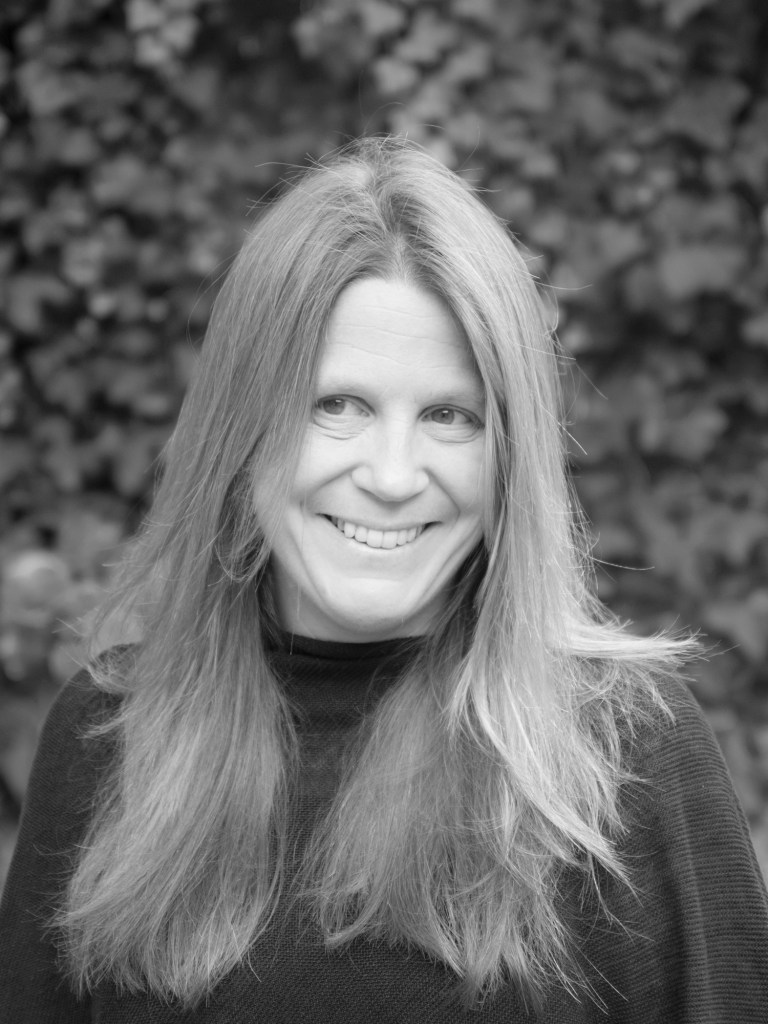

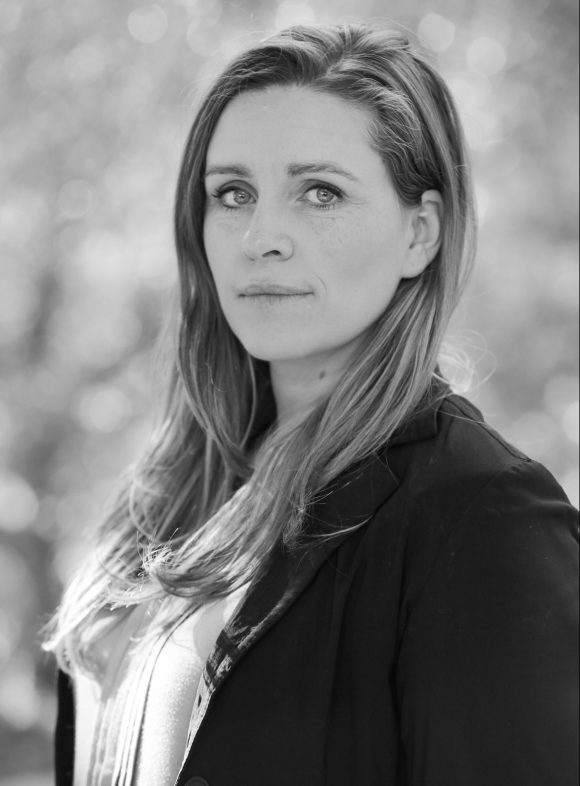
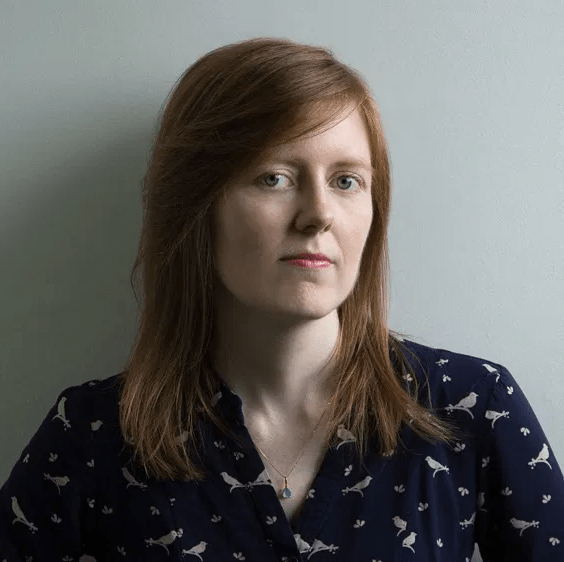
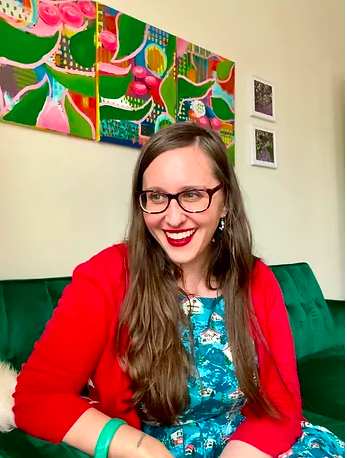
(November 19, 2020) Katie Peterson is the author of four collections of poetry, including A Piece of Good News, and her fable in lyric prose, Life in a Field, winner of the Omnidawn Open Books Prize, will be published in April 2021. Katie has received numerous fellowships, including from the American Academy of Arts and Letters, and she collaborates with her husband, the photographer Young Suh. Katie, Young, and their daughter Emily live in Berkeley, where Katie directs the MFA program in Creative Writing at UC Davis. She has one daughter who is 3 and she describes writer-motherhood in 3 words as: Always Play First.

FROM THE EPISODE: READING LIST & REFERENCES

Katie Peterson’s website

Katie’s books
Life in a Field (Omnidawn, 2021)
A Piece of Good News (Farrar, Straus and Giroux, 2019)
Robert Lowell, New Selected Poems (Farrar, Straus and Giroux, 2017)
The Accounts (University of Chicago Press, 2013)
Permission (New Issues Poetry and Prose, 2013)
This One Tree (New Issues Poetry and Prose, 2006)

Young Suh, photographer and Katie’s husband

Yaddo artist retreat

Katie Ford, poet

Elizabeth Bishop, poet

Sandra Lim, poet

The Last Clear Narrative, Rachel Zucker

“Tell all the truth, but tell it slant—success in circuit lies.” Emily Dickinson

The Odyssey, Homer


sound bites

Sometimes when I look at my own work, it feels like a combination between a classic American nature poet and a sexy, metaphysical John Donne.

When my mother died, I was filled with two twin senses: the first, this feeling that I would never be a mother, and the second, this incredible hunger to be a mother.

“I think of it as a hallmark of my generation that people felt complicated feelings about “settling down.” We were raised in a generation with a lot of ambivalence about family.” — @hugyourfamily

During the nine months of pregnancy and the month right after it, all these things happen in your body that you can’t refuse. You can’t refuse the heartburn, you can’t refuse contractions, you can’t refuse back pain. And then you have a baby, and you’re supposed to breastfeed that thing, which is so crazy. Talk about an experience that’s both biological and intellectual! There are all these biological things happening, but your brain can’t help but reflect on the strangeness of the experience.

You’re really hungry while you’re pregnant, and then you have the baby, and when you’re breastfeeding, you’re really hungry. I remember some Berkeley person said to me, “Well, it must be really nice to feel so close to your body.” And I said to the person, “I live here [points to forehead]. When this is over, I’m coming back here.” And the person looked at me like I was a horse.

There was no way I was going to carry a baby and then give birth to it without being ruminative, conceptual, philosophical, desiring of making generalizations about the experience, kind of idiosyncratically obsessed with what was most conceptual at the root of the experience.

Right after Emily was born, I’d constantly have a thought and lose it completely, and the thoughts were a wandering around somewhere in me, but I couldn’t find them. It really drove me crazy.

“We have all these reserved feelings about thinking about ourselves as animals, but never in my life have I thought more about another person as an animal than having a little girl.” — @hugyourfamily

In the last two or three months, Emily wakes up at three or four in the morning and comes into our bed and literally wants to sleep on top of me. It’s so mammalian. It’s so intense. I can feel that she wants that closeness because it’s going away. She’s a little girl, she’s becoming a grownup. The animal in her is moving forward in time.

I don’t think we have a great sense in our culture right now about what it means to grow up. Many of us don’t want to grow up. I felt and still feel, like being a grown up is fundamentally a bad thing. Who are the models for really good grownups—Obama? That’s it. It’s hard to think of that many more. Dolly Parton and Obama are really good grownups.

“Who are the models for really good grownups—Obama? That’s it. It’s hard to think of that many more. Dolly Parton and Obama are really good grownups.” — @hugyourfamiliy

Emily and I can’t stand in the rational truth of things when she doesn’t want me to park in a certain place and throws a temper tantrum.

Dickinson said, “Tell all the truth, but tell it slant—success in circuit lies.” The truth is something that cannot be dropped on the page unceremoniously, but is its own difficult animal that needs to be cajoled and sometimes restrained.

“The truth is something that cannot be dropped on the page unceremoniously, but is its own difficult animal that needs to be cajoled and sometimes restrained.” — @hugyourfamily

Motherhood has made me think about how many of my own feelings, and how many of the things I’d like to say, I now must repress. More than once, Odysseus from the Odyssey sat and, through tears, listened to a story that he couldn’t react to. Nothing has made me think about that more than this pandemic.

When I think about being a mother, I think about being a grownup, and when I think about being a grownup, I think about being so attached to others that what you do and say and eat and feel matters in such an embodied way to somebody else.

I had given up hope this spring of writing any poems this year, and then I started going for walks. On these walks, a poem came to me. And then I had to go on the same walk every day. I still go on it, because there might be a poem on the walk.

The life of a poet is a lifelong dare and I’m just in the middle of that big dare, like I jumped out of a plane and I’m still in the jump. I just have really cute company.

“The life of a poet is a lifelong dare.” — @hugyourfamily

Tzynya Pinchback

Regardless of what I’m writing about, I want to start with beauty or end with beauty.


(November 12, 2020) Tzynya Pinchback writes poetry shaped like prose and essays that would rather be poems. She’s the author of How to Make Pink Confetti (Dancing Girl Press 2012) and her work appears in American Poetry Journal, Mom Egg Review, WOMR’s Poets Corner, and others. Tzynya is a finalist for 2020 Poet Laureate of Plymouth, Massachusetts, and mother to a 23-year-old daughter. She describes writer-motherhood in 3 words as: PRIMAL. THEATER. SANCTUARY.


SOUND BITES

“In some weird way, getting cancer made me a better writer. It made me trust my voice more. It freed me up to write about whatever I wanted. So much of what I write is about what scares me.” — @Tzynya

Before motherhood, I was very eager. I wrote all the time, every day. It was urgent. It didn’t matter if I didn’t sleep, if I didn’t eat. It was something that I had to do all the time. When my daughter was born, I looked up one day, and I hadn’t written in a year. I couldn’t find the words to capture how big mothering was. It replaced the desire to write.

“I couldn’t find the words to capture how big mothering was. It replaced the desire to write.” — @Tzynya

In my mind, I would have one child walking beside me, one in a sling on my chest, and a double stroller. This was my fantasy. I would write at night when they were asleep and teach writing workshops. I’d be cooking from scratch and baking and sewing and just doing everything perfect. I had a very unrealistic idea of motherhood. When I first became a single mom, I let go of some of that.

So many things are out of control when you become a mother. When I was pregnant, I had my birthing plan spelled out to the T. I knew how I was going to give birth, how I was going to deliver, I wasn’t going to use any drugs, what I was going to wear—all the way down to my socks. None of that came to pass.

“Pain is a very interesting thing. It’s so violent. It’s loud. It’s obnoxious. So, I felt like my writing had to shrink.” — @Tzynya

The sicker I got, the more I wanted to find and write about beautiful things. When you’re really sick, you start to notice little things. Like, when you’re driving back from the cancer center, you notice a little 7-year-old skipping down the street, and you instantly remember that unbridled joy of skipping through a hopscotch pattern. Then I’d go home, and I write about that memory, drawing hopscotch in front of my house when I was a little girl.

Regardless of what I’m writing about, I want to start with beauty or end with beauty. That’s my dream, my motivation. It doesn’t matter if it’s an essay, poetry, fiction—I just really want there to be a starting point of something beautiful, even if the only beauty in the work is the language.

“Regardless of what I’m writing about, I want to start with beauty or end with beauty.” — @Tzynya

My story as Elizabeth’s mother diverges from her story, and there’s a line there. So, if I’m ever writing anything that I think may start to intrude on her narrative, then I will take it to her. I never want to, in telling my story, intrude on hers.

It’s a little overwhelming to think that my daughter is going to see me splayed out, writing about my flawed decisions. But at the same time, maybe it will help her when she has to make decisions. I would rather her understand how many mistakes I made, and how I went to bed every night doubting if I’d made the right decision. I think it’s great for her to understand that there’s no perfect way to be a mom or a woman or a human.

“It’s a little overwhelming to think that my daughter is going to see me splayed out, writing about my flawed decisions. But I think it’s great for her to understand that there’s no perfect way to be a mom or a woman or a human.” — @Tzynya

I always tell my daughter: Follow your heart, and follow it all the way through. Don’t give up on it. Don’t settle. You will have to compromise, because that’s life, but don’t settle. Just do what’s going to bring you joy and make you happy and make you solid and fulfilled at the end of the day.

Liz Harmer

I try to have an interesting and rich life where I am. I believe passionately that you can have an interesting, rich, not boring, settled, domestic life, just because you have a boring, settled, domestic life.


(October 28, 2020) Liz Harmer is a Canadian living in California. Her first novel, The Amateurs, a speculative novel of technological rapture, was released with Knopf/Vintage in 2019. Her stories, essays, and poems have been published in Lit Hub, Best Canadian Stories, and elsewhere, and her second novel, Strange Loops, is forthcoming with Knopf Canada in 2022. Her children are 13, 11, and 8, and here’s how she describes motherhood in 3 words: “Challenge and Delight”

FROM THE EPISODE: READING LIST & REFERENCES

Liz Harmer’s website

Liz’s Books
The Amateurs (Penguin Random House, 2019)
Strange Loops (Knopf Canada, 2022)

Romeo and Juliet, Baz Luhrmann (1996)

A Lover’s Discourse, Roland Barthes (1978)

Eros the Bittersweet, Anne Carson (Dalkey Archive Press, 1998)

The Four Loves, C.S. Lewis (Harvest Books, 1960)

“A Letter to a Young Writer,” Richard Bausch

Elizabeth Cady Stanton

Elizabeth McCracken

John Cheever

Stephen King

Selfish, Shallow, and Self-Absorbed: Sixteen Writers on the Decision Not to Have Kids, Meghan Daum (Picador, 2015)

The Baby Book, Barry Sears (Little, Brown Spark, 1993)


SOUNDBITES

“I’m interested in my own desire, and women having desire feels like this taboo thing that we’re confused about culturally.” — @lizharmer

I try to say yes to things, I try to meet lots of people, I do things that scare me a lot. I probably work a lot of it out in my writing by letting my characters do the things I can’t do myself or that I’m afraid to do.

“I try to have an interesting and rich life where I am. I believe passionately that you can have an interesting, rich, not boring, settled, domestic life, just because you have a boring, settled, domestic life.” @lizharmer

I try not to be afraid to see myself in my writing. I don’t think you can avoid yourself coming into your writing. But that doesn’t mean that I’m writing about myself.

I did learn to not have precious writing time, but just to be writing all the time. Just a little bit every day adds up to a lot.

“I want to model for my daughters that you can have more things in life than a family. Family is important, and you love the people near to you, but also, you have to invest in yourself.” — @lizharmer

The way I try to not feel guilty is to remind myself that it’s important that my kids see me as a person. I think it’s important for parents to not be the servants of their children. Kids need to learn to be on their own in the world, slowly, and it’s important that they understand that we’re also human beings who have needs and boundaries. Whenever I feel guilty, I think, “No, I’m teaching them good boundaries.”

I don’t want to be like, “Well, just claim your time,” because it’s not culturally possible to do that. I acknowledge that part of the reason I claim my time is because my husband doesn’t give me a hard time about it. One piece of advice I got that was really helpful to me is that everything’s easier after the youngest child is 5.

It was important to me to not get overwhelmed by my ambition. When you haven’t written anything, a book looks really long. How are you gonna finish a book? I got into a routine that was useful to me, which was, “I’m just going to finish a story. And then I’m going to finish another story. And then maybe I’ll edit those. And then I’ll slowly get to a third story.” As time passes, you end up with 15 or 20 stories. The habit perpetuates itself.

On the mornings I don’t teach, I walk the dog without my smartphone. I just walk outside. I let that be a time of collecting my thoughts and letting my ideas stew.

I Skype with a good friend once a week, and we write. That is a really precious time. When somebody else is keeping you accountable, or also doing writing, you feel permission to do it.

“Here’s a hot tip: apple slices, peanut butter, and cheese are perfectly nutritious. You don’t have to make elaborate meals; you can just serve kids a pile of things.” — @lizharmer

Blair Hurley

There’s something dangerous about a girl who wants something for herself.


(October 22, 2020) Blair Hurley received her A.B. from Princeton University and her M.F.A. from NYU. Her stories are published or forthcoming in Ninth Letter, The Georgia Review, West Branch, Mid-American Review, Washington Square, Hayden’s Ferry Review, Descant, Fugue, and elsewhere. She has received a 2018 Pushcart Prize and scholarships from Bread Loaf and the Kimmel Harding Nelson Center for the Arts. Her debut novel, The Devoted, was published in August 2018 from WW Norton & Company.

FROM THE EPISODE: READING LIST & REFERENCES

Blair Hurley’s website

Blair’s book
The Devoted (WW Norton, 2018)

Rabbit, Run, John Updike (Random House, 1960)

Snuffleupagus’s identity shift on Sesame Street

John Steinbeck

Alice Munro

A Tale for the Time Being, Ruth Ozeki (Penguin Books, 2013)


SOUND BITES

Motherhood is such a powerful identity in our culture, our literature, and our lives that it’s nerve-racking to approach it yourself and to consciously make the decision to adopt this identity.

When I thought about motherhood as a young woman, I thought I should focus on my career and not really think too hard about parenthood. I somehow got the impression that it wasn’t feminist to long to be a mother.

“One problem I have with the ‘having it all’ myth is the idea that you have to somehow add motherhood and career ONTO your life, when there should be a way for these roles to complement each other; to be PART of your life.” — @bhurley

It’s been so great to connect with other writer-moms and see what they went through and what they struggled with at different stages. Connecting with other mothers helps with the sense of being alone.

Before I had my baby, I thought, “It’ll be hard until she reaches X milestone, and then I’ll get my life back and I’ll be myself again.” It’s not really that way at all. It’s taken some adjusting to realize that my identity has changed forever. I’m living a different life now, and that’s perfectly okay. Life is change, and change is not always bad. In this case, it’s been an incredibly positive change. There are so many ways that I feel more access to joyful experiences.

Before I had my daughter, I thought I could write the same way I was writing before, but now I realize that my identity has changed. I’m going to be writing different things, I’m going to be concerned about different things, I’m going to be feeling different ways. And again, that’s not a bad thing. In fact, it will probably enrich my writing in ways that I have yet to see.

I’ve tried to make a distinction between what we generally call sentimentality and what might just be sentiment. It’s a useful distinction to make, because yes, there is a problem with excessive sentimentality in writing that instructs readers reader to feel tragic in a manipulative way, whereas sentiment is just strong feeling. I want my readers to experience strong feelings. I don’t want to be afraid or ashamed of sentiment.

I think women writers, and maybe mother writers in particular, can be denigrated or looked down upon if they’re willing to show emotion. There is a perception that if you write emotion from the perspective of motherhood, it’s inherently sentimental. But realistic writing is about showing emotion, being willing to make a reader feel something.

Many male writers write about domestic spaces and it’s seen as the height of intellectualism and experimentalism. I think about all the many Updike stories, for example, and somehow because it’s from a male perspective, focusing on the male vantage point, it’s seen as more serious, more legitimate than when women writers write about domesticity.

“Many male writers write about domestic spaces and it’s seen as the height of intellectualism and experimentalism, more legitimate than when women writers write about domesticity.” — @bhurley

Moral judgment would be passed on a character who is a mother who does something transgressive like leave a child, even temporarily, to just to get away, and who is not thinking about her child at all times. The stakes are so high for a female character who has a child.

I hope that my daughter will be proud of the work I do. I want her to see me working and to see writing as a major part of my life, something that’s part of my identity.

“I love a woman writer who’s willing to engage with a little bit of cruelty, a thin edge between tenderness and viciousness.” — @bhurley

Motherhood is changing my writing about girlhood; particularly, I’m seeing how fiercely girls want to become—to grow and to become themselves. Even at my daughter’s young age, I can see it in her desires and in the way she’s trying to figure things out and how she gets excited when she’s masters a new skill. It’s a powerful desire to become, which I find deeply moving to witness, and I feel honored to witness.

When I’m writing characters, I want to try to capture that desire and that process of becoming. Everyone wants to become—and when girls are wanting to become, it’s seen as a dangerous thing. There’s something dangerous about a girl who wants something for herself, who wants to transform. I hope to write characters that have that ferocity of desire, and to engage with its danger and risk.

“There’s something dangerous about a girl who wants something for herself.” — @bhurley

Before I became a mother, I thought I would feel resentment, like I was a prisoner unable to work and I would feel horrible about it. But actually, it’s more insidious than that, because I’m too busy feeling joyful with my baby. That’s why the work is not getting done. I’m the jailer. I’m the one keeping myself from writing. I did not expect that at all. The happy aspects of parenting are actually the ones preventing me from being productive right now.

My husband and I have devised a system where we each have one day a week that we’re the primary parent to give the other partner the chance to work.

It takes a concerted effort to find that quiet place I think is essential for good writing. If you’re only trying to write in little bits while feeding the baby, I don’t think you’ll be able to arrive at bolder and deeper and darker ideas.

“It’s important to have unfettered time, however you manage it, and to do your best to honor that time and only focus on writing.” — @bhurley

It’s tempting to feel that any time you take for yourself, you’re taking it away from your child. That can be heartbreaking. I think a lot of women feel that, and it’s so unfortunate because it’s an illusion. It’s so important for women to feel okay about valuing their work and valuing themselves. And ultimately, it’s important for their children to see their mother valuing herself and valuing her work.

We need breathing spaces; we need to have private and quiet spaces for our own growth. I’m trying to remember that it’s good for my child to allow her these spaces. Even in these few months, I’ve seen how it’s usually the moment I take a little step back that she learns a new skill. A silly example: I kept trying to guide her hands and guide her hands to help her hold her sippy cup, and finally, I said, “You figure it out.” And then she did.


Amy Shearn

So much of being creative is giving up control and letting in a little bit of wildness.


(October 15, 2020) Amy Shearn is the author of the novels Unseen City, The Mermaid of Brooklyn, and How Far Is the Ocean From Here. She is a senior editor at Forge and a fiction editor at Joyland, and her work has appeared in the New York Times, SlateLiterary Hub, and many other publications. Amy has an MFA from the University of Minnesota, and lives in Brooklyn with her two children.

FROM THE EPISODE: READING LIST & REFERENCES

Amy’s website

Amy’s books
Unseen City (Red Hen Press, 2020)
The Mermaid of Brooklyn (Touchstone, 2013)
How Far is the Ocean From Here (Crown, 2008)

Forge, Medium’s publication on personal development

Amy’s feature on stoicism: Forge, “What Happens When You Go Full Stoic”

Norma Jean the Termite Queen, Sheila Ballantyne (Doubleday & Company, 1975)

The Barter, Siobhan Adcock (Penguin Random House, 2014)

The Days of Abandonment, Elena Ferrante (Europa Editions, 2005)

Forty Rooms, Olga Grushin (Penguin Random House, 2016)

100 Essays I Don’t Have Time to Write, Sarah Ruhl (Farrar, Straus and Giroux, 2015)

Lenka Clayton’s Artist Residency in Motherhood

The Resort: A workspace outside the home with virtual monthly memberships, craft talks, and accountability groups


sound bites

The practice of giving up what you can’t control is so useful in this time when there’s so much that’s crazy and stressful that I am not in control of, as powerful as I am.

I’m aware of how much my daughter is watching me, and I think about the kind of woman and mother I want her to be—or feel like she has to be. I would never want her to grow up and think, “Oh my God, I have to do everything perfectly.”

“So much of being creative is giving up control and letting in a little bit of wildness.” — @amyshearn

If you’re going to have kids, sit down with your partner and have a real conversation. Tell them, “I am going to need this much time to work on my writing. When are we going to make that happen?”

Something I think is hard about writing as a mother is that your goal as a mother is to make things pleasant and take care of people—but in writing, it’s much better if you’re not trying to be pleasant. You’re trying to be as honest and real as possible.

People think your main character is you, no matter what. It’s insulting because there’s a subtext of, “How could a woman really create something from scratch? Obviously, she’s just writing about herself.”

“There’s amazing intimacy in the relationship between the writer and the reader who never meet each other. It’s almost otherworldly.” — @amyshearn

We’re in a moment where historic numbers of women are dropping out of the workplace. The husband’s career is being prioritized, and that’s not a failing on the part of women; the system has failed.

“There’s such dissonance in the way many of us live so disconnected from our mammal selves. I was working at an office, not seeing sunlight or breathing air—and also growing a person in my guts. That’s bananas.” — @amyshearn

Life is not interrupting the work; life is the work.

Introduce Yourself (Example Post)

This is an example post, originally published as part of Blogging University. Enroll in one of our ten programs, and start your blog right.

You’re going to publish a post today. Don’t worry about how your blog looks. Don’t worry if you haven’t given it a name yet, or you’re feeling overwhelmed. Just click the “New Post” button, and tell us why you’re here.

Why do this?

  • Because it gives new readers context. What are you about? Why should they read your blog?
  • Because it will help you focus your own ideas about your blog and what you’d like to do with it.

The post can be short or long, a personal intro to your life or a bloggy mission statement, a manifesto for the future or a simple outline of your the types of things you hope to publish.

To help you get started, here are a few questions:

  • Why are you blogging publicly, rather than keeping a personal journal?
  • What topics do you think you’ll write about?
  • Who would you love to connect with via your blog?
  • If you blog successfully throughout the next year, what would you hope to have accomplished?

You’re not locked into any of this; one of the wonderful things about blogs is how they constantly evolve as we learn, grow, and interact with one another — but it’s good to know where and why you started, and articulating your goals may just give you a few other post ideas.

Can’t think how to get started? Just write the first thing that pops into your head. Anne Lamott, author of a book on writing we love, says that you need to give yourself permission to write a “crappy first draft”. Anne makes a great point — just start writing, and worry about editing it later.

When you’re ready to publish, give your post three to five tags that describe your blog’s focus — writing, photography, fiction, parenting, food, cars, movies, sports, whatever. These tags will help others who care about your topics find you in the Reader. Make sure one of the tags is “zerotohero,” so other new bloggers can find you, too.

Introduce Yourself (Example Post)

This is an example post, originally published as part of Blogging University. Enroll in one of our ten programs, and start your blog right.

You’re going to publish a post today. Don’t worry about how your blog looks. Don’t worry if you haven’t given it a name yet, or you’re feeling overwhelmed. Just click the “New Post” button, and tell us why you’re here.

Why do this?

  • Because it gives new readers context. What are you about? Why should they read your blog?
  • Because it will help you focus your own ideas about your blog and what you’d like to do with it.

The post can be short or long, a personal intro to your life or a bloggy mission statement, a manifesto for the future or a simple outline of your the types of things you hope to publish.

To help you get started, here are a few questions:

  • Why are you blogging publicly, rather than keeping a personal journal?
  • What topics do you think you’ll write about?
  • Who would you love to connect with via your blog?
  • If you blog successfully throughout the next year, what would you hope to have accomplished?

You’re not locked into any of this; one of the wonderful things about blogs is how they constantly evolve as we learn, grow, and interact with one another — but it’s good to know where and why you started, and articulating your goals may just give you a few other post ideas.

Can’t think how to get started? Just write the first thing that pops into your head. Anne Lamott, author of a book on writing we love, says that you need to give yourself permission to write a “crappy first draft”. Anne makes a great point — just start writing, and worry about editing it later.

When you’re ready to publish, give your post three to five tags that describe your blog’s focus — writing, photography, fiction, parenting, food, cars, movies, sports, whatever. These tags will help others who care about your topics find you in the Reader. Make sure one of the tags is “zerotohero,” so other new bloggers can find you, too.

Introduce Yourself (Example Post)

This is an example post, originally published as part of Blogging University. Enroll in one of our ten programs, and start your blog right.

You’re going to publish a post today. Don’t worry about how your blog looks. Don’t worry if you haven’t given it a name yet, or you’re feeling overwhelmed. Just click the “New Post” button, and tell us why you’re here.

Why do this?

  • Because it gives new readers context. What are you about? Why should they read your blog?
  • Because it will help you focus your own ideas about your blog and what you’d like to do with it.

The post can be short or long, a personal intro to your life or a bloggy mission statement, a manifesto for the future or a simple outline of your the types of things you hope to publish.

To help you get started, here are a few questions:

  • Why are you blogging publicly, rather than keeping a personal journal?
  • What topics do you think you’ll write about?
  • Who would you love to connect with via your blog?
  • If you blog successfully throughout the next year, what would you hope to have accomplished?

You’re not locked into any of this; one of the wonderful things about blogs is how they constantly evolve as we learn, grow, and interact with one another — but it’s good to know where and why you started, and articulating your goals may just give you a few other post ideas.

Can’t think how to get started? Just write the first thing that pops into your head. Anne Lamott, author of a book on writing we love, says that you need to give yourself permission to write a “crappy first draft”. Anne makes a great point — just start writing, and worry about editing it later.

When you’re ready to publish, give your post three to five tags that describe your blog’s focus — writing, photography, fiction, parenting, food, cars, movies, sports, whatever. These tags will help others who care about your topics find you in the Reader. Make sure one of the tags is “zerotohero,” so other new bloggers can find you, too.