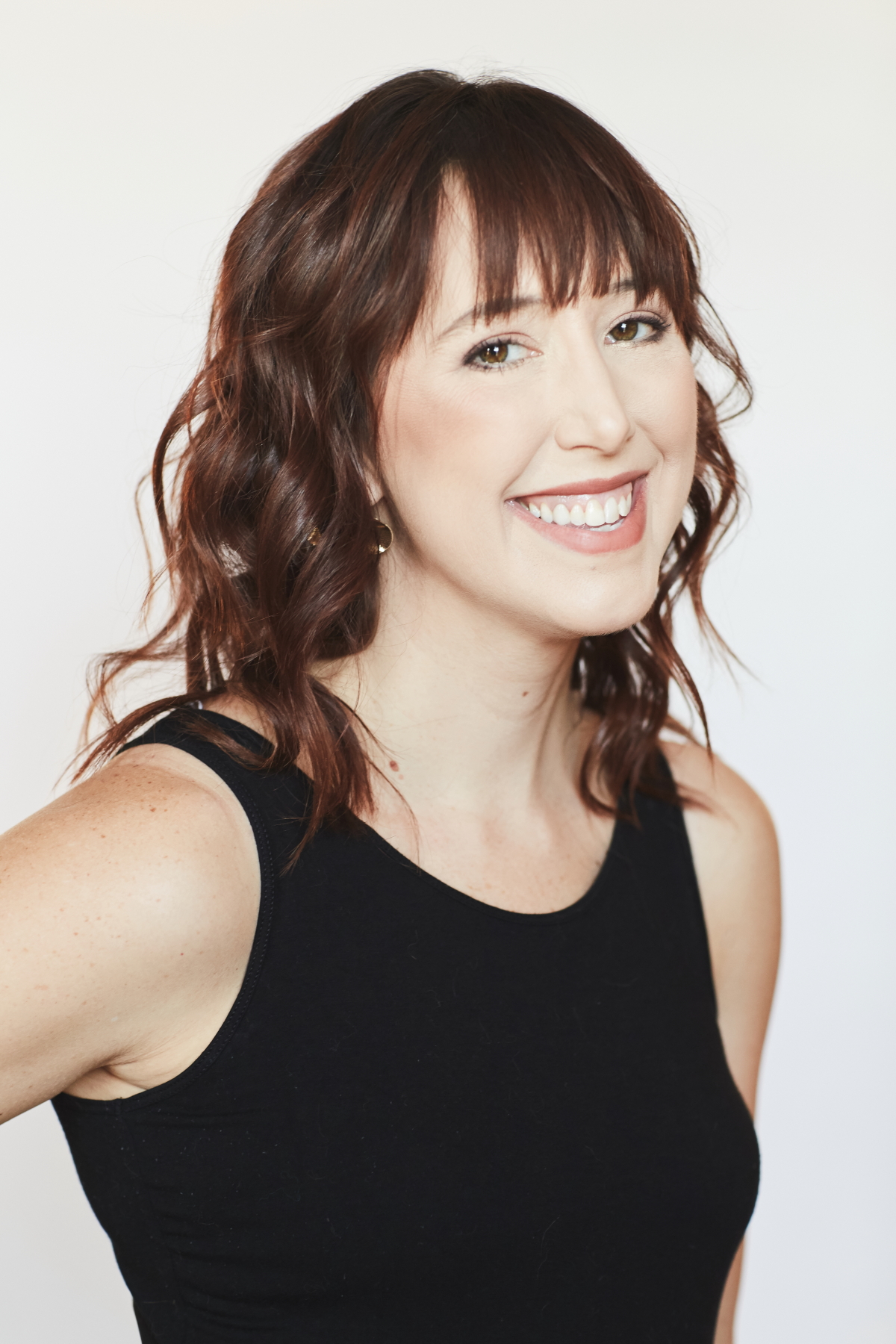
Kristin Bair

We have a wedding cabinet we brought back from China; it’s a huge thing that fits nowhere. I dreamed I was in it with a family of big, male lions. The goal was for me to survive, and I was like, “This is symbolic.”


(February 18, 2021) Kristin Bair is the author of the novel Agatha Arch Is Afraid of Everything. Under the name Kristin Bair O’Keeffe, she has published two novels, The Art of Floating and Thirsty, as well as numerous essays about China, bears, adoption, off-the-plot expats, and more. Her work has appeared in The Gettysburg Review, The Baltimore Review, The Manifest-Station, Flying: Journal of Writing and Environment, The Christian Science Monitor, Poets & Writers Magazine, Writer’s Digest, and other publications. Kristin has an MFA from Columbia College Chicago and a BA from Indiana University, Bloomington. A native Pittsburgher, Kristin now lives north of Boston with her husband and two kids and describes writer-motherhood in three words as “Are they asleep?”

FROM THE EPISODE: READING LIST & REFERENCES

Kristin Bair’s Website
Kristin’s Books
Kristin’s article, “Why Some Women Wield Exclusion Like a Superpower,” Scary Mommy
Sara Teasdale


SOUND BITES

“Moms just muscle through, cleaning up the puke.”

Mothers’ groups are very complex entities. They’re wildly supportive and nurturing—and they can also just cut you to the quick in seconds.

Sometimes, moms in a group that’s intended to be public become very good friends. I think they should just close ranks and say, “We’re not really that group anymore; we’re really a group of friends who want to be together and aren’t really interested in new members.” That’s a fine thing—but I think you have to be clear about your intention.

Every Facebook moms’ group has a provocateur, somebody who provokes, who always says the thing that everybody’s thinking, but nobody says out loud.

I think moms have an inclination not to go too far toward any kind of negative emotion because of that protective mama bear thing.

I wasn’t raised in a house where we were taught to manage big feelings in really productive ways, so that’s something I’ve worked on over the years and explored on the page. As a mom now, trying to teach my kids how to process and express big feelings is not easy. You’re not born with that ability. It’s something you learn when it’s modeled and consciously taught. Now I have a 13-year-old with hormones who’s at the point when teens start to break away emotionally, but at the same time, having the surge of emotions. I’ve realized it’s not a lesson you learn once; it’s a lesson you learn over and over again in life.

When my 13-year-old starts getting very loud and expressive and can’t control her emotions, I remember that the teen brain is like a shaken snow globe, and you’re not going to be able to get through to them until the snow settles.

Judgment and exclusion starts so early. If there’s anything I wish I could get rid of in women’s lives, it would be that urge to exclude. It starts so young and it’s so hurtful. I see it already in my 13-year-old’s girl groups.

I announced when I was seven that I was a poet and nobody should bother me when I was working on my poems. My mom said, “You can’t be a poet.” And I said, “I am. What do you mean that I can’t? That’s just my life now.” And, it’s always stayed that way.

My first poem was about a hummingbird. I’d never seen a hummingbird.

At the Bread Loaf Writers’ Conference, I was writing both poetry and fiction, and a somewhat famous male poet told me that I couldn’t do both. That really froze me in my process of poetry. I remember that exact moment, the breakfast, what I was eating, and just how it stunned me and it was just so debilitating. It’s funny because I’m such a mouthy person otherwise, but when paternalistic buttheads would speak to me at that point, I’d crumble, which just pisses me off now. I’d love to call them up and let them have it. But, it did inform the way I teach. I’m so careful with what people are interested in writing, what they already write and what they hope their potential will be. And I never, ever say, “Nope, that’s not gonna work for you.” I hope that everybody always expands as opposed to shrinks.

We have a wedding cabinet we brought back from China; it’s a huge thing that fits nowhere. I dreamed that I was in it with a family of big, male lions. The goal was for me to survive, and I was like, “This is symbolic.” When the door opened, and I came out with the lions being my pals, I was like, “I’m gonna survive this damn pandemic.”

In China, you usually have somebody to help you out at home. I had a lot of time to both write and be a mom. In China, it was amazing to be able to do both fully, which rarely happens in the United States. I always tell my husband that I was a much better wife there, because I had time. I could be the best mom, the best writer—not in terms of the quality of my work, but the most productive—and also the best wife because I had time. I wasn’t strung out and exhausted and worried all the time. Here in the US, there’s no time. I’m not as good a wife. It was a real gift for five years that I don’t take lightly.

As women writers, we are not accustomed to being allowed the time to write. I don’t think male writers have that kind of weight of responsibility and emotional responsibility for a family.

I feel ashamed that I should even think that I deserve the ability to write every day without distraction, which is really truly the only thing I want to do. There’s shame and guilt even just saying it out loud.

People go back and forth on whether we are born writers. Different people probably have different experiences with that, but I have always firmly believed that I was born this way; that for whatever cosmic reason, I am supposed to be doing this. But, the world doesn’t exactly work with you on that, so I’ve gotta keep pushing against it.
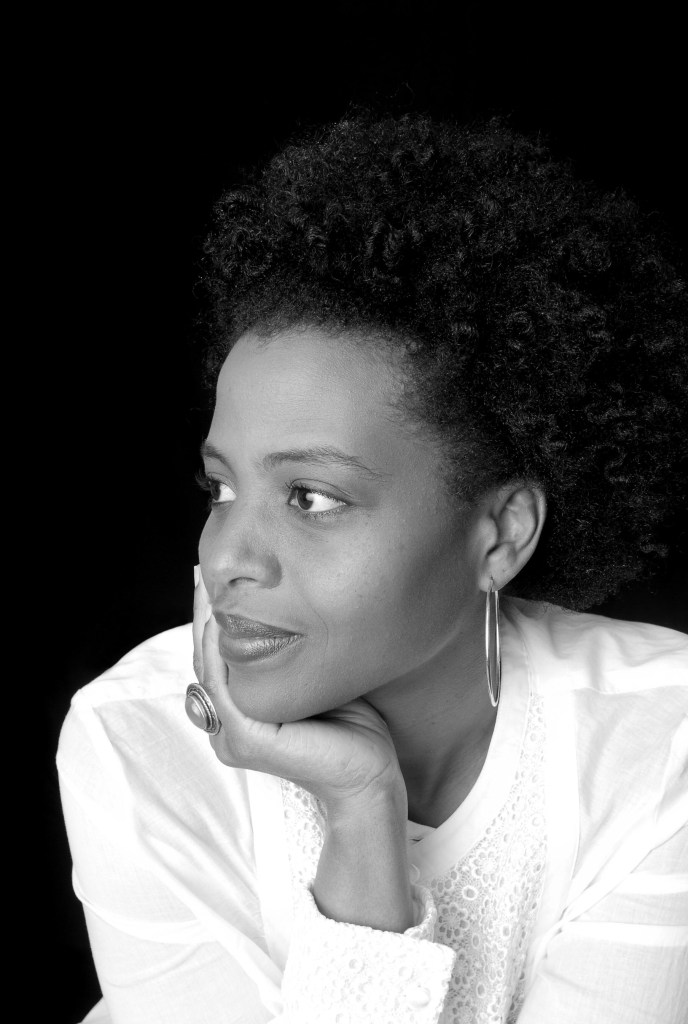
Lori L. Tharps

Your books want all of you, and your kids want all of you. You have to figure it out.


(February 11, 2021) Lori L. Tharps is an author, journalist, educator, podcast host, and popular speaker who is inspired by the collision of culture and color and fueled by creativity and passion. Lori has served as writer and/or editor for magazines, including Glamour, Parents, and Essence, and has written for The New York TimesThe Root.com, and The Washington Post, among others. She is the author of the three nonfiction books, Hair Story: Untangling the Roots of Black Hair in AmericaKinky Gazpacho: Life, Love & Spain; and Same Family, Different Colors: Confronting Colorism in America’s Diverse Families and the author of the novel, Substitute Me. Lori has 3 kids and describes motherhood in 3 words as: “inspiring and exhausting.”

FROM THE EPISODE: READING LIST & REFERENCES

Lori L. Tharps’s Website
Lori’s Books
My American Melting Pot, Lori’s Blog & Podcast

This Year You Write Your Novel, Walter Mosley

Black Ice, Lorene Cary

Exile Music, Jennifer Steil

Eyes That Kiss in the Corners, Joanna Ho


SOUND BITES

Because I come from deadline journalism, I give myself internal deadlines, like, “You have four hours to get this chapter done.”

I credit my children for endless sources of story ideas. Almost every book I’ve written has something to do with my children.

My kids have made me really efficient. I’ve watched people with no kids struggle to get that first book written, and I’m like, “Don’t ever look at me and say you don’t have time. I don’t feel sorry for you. If it’s important, you figure it out.”

If you’re working on a beautiful novel that needs slow work, it’s not the same as turning out nonfiction. There’s kind of a boom, boom, boom, boom, boom rhythm to nonfiction. Fiction is a little more like a slow cooker; you gotta let it marinate, and there’s no way you can speed it up. If you try to speed up a slow cooker, it doesn’t work. You get hard beans, raw meat.

“Fiction is a little more like a slow cooker; you gotta let it marinate. If you try to speed up a slow cooker, you get hard beans, raw meat.”

I credit my mom with making me a writer because when I was eight, she bought me an antique, big box, Remington typewriter. That’s when I fell in love with the idea of being a writer.

My mother was a nurse, a psychotherapist, a cultural anthropology professor—she was always getting new degrees. She had a subscription to Natural History magazine, and she could explain all things through the animal kingdom. My brother and I would ask, like, “Why is it wrong to have sex when you’re young?” and she’d be like, “Well, the badger…” There’s something about a badger having an erection for hours.

Some people would call my mom a liar. She’s not a liar at all; she just exaggerates a lot. She’d tell my siblings and I about a patient who lacerated his liver on the escalator because he didn’t tie his shoes. Now we all tell our kids to tie their shoes, like, “Don’t trip on the escalator, because you could lacerate your liver.”

My mom was busy, highly educated—in the sense that she was always going back to school for something or another—but she was such a good mom. She cooked, she baked, she sewed. She had three of us, and I never felt like my mom’s work was more important to her, even though I know her work was very important. She was saving people’s lives. We knew all her patients’ names. But I felt like she loved us so much. I never, ever felt like we were in the way. As an adult, I realized we were in the way. She could have done a lot more, but she never made us feel like that. I just feel so grateful that she made us a priority, even while she was pursuing her own passions.

You can be a writer and a mother, but to be a really good writer, you don’t want to have kids because you want to be completely consumed. I get completely consumed in my story, and I want to write, and I don’t want to go play in the snow with my daughter. When she asks, I’m like, “Not really, no. I want to finish revising my novel because I’m in it.” But then that means I’m not being a good mom.

Some people say your children want to see you happy. No, they don’t! They want to be happy. That’s bullshit. I think that is the biggest crock of dookie that anybody’s ever told somebody. Children are hardwired to be selfish; they don’t have that altruistic sense, like, “As long as my mom’s happy, I’m fine being ignored.”

They don’t want Mommy to go on this business trip. They want you home. That doesn’t mean that you can’t figure out how to go on the business trip or to the writer’s retreat or whatever you have to do, but don’t fool yourself by thinking your kid wants this for you. “They just they want to see me get the Pulitzer!” Uh-uh. Your books want all of you, and your kids want all of you. You have to figure it out.

“Your books want all of you, and your kids want all of you.”

Maybe your book isn’t as good as it could have been, had you been 100 percent in it all the time. But it’s probably good enough. And kids are super resilient, so if you slip up, it’s probably gonna be okay.

You can train your children that, “When Mommy’s in her writing room, you have to respect that.”

Your books are your children and your children are your children. If you have more than one, then you know that you have to give a Kid A solo time, and you’ve got to give Kid B solo time.

If there’s directions somewhere, my mom could fix a vacuum cleaner—although she did blow hole in the wall once.

My mom knows how to fold sheets perfectly. She knows how to do laundry and get the spots out. I buy my kids all dark blue clothes. That’s my secret tip.

I write because I want to make people feel seen.

One of my sons looks Black and one doesn’t. This is not just “Oh, haha, funny—maybe one needs more sunscreen than the other.” This is, “How do you tell one child that they’re a marked man, and the other one has the freedom and innocence of just being a child?” That’s not insignificant. How I dealt with it was to say both of my children are Black; the pigment in their skin doesn’t designate them as Black, so they both get the quote unquote “talk.” When they were much younger, I wasn’t telling them, “Keep your hands on the steering wheel.” That’s not where they were. I wasn’t willing to say, “You can’t wear hoodies.” I did not want to create a wedge between my sons about who was privileged and who wasn’t. We spent a lot of time normalizing the fact that our family members are all different colors and different hair textures.

The main thing is to make sure that your children feel confident and comfortable in the skin they’re in, because for one reason or another, they’re sure to be confronted about the way they look. If you have instilled in them that they are perfect, that this is the way that God made them, then they’ll be more prepared for whatever comes their way.

One of the psychologists I interviewed for the book used the term was Normalized Difference, like flowers in a garden. There’s roses and daisies and tulips and they’re all different colors, and that’s what makes the garden so beautiful. I find myself using a lot of that kind of phrasing when I talk to my daughter. That’s why we do things like, “You’re the color of a garbanzo, and you’re the color of a toasted almond, and what color do you think I am?” And she’d say “cinnamon-dusted hummus.”

Ann Hood

I made the decision that I wasn’t going to be a parent whose baby dictated their life. I wanted kids to be part of the life I’d built, because I thought I built a really fun, exciting life.

CW: Child loss


(February 2, 2021) Ann Hood is the New York Times best-selling author of 14 novels, 4 memoirs, a short story collection, a 10-book series for middle readers, and 1 young adult novel. Her essays and short stories have appeared in many journals, magazines, and anthologies, including The Paris Review, Ploughshares, and Tin House. She is a regular contributor to the Home Economics column in The New York Times Op-Ed page, and her most recent work is Kitchen Yarns, published with W.W. Norton and Company in early 2019. She is a faculty member in the MFA in Creative Writing program at The New School in New York City and lives in Providence, Rhode Island, with her husband and their children. She describes writer-motherhood in three words as “best thing ever.”

FROM THE EPISODE: READING LIST & REFERENCES

Ann Hood’s website
Ann’s books
Ann’s essay “The Boys of Summer,” NYT
Ann’s Craft Talks

Bread Loaf Writers’ Conference
The Lehman Trilogy
Election
F. Scott Fitzgerald
Raymond Carver
Anne Tyler
The Addams Family
Charles Addams cartoons
The Beatles
The Pushcart Prize
Yaddo
Transformers
Raising Arizona
Labor Day, edited by Eleanor Henderson
Wanting a Child, edited by Helen Schulman and Jill Bialosky
“Hamlet and His Problems,” T.S. Eliot on objective correlative
Hair
Andre Dubus III
Laura Lippman


sound bites

I’ve always loved to travel, so it seemed kind of natural to become a flight attendant. I wanted to be a writer. I thought, well, if I’m a flight attendant, I will surely have adventures that will give me more things to write about.

I loved my 20s. I was the happiest flight attendant. I was writing. I sold my book in my 20s. I just couldn’t see how kids would fit into my life. I had a long-term boyfriend who I adored, and we had this very distant, fuzzy idea of having kids someday, but it wasn’t something we talked about a lot or planned. I never had that biological clock ticking thing. Once I decided to have a baby, then I was all on board, and it wasn’t a hard decision. Once I had one, I wanted, like, five. I just loved it.

Because I was a writer for so long without children, I used to do whatever I wanted when I wanted. If I wanted to stay up all night writing, that was fine. If I wanted to lock myself away for a few days and finish a project, that was fine. If I wanted to drink in the afternoon, that was fine. Anything was fine! And all of a sudden, it’s like, oh my goodness, this is gonna be a challenge.

I had made the decision that I wasn’t going to be a parent whose baby dictated their life. I wanted kids to be part of the life I had built, because I thought I built this really fun, exciting life, and I thought they should fit into it. From the time my son was a baby, I was taking him all over the world with me. I was taking him on book tours. These things have got to coexist. I put him in those little chairs that you can bounce and bounced it with my foot and wrote my novels or essays or whatever I was working on.

“I had made the decision that I wasn’t going to be a parent whose baby dictated their life. I wanted kids to be part of the life I had built, because I thought I built this really fun, exciting life, and I thought they should fit into it.”

When I was in labor, I was judging the Barnes and Noble First Book Award.

I think pretty quickly, once my son was past being a toddler and went off to two hours three times a week to school, I retrained to myself to write when those hours opened up. I think so many women do that. I read an essay by Anne Tyler once in which she said that she would take her kids to school in her pajamas, get them out of the car, and run home to write and then pick them up. You know, all the other moms were like, “Are you still doing that writing thing?” Because she wouldn’t sit around and chat, because she knew she had that many hours. I think a lot of women who are writers and mothers have learned to do that same thing. It’s like nap time–okay I can write. Or a play date, I can write for three hours or whatever.

After Grace died, I didn’t write for about two years. I remember a really wise writer friend of mine said, “Of course you can’t write, because we write to make sense of things, and there is no sense to what happened.” Your mind can’t even try to make sense of it.

I sat down, and I wrote on post-it notes all the facets of grief. Then I looked at them all, and I chose the ones that I thought were the most interesting and created a character to sort of reflect that emotion. I had hope and love and resignation and regret, and then I made up characters to personify those things. And that was The Knitting Circle.

Over the course of writing The Knitting Circle and when it first came out, I would have this idea about grief, as if I figured out one little, tiny piece of it. I’d write an essay about that little, tiny piece.

I’ve had so many people—hundreds, maybe more—say, “You’re expressing what I don’t know how to say,” or “You wrote about something that I couldn’t explain,” or people would say they gave the book to their mother or friend or husband. For me, that made it worthwhile to talk about it, although it’s always hard.

Before I had children, I still wrote about motherhood, I think because I’m so family-oriented, and I came from a big family. The thing that interests me is relationships between mothers and daughters; sisters—I don’t even have a sister, but women. More than love stories, I like the women’s stories. Every time I would write a book, my mother would say to me, “Another bad mother. Everybody’s gonna think I’m the worst mother. I don’t like that.” They’re not bad mothers; they’re flawed. Once I had kids, I’m not sure my writing changed that much, except I was a better writer. I think I could explore things more deeply.

I kind of saw motherhood as a grand adventure, which I think it is. There were times, especially when Sam and Grace were little, when I can remember being in a grocery store, and they were just off the wall, being bad and running. I remember thinking, “No, this isn’t what this is supposed to be. I don’t like this part.” They were pretty much all good kids and did what they were supposed to do and were creative and fun. I had a lot of fun with them, but there were those moments when it was like, this isn’t what I signed up for. But mostly, I just always thought of it as an adventure.

When my kids were little, I would say, “You can’t come in this room for an hour.” I think it gets easier when they’re older.

“When my kids were little, I would say, ‘You can’t come in this room for an hour.'”

By the time I had my first kid, I already had written six books and I had columns in magazines. I was always working. But I have so many women students who feel guilty writing because they don’t think they’ve earned it, because they haven’t published yet. I’ve had women tell me that their husbands have said they could write for one year, and if you don’t finish it or the book doesn’t sell, then it’s not for you. We know that’s not how writing or publishing works. It makes me feel bad that in 2021, women are still feeling guilty about their dream or their work or their passion.

“It makes me feel bad that in 2021, women are still feeling guilty about their dream or their work or their passion.”

From when Sam was quite young, I was always a firm believer in the babysitter. We lived right near Brown University, and they just had a bulletin board with little paper you ripped off. I called up every kid, like, “Come. I need to work.” I think it’s great for your kid to be with a teenager. I would say we’re still very close to probably 60 to 70 percent of those babysitters.

Work—and your passion—don’t always make money. We will not be valued unless we value ourselves and what we’re doing, and I always saw the value in my writing time. I used to take my kids on book tours with me because I wanted them to see what I do. I wanted them to see that people show up. Sometimes there’s 4 people in the room, and sometimes it’s 400 people. I always wanted them to see it.

“Work—and your passion—don’t always make money. We will not be valued unless we value ourselves and what we’re doing. If you see your writing as worthwhile, then it is.”

If you see your writing as worthwhile, then it is.

I think my son completely loves that I’m a writer because it allowed him to pursue acting. I never once said, “You can’t major in theater” or “You’re wasting your time” or “That’s your hobby.” He wanted to be an actor, and I got it, because I’m an artist, too. He was shocked when someone said to him once, “Your mother’s gonna let you major in theater in college?” He couldn’t imagine that someone wouldn’t.

My kids appreciate what I do. I can I hear, when they introduce me to their friends, that they’re proud because they know it’s hard to be a writer, that you sit with nothing and you make something.

“It’s hard to be a writer, that you sit with nothing and you make something.”

Rachel Zucker

This is a call to women my age and older, particularly white women or women with privilege and power of any kind. Now is the moment. Do not let us go back to the worst part of what was before.


(January 28, 2021) Rachel Zucker is the author of 10 books, including, most recently, SoundMachine. A recipient of fellowships from the National Endowment for the Arts, MacDowell Colony and the Sustainable Arts Foundation, Zucker is an adjunct professor at New York University and at the Antioch Low Residency MFA program. Founder and host of the podcast Commonplace: Conversations with Poets (and Other People)Zucker is working on an immersive audio project (also called SoundMachine) and a book of lectures called The Poetics of Wrongness. She’s the mother of 3 boys ages 21, 20 and 13, and she describes writer-motherhood in 3 words as: “attachment, attachment, attachment.”

FROM THE EPISODE: READING LIST & REFERENCES

Rachel Zucker’s website
Rachel’s books
Commonplace: Conversations with Poets (and Other People, Rachel’s podcast
MacDowell Colony
Sustainable Arts Foundation
Podcast: Appearances with Sharon Mashihi
Kaitlin Prest‘s podcasts The Shadows and The Heart
Sharon Olds
Claudia Rankine
Sarah Vap
Makenna Goodman, The Shame
Darcey Steinke, Flash Count Diary: Menopause and the Vindication of Natural Life
Sarah Manguso
Motherhood Initiative for Research and Community Involvement
In motherhood, Tillie Olsen famously said, “You’re so terribly interruptible.”
The Long Winter, Laura Ingalls Wilder
Katie Peterson (Check out the Writer Mother Monster conversation with Katie here!)


SOUND BITES

I’m trying to figure out how to date as a 49-year-old woman, during a pandemic, when I take COVID really seriously. I am basically Rip Van Winkle— like I woke up 25 years later, and I don’t know what Tinder is. How do female humans do this?

“I’ve been trying to do a better job of telling my kids how much I love to work and not feel horribly guilty about it.”

It’s so hard to have solidarity amongst women, amongst mothers. Motherhood is so intense at almost every stage. It’s hard to be interested in menopause when you’re obsessed, understandably, with sleep training. It’s hard to think about having sex after a hysterectomy in your late-40s after a divorce when your nipples hurt from breastfeeding. I’m desperate for wisdom, experience, advice from mothers who are half a generation older than I am, but it’s hard to have that conversation when we’re at such different stages.

Part of why I wanted to be a mother was that I wanted to do it differently than my mother had done it. One of the central damaging things was my mother was a writer and an artist, and I thought she chose her work over me. She was ambitious and did the best she could, but it wasn’t really good enough—and then she got divorced and ruined my life. I have a very different understanding of that now.

I’ve never been able to do what my mother did, which was to say, “I’m working now. Go away,” or to just go away herself. I have struggled with that so pointlessly.

It was one thing to teach, it was one thing to make money, it was one thing to fulfill a family obligation to go to a best friend’s wedding or something, but to go away to write was something that I couldn’t imagine.

You have to commit to many residencies for four weeks, so it’s really prohibitive to almost every mother that I know. I don’t think people think very hard about how exclusionary it is. Those residencies were basically created for men with tenure-track jobs who were on an academic calendar.

The McDowell Fellowship was a profound experience. It was the first time in my adult life that I didn’t have to make dinner every night, that somebody fed me. That was very emotional, actually, to be cared for in that way. I’d never had that experience—not from my mother, not from my father, certainly not from my husband.

I was less hirable than some other people for junior faculty positions, because by the time I was full on the job market, I had six books, I’d won awards, I was too old. Nobody knew what to do with me.

I’ve been trying to do a better job of telling my kids how much I love to work and not feel horribly guilty about it. That’s also a weird thing that I used to do when they were little, sort of act like it was not what I wanted.

With this whole helicopter mom thing, now we’re screwed because we’re too attentive. It’s never ending with the fault and the shame and the guilt. Kids also need limitations, and they need to be safe, and the world is so “horribly dangerous,” but if we keep them too safe, then they’re not going to be resilient. I mean, it’s impossible.

Prose, poetry, memoir, short story, creative nonfiction, essay, lyric essay, audio transcription–there was no one of those that was adequate to describing the experiences that I was trying to describe, which are primarily stories of motherhood. How do you record, or describe and communicate experiences that are internal or external, in the body, in the subconscious, the way you have the running tape in your mind all the time? The novel wasn’t really invented for that material.

“The person who made Candy Land should be killed.”

What kind of narrative structure or lyric structure can contain or embody what it means to be interruptible but also have a relationship with the reader in which you don’t seem psychotic?

People are so fucked up in their ideas about “you have to sleep with your child, you can’t sleep with your child, it’s incest, they’re never going to individuated.” And it’s like, everybody’s just trying to get some sleep and not feel abandoned.

“The problem is that the pandemic, so far, has made every vulnerable group more vulnerable, and the few people who were basically immune to everything that could possibly go wrong in a person’s life have made billions of dollars.”

I hope we can come out of the pandemic with real personal and, more importantly, institutional change. There are things that we should never go back to. There’s no reason for in-person parent-teacher conferences. Just be done with that. A lot of things are opening up in ways that, hopefully, will give people more accessibility, opportunity, and potential for an equal playing field. The problem is that the pandemic, so far, has made every vulnerable group more vulnerable, and the few people who were basically immune to everything that could possibly go wrong in a person’s life have made billions of dollars. And it’s really hard to protest right now safely, so that constellation of things is very concerning to me. How do we continue to dismantle capitalism, for example, and racism and white supremacy and things that exclude women and exclude mothers? Well, I think that a major societal disruption, which is what’s happened, is one of the things that we needed to make this happen. But how do we not slide back is really the question. It’s not primarily the job of mothers and parents with young children; it is primarily the job of people like me. I don’t know yet how to participate in that fight, to not slide back, to move forward. But it really has to be the work of women who don’t have young children at home, who are not struggling just make enough money or keep their jobs, so I don’t know yet how to do that work most successfully and powerfully. But I think this is a call to women my age and older, particularly white women or women with privilege and power of any kind. Now is the moment. Do not let us go back to the worst part of what was before.

“I hope we can come out of the pandemic with real personal and, more importantly, institutional change.”

Elle Nash

We can all do magic. The simplest definition of magic is putting your will out into the world. We do that with art.


(January 18, 2021) Elle Nash is the author of the novel Animals Eat Each Other (Dzanc Books), which was featured in O – The Oprah Magazine, and hailed by Publishers Weekly as a “complex, impressive exploration of obsession and desire.” A small collection of stories, Nudes, is forthcoming from SF/LD Books in Spring 2021. Her short stories and essays appear in Guernica, The Nervous Breakdown, Literary Hub, The Fanzine, New York Tyrant and elsewhere. She is a founding editor of Witch Craft Magazine, a fiction editor at Hobart Pulp and Expat Press, and runs an annual workshop called Textures. Elle has one child and she describes writer-motherhood in three words as, “boundary-building, productive.”

FROM THE EPISODE: READING LIST & REFERENCES

Elle Nash’s Website
Elle’s Book: Animals Eat Each Other

Textures, Elle’s writing workshop

Witch Craft Magazine, Elle’s magazine

Chloé Caldwell

Transgressive Fiction

Frisk, Dennis Cooper

Heartbreaker, Maryse Meijer


SOUND BITES

While I was working in the office, I was like, “I can’t imagine being a mom this way. I can’t imagine working full-time and trying to manage a household and a relationship and be a mom all at the same time. I don’t know how working moms keep it all together.” Now I am a working mom, and you just figure it out.

I had been working on a manuscript, and I was in the fog of breastfeeding, too. There’s something hormonally about it that made me feel not as sharp, a combination of exhaustion and having this new person always around. There’s this weird mind-melding thing that happens, where your identities kind of fuse, which I think is on purpose so you can understand and know what your baby needs. I had trouble breaking out of that when I was working on my manuscript.

I sat down and wrote my novel in 11 weeks. I just woke up around four or five in the morning, and my daughter was starting to have more regular naps, so I would write every time she was asleep during the day, too. I just committed to it. And that’s how I got my first draft done. It was definitely a lot of not sleeping.

I don’t want to speak to this as if it’s a universal experience, but it seems like new moms struggle with identity and feeling like their own person, and some moms struggle with this for a lot longer. Part of this is when moms feel guilty for taking time out for themselves. I experienced that, where I felt bad for asking, for example, for time to write on the weekends.

“It seems like new moms struggle with identity and feeling like their own person, and some moms struggle with this for a lot longer. Part of this is when moms feel guilty for taking time out for themselves.”

It was easy for me to think: I’m staying at home and don’t have a job, even though I’m literally running an entire household, and I’m taking care of a tiny human. It was easy for me to think that I didn’t deserve the time, because there’s all this time already, even though that time is actually spent. I had to go through a process of seeing my alone time as valuable and important for me and setting boundaries.

I believe in everyone’s personal agency and a person deciding what is right for them and what their boundaries are, but in a coming-of-age story or this life experience with a new human, those boundaries can become really blurred. It can be difficult to figure out where the boundaries are.

[Elle’s advice to writer-moms:] The first step is to have really clear goals. The second step is not having excuses, being able to write whenever you can. My third step was making it known to my partner where I was, like wanting to write for four hours on Saturday morning and trying to negotiate that and making it known that it’s important for me on multiple levels—mental health, happiness, life goals, all those things. It also means being pragmatic about your time.

You have to have a good balance of being disciplined and being clear with what you want. But also, not beating yourself up when you don’t do it. I think the beating yourself up part of it can contribute to having low self-esteem, and that can impede you from being able to reach your goal overall.

“You have to have a good balance of being disciplined and being clear with what you want. But also, not beating yourself up when you don’t do it.”

I know that most bestsellers don’t tend to outlive their generation, and I’m also really interested in legacy, to a degree. It’s hard for me to look 10 or 20 years down the line and say, where exactly do I want to be? I would say I really don’t want to peak until I’m, like, 60.

“It’s hard for me to look 10 or 20 years down the line and say, where exactly do I want to be? I would say I really don’t want to peak until I’m, like, 60.”

I loved being pregnant in Arkansas. People were really wonderfully nice. It’s very family oriented and a bit more traditional and conservative there; people would treat you like a very high-class citizen when you’re pregnant. People would let me cut in line at the DMV. Everyone’s just really nice to you when you’re pregnant. They’re also really nice to you when you have a brand-new baby–but it drops off when the baby’s older and no longer cute.

“Everyone’s just really nice to you when you’re pregnant. They’re also really nice to you when you have a brand-new baby–but it drops off when the baby’s older and no longer cute.”

I find it very interesting how society treats pregnancy and pregnant women and what kind of pressure that can put on a person who wants to be pregnant but isn’t.

The first few months being back in your hometown that you left after high school is definitely really freaky. It’s almost like people still dress like it’s 2005 here sometimes. It did feel a little bit like going back in time. I also forgot just how powerful mountains are. Growing up, I never really paid attention to them, and now, every day, I stare at this mountain and I’m just like, “Holy shit. It’s majestic.” I don’t know why I didn’t care about it before.

“The real world kind of sucks. It can be really harsh, so I think having a community of people who are interested in the wonderful aspects of art that you’re interested in can make things feel less lonely.”

We can all do magic. It’s pretty practical. I think everything we do in terms of ritual is a form of magic. When you’re writing, and you’re creating a particular atmosphere in another person’s mind, that’s magic. It’s a very practical type of thing that we do every day. The simplest definition of magic is putting your will out into the world. We do that with art, we do that with our intentions.

“The simplest definition of magic is putting your will out into the world. We do that with art, we do that with our intentions.”

My dad pretty much was like, “Well, you’re going into college or going into the Army,” and I really was not wanting to go into the Army, so I went to school for journalism.

Continue to try every day, and whenever you find yourself comparing yourself to other people and where they are—if someone has a book announcement and you feel saddened by your own lack of that—just try to recognize that you’re relating to that person because you want to be where they are. It’s demonstrating to you that there is a pathway forward for you.

“I hope that seeing me doing something that I love can demonstrate to–and encourage–my daughter that she deserves that type of space, too.”

Writing is a balance of not being too hard on yourself but continuing to show up and do the work as much as you can. Accept that sometimes you have to sacrifice certain elements: If you want that extra hour of writing time, make your dinner as low effort as possible.

If it’s becoming too difficult, it’s okay to take breaks, especially when you first have a kid and they’re really dependent on you. They’re really little for a very short period of time. If you need to take that break and spend that time with them while they’re little, that’s 100% okay.

Lyz Lenz

“You’re not stealing time; that time belongs to you. Take it, and don’t apologize for it, because your contributions to this world matter. You as a full human being matter.
Go for it. Balls to the wall—no, labia to the wall, ladies.”


(January 14, 2021) Lyz Lenz’s writing has appeared in the Huffington Post, The Washington Post, the Columbia Journalism Review, The New York Times, Pacific Standard, and others. Her book God Land was published in 2019, through Indiana University Press. Her second book Belabored, was published in 2020 by Bold Type Books. Lyz’s essay “All the Angry Women” was also included in the anthology Not that Bad edited by Roxane Gay. Lyz received her MFA in creative writing from Lesley University. She lives in Iowa with her two kids and two cats. She describes writing-motherhood in three words as “Creative and Chaotic.”

FROM THE EPISODE: READING LIST & REFERENCES

Lyz Lenz’s Website

Lyz’s Books
God Land
Belabored: A Vindication of the Rights of Pregnant Women
Not That Bad, Edited by Roxane Gay

Jezebel

Barbara Robinette Moss, Change Me Into Zeus’s Daughter

Wandering Womb

Maggie Nelson


SOUND BITES

Nobody wanted to publish my writing, so I started a blog, like everybody. Then I started having children, so suddenly, my blog became a “mom blog.” Just purely by using my uterus, I became a niche category.

When you give birth to a child, they are still part of you, in a way, and your story is still their story. Our political dialogue tries to cleave the two apart, but really, for the longest time, we are the same organism. When writing about my kids in the early days, their story was my story.

I write about my divorce, and I still have to co-parent with my kids’ father and now his wife. I want to write honestly, but I also want to respect boundaries. It’s a constant tightrope.

“I want to write honestly, but I also want to respect boundaries. It’s a constant tightrope.”

Women often police women’s performance of gender far more than men do. In extreme performances of gender, women are able to ask for thing. Pregnancy, marriage, planning a wedding–that’s the whole bridezilla thing. All of a sudden, a woman feels empowered to ask for things, and maybe she’d never felt she could before.

“The four trimesters of pregnancy and birth encapsulate a political and cultural dissonance about the way we police bodies in America.”

Why do men get mad at me? There is something about a woman who has nothing to lose, and that happened, I think, when I got my divorce. I learned that my happiness was not ancillary, that it was actually the point. And that all people deserve to have good and happy lives. It’s not selfishness to want that. It’s not selfishness to ask for it. It’s not selfishness to take the time you need to write. It’s not selfishness to go for the career that you want. And I think we often tell women that, “No, you gotta die on the cross.” You don’t have to! Walk down from that cross; go do what you need to do. It’s not great up there. It sucks.

“I think we often tell women, “You gotta die on the cross.’ You don’t have to! Walk down from that cross; go do what you need to do. It’s not great up there. It sucks.”

I realized I had nothing to lose, and I started making bolder choices. I started writing more boldly, in a way that I didn’t before. I started asking harder questions, not just of myself, but of the people I was talking to.

“There is something very powerful about a woman who walks into a room and says, ‘I don’t need you. I’m here because I want to be here.'”

The wonderful writer Maggie Nelson said, “Every story is a story of a body.” Pregnancy is a great way of talking about how you cannot separate flesh from your reality. I think about that often when I’m writing: How does this interest me? Why am I interested? Why do people care? And how does this affect the fleshy reality of our lives?

After my daughter was born, my mother asked me, “How do you feel now that you’re a mom?” I was like, “I feel like myself but fatter.”

I’m not trying to undermine faith in science and medicine, but we do need to understand the ways that science and medicine fail us, and how a lot of it is built on misogyny and white supremacy. I remember feeling very let down by the medical establishment after the birth of my daughter, which was very traumatic. I had postpartum hemorrhaging, but nobody would tell me what was going on. They wouldn’t even tell me how many stitches I got.

It shouldn’t take personal experience for people to listen and change and grow, but my perception of women and work and the emotional labor we do and the loads that we carry radically changed when I became a mother. It changed from “This sucks” to “Let’s burn it down!”

“My perception of women and work and the emotional labor we do and the loads that we carry radically changed when I became a mother. It changed from ‘This sucks’ to ‘Let’s burn it down!’”

My writing is my career, and it is a priority, and that means it’s a priority over folding clothes, it’s a priority over raking the lawn, it’s a priority over all those things that we somehow think we need to do that are really just ancillary to the task of living. In my bedroom right now are baskets and baskets of unfolded laundry, and I don’t care. I don’t match socks anymore. We have a sock basket, and I just dump. Screw matching socks.

“Part of taking care of my kids is being a fully well-rounded human being. They need a mother whose life is not all about them, because one day they’re gonna leave me, and be like, ‘Get a friend.’”

I have chosen to prioritize my work over other things. Does that mean that some days I don’t work out? Yeah. Does that mean some days, emails don’t get answered? Yeah. Phone calls don’t get returned. Text messages don’t get returned. Because this is my time, and I worked so hard to get here, and I’m so grateful that I have it.

“You’re not stealing time; that time belongs to you. Take it, and don’t apologize for it, because your contributions to this world matter. You as a full human being matter.”

You’re not stealing time; that time belongs to you. Take it, and don’t apologize for it, because your contributions to this world matter. You as a full human being matter. Go for it. Balls to the wall—no, labia to the wall, ladies.

“Go for it. Balls to the wall—no, labia to the wall, ladies.”

Creating Community for Writer-Moms, with Scribente Maternum

“I’m for women being just a little bit selfish.”

Carla du pree

scribente maternum

In this special episode, “Creating Community for Writer-Moms,” the founders of Scribente Maternum offer actionable advice for seeking out, creating, and participating in writer-mom communities. The panel features Rachel Berg Scherer, Carla du Pree, Caytie Pohlen-LaClare, and Elizabeth Doerr, whose bios can be found at the bottom of this page. Scribente Maternum is a community of writers that explores our emotions as mothers, provides space to recharge, facilitates connections with other writers, and inspires personal and collective action. The organization hosts an annual retreat in February.

Read the bios of this episode’s panelists at the bottom of this page.
Learn more about Scribente Maternum here.


EPISODE RESOURCES

Scribente Maternum website
Scribente Maternum February retreat
CityLit Project
Better Smarter Stronger
AWP Conference


SOUND BITES

An awesome tension exists between being the on-call parent and a creative professional.

Rachel Berg Sherer

There’s a unique dichotomy of being both inspired by and distracted by our children. We created Scribente Maternum to live with that balance and find the time to still be creative and be moms.

Rachel Berg Sherer

You’re always a mother, and you’re always a writer–even when you’re not actually doing the act of writing. You’re always thinking about these different personalities and how they show up in the world, how they announce themselves. My mom used to say: “When children are young, they’re around your feet, and as they grow older, they’re around your heart.”

Carla Du Pree

“You’re always a mother, and you’re always a writer–even when you’re not actually doing the act of writing.” — Carla Du Pree

When we talk about balance, it’s not ever exactly 50/50; you’re going to give more time to your children, and your writing is going to drop down for a while, but then you might have times when you can do a little bit more writing. It’s a give and take.

Caytie Pohlen LaClare

“I learned that if I was happy, my kids would be happy. If I fed my spirit, it meant that I could feed theirs.” — Carla Du Pree

I like to change the concept of what is writing. Writing can be the physical act of writing. Writing also means paying attention, observing the world in a different way, listening to people with a different ear, taking time to really absorb and observe what’s around you. That’s writing to me, and it’s not necessarily something you have to pinpoint or structure.

Carla Du Pree

“Listen to children, the way everything is new to them. They’re like walking scribes. We have to listen and pay attention and be in that moment with them.” — Carla Du Pree

I’ve become a better writer in some ways since having a kid because I’m paying attention to what he’s observing in the world. As adults, we take some of the things going on in the world for granted. When we travel with my kid, he notices things that I would have walked right past. That’s a huge example of how they are sources of inspiration. If we see the world through their eyes, they’re our viewpoint and inspiration.

Elizabeth Doerr

I’ve become so much more efficient since I had children. My whole process has changed. I find myself outlining entire essays in my head when I’m with small children and don’t have time to sit and write. I have an ongoing notes app on my phone, where I quickly type when something comes to mind.

Rachel Berg Sherer

I’m very externally motivated, so having a group that holds me accountable, with deadlines, is how I will force myself to make time to write. The time is there; it’s just a matter of looking for it.

Elizabeth Doerr

Writing with a baby or toddler is different than writing with elementary or high school kids. That’s the biggest thing to keep in mind: It continues to evolve. And just when you think you’ve got it down, it changes again, because your kids are in a new stage as well.

Caytie Pohlen LaClare

“Motherhood is messy. You will not be perfect, but life isn’t either. And neither is writing. Quite frankly, that first draft is usually horrible.” — Carla Du Pree

When we started Scribente Maternum, we wanted a real space where mothers could embrace their motherhood and the idea of rage in motherhood—because there is that, too. Like, “How dare you take up all this time, when all I want to do is this one little thing.”

Carla Du Pree

It’s a wonderful thing to find a writer who really identifies with the way you write or a poet whose work you really want to support and become writer friends or literary friends from that. There are all kinds of ways to build community.

Carla Du Pree

Being a parent can be isolating, and being a writer can be isolating. It’s so important to have a place you can go where other people have similar experiences and can offer encouragement. Knowing that somebody else is going through the same thing helps you feel like a part of that group, and not so alone in your individual world.

Caytie Pohlen LaClare

I think of mothers always as creative beings. You created a miracle. You have so much to offer, and it’s so important to hear your stories. When I think about black mothers writing, I remember I was on a goose hunt, trying to find stories that had characters that look like my children. I’m supporting every writer of color, every black mother, every mother, period. We need to hear your stories. Your children need to read them. I’m for women being just a little bit selfish.

Carla Du Pree

“I’m for women being just a little bit selfish.” — Carla Du Pree

My son was older when he read my work. He was stunned. He had this idea of who I was, but he didn’t know writer me. And I’ll never forget, he walked into the room, and he said, “Mom, this is you?”

Carla Du Pree

We’re better parents when we set aside time for ourselves, like the metaphor of securing your own oxygen mask before you try to help somebody else. You can’t help anybody if you are exhausted, if you’re depleted, if you’re not fulfilled, if you’re resentful because these tiny humans are taking everything you have. We’re better mothers when we step away and do what we need to do to make ourselves feel whole.

Rachel Berg Sherer

“We’re better parents when we set aside time for ourselves, like the metaphor of securing your own oxygen mask before you try to help somebody else.” — Rachel Berg Sherer

You’re not alone. Wherever you are out there, wherever you are on your journey, you’re not alone. There are other people going through the same thing, so reach out.

Caytie Pohlen LaClare

episode panelists

Rachel Berg Sherer

Rachel has worked in public relations and communications, everywhere from from Capitol Hill to an order of nuns, taught tenth-grade English, and coaching Speech. She is the founder of Midwest Writing and Editing and writes a regular Feminist Parenting column for Rebellious Magazine for Women. Her work been featured in Solstice Literary Magazine and Minnesota Parent magazine. Rachel and her family live in Minnesota.

Carla Du Pree

Carla Du Pree is a fiction writer, a Maryland state arts ambassador, and the executive director of CityLit Project, a nonprofit that creates enthusiasm for literature. She’s a recipient of fellowships from Hedgebrook, Rhode Island Writers Colony for Writers of Color, the Virginia Center for the Creative Arts, and Martha’s Vineyard Institute of Creative Writing. She’s won a Rubys Artist Grant and an MSAC Individual Artist Award for her fiction. Carla was awarded NASAA’s 2020 inaugural Diversity, Equity and Inclusion Individual award, and she is the Maryland State Department of Education’s Arts Leader for April 2020. Carla lives in Baltimore and is the mother of three twenty-something-year-olds and the grandma of a six-year-old grandson. 

Caytie Pohlen LaClare

With Better Smarter Stronger, Caytie merges her purpose and passion into an organization that provides inspiration and education. Caytie lives in the Minneapolis area with her two sons and husband. Caytie also has two grown children and one new grandbaby. Her writing journey has been mostly for personal enjoyment, but she has also recently started writing more blog posts and marketing materials for her businesses.


Elizabeth Doerr

Elizabeth Doerr is a freelance writer who helps justice and equity-focused professionals and brands tell their stories. She won a Maryland/Delaware/DC Press Association award for her 2015 Baltimore City Paper story about street harassment, “Stop Calling Me ‘Baby.” You can find her work in CityLabPortland Monthly, and Baltimore City Paper among other publications. Elizabeth worked in higher education in the realm of experiential and social justice education for over a decade and she has frequently put her organizational and spreadsheet skills to work through event management. Elizabeth in Portland, OR, with her husband and son. www.elizabethdoerr.com


Melanie Conroy-Goldman

“Before I became a mother, I was writing about characters. When I became a mother, I was writing as characters. I didn’t want to talk about things anymore. I wanted to be vivid and live inside of an electric experience.”


(January 7, 2021) Melanie is the author of the novel The Likely World (Red Hen Press). A Professor of Creative Writing at Hobart and William Smith Colleges, she was a founding director of the Trias Residency for Writers. Her fiction has been published in Southern Review, StoryQuarterly, in anthologies from Morrow and St. Martin’s and online at venues such as McSweeneys.net. She also volunteers at a maximum security men’s prison with the Cornell Prison Education Program. She lives in Ithaca, New York with her husband, daughter and step-daughters. She describes writer-motherhood in three words as richly entangled identities.

FROM THE EPISODE: READING LIST & REFERENCES

Melanie Conroy-Goldman’s Website

Melanie’s Book: The Likely World

Trias Residency for Writers

Peter Ho Davies

My Struggle, Karl Ove Knausgård

A Visit from the Goon Squad, Jennifer Egan

The Odyssey, Homer

“You Should’ve Asked,” a feminist comic about the mental load, by Emma

The Topeka School, Ben Lerner


sound bites

One of the things that I write about is that entering sobriety is an incredibly demanding life phase, and trying to parent while trying to also do the work of staying sober is an extra barrier that I think hasn’t often been written about, although some people have written about it incredibly beautifully. That act of balancing is both present in work for working mothers and for mothers who are struggling with various kinds of mental health issues, including addiction.

There’s a central betrayal at the heart of any addict parent, and if you ever hear any person who’s recovered from addiction talk about parenting, they’ll always say that they couldn’t parent in the way that it has to be. It has to be primary. There’s no other way to parent, because the addiction is primary.

“Before I became a mother, I was writing about characters. When I became a mother, I was writing as characters. I didn’t want to talk about things anymore. I wanted to be vivid and live inside of an electric experience.” — @mscongo

As the parent of a young child, a baby, you live so much in the moment. You’re embedded in experience.

“Motherhood turns you into a milk cow. Even if you’re not breastfeeding, you’re the provider of milk. There’s no two ways about it.” — @mscongo

There is a desperation to be yourself that emerges from being melded with another human.

I am no role model.

Every parent should have adequate childcare. There are probably lots of people who have kids under five who are barely writing, and there’s nothing wrong with that. Anything else is extraordinary and superhuman. Anyone who’s squeezing out a couple of words a week with a child under five is doing great.

“Anyone who’s squeezing out a couple of words a week with a child under five is doing great.” — @mscongo

There’s still shame around not taking care of your kids full-time, not being a stay-at-home mom, and that’s bananas.

I know there are many women who are novelists, and many novels that don’t contend with children, but for women novelists, the assumption is that it’s hard to be both a writer and a parent. It’s not the subject. It’s not the plot.

I’m a feminist. I’m a second-wave feminist, so I’m not even a cool feminist.

The absence of adult supervision in certain narratives by women acknowledges the importance of good caregiving in ways that the traditional male adventure narrative doesn’t bother with. Someone else is taking care of that—a servant or wife or someone else. It’s not part of the story.

I’m seeing a lot of books where it’s central to the narrative that the man is sick of taking care of the kids, and then he takes off—and I’m worried that this is going to be like the First World male novel, and I’m not here for that. Like, I’m not here to feel sorry for the fact that you have to do 44% of the childcare.

“Mothers feel shame for things that weren’t our fault. We feel shame for every way in which our children’s lives aren’t perfect. We carry more shame than we deserve.” — @mscongo

I keep my children out of my work. They’re tempting, because they’re cool. I want to write about them. But I feel like that’s one line I can’t cross. I can’t write about my children. It’s complicated. It’s different from how I feel about drawing on other life experiences.

With every one of my children’s developmental phases, I got a little more time and brain space.

I used to compose on the page. I was always typing or writing longhand when I was composing. Now, I spend a lot more time in my head and playing around with scenes and even playing around with sentences and words. That’s usually something I do before I go to bed. And if it gets really good, I get up, and I write it down.

Katie Gutierrez

My biggest fear around becoming a mother was that suddenly I would no longer be a writer.


(December 17, 2020) Katie Gutierrez lives in San Antonio, TX, with her husband and two young children, who are 2 and a half years old and three and a half months old. She has an MFA from Texas State University, and her writing has appeared in The Washington Post, Longreads, Catapult, and more. Her debut novel, More Than You’ll Ever Know, will be published by William Morrow in 2022. She describes writer-motherhood in three words as never enough time.

FROM THE EPISODE: READING LIST & REFERENCES

Katie Gutierrez’s Website

Katie’s Book: More Than You’ll Ever Know

Catch Me If You Can

Texas Highways Magazine (coming soon)

Alice Monro


SOUND BITES

When I got my book contract, any time I tried to sit down at my computer, my toddler would come in as a baby shark, or my newborn would be hungry. I ended up sitting in the dark breastfeeding, looking through the contract on my phone and signing it through DocuSign. You have this fantasy, as a writer, of what these moments will look like, and I never once envisioned it looking like that. But it also felt completely right for where I am in my life right now.

“A component of female desire is the desire to be known, to be seen, and to discover who we are in different environments and relationships.” — @katie_gutz

The experiment for me is to look at a character who is acting in an ostensibly amoral way and portray her in a way that very quickly makes her actions understandable. That’s part of the fun of writing for me. And that is when you’re succeeding as a writer.

When I found out I was pregnant, I was overjoyed. But right along with that feeling of joy was this fear, this feeling of Oh, God, what did I do? What is this going to mean for my life? That all came up, and it was not as simple of an emotion as getting that phone call from the nurse. Because I still didn’t really have an idea of how motherhood would fit into my life, and I didn’t really have an idea of what kind of mother I would be.

“When I found out I was pregnant, I was overjoyed. But right along with that feeling of joy was this fear, this feeling of: Oh God, what did I do? What is this going to mean for my life?” — @katie_gutz

When we were on submission with my first novel and it didn’t work out, I had this overwhelming sense of, Okay, I’ve got one more shot. I’ve got to finish this book before I have the baby, and we’ve got to go on submission and try to make this happen, because I don’t know what it’s going to be like afterwards. And I think that I was really wrong about that. I had internalized that being a mother is anathema to being a creative individual, to pursuing any kind of art.

“My biggest fear around becoming a mother was that suddenly I would no longer be a writer.” — @katie_gutz

It’s been a big surprise, how much being a mother has positively impacted what I do, even though actually getting to work, getting to write, is more complicated.

I spent those first few months not sleeping, because all I could do was imagine every single worst-case scenario that could happen to this completely helpless baby. Being a writer, your imagination is pretty vivid, and I felt like I had to follow each fantasy through to its conclusion. I was surprised at the depth of that anxiety, the depth of my fear around losing my child and how that fear never goes away; it just becomes folded into your daily life as a mother.

“When we become mothers, we don’t stop being ourselves or having our own desires or experiencing the desire for adventure. It becomes a question of how to balance these deep emotions–or live with the imbalance.” — @katie_gutz

The days when I’ve become the most frustrated, the angriest, and the worst version of myself—you know, the monster, to my kids and husband—are the days when I wake up with an urgent need and expectation that I’m going to sit down for at least an hour, and revise one chapter or write 500 words. When I set these concrete goals for myself, and then the day explodes and none of it happens, that’s when I find myself extremely resentful of my kids, my husband, the fact that he doesn’t have to have a baby at his boob every two hours.

I try to let go of control and tell myself I’m just going to touch the work at some point today. That’s my only goal. I’m going to touch it at some point, if it’s working on one sentence, so be it. If I get lucky and both kids nap at the same time, I get two hours. Those are the days when things go the smoothest for me, when I can appreciate being with the kids but also whatever time that I actually get to work. Those are the days when I don’t set any expectation for myself, except that I’m going to touch the work and move it forward in some way.

I was thinking about practical strategies for moms with newborns, and for me, what works best is when I read books that seem to be in conversation with what I’m working on. That feels like I’m touching the work. It’s also giving myself permission to daydream and to use those daydreams as also touching the work.

I’m taking this time with a newborn to be active about using my daydreams for the revision process. When I get the chance to sit down, even if it is for 15 minutes, I go straight to it, no procrastination.

In the past, there’s been this conversation around writing as a very solitary, strictly scheduled or regimented existence. There’s so much happening in the background in this patriarchal society and sexist culture that was not talked about. It’s important to have these conversations about what it really takes to make a book happen.

The other day, I held up a book to my daughter and said, “Mommy’s writing these books.” And I could see her trying to put it together. It was a strangely emotional moment for me, having this small child who was starting to understand what I’m doing when I’m not being present with her.

When my daughter is old enough to read my books, I hope she’ll feel proud, whether or not she likes the books. I think that’ll be strange, because she’ll be getting access to some parts of me that she obviously doesn’t see as her mother. I hope it’ll bring us closer.

I just texted a friend the other day—it was one of the bad days—and I said, “I feel like I’m failing on every front.” I was snapping at my daughter and I was so resentful of this baby boy who just wouldn’t sleep. Every time I sat down, I had to get back up. I felt like everything I was trying to do, everything I was trying to be, was a complete failure. Some days are just going to be like that.

You don’t have to be sitting at your computer to be writing, but it’s also okay to just not be writing. It’s okay to do absolutely nothing that touches your work, because you’re also a person apart from being a mother, and apart from being a writer, and you need to be able to occasionally take care of that person, as well. Let’s become the monster, right?

Daria Polatin

There’s only so much pie, you know?


(December 7, 2020) Daria Polatin is a playwright, TV writer-producer and author who is developing a TV limited series based on her novel DEVIL IN OHIO for Netflix. She was a Co-Executive Producer on CASTLE ROCK for Hulu, where her episode “The Laughing Place” was named one of Entertainment Weekly’s Best TV Episodes of 2019. She has been a writer and producer on HUNTERS, JACK RYAN, CONDOR, HEELS and SHUT EYE. Daria received her MFA from Columbia University and is a founding member of THE KILROYS, the advocacy group for gender equality in the American Theatre. She has one son who is 11 weeks old and she describes writer-motherhood in 3 words as: stunning, shifting, softening.

FROM THE EPISODE: READING & VIEWING LIST & REFERENCES

Daria Polatin’s Website
Daria’s Book: Devil in Ohio
Daria’s Play: Palmyra

Daria’s Series:
Castle Rock
Hunters
Jack Ryan
Condor
Heels
Shut Eye

The Kilroys, Daria’s advocacy group for gender equality in the American theater

Chekhov


SOUND BITES

Time is really punctuated when you have a baby. I used to have a certain sensibility of my time and what I could get done, and now the periods I have are much shorter. Having to code switch really is tricky. A few minutes of feeding can feel like hours, and the nap feels like one second. Time just has all these new nuances, even though it is a constant.

Writing outlines is tough. I know a lot of writers outline their projects in different mediums, and it’s just not the most fun to do an outline, but it’s the scaffolding for the cathedral that you’re going to make.

Because of the amount I need to get done, I need to work quickly, and it’s a good lesson in not second-guessing myself. I need to make decisions and move on, whereas, in the past, I may have read a piece over and over and over and improved it one more time. I don’t have time to do that now. It’s about trusting the process and my intuition, trusting that I’ve been doing this for many years. I don’t want to say that I’m shortchanging the process, but I can move through the process much more quickly now. And I have to; otherwise, I couldn’t keep up, or I would have to take on less, either as a writer or as a mother, and I don’t want to do that. I want it all.

There’s never going to be enough time for all of the things, and I just have to make peace with that. I’m always probably going to feel like I’m not doing enough in a certain area, whether it’s this project or that project or with my son or with my husband. There are a lot of things that I’m going to have to be comfortable with. There’s only so much pie, you know?

“There’s never going to be enough time for all of the things, and I just have to make peace with that. There’s only so much pie, you know?” — @DariaPolatin

Every minute of TV costs a lot of money, effort, and energy to make, so you have to be relentless in refining every moment on screen.

I really love when each episode of a show has an arc to it. The Crown does that really well. Each episode contains a theme, a question, and an answer.

Books are the most direct connection between author and reader. There’s the least interference in that form of written material, a direct relationship with the consumer of the story.

“I now understand this very primal, Mama Bear, almost monster feeling of doing anything for your child. I have a new understanding, a visceral understanding, of what that is.” — @DariaPolatin

I want to be a safe space for my son, and I want to be a grounded place that he can always come to for comfort in whatever form that would be.

I’m fearful of not having enough time for everything; most importantly, my son, because he’s the most vulnerable of all of those elements.

I’m trying to stay grounded and teach through example. Taking care of the things I need to take care of is an important thing to do. If I just sacrificed my career and became a mother full-time, that’s not serving me, and I wouldn’t be happy, and that wouldn’t be serving him.

You have to be very present to be able to assess the circumstances and get out of your own expectations of what your child might need. It’s almost meditative, Zen-like, to step back and just look at situations with a clear, fresh perspective without projecting expectations onto your child.